Photo via Times of India

A 'yellow brick road' beneath the Pacific Ocean traced to ancient volcanic activity

Read the original at Times of India ↗
Cite

TOI Science Desk. (2026, November 14). A 'yellow brick road' beneath the Pacific Ocean traced to ancient volcanic activity. Times of India. https://timesofindia.indiatimes.com/science/discovery/a-yellow-brick-road-was-discovered-1029-metres-beneath-the-pacific-ocean-scientists-explain-how-volcanic-rock-and-iron-rich-deposits-created-the-striking-formation/articleshow/135706462.cms

Dated from the outlet's own feed. Check the original for its byline.

Times of India · collected 2026-11-14 · by TOI Science Desk

Quick Summary

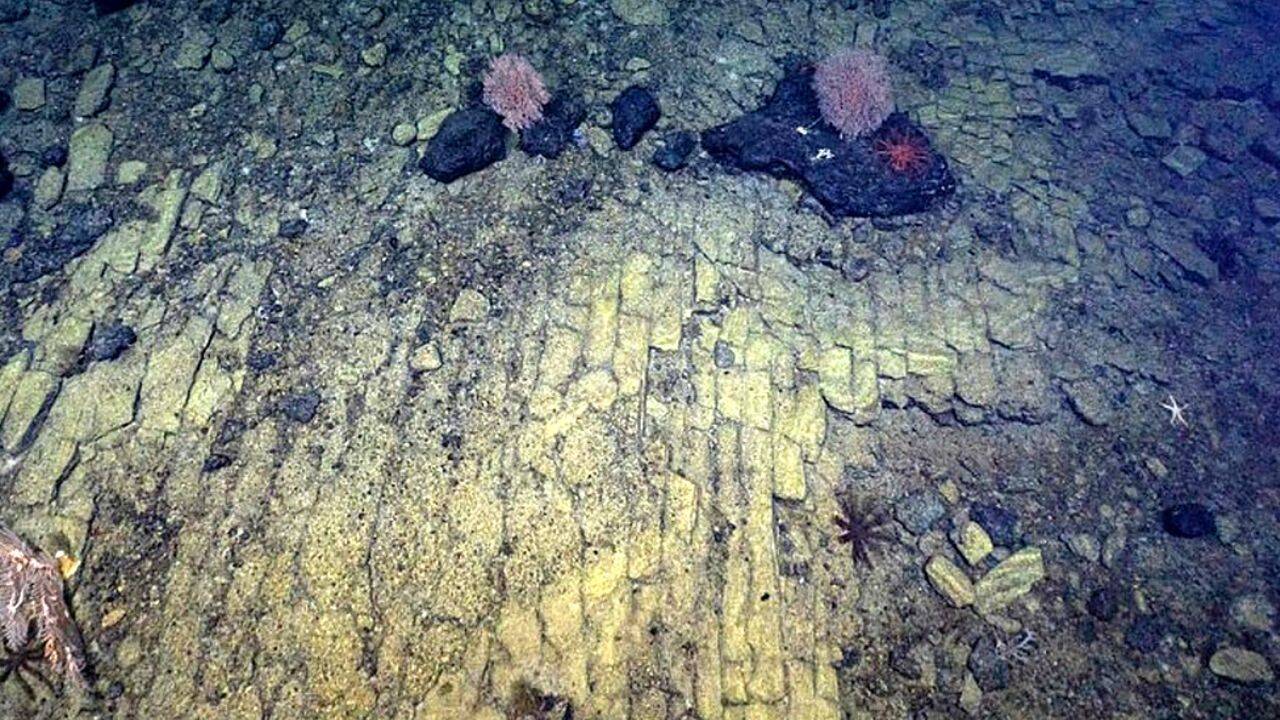
Scientists discovered a unique formation on the Pacific Ocean floor that resembles a yellow brick road during an expedition by the Ocean Exploration Trust’s E/V Nautilus. Located at a depth of 1,029 meters near Nootka Seamount within the Papahānaumokuākea Marine National Monument, the formation consists of fractured hyaloclastite, a volcanic rock created when magma interacts with cold water. The yellow color is attributed to low-temperature hydrothermal alteration, which changes the volcanic glass and gives it its distinctive hue. Researchers confirmed that despite its appearance, the formation is a natural geological feature, not a human-made structure.
Written by AI on 2026-11-16, from this article's own text only (the story summary below draws on all the coverage).

AI analysis

Story summary

Scientists discovered a formation resembling a yellow brick road on the Pacific Ocean floor during an expedition by the Ocean Exploration Trust’s research vessel E/V Nautilus in 2022. The structure, found at a depth of 1,029 metres near Nootka Seamount within the Papahānaumokuākea Marine National Monument, consists of fractured hyaloclastite, a volcanic rock formed when hot magma meets cold water. Its yellow color is likely due to low-temperature hydrothermal alteration of the volcanic glass. Despite its regular pattern, the formation is a natural geological occurrence rather than an artificial construction.

Written for “Yellow Brick Road Under Pacific” on 2026-11-17, grounded in this article and the 0 other(s) covering the same event.

Compared with similar articles

Nothing to compare against. No article is close enough to this one for the pipeline to have linked or judged the pair.

Story

Yellow Brick Road Under Pacific
Science · 1 article(s) covering the same event.
How this article was measured signals, leaning charts, publisher record, byline, topics and claims

Signals How these are calculated →

Claims extracted
30
sentences that state something as happening or true
Uncertain
17%
5 of 30 hedged ("reportedly", "may", "according to")
Leaning
not political
takes no side on a contested political question
Publisher signals
59/100
Times of India's corrections and hedging, across everything collected from it. Not a measure of accuracy.
Outlets on this story
1
Science
Same framing elsewhere
1
articles that frame the event the way this one does
Analyzed 2026-11-16 · how these are computed

How this is being covered How these are calculated →

Article leaning vs. publisher reliability
Source leaning vs. consistency

Publisher

Times of India · 5179 article(s) · 6 correction(s) detected
Running correction rate · 6 correction(s)

Who wrote this

TOI Science Desk
330 article(s) here · 1 carrying a prediction
The study, conducted by the Beaver Trust and the University of Exeter, confirmed 349 territories and identified 56 more that may be occupied, bringing the total to as many as 405.
Although its external lettered dials could still turn, nobody had managed to find the correct combination since its discovery.
It states that, while they may be small, they are still extremely venomous, and that its experienced reptile team is handling them under the highest safety and care protocols.
Elephants are known for their strong family bonds and complex social relationships, but declining populations may be putting these connections at risk.
Individually, such objects might seem small; together, they provide strong evidence that the outpost was active during the Sui period.
Who knew one animal could change an entire landscape?
The snakes were temporarily brought to the San Francisco Zoo, where they could give birth in a controlled environment.
Scientists have drawn a treasure map of where fossils of ancient sea life may still be waiting to be found.
The newly excavated channels, along with additional connections to Darby Creek, are expected to improve tidal circulation overall.
We have often wondered what animals might be trying to tell us, whether it is a dog barking at the postman or birds calling out to one another from the trees.
Wire or desk byline, not an individual reporter.
Also by TOI Science Desk
Nothing else under this byline is closely related to this article, so these are simply their most recent.
All 330 articles by TOI Science Desk →

Topics

E/V Nautilus The Oceanography Society the Ocean Exploration Trust’s

Subjects

the Ocean Exploration Trust’s ORG · 2× The Oceanography Society ORG · 1×

Narrative

It was one of several discoveries documented during the vessel’s 2022 field season, when the team explored deep-ocean environments and used remotely operated and autonomous systems to investigate remote and poorly surveyed areas.
framing: assertive · carried by 1 article(s) · first seen 2026-11-16
The geometry may look carefully arranged, but it is part of the rock’s natural structure.

Claims (30 extracted, 5 hedged)

A strange formation resembling a yellow brick road was discovered on the Pacific Ocean floor during an expedition by the Ocean Exploration Trust’s research vessel E/V Nautilus. asserted
formation → resemble → vessel
The structure was found at a depth of 1,029 metres near Nootka Seamount, within the Papahānaumokuākea Marine National Monument. asserted
structure → find → Monument
Its unusually regular pattern made it resemble a brick sidewalk, but scientists identified it as a natural geological formation. asserted
scientists → make → formation
According to a report published by The Oceanography Society on the Ocean Exploration Trust’s 2022 field season, the formation likely consists of fractured hyaloclastite, a type of volcanic rock created when hot magma meets cold water. uncertain
magma → accord → water
Researchers suggested that its yellow colour likely resulted from low-temperature hydrothermal alteration of the volcanic glass. uncertain
colour → suggest → glass
Scientists spotted a yellow brick road 1,029 metres beneath the Pacific The unusual pattern was observed during an E/V Nautilus expedition in the Pacific. asserted
pattern → spot → Pacific
The formation lay at a depth of 1,029 metres near Nootka Seamount, inside Papahānaumokuākea Marine National Monument. asserted
formation → lie → Monument
Its fractures intersect at right angles, giving it the look of a brick sidewalk. asserted
fractures → intersect → sidewalk
The resemblance prompted the description ‘yellow brick road’, but the appearance did not indicate that people had built or laid anything there. asserted
people → prompt → anything
The report identifies the feature as a geological formation on the seafloor. asserted
report → identify → seafloor
It was one of several discoveries documented during the vessel’s 2022 field season, when the team explored deep-ocean environments and used remotely operated and autonomous systems to investigate remote and poorly surveyed areas. asserted
team → document → areas
Right-angled cracks gave the formation its unusual appearance The report explains that the formation likely consists of hyaloclastite. asserted
formation → angle → hyaloclastite
This rock forms when hot magma comes into contact with cold water, causing volcanic material to break into fragments. asserted
material → form → fragments
Scientists said the surface likely represents fractured hyaloclastite, rather than a constructed pathway. asserted
surface → say → pathway
The cracks intersect at right angles, producing the unusually neat pattern that gives the site its road-like appearance. asserted
that → intersect → appearance
The geometry may look carefully arranged, but it is part of the rock’s natural structure. uncertain
it → look → structure
The report attributes the formation to volcanic activity on the seafloor. asserted
report → attribute → seafloor
The report says the formation is natural, not human-made. asserted
formation → say → ?
How did volcanic glass develop its yellowish appearance The yellow appearance also has a natural explanation. asserted
appearance → develop → explanation
According to the report, the colour likely developed through low-temperature hydrothermal alteration of the volcanic glass. uncertain
colour → accord → glass
This process changes the material after it forms, leaving iron oxyhydroxide that gives the surface its yellowish colour. asserted
that → change → colour
Hydrothermal alteration refers to changes caused when heated fluids interact with rock. asserted
fluids → refer → rock
In this case, the report presents it as the likely reason for the colour. asserted
report → present → colour
Together, the fractured rock, right-angled cracks and altered volcanic glass give the seafloor feature the appearance of a road, although it was formed through natural geological activity in the area. asserted
it → fracture → area
The 2022 field season documented several other deep-sea discoveries The yellow brick road was one finding from the 2022 field season aboard E/V Nautilus. asserted
road → document → Nautilus
The report describes a wider programme of seafloor mapping, remotely operated vehicle dives and work with autonomous systems. asserted
report → describe → systems
It records 120 uncrewed vehicle deployments during the season. asserted
It → record → season
The expeditions also documented deep-sea coral and sponge communities, fossilised whale bones and a fossilised Megalodon tooth. asserted
expeditions → document → communities
Researchers observed and collected a sea pen from the genus Solumbellula, marking its first recorded observation and collection in the Pacific, according to the report. uncertain
Researchers → observe → report
The work combined exploration with scientific research and public outreach, allowing people on shore to follow discoveries through live broadcasts and ship-to-shore connections during the same field season. asserted
people → combine → season

Give feedback · no sign-in needed

No sign-in needed for now. Your note is sent without a name, so it cannot be answered.

History Support