Photo via Times of India

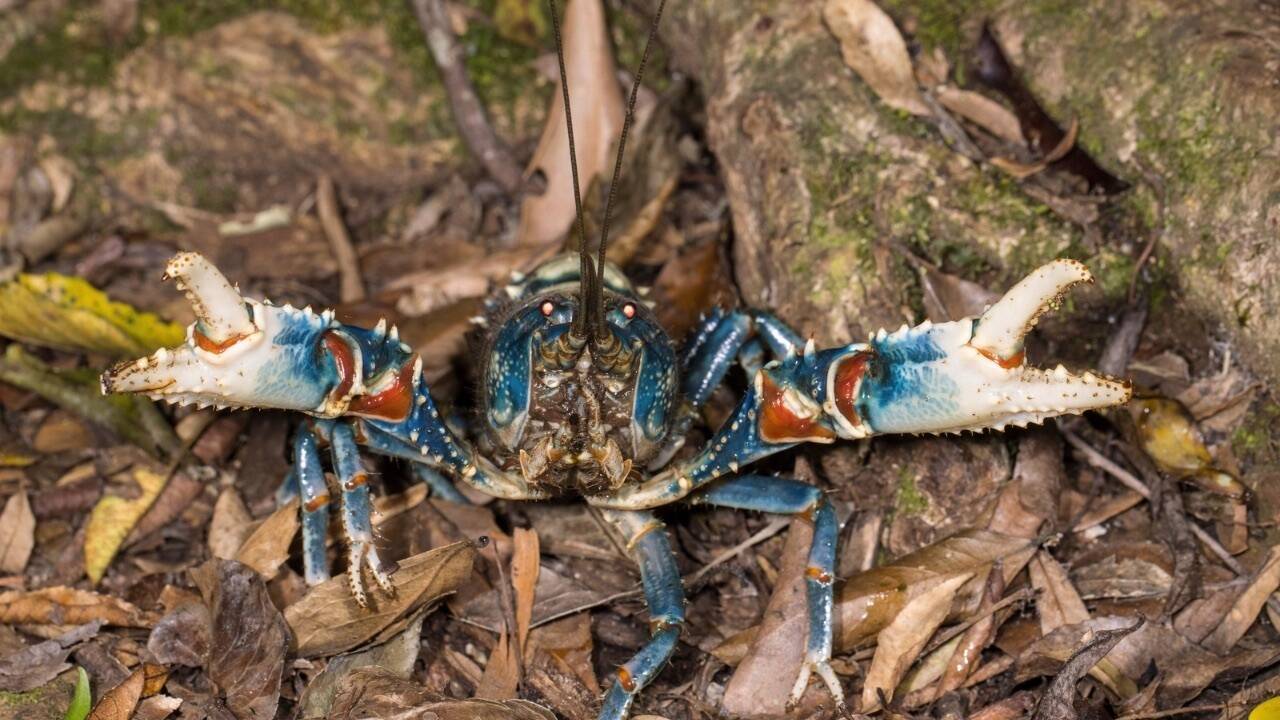
Scientists scooped 11 endangered alpine spiny crayfish from a Victorian creek after bushfires

Read the original at Times of India ↗
Cite

TOI Science Desk. (2026, November 14). Scientists scooped 11 endangered alpine spiny crayfish from a Victorian creek after bushfires. Times of India. https://timesofindia.indiatimes.com/science/wildlife/scientists-scooped-11-endangered-alpine-spiny-crayfish-from-a-victorian-creek-after-bushfires-in-january-keeping-the-feisty-creatures-apart-in-a-hatchery-months-later-they-are-being-returned-to-their-home-waters/articleshow/135759022.cms

Dated from the outlet's own feed. Check the original for its byline.

Times of India · collected 2026-11-14 · by TOI Science Desk

Quick Summary

Scientists from the Arthur Rylah Institute in Victoria, Australia, rescued 11 endangered alpine spiny crayfish from a creek near Lucyvale in January 2026, following bushfires that threatened their survival. The crayfish, kept in captivity at the Snobs Creek conservation hatchery to await improved water quality, had to be housed separately due to aggressive behavior towards each other. The rescue operation aims to protect the species from further environmental disturbances, as the crayfish face significant risks due to their limited distribution.
Written by AI on 2026-11-16, from this article's own text only (the story summary below draws on all the coverage).

AI analysis

Story summary

In January 2026, scientists from the Arthur Rylah Institute in Victoria, Australia, rescued 11 endangered alpine spiny crayfish from a creek near Lucyvale after bushfires threatened their survival. The crayfish, which are particularly vulnerable to environmental disturbances due to their limited distribution, faced a risk of suffocation from debris and sediment entering the waterway. Months after the rescue, the crayfish have been cared for in captivity and are now being reintroduced to their natural habitat. According to Will Sowersby, a senior scientist at the Arthur Rylah Institute, the rescue was crucial not just to remove the crayfish from immediate danger but also to protect the species from potential extinction in certain freshwater areas.

Written for “Scientists Rescue Endangered Crayfish” on 2026-11-17, grounded in this article and the 0 other(s) covering the same event.

Compared with similar articles

Nothing to compare against. No article is close enough to this one for the pipeline to have linked or judged the pair.

Story

Scientists Rescue Endangered Crayfish
Science · 1 article(s) covering the same event.
How this article was measured signals, leaning charts, publisher record, byline, topics and claims

Signals How these are calculated →

Claims extracted
27
sentences that state something as happening or true
Uncertain
19%
5 of 27 hedged ("reportedly", "may", "according to")
Leaning
not political
takes no side on a contested political question
Publisher signals
59/100
Times of India's corrections and hedging, across everything collected from it. Not a measure of accuracy.
Outlets on this story
1
Science
Same framing elsewhere
1
articles that frame the event the way this one does
Analyzed 2026-11-16 · how these are computed

How this is being covered How these are calculated →

Article leaning vs. publisher reliability
Source leaning vs. consistency

Publisher

Times of India · 5179 article(s) · 6 correction(s) detected
Running correction rate · 6 correction(s)

Who wrote this

TOI Science Desk
330 article(s) here · 1 carrying a prediction
The study, conducted by the Beaver Trust and the University of Exeter, confirmed 349 territories and identified 56 more that may be occupied, bringing the total to as many as 405.
Although its external lettered dials could still turn, nobody had managed to find the correct combination since its discovery.
It states that, while they may be small, they are still extremely venomous, and that its experienced reptile team is handling them under the highest safety and care protocols.
Elephants are known for their strong family bonds and complex social relationships, but declining populations may be putting these connections at risk.
Individually, such objects might seem small; together, they provide strong evidence that the outpost was active during the Sui period.
Who knew one animal could change an entire landscape?
The snakes were temporarily brought to the San Francisco Zoo, where they could give birth in a controlled environment.
Scientists have drawn a treasure map of where fossils of ancient sea life may still be waiting to be found.
The newly excavated channels, along with additional connections to Darby Creek, are expected to improve tidal circulation overall.
We have often wondered what animals might be trying to tell us, whether it is a dog barking at the postman or birds calling out to one another from the trees.
Wire or desk byline, not an individual reporter.
Also by TOI Science Desk
Nothing else under this byline is closely related to this article, so these are simply their most recent.
All 330 articles by TOI Science Desk →

Topics

ABC News Australia Lucyvale Victoria the Arthur Rylah Institute

Subjects

ABC News ORG · 3× Victoria GPE · 2× the Arthur Rylah Institute ORG · 2× Australia GPE · 1× Dylan White PERSON · 1× Eildon GPE · 1× Longwood GPE · 1× Lucyvale GPE · 1× Will Sowersby PERSON · 1× the Victorian Fisheries Authority ORG · 1×

Narrative

The rescue was therefore not simply about moving a handful of creatures away from an immediate threat, but also about protecting a vulnerable population whose limited distribution makes it particularly susceptible to environmental disturbances.
framing: assertive · carried by 1 article(s) · first seen 2026-11-16
The concern was that the creatures could suffocate as debris and sediment entered the waterway, affecting the conditions they depended on to survive.

Claims (27 extracted, 5 hedged)

Bushfires can threaten to wipe out an entire wildlife species, let alone one that is already endangered. asserted
that → threaten → species
This is a concern that has prompted many conservationists and scientists to take part in rescue operations. asserted
that → prompt → operations
In Victoria, Australia, a group of scientists rushed to the rescue of the endangered alpine spiny crayfish during the January 2026 bushfires, rescuing a total of 11 from a creek. asserted
group → rush → creek
Months later, after being cared for in captivity, the creatures are finally making their way back to the waters they call home. asserted
they → care → waters
According to an ABC News report dated November 7, 2026, scientists from the Arthur Rylah Institute rescued 11 of these crayfish from a creek near Lucyvale in the immediate aftermath of the fires. uncertain
scientists → accord → fires
The concern was that the creatures could suffocate as debris and sediment entered the waterway, affecting the conditions they depended on to survive. uncertain
they → suffocate → conditions
Will Sowersby, a senior scientist at the Arthur Rylah Institute, explained to ABC News that without intervention, the species could disappear from some of these freshwater areas. uncertain
species → explain → areas
The rescue was therefore not simply about moving a handful of creatures away from an immediate threat, but also about protecting a vulnerable population whose limited distribution makes it particularly susceptible to environmental disturbances. asserted
it → move → disturbances
Once rescued, the 11 crayfish were transported to the Snobs Creek conservation hatchery near Eildon, which is operated by the Victorian Fisheries Authority. asserted
which → rescue → Authority
They remained there while scientists waited for the water quality in their natural habitat to improve sufficiently for their return. asserted
quality → remain → return
However, keeping them alive in captivity presented an entirely different set of challenges. asserted
alive → keep → challenges
This was the first time alpine spiny crayfish had been taken into captivity, meaning hatchery staff were learning about their behaviour and care requirements as they went along. asserted
they → take → requirements
Dylan White, a senior conservation hatchery officer at Snobs Creek, told ABC News that the crayfish had to be housed separately because they would attack each other if kept together. asserted
they → tell → other
It meant that the hatchery team had to make individual arrangements for the rescued animals, keeping them apart throughout their stay. asserted
team → mean → stay
While the creatures were no longer facing the immediate threat of deteriorating water conditions in the creek, their temporary home still required careful attention to ensure they remained healthy until they could be returned. uncertain
they → face → attention
Preparing for a future beyond the rescue asserted
Preparing → prepare → rescue
The return of the crayfish comes as the Victorian High Country gradually recovers from the Walwa-River Road bushfire, which burned approximately 121,000 hectares. asserted
which → come → hectares
Although the immediate danger has passed for the rescued animals, scientists are continuing to monitor the waterways and the surrounding habitat to understand how the species will fare in the months ahead. asserted
species → pass → months
Scientists hope that alpine spiny crayfish could eventually become part of a captive breeding programme at the Snobs Creek hatchery. uncertain
crayfish → hope → hatchery
The hatchery itself has become an important centre for the rescue and care of vulnerable freshwater species following natural disasters. asserted
hatchery → become → disasters
Its staff have also looked after other animals affected by Victoria's summer bushfires, including Macquarie perch and trout cod rescued from Seven Creek following the Longwood bushfire. asserted
staff → look → bushfire
More than 100 of these fish have already been released back into the wild. asserted
100 → release → wild
However, the work at the hatchery is not without its challenges for the staff, as each rescue brings a different set of requirements and, sometimes, the need to learn how to care for a species that has never been kept in captivity before. asserted
that → bring → captivity
For the alpine spiny crayfish, the journey from a fire-affected creek to a conservation hatchery and eventually back to their home waters has been an atypical one. asserted
journey → affect → waters
Their rescue also offers a reminder that the consequences of a bushfire are not always immediately visible. asserted
consequences → offer → bushfire
Beneath the surface of a stream, entire populations of small and often overlooked creatures can be at risk, making the work of protecting them just as important as restoring the landscapes we see above ground. asserted
we → overlook → ground
With the country at risk of facing more natural disasters as climate change progresses, protection and rescue operations for species, particularly those already at a high risk of extinction, have become a need of the hour. asserted
operations → face → hour

Give feedback · no sign-in needed

No sign-in needed for now. Your note is sent without a name, so it cannot be answered.

History Support