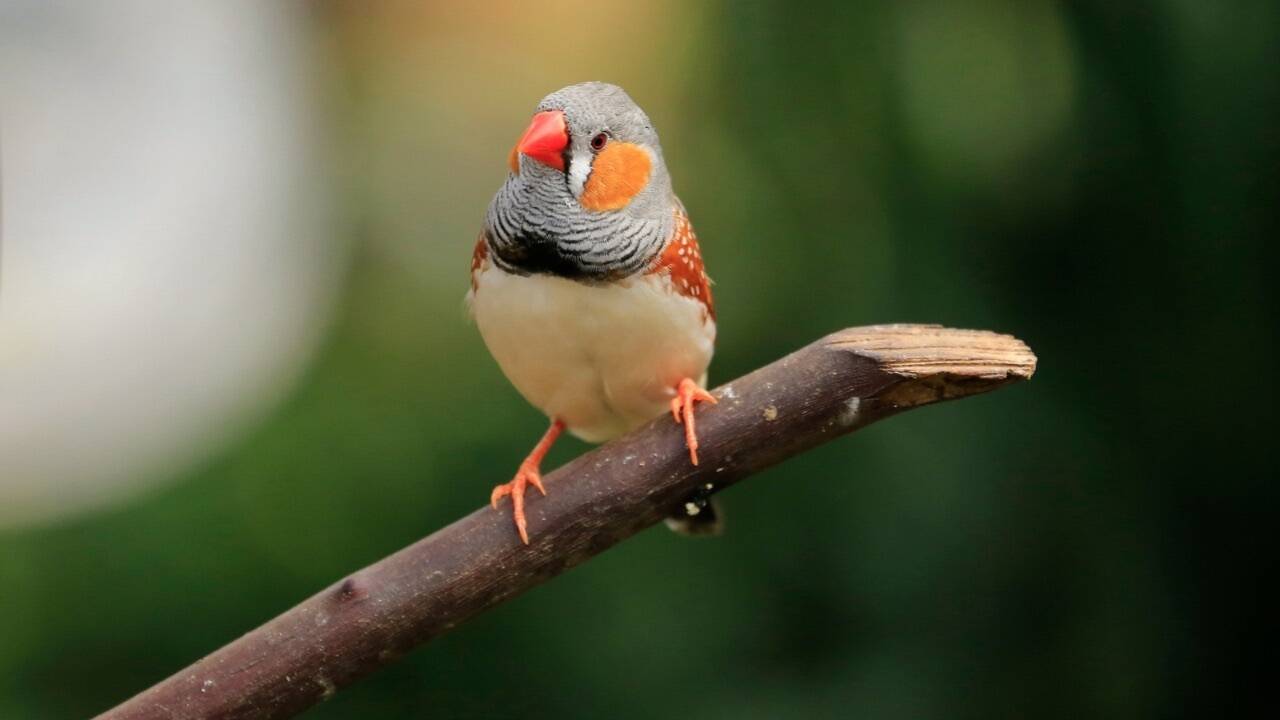
What if the birds chirping outside your window were actually having a conversation, and you were simply missing out on all the gossip?
asserted
you → chirp → gossip
We have often wondered what animals might be trying to tell us, whether it is a dog barking at the postman or birds calling out to one another from the trees.
uncertain
it → wonder → trees
While humans have long been fascinated by birdsong, figuring out what these sounds actually mean has been quite a task.
asserted
sounds → fascinate → what
Now, a scientist's work at the University of California, Berkeley, could be bringing us closer to understanding what birds are actually trying to tell us.
uncertain
birds → bring → us
Dr Julie Elie, an animal behaviour researcher and associate project scientist at Berkeley, has spent more than a decade studying zebra finches, observing their behaviour and keeping meticulous records of their vocalisations.
asserted
Elie → spend → vocalisations
Today, this work has led to the development of an acoustic catalogue of their calls,
identifying 11 distinct types of vocalisations that the birds use in different social situations.
asserted
birds → lead → situations
Her findings suggest that zebra finches may actually recognise the meanings associated with these calls, something that could transform how researchers have approached the subject of communication between humans and other species.
uncertain
researchers → suggest → humans
Listening to what the birds have to say
Zebra finches are small, sociable songbirds native to Australia, recognised by their distinctive markings and their rather vocal nature.
asserted
finches → listen → markings
Young male zebra finches, for instance, learn their songs by listening to adult birds, a process that has drawn comparisons with how humans acquire speech.
asserted
humans → learn → speech
However, Elie's work has focused on something slightly different.
asserted
work → focus → something
Instead of focusing only on the elaborate songs produced by male birds, she has paid heed to the everyday calls that zebra finches use to communicate with their mates.
asserted
finches → focus → mates
These sounds can indicate hunger, distress, danger, aggression, or simply express the need to maintain contact with another bird.
asserted
sounds → indicate → bird
According to a
UC Berkeley report dated November 4, 2025, Elie spent time observing zebra finches in Australia before continuing her research in the lab.
uncertain
Elie → accord → lab
The work involved examining thousands of recordings, with the researchers building a collection of approximately 8,000 calls from dozens of birds.
asserted
researchers → involve → birds
By studying their behaviour alongside their vocalisations, she slowly began identifying patterns between the sounds they made and the situations in which they were heard.
asserted
they → study → which
When birds find meaning in their calls
This experiment was designed so that the birds had to distinguish between different vocalisations, rather than simply react to familiar sounds.
asserted
birds → find → sounds
If they recognised the call-type associated with the reward, they would listen to it until the recording ended, while interrupting recordings of other calls and moving on to the next one.
asserted
recording → recognise → one
The birds were able to learn the categories, giving researchers a way to check whether their interpretation of the vocal repertoire was actually recognised by the animals.
asserted
interpretation → learn → animals
However, it was the mistakes made during these experiments that offered an even more interesting finding.
asserted
that → make → finding
The researchers noticed that the birds were more likely to confuse calls that carried similar meanings, even when the sounds themselves were quite different.
asserted
sounds → notice → meanings
On the other hand, calls that sounded similar but served different purposes were less likely to be confused.
asserted
that → sound → purposes
For example, the zebra finches sometimes mistook two types of contact calls used to maintain communication over different distances.
asserted
finches → mistake → distances
Despite this, they were less likely to confuse a contact call with an alarm call, even when the two sounded acoustically similar.
asserted
two → confuse → call
, these findings suggest that the birds organise their calls according to meaning and have a mental representation of what the different vocalisations communicate.
uncertain
vocalisations → suggest → what
In June 2026, she received the Coller-Dolittle Prize for Two-Way Interspecies Communication, a US$100,000 award recognising promising work towards developing ways for humans and animals to communicate.
asserted
humans → receive → ways
According to The Guardian's report dated June 26, 2026, her work has brought researchers closer to exploring the possibility of meaningful exchanges between different species.
uncertain
work → accord → species
Elie believes that birds could be among the first animals with which humans might achieve such an exchange.
uncertain
humans → believe → exchange
However, she is also careful about what this would actually mean.
asserted
this → mean → what
Being able to recognise individual calls is only one part of communication.
asserted
Being → recognise → communication
Researchers would also need to understand how these calls are combined, how birds respond to one another, and how their body movements tie into this vocal exchange.
asserted
movements → need → exchange
Therefore, this is still a long journey before humans can actually claim to talk to birds.
uncertain
humans → claim → birds
 The Aporia