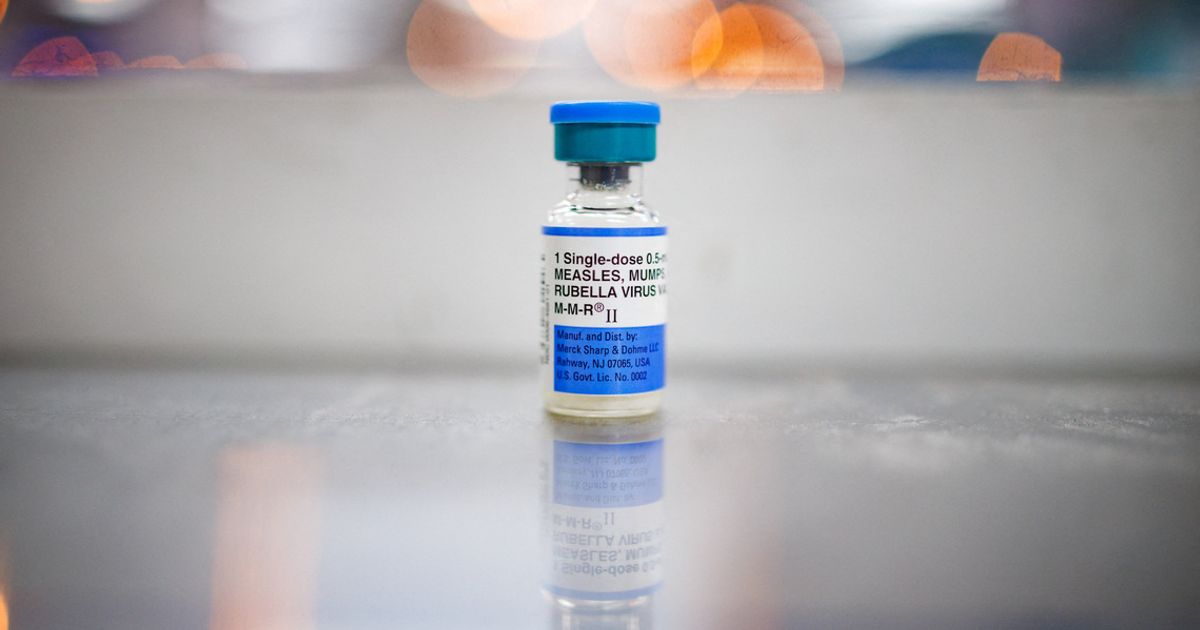
Photo via The Straits Times

Drug-resistant infections putting modern medicine at risk, WHO warns

Read the original at The Straits Times ↗
Cite

The Straits Times. (2026, November 16). Drug-resistant infections putting modern medicine at risk, WHO warns. The Straits Times. https://www.straitstimes.com/world/drug-resistant-infections-putting-modern-medicine-at-risk-who-warns

Dated from the outlet's own feed. Check the original for its byline.

The Straits Times · collected 2026-11-16 · by The Straits Times

Quick Summary

No summary of this article yet; the story summary below covers the event.

AI analysis

Story summary

The World Health Organization (WHO) warned on November 16, 2026, that antimicrobial resistance (AMR) is threatening the future of modern medicine. Despite progress in combating drug-resistant bacteria, WHO officials stated that efforts to prevent, diagnose, and appropriately use antibiotics are still insufficient to meet global targets. Jean-Pierre Nyemazi, interim head of AMR at the WHO, noted that the widespread use of antibiotics in human health, animal husbandry, and food production has accelerated the problem, making AMR one of the leading causes of infectious-disease deaths worldwide. In 2021 alone, AMR was directly responsible for more than 1 million deaths and linked to some additional deaths.

Written for “Drug-resistant Infections Warning” on 2026-11-18, grounded in this article and the 0 other(s) covering the same event.

Compared with similar articles

This article reads unscored and hedges 5% of its claims. Each row says how that neighbour differs.
Al Jazeera
Hedges 2 of 15 claims Outlet record 60/100
“While both articles discuss WHO warnings about antimicrobial resistance on the same day, they differ in their focus, with one emphasizing the threat to modern medicine and the other specifically mentioning the prediction of 39 million deaths over 25 years.”
Daily Mail
Leans strongly left Hedges 2 of 31 claims Outlet record 70/100
“While both articles discuss antibiotic resistance and its dangers, they describe different specific warnings and contexts: WHO's global warning and Australia-specific concerns including a report and trials.”
ABC News (AU)
Hedges 1 of 25 claims Outlet record 67/100
“While both articles discuss warnings about antibiotic resistance, they cover different aspects and focus on different geographical regions, suggesting separate coverage rather than the same specific event.”

Story

Drug-resistant Infections Warning
Health · 1 article(s) covering the same event.
How this article was measured signals, leaning charts, publisher record, byline, topics and claims

Signals How these are calculated →

Claims extracted
20
sentences that state something as happening or true
Uncertain
5%
1 of 20 hedged ("reportedly", "may", "according to")
Leaning
not political
takes no side on a contested political question
Publisher signals
64/100
The Straits Times's corrections and hedging, across everything collected from it. Not a measure of accuracy.
Outlets on this story
1
Health
Same framing elsewhere
1
articles that frame the event the way this one does
Analyzed 2026-11-16 · how these are computed

How this is being covered How these are calculated →

Article leaning vs. publisher reliability
Source leaning vs. consistency

Publisher

The Straits Times · 5423 article(s) · 7 correction(s) detected
Running correction rate · 7 correction(s)

Who wrote this

The Straits Times
3768 article(s) here · 1 carrying a prediction
“We will always protect our national interests and ensure that there are guardrails in place,” she added, when asked about the prospect of Chinese automakers stepping up investment in production plants in Canada as well as in the North American country’s energy sector.
Trump then pointed to Takaichi, saying, “And she may be even tougher.”
Rubio says no imminent threat to Washington after report of possible Iranian dirty bomb plot AI generated MANILA/ WASHINGTON – US Secretary of State Marco Rubio said on Nov 18 he did not think there was any imminent threat to the US capital, when asked about a CNN report citing US intelligence assessments on the possibility that Iran may be planning an attack involving a so-called dirty bomb in Washington.
Instantly recognisable for the red spots it generates on an infected person’s body, measles also causes fever, respiratory symptoms, and in some cases more serious complications such as pneumonia and brain inflammation, which can lead to severe long-term health problems or even death. ‘The worst illness’ Jones said measles patients are usually “extremely miserable”, adding “it is often the worst illness the child will have ever gone through in their life”.
They also argued the ballot was designed to distinguish the two Sullivans as much as possible and that Alaska’s ranked choice voting process would allow any voters who might be confused to rank them.
CNN cited seven anonymous US officials as saying Iran was plotting how to target senior administration figures with a bomb laced with chemical or radioactive material, though they stopped short of saying Iran planned to carry out such an attack. “If there is (such a threat), they will pay a price the likes of which no other country has ever paid before,” Trump said.
The US has even asked Kyiv whether it would cede its Donbas region to Russia in exchange for membership in the NATO military alliance.
Other recent developments may further encourage international applicants.
The Java discovery may be Calif’s most serious yet, one that could enable a hacker to gain remote access to sensitive internal systems.
China warned the US it would retaliate if Washington proceeds with curbs on remote access to advanced chips, while urging the Trump administration to resolve differences through dialogue.
Also by The Straits Times
Nothing else under this byline is closely related to this article, so these are simply their most recent.
All 3768 articles by The Straits Times →

Topics

AMR GENEVA WHO World Health Organization

Subjects

WHO ORG · 10× AFP ORG · 1× AMR ORG · 1× GENEVA GPE · 1× Jean-Pierre Nyemazi PERSON · 1× Nyemazi PERSON · 1× Pravasha Prakash PERSON · 1× Sylvia Bertagnolo PERSON · 1× World Health Organization ORG · 1×

Narrative

The widespread use of antibiotics in human health, animal husbandry and food production has accelerated the problem, making AMR one of the leading causes of infectious-disease deaths worldwide. “Antimicrobial resistance is widespread and threatening the future of modern medicine,” said Jean-Pierre Nyemazi, interim head of antimicrobial resistance at the WHO.
framing: assertive · carried by 1 article(s) · first seen 2026-11-16
“Without testing, clinicians must treat without knowing the cause of infection or which antibiotic will work,” said Sylvia Bertagnolo, head of surveillance for AMR at the WHO.
2026-11-16 · The Straits Times
Drug-resistant infections putting modern medicine at risk, WHO warns · assertive framing

Claims (20 extracted, 1 hedged)

Drug-resistant infections putting modern medicine at risk, WHO warns AI generated asserted
WHO → put → risk
The spread of antimicrobial resistance (AMR) is threatening modern medicine despite progress in combating drug-resistant bacteria, senior World Health Organization (WHO) officials warned on Nov 16. asserted
officials → threaten → Nov
WHO officials said countries have expanded efforts to tackle AMR, but warned that progress in prevention, diagnosis and the appropriate use of antibiotics remains too slow to meet global targets. asserted
progress → say → targets
Bacteria have long evolved resistance to medicines designed to kill them. asserted
Bacteria → evolve → them
The widespread use of antibiotics in human health, animal husbandry and food production has accelerated the problem, making AMR one of the leading causes of infectious-disease deaths worldwide. “Antimicrobial resistance is widespread and threatening the future of modern medicine,” said Jean-Pierre Nyemazi, interim head of antimicrobial resistance at the WHO. asserted
Nyemazi → accelerate → WHO
“Unlike Covid-19, which was very visible, drug-resistant infections have been taking people’s lives for years without us noticing it and raising the alarm as we should,” said Nyemazi. asserted
Nyemazi → take → alarm
In 2021 alone, AMR was directly responsible for more than one million deaths and linked to some 4.7 million others, said the agency. asserted
agency → link → others
A WHO investigation in 183 countries into the progress of the fight against antimicrobial resistance in 2026 revealed that nearly nine countries in 10 had a national action plan against the phenomenon. asserted
countries → reveal → phenomenon
But only 42 countries – less than one in five – said they had a plan that was financed, implemented and monitored, said Pravasha Prakash, an AMR technical officer with the global health agency. asserted
Prakash → say → agency
“Countries are moving forward in every step, but progress still needs to be speeded up to reach the 2030 targets,” she added. asserted
she → move → targets
Poor access to diagnostics One of the main weaknesses remains access to diagnostics. asserted
One → remain → diagnostics
Only 36% of countries had a national reference laboratory capable of testing for resistance in all bacteria and fungi monitored by the WHO, well short of the 80% target set for 2030. asserted
% → have → 2030
“Without testing, clinicians must treat without knowing the cause of infection or which antibiotic will work,” said Sylvia Bertagnolo, head of surveillance for AMR at the WHO. asserted
Bertagnolo → test → WHO
The latest global surveillance data show that in 2023, one in every six laboratory-confirmed bacterial infections flagged to the WHO was resistant to antibiotics used to treat it. asserted
infections → show → it
As a result, the WHO has announced the release of two new tools designed to help countries strengthen their diagnostic capacities. asserted
countries → announce → capacities
The first defines the tests that should be available at every level of the healthcare system, from primary care centres to referral hospitals. asserted
that → define → hospitals
The second compiles 73 laboratory procedures, from sample collection to the identification of pathogens and antibiotic susceptibility testing. asserted
second → compile → pathogens
The WHO has estimated that AMR could cause some 39 million deaths between now and 2050. uncertain
AMR → estimate → 2050
There needed to be improved use of existing antibiotics, at a time when the development of new treatments is failing to keep pace with the rise of resistance, it said. asserted
it → need → resistance
Infection prevention, vaccination, improved access to water and sanitation, and the appropriate use of antimicrobials are the main levers to combat the issue, it added. asserted
it → combat → issue

Give feedback · no sign-in needed

No sign-in needed for now. Your note is sent without a name, so it cannot be answered.

History Support