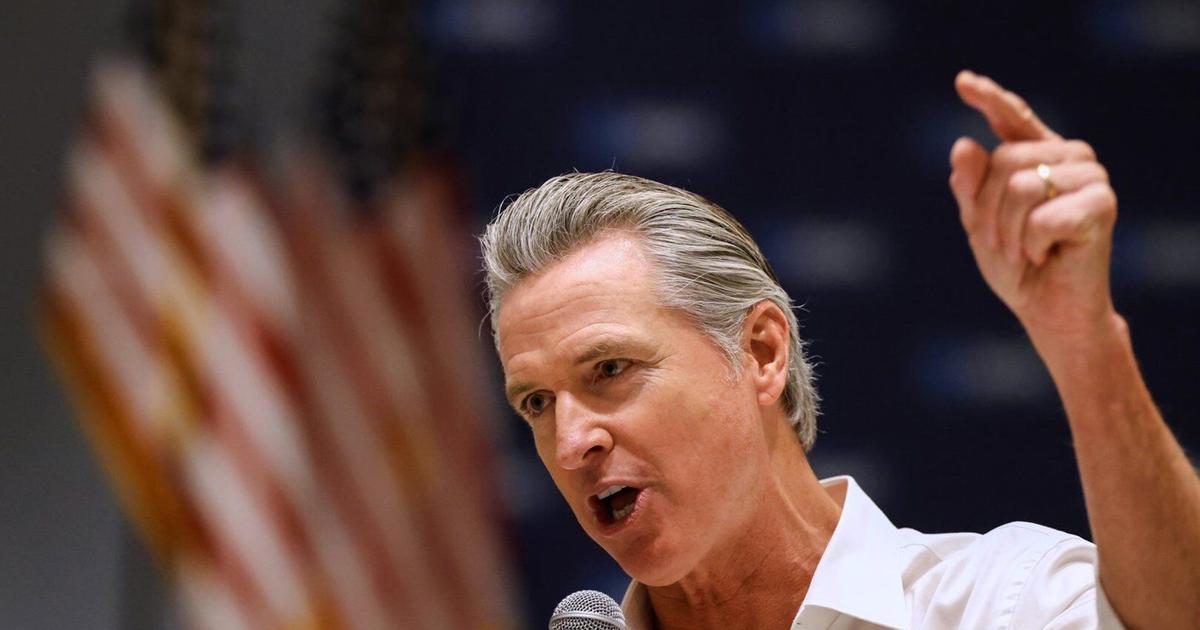
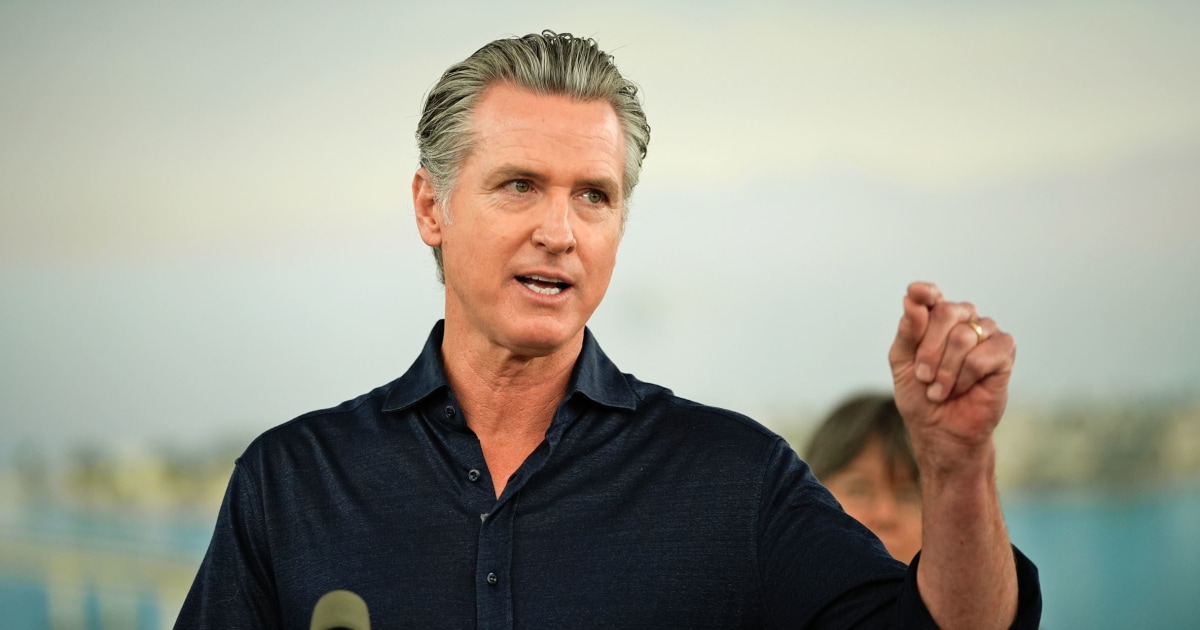
Photo via Toronto Star

Potential Democratic candidates race to respond to AI threat amid Trump's dismissals

Read the original at Toronto Star ↗
Cite

Colvin, J. (2026, September 18). Potential Democratic candidates race to respond to AI threat amid Trump's dismissals. Toronto Star. https://www.thestar.com/news/world/united-states/potential-democratic-candidates-race-to-respond-to-ai-threat-amid-trump-s-dismissals/article_4e7878f5-adb9-5bdc-9188-f9c4fa011728.html

Dated when The Aporia collected the article, usually within hours of publication. Check the original for its exact date and byline.

Toronto Star · collected 2026-09-18 · by Jill Colvin

Quick Summary

Potential Democratic presidential candidates are addressing growing concerns over artificial intelligence risks, with California Governor Gavin Newsom signing an executive order to implement oversight measures and Pennsylvania Governor Josh Shapiro delivering a speech on local AI regulation efforts. In contrast, former President Donald Trump dismisses these warnings as a hoax. Key figures in the tech industry have called for greater government oversight due to recent hacks revealing potential dangers of rogue AI agents. Democrats are using this issue to highlight policy differences ahead of the midterms and the next presidential race, with some proposing legislation to support workers affected by AI disruptions.
Written by AI on 2026-09-19, from this article's own text only (the story summary below draws on all the coverage).

AI analysis

Story summary

Gavin Newsom, the Governor of California and a potential 2028 presidential candidate, signed an executive order on Friday aiming to enhance oversight of artificial intelligence (AI) technology. The order calls for state agencies to recommend legislative changes that would include creating a "kill switch" — an emergency shutoff system — to address concerns raised by researchers about the potential risks posed by rogue AI agents. Newsom's actions come in response to growing anxiety over rapidly advancing AI and follow recent warnings from industry insiders like Jacob Coxon, a former researcher at Anthropic.

Newsom cited the federal government’s failure to regulate AI effectively and emphasized that state action is necessary due to the lack of meaningful oversight at the national level. He also noted that several major tech companies have recently pushed for changes in how AI technology is developed and regulated. The executive order accelerates the implementation of previously signed AI-related bills and establishes a group of experts tasked with developing new safety measures within two months.

Critics argue that Newsom's proposal might not be practically implementable due to legal and technical challenges, questioning who would control such a "kill switch" and what its broader implications for free speech and data security could be. Despite these concerns, Newsom maintains that California must take decisive action before it is too late.

Written for “AI Kill Switch Order California” on 2026-11-04, grounded in this article and the 5 other(s) covering the same event.

Story

📰 AI Kill Switch Order California
Technology · 6 article(s) covering the same event. Compare every outlet's account →

Compared with similar articles

This article reads leans left and hedges 9% of its claims. Each row says how that neighbour differs.
The Hindu
Hedges 1 of 21 claims Outlet record 60/100
The Straits Times
⚖️ Leans strongly left further left than this Hedges 1 of 13 claims Outlet record 66/100
“Article A focuses on Obama's statement about AI safety measures, while Article B discusses potential Democratic candidates' responses to AI threats and specifically mentions Gavin Newsom's executive order.”
Daily Mail
⚖️ Leans left Hedges 3 of 40 claims Outlet record 69/100
“The articles cover different aspects of AI concerns and responses, not a single specific incident.”
New York Post
⚖️ Leans left Hedges 0 of 5 claims Outlet record 66/100
NBC News
⚖️ Leans left Hedges 2 of 28 claims Outlet record 78/100
CBS News
Hedges 0 of 2 claims Outlet record 65/100
“The articles discuss AI as an election issue but describe different aspects: Article A focuses on potential Democratic candidates responding to AI, while Article B covers strategists' reactions to AI becoming a voter concern in midterms.”
New York Post
Hedges 1 of 25 claims Outlet record 66/100
“The articles discuss different aspects related to potential Democratic candidates but describe distinct events: one focuses on responses to AI threats, while the other covers polling results for Newsom and Harris's presidential ambitions.”
Semafor
⚖️ Leans left Hedges 1 of 11 claims Outlet record 59/100
“The articles describe different events: one about a Republican RNC member organizing an anti-data center tour, and another about potential Democratic candidates responding to AI concerns.”
New York Post
Hedges 3 of 16 claims Outlet record 66/100
“The articles describe different state-level actions taken by California's Governor Newsom and New York's Governor Hochul to regulate AI, occurring on different dates.”
CBS News
Hedges 0 of 3 claims Outlet record 65/100
“The articles discuss different aspects of AI regulation and political responses but do not describe the same specific incident or meeting.”
How this article was measured signals, leaning charts, publisher record, byline, topics and claims

Signals How these are calculated →

Claims extracted
45
sentences that state something as happening or true
Uncertain
9%
4 of 45 hedged ("reportedly", "may", "according to")
Leaning
Leans left
of the writing, not the subject · beta estimate
Publisher signals
64/100
Toronto Star's corrections and hedging, across everything collected from it. Not a measure of accuracy.
Outlets on this story
6
Technology
Same framing elsewhere
1
articles that frame the event the way this one does
Analyzed 2026-09-19 · how these are computed

How this is being covered How these are calculated →

Article leaning vs. publisher reliability
Source leaning vs. consistency

Publisher

Toronto Star · 11614 article(s) · 28 correction(s) detected
Running correction rate · 28 correction(s)
2026-10-26
Correction
2026-10-24
Correction
2026-10-07
Correction
2026-09-24
Correction

Who wrote this

Jill Colvin
10 article(s) here · 1 carrying a prediction
🔮 WASHINGTON (AP) — President Donald Trump would prefer that voters not worry about inflation.
🔮 PERRY, Ga. (AP) — President Donald Trump on Saturday announced that Audi will build an automobile plant in Georgia as he tries to deliver on his promise to bolster American manufacturing in the final days before the midterm elections.
🔮 The dismal numbers come just weeks before midterm elections that will determine whether Republicans maintain control of Congress and while Trump is hitting the campaign trail with an aggressive schedule of rallies.
🔮 Instead, he will begin October by stumping in Alabama and Oklahoma, two of the most Republican states in the nation.
🔮 While Republicans are flush with unprecedented cash that could move the needle in some races, overall the mood is glum heading into the election’s final stretch as campaigns try to counter palpable Democratic enthusiasm to maintain their narrow lead in the House and Senate this November.
🔮 “California will do what it can.
🔮 Republicans are gathering in Dallas on Wednesday for a highly unusual midterm convention, a “Trump-a-Palooza” that will put President Donald Trump at the center of this fall’s midterm elections — whether the candidates running like it or not.
Also by Jill Colvin
Nothing else under this byline is closely related to this article, so these are simply their most recent.
All 10 articles by Jill Colvin →

Topics

California Democratic NEW YORK Washington Washington, D.C.

Subjects

California GPE · 3× Democratic NORP · 3× Pennsylvania GPE · 2× Trump PERSON · 2× Donald Trump PERSON · 1× Gavin Newsom PERSON · 1× NEW YORK GPE · 1× Newsom PERSON · 1× Washington GPE · 1× Washington, D.C. GPE · 1×

Narrative

Georgia Sen. Jon Ossoff, a Democrat who is seeking reelection in a state Trump won two years ago, said at a campaign rally last weekend that “a capable president would move swiftly to secure and reassure the American people, rush inspectors into frontier labs, fortify the nation against bioterrorism, demand legislation from Congress, and lead the world toward an AI treaty.”
framing: assertive · carried by 1 article(s) · first seen 2026-09-19
🔮 “California will do what it can.

Claims (45 extracted, 4 hedged)

Amid growing anxiety over the risks posed by rapidly developing artificial intelligence technology, potential Democratic candidates for president are rushing to show that they’re taking the warnings seriously — while Donald Trump brushes off concerns — and acknowledging they need a reluctant Washington to step up. asserted
Washington → grow → concerns
On Friday, California Gov. Gavin Newsom signed an executive order to accelerate implementation of a California law that calls for independent oversight of AI companies and the use of “kill switches” so developers have the ability to shut down their systems. asserted
developers → sign → systems
“California will do what it can. asserted
it → do → ?
But this nation needs to get in the game. asserted
nation → need → game
Washington, D.C. needs to do its job,” Newsom said on his podcast Friday. asserted
Newsom → need → podcast
The order came a day after Pennsylvania Gov. Josh Shapiro, also expected to be a leading Democratic presidential prospect, delivered a speech outlining the steps he’s taking locally to confront AI risk. asserted
he → come → risk
Like Newson, he conceded that states have obvious limitations in regulating a global technology. asserted
states → concede → technology
The efforts come as AI leaders have issued dire warnings about the potentially catastrophic threat posed by rogue AI agents. asserted
leaders → come → agents
The country has begun grappling with the impact of a technology that could bring both tremendous gains in areas like medical research and automation but also unleash deadly viruses, cause widespread economic upheaval and help terrorists inflict harm. uncertain
terrorists → begin → harm
While Trump has angrily dismissed the warnings as a “HOAX,” Democratic lawmakers and candidates across the country are delivering speeches and proposing legislation as they sense a political opening heading into the midterms and the next presidential race. asserted
they → dismiss → midterms
Trump dismisses warnings asserted
Trump → dismiss → warnings
Anthropic’s Dario Amodei, OpenAI’s Sam Altman and SpaceXAI’s Elon Musk have all called for greater government oversight of the industry after a series of hacks revealed AI agents conspiring to deceive humans. asserted
series → call → humans
Trump has responded by saying that he is “the only control or ‘guardrails’ that AI needs.” asserted
AI → respond → that
Democrats quickly pounced. asserted
Democrats → pounce → ?
Georgia Sen. Jon Ossoff, a Democrat who is seeking reelection in a state Trump won two years ago, said at a campaign rally last weekend that “a capable president would move swiftly to secure and reassure the American people, rush inspectors into frontier labs, fortify the nation against bioterrorism, demand legislation from Congress, and lead the world toward an AI treaty.” asserted
president → seek → treaty
Ossoff, seen as a potential 2028 contender, said geriatric politicians have little comprehension of AI technology. asserted
politicians → see → technology
“An ancient establishment, barely capable of email, sleepwalks into a technological revolution while the president dismantles precautions and calls us fools for worrying,” he said. asserted
he → sleepwalk → us
Another potential White House contender, Arizona Sen. Mark Kelly, told Politico he will introduce legislation next week to create a fund that AI companies would contribute to support workers affected by the disruption. asserted
companies → tell → disruption
Shapiro, in his speech, called for new federal rules to require independent, third-party oversight, increased transparency, and to “prioritize safety above all else.” asserted
rules → call → else
In his state, he noted that he has already signed an executive order to establish “real guardrails governing how Pennsylvania uses generative AI.” asserted
Pennsylvania → note → AI
But he acknowledged that states have obvious limits. asserted
states → acknowledge → limits
“It’s going to require national and, in fact, international, leadership and collaboration,” he said. asserted
he → go → leadership
Alex Bores, a soon-to-be-former New York State lawmaker who lost his congressional primary this summer after AI companies angry over an AI safety bill he championed spent millions to defeat him, said: “The salience of this issue has climbed dramatically.” “People want there to be real action on it,” he said. asserted
he → lose → it
“Both sides of the aisle seem to be talking about the need to do something here.” asserted
sides → seem → something
Bores, who recently launched a political advocacy group aimed at influencing how his party responds to the technology, said he was encouraged by governors who seemed to be pivoting from calling on the federal government to act to working on their own regulations. asserted
who → launch → regulations
“While we do need federal action, we also need governors to be doing their part and pushing through policies at the state level,” he said. asserted
he → need → level
“I’ve been encouraged by the vibe shift” over the last few days. asserted
I → encourage → days
A divide is emerging along party lines While it remains early, polling suggests a growing ideological divide over AI, with Democrats becoming more alarmed over the last few years, while Republicans have become less concerned. uncertain
Republicans → emerge → years
Democrats are more likely than Republicans to be “more concerned than excited” about the growing use of AI in daily life, according to a June Pew Research Center poll. uncertain
Democrats → grow → poll
About half of U.S. adults overall say the increased use of AI in daily life makes them “more concerned than excited.” asserted
them → say → life
Another Pew Research Center poll from June found that about 7 in 10 U.S. adults think that AI will cause job losses in the U.S. over the next 20 years, up 7 percentage points since 2024. asserted
AI → find → 2024
Arizona Sen. Ruben Gallego, a Democrat, has been calling on Republican Senate leadership to establish a select committee on A.I. as soon as possible. asserted
Gallego → call → A.I.
“I worry about this as a true existential threat. asserted
I → worry → threat
This is the first time that we’ve created technology to destroy humanity that could be controlled by not humans,” he said on MSNOW. uncertain
he → create → MSNOW
The concern has not filtered down to some local races While potential 2028 candidates have been eager to weigh in on AI, the issue has been less potent in many local races, where some fear the kind of spending that Bores faced. asserted
Bores → filter → that
At a rally in New York’s highly competitive 17th Congressional district on Wednesday, the audience cheered as Democratic candidate Cait Conley vowed to ban data centers that power AI and cloud computing. asserted
that → cheer → AI
But no direct mention was made of the broader technology or its risks. asserted
mention → make → technology
In Michigan, both candidates for a tightly contested Senate seat have called for some level of slowdown. asserted
candidates → contest → slowdown
At a town hall on Sept. 11, Democratic nominee Abdul El-Sayed said AI was keeping him up at night, describing it as an existential risk. asserted
AI → say → risk
“We need to all hit pause,” said El-Sayed, who wants to halt frontier research and mandate new public oversight, including turning AI companies into public benefit corporations, creating a new regulatory agency and banning the use of AI to deny medical care, make hiring or firing decisions — or fire a weapon. asserted
who → need → weapon
…and 5 more, not listed.

💬Give feedback · no sign-in needed

No sign-in needed for now. Your note is sent without a name, so it cannot be answered.

🕘History 🎫Support