Photo via Washington Examiner

Socialism on two wheels: The fatal delusion of the city cyclist

Read the original at Washington Examiner ↗
Cite

Levin, M. (2026, September 19). Socialism on two wheels: The fatal delusion of the city cyclist. Washington Examiner. https://www.washingtonexaminer.com/op-eds/4732449/urban-bicycling-traffic-laws-physics/

Dated when The Aporia collected the article, usually within hours of publication. Check the original for its exact date and byline.

Washington Examiner · collected 2026-09-19 · by Michael Levin

Quick Summary

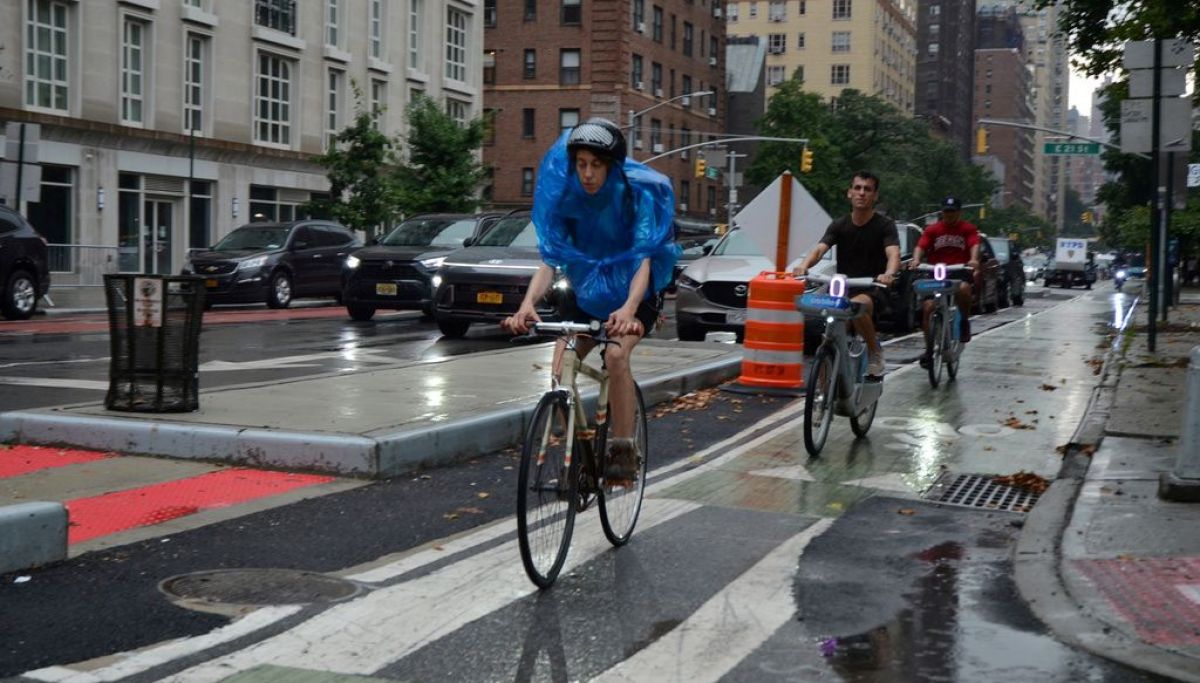
This opinion piece argues that urban cyclists exhibit antisocial and reckless behavior while riding bicycles in cities, suggesting that such actions stem from an anti-establishment mentality akin to socialism. The author claims that cyclists ignore traffic laws, endanger others, and sometimes create their own bike lanes without official approval, increasing risks for all road users. The article cites examples of accidents and fatalities to support its assertion that urban cycling is inherently dangerous and irresponsible.
Written by AI on 2026-09-19, from this article's own text only (the story summary below draws on all the coverage).

AI analysis

Story summary

In an opinion piece published by the Washington Examiner, Michael Levin criticizes urban cyclists, particularly those in cities like Boston and Brooklyn, for dangerous behaviors such as speeding, swerving, running red lights, and going against traffic. According to Levin, drivers often ignore or intentionally intimidate bicyclists by invading their lanes. He argues that this behavior stems from an anti-growth, anti-car mentality similar to socialism, suggesting that urban cyclists may eventually challenge the laws of free enterprise and private property. However, he asserts that such challenges will ultimately fail because they defy the natural order and logic of societal functioning. Levin also mentions that these same cyclists are typically law-abiding citizens who buy products like Girl Scout Cookies when not cycling.

Written for “Cyclist Safety Controversy” on 2026-11-03, grounded in this article and the 0 other(s) covering the same event.

Story

📰 Cyclist Safety Controversy
Politics · 1 article(s) covering the same event.

Compared with similar articles

Nothing to compare against. No article is close enough to this one for the pipeline to have linked or judged the pair.
How this article was measured signals, leaning charts, publisher record, byline, topics and claims

Signals How these are calculated →

Claims extracted
50
sentences that state something as happening or true
Uncertain
6%
3 of 50 hedged ("reportedly", "may", "according to")
Leaning
Leans strongly right
of the writing, not the subject · beta estimate
Publisher signals
70/100
Washington Examiner's corrections and hedging, across everything collected from it. Not a measure of accuracy.
Outlets on this story
1
Politics
Same framing elsewhere
1
articles that frame the event the way this one does
Analyzed 2026-09-19 · how these are computed

How this is being covered How these are calculated →

Article leaning vs. publisher reliability
Source leaning vs. consistency

Publisher

Washington Examiner · 3970 article(s) · 7 correction(s) detected
Running correction rate · 7 correction(s)

Who wrote this

Michael Levin
9 article(s) here · 1 carrying a prediction
🔮 Clip and save this op-ed, because I may be the only person in the free world predicting that in the midterm elections next month, the Republicans are going to win and win big.
🔮 The U.N. was founded in an era of post-World War II optimism, but it didn’t take long before the Soviets and the Chinese communists found a massive constituency of “non-aligned” countries who could be counted on to vote against the U.S. at every turn.
🔮 A seminal moment in my life came when I was 17 and I asked a construction worker how long it would be until the subway project he was working on would be completed.
🔮 One of the tools of trial lawyers is to ask a jury, “How much would you be willing to pay per hour not to be experiencing the pain and suffering of my client, who was injured in that terrible accident?”
2026-09-25 · assertive framing · Why $4 gas is the bargain of a lifetime
🔮 Socialists, who likely overlap with urban bicyclists, may end up repealing the laws of free enterprise and private property.
🔮 It’s not really a speech he’s likely to give, but it would be awesome nonetheless if he did.
🔮 Zoeller thought it would be hilarious if Woods served fried chicken and collard greens.
Also by Michael Levin
America is holding an election. It needs a divorce
2026-11-01 · Washington Examiner
Nothing else under this byline is closely related to this article, so these are simply their most recent.
All 9 articles by Michael Levin →

Topics

Beantown Boston Brooklyn Girl Scout Cookies Williamsburg

Subjects

Beantown GPE · 1× Boston GPE · 1× Brooklyn GPE · 1× Evel Knievel PERSON · 1× John Q. Public PERSON · 1× Michelle Obama PERSON · 1× Norm Macdonald’s PERSON · 1× Spokane GPE · 1× Washington GPE · 1× Williamsburg GPE · 1×

Narrative

Yes, bike lanes indicate where cars mustn’t go, but a) drivers aren’t looking for bicyclists; b) drivers don’t care about bicyclists; and c) drivers occasionally think it’s funny to terrify bicyclists by coming into their lanes.
framing: assertive · carried by 1 article(s) · first seen 2026-09-19
🔮 Socialists, who likely overlap with urban bicyclists, may end up repealing the laws of free enterprise and private property.
2026-09-19 · Washington Examiner
Socialism on two wheels: The fatal delusion of the city cyclist · assertive framing

Claims (50 extracted, 3 hedged)

What piece of everyday athletic gear, applied in urban areas to the buttocks, turns normal people into raging, homicidal, suicidal, antisocial maniacs? asserted
piece → apply → maniacs
Yes, bike lanes indicate where cars mustn’t go, but a) drivers aren’t looking for bicyclists; b) drivers don’t care about bicyclists; and c) drivers occasionally think it’s funny to terrify bicyclists by coming into their lanes. asserted
it → indicate → lanes
When not bicycling, urban riders are normal and law-abiding. asserted
riders → bicycle → ?
They’re your neighbors, your co-workers, your friends. asserted
They → ’re → ?
They pay their taxes. asserted
They → pay → taxes
They buy Girl Scout Cookies. asserted
They → buy → Cookies
They vote. asserted
They → vote → ?
But put them on a 10-speed and they morph from John Q. Public into Evel Knievel. asserted
they → put → Knievel
They speed, they swerve, they run red lights, they go the wrong way, and if you don’t like it, they flip you the bird. asserted
they → speed → bird
They’re … free! asserted
They → ’re → ?
And everyone else has to lump it. asserted
everyone → have → it
The same anti-growth, anti-car, anti-common sense mentality that animates socialism also leads to the anarchistic desire to ride in traffic. asserted
that → animate → traffic
Socialists, who likely overlap with urban bicyclists, may end up repealing the laws of free enterprise and private property. uncertain
who → overlap → enterprise
But they will not succeed at repealing the laws of physics. asserted
they → succeed → physics
To wit: If a vehicle hits a bike, the vehicle wins. asserted
vehicle → hit → bike
And if another bike hits your bike, you both hit the pavement, and then you both get hit by cars. asserted
you → hit → cars
To paraphrase Michelle Obama, physics don’t play. asserted
physics → paraphrase → Obama
Everyone has a story about a friend or relative who got hit or killed while riding a bike on city streets. asserted
who → have → streets
Yet bikers ignore those outcomes. asserted
bikers → ignore → outcomes
Norm Macdonald’s joke comes to mind: “When you see a traffic accident, you think, ‘That could never happen to me.’ uncertain
That → come → me
That’s true, unless you got to the same spot 90 seconds earlier.” asserted
you → ’ → spot
Biking on city streets is crazy enough. asserted
Biking → bike → streets
This means sneaking into the street in the middle of the night and then painting new bike lane lines. asserted
This → mean → lines
A given city’s traffic engineers have declared a street unsafe for bikers. asserted
street → give → bikers
Yet the lines painted by excitable, oppositional, law-defiant bicyclists are actually putting their fellow bikers (and pedestrians) at mortal risk. asserted
lines → paint → risk
In their bravado and foolhardiness, the danger they create means nothing to them. asserted
they → create → them
The latest example is Boston, where you’d think people would be smarter. asserted
people → think → ?
Apparently putting on a bicycle helmet in a city reduces your IQ by at least 50 points. asserted
putting → put → points
A bicyclist was killed recently, and the response of the biking community was to paint new bike lanes. asserted
response → kill → lanes
A city counselor has suggested that those repainted lines, near where a biker had been killed, led to a person riding a scooter getting hit by a car. uncertain
person → suggest → car
You nearly got another person killed. asserted
person → get → ?
But it’s not just Beantown. asserted
it → ’ → ?
In 2009, residents of Williamsburg, a Brooklyn neighborhood, complained that people were getting hurt by speeding bicyclists who had no regard for pedestrians. asserted
who → complain → pedestrians
In response, the city removed the offending bike lane. asserted
city → remove → lane
Urban hipsters immediately repainted the bike lane. asserted
hipsters → repaint → lane
Same thing happened in Spokane, Washington, in 2017. asserted
thing → happen → 2017
The city removed a bike lane and some urban Einstein repainted it. asserted
Einstein → remove → it
Same thing happened in Cleveland, Dallas, Philadelphia, Los Angeles, and (no surprise) San Francisco. asserted
thing → happen → Francisco
It’s not just Americans who are willing to put themselves and their fellow cyclists at risk. asserted
who → ’ → risk
Cyclists in Mexico City, Toronto, and even those Mensa members over in Riga, Latvia painted new lines. asserted
Cyclists → paint → lines
…and 10 more, not listed.

💬Give feedback
🕘History 🎫Support