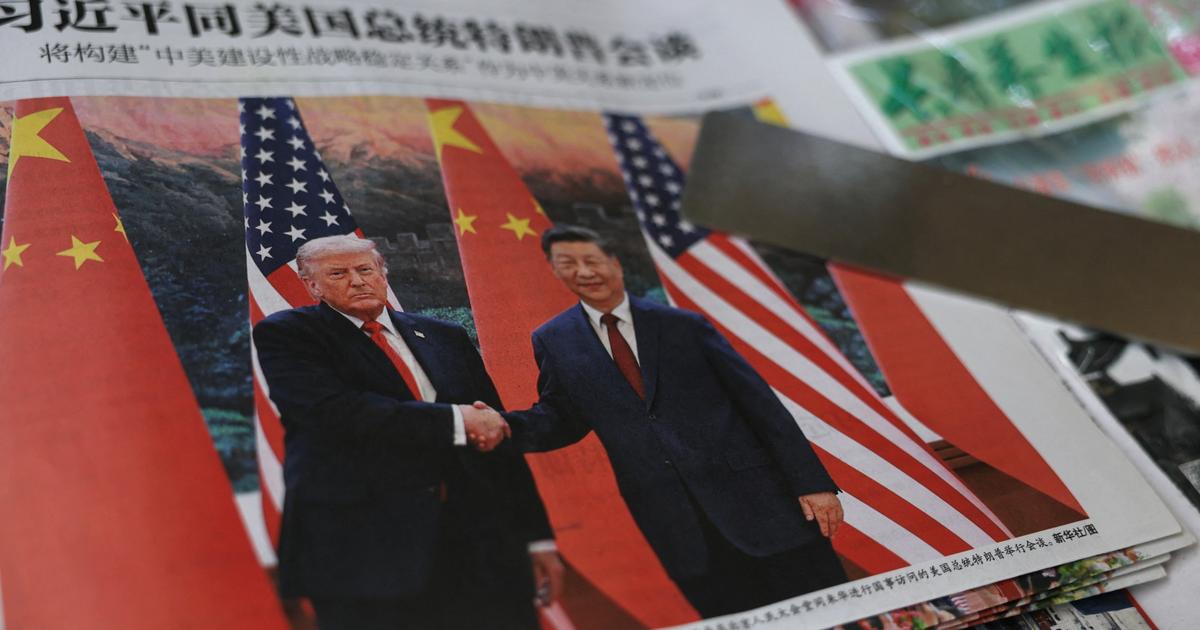
Photo via Fox News

America and China are fighting for the future of AI — chips are the battlefield

Read the original at Fox News ↗
Cite

Ferguson, B. (2026, September 20). America and China are fighting for the future of AI — chips are the battlefield. Fox News. https://www.foxnews.com/opinion/america-china-fighting-future-ai-chips-battlefield

Dated when The Aporia collected the article, usually within hours of publication. Check the original for its exact date and byline.

Fox News · collected 2026-09-20 · by Ben Ferguson

Quick Summary

President Donald Trump and Chinese President Xi Jinping will discuss various topics including trade and technological competition during their meeting this week. A key area of contention is artificial intelligence (AI), where the battle now centers on semiconductor chips rather than just AI models themselves. America leads in advanced AI technology and chip design, but China is rapidly developing its own ecosystem to reduce dependence on American tech, exemplified by Huawei’s expansion into AI chips and computing systems. This shift challenges the U.S.'s previous strategy of restricting Chinese access to sensitive technologies, as it now needs a broader approach to ensure global preference for American technology over China's alternatives.
Written by AI on 2026-09-21, from this article's own text only (the story summary below draws on all the coverage).

AI analysis

Story summary

The upcoming meeting between President Donald Trump and Chinese President Xi Jinping in Washington will cover various topics including trade, tariffs, rare earth minerals, and national security. However, an underlying issue is the competition over artificial intelligence (AI) development. While America leads in advanced AI technology and semiconductor design, China aims to reduce its reliance on American tech through companies like Huawei, which plays a crucial role in this strategy. The U.S. has historically used export controls to restrict China's access to sophisticated semiconductors with military applications to prevent technological advancements that could boost Chinese military capabilities. This competition over AI and chip technology is seen as pivotal for future economic and military power dynamics between the two nations.

Written for “AI Chip War Usa China” on 2026-11-05, grounded in this article and the 0 other(s) covering the same event.

Story

📰 AI Chip War Usa China
Politics · 1 article(s) covering the same event.

Compared with similar articles

This article reads unscored and hedges 3% of its claims. Each row says how that neighbour differs.
Los Angeles Times
Hedges 11 of 73 claims Outlet record 95/100
“While both articles discuss the upcoming meeting between Trump and Xi Jinping regarding artificial intelligence, they describe different aspects of the broader diplomatic context.”
South China Morning Post
Hedges 1 of 5 claims Outlet record 62/100
“While both articles discuss AI discussions between the US and China, Article A specifically covers a meeting in New York before Xi-Trump talks, while Article B is about broader AI competition and agenda for the upcoming summit in Washington.”
South China Morning Post
Hedges 2 of 2 claims Outlet record 62/100
“The articles discuss different aspects of AI chip development; Article A focuses on the broader competition between America and China, while Article B covers Hygon's specific expansion plans.”
South China Morning Post
Hedges 1 of 2 claims Outlet record 62/100
“Article A discusses the broader context of technological competition between America and China regarding AI and chip technology, while Article B mentions China's progress in developing 3-nm chips but also includes other unrelated weekend reads.”
Semafor
Hedges 0 of 4 claims Outlet record 59/100
“The articles discuss related topics of US-China relations regarding AI and technology but describe different aspects and events, not a single identical occurrence.”
Washington Examiner
⚖️ Leans left Hedges 6 of 20 claims Outlet record 69/100
“While both articles discuss a meeting between Trump and Xi Jinping involving AI, they describe different aspects of the event and are not clearly reporting on the exact same occurrence.”
CBS News
⚖️ Leans left Hedges 0 of 2 claims Outlet record 65/100
“While both articles discuss a meeting between President Trump and Chinese President Xi Jinping, they cover different aspects of the event: Article A focuses on Rep. Ro Khanna's call for an international agreement on AI monitoring, while Article B discusses broader technological competition in AI.”
Times of India
Hedges 5 of 23 claims Outlet record 59/100
“The articles describe related developments but different meetings and dialogues involving US-China relations on AI, not the exact same incident.”
Toronto Star
Hedges 8 of 41 claims Outlet record 64/100
“While both articles discuss the potential meeting between Trump and Xi Jinping regarding AI, they do not describe the exact same specific incident or occurrence.”
South China Morning Post
Hedges 0 of 6 claims Outlet record 62/100
“The articles discuss different aspects of AI and trade leading up to a Xi-Trump meeting but do not describe the same specific incident or occurrence.”
How this article was measured signals, leaning charts, publisher record, byline, topics and claims

Signals How these are calculated →

Claims extracted
70
sentences that state something as happening or true
Uncertain
3%
2 of 70 hedged ("reportedly", "may", "according to")
Leaning
withheld
no quote in the article backed the model's score
Publisher signals
68/100
Fox News's corrections and hedging, across everything collected from it. Not a measure of accuracy.
Outlets on this story
1
Politics
Same framing elsewhere
1
articles that frame the event the way this one does
Analyzed 2026-09-21 · how these are computed

How this is being covered How these are calculated →

Article leaning vs. publisher reliability
Source leaning vs. consistency

Publisher

Fox News · 6649 article(s) · 13 correction(s) detected
Running correction rate · 13 correction(s)

Who wrote this

Ben Ferguson
1 article(s) here · 1 carrying a prediction
🔮 When President Donald Trump sits down with Chinese President Xi Jinping in Washington this week, the agenda will be crowded.
The only article under this byline in the corpus.

Topics

America American China Chinese Huawei

Subjects

China GPE · 9× American NORP · 8× America GPE · 7× Chinese NORP · 7× Huawei ORG · 5× Washington GPE · 3× Biden PERSON · 2× Donald Trump PERSON · 1× Xi Jinping PERSON · 1× the United States GPE · 1×

Narrative

That's why the next phase of this competition will be fought over which chips countries buy, which computing systems they install, which software developers learn and which technology stack becomes the default infrastructure for the AI economy.
framing: assertive · carried by 1 article(s) · first seen 2026-09-21
🔮 When President Donald Trump sits down with Chinese President Xi Jinping in Washington this week, the agenda will be crowded.

Claims (70 extracted, 2 hedged)

When President Donald Trump sits down with Chinese President Xi Jinping in Washington this week, the agenda will be crowded. asserted
agenda → sit → Washington
But looming over all of it is a technological competition that could shape the balance of economic and military power for decades: artificial intelligence. uncertain
that → loom → decades
And increasingly, the battle isn't simply about who builds the best AI model. asserted
who → build → model
It is about who controls the chips, computing infrastructure and technology ecosystem underneath it. asserted
who → control → it
America remains the global leader in advanced AI technology and semiconductor design. asserted
America → remain → technology
But China is pushing aggressively to reduce its dependence on American technology, and Huawei has emerged as one of the most important companies in that effort. asserted
Huawei → push → effort
That should have Washington's full attention. asserted
That → have → attention
For years, the United States has used export controls to restrict China's access to advanced semiconductors and semiconductor-manufacturing technology, particularly technologies with potential military applications. asserted
States → use → applications
Those restrictions had a clear national-security objective: prevent America's most sophisticated technology from strengthening a strategic competitor's military capabilities. asserted
restrictions → have → capabilities
China accelerated its effort to build an AI ecosystem that doesn't need America. asserted
that → accelerate → America
Huawei expanded its Ascend AI-chip roadmap. asserted
Huawei → expand → roadmap
Chinese developers adapted software and models to domestic hardware. asserted
developers → adapt → hardware
Chinese companies poured resources into computing systems capable of compensating for some of the performance limitations of individual Chinese chips. asserted
companies → pour → chips
And Huawei isn't standing still. asserted
Huawei → stand → ?
The company recently said demand for its AI computing equipment in China is exceeding supply. asserted
demand → say → supply
It is accelerating future generations of its Ascend processors and developing enormous computing systems capable of connecting vast numbers of chips. asserted
It → accelerate → chips
That means the strategic question facing Washington has changed. asserted
question → mean → Washington
The question isn't simply: How do we keep sensitive American technology away from China? asserted
we → keep → China
It is also: How do we make sure the rest of the world continues choosing American technology instead of China's? asserted
rest → make → China
Those are related questions, but they aren't identical. asserted
they → relate → ?
If American technology becomes inaccessible across too much of the global market, China has an enormous incentive to develop substitutes. asserted
China → become → substitutes
Huawei has an enormous incentive to sell them. asserted
Huawei → have → them
And governments and companies around the world have an enormous incentive to build around whatever technology they can reliably obtain. asserted
they → have → technology
Once developers write software for an ecosystem, companies construct computing infrastructure around it and countries invest billions deploying it asserted
countries → write → it
, switching becomes much harder. asserted
switching → become → ?
America wants a world running on American chips, American software, American standards and American innovation. asserted
America → want → chips
China wants to build an alternative. asserted
China → want → alternative
It wants a world in which Huawei and other Chinese companies provide a technology stack that Beijing controls and America cannot easily influence. asserted
America → want → that
President Trump has taken a different approach from the Biden administration. asserted
Trump → take → administration
His administration rescinded the Biden-era AI Diffusion Rule while maintaining controls targeting technologies with serious national-security implications. asserted
administration → rescind → implications
The administration has also allowed certain advanced chips to be considered for sale to approved Chinese customers under licensing requirements and security conditions. asserted
chips → allow → requirements
The theory is straightforward: protect the technologies most critical to national security without unnecessarily surrendering commercial markets to Chinese competitors. asserted
theory → protect → competitors
That distinction matters. asserted
distinction → matter → ?
Nobody serious is arguing that America should simply hand China unrestricted access to technology that could materially enhance advanced weapons, military AI, surveillance or other sensitive capabilities. uncertain
that → argue → weapons
National security comes first. asserted
security → come → ?
But there is a difference between protecting America's crown-jewel technology and adopting restrictions so sweeping that they accelerate China's determination to replace American technology throughout the commercial market. asserted
they → be → market
Because Huawei's goal isn't merely to survive American restrictions. asserted
goal → survive → restrictions
Huawei wants to compete. asserted
Huawei → want → ?
It wants Chinese chips powering Chinese AI. asserted
It → want → AI
It wants Chinese computing infrastructure supporting Chinese models. asserted
It → want → models
…and 30 more, not listed.

💬Give feedback · no sign-in needed

No sign-in needed for now. Your note is sent without a name, so it cannot be answered.

🕘History 🎫Support