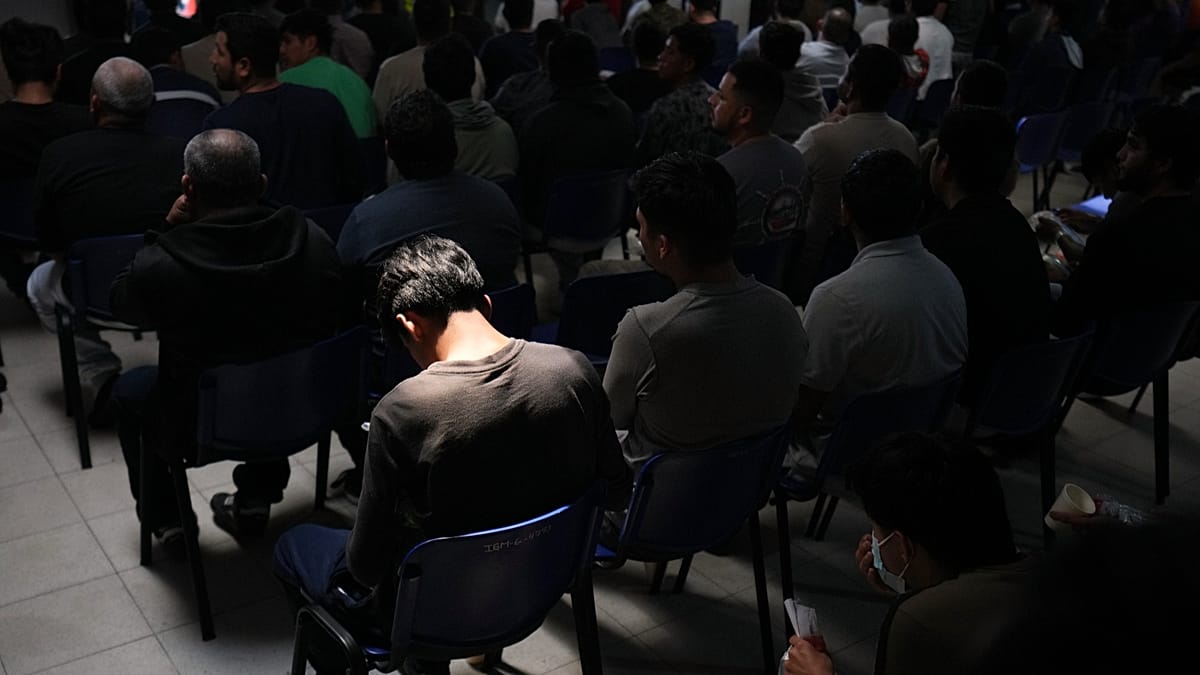
Since returning to office in 2025, Donald Trump’s administration has deported more than 25,000 migrants, refugees and asylum seekers to countries that are not their own.
asserted
that → return → countries
Human rights lawyers describe these so-called third-country national arrangements as a “show of force”, intended to make people fear the consequences of entering the US without permission.
asserted
people → describe → permission
To compile the most comprehensive account of a policy that has mostly operated behind closed doors, the Guardian joined 23 other media organisations in the Deportation Project, a joint investigation coordinated by Paris-based Forbidden Stories.
asserted
Guardian → compile → Stories
The consortium interviewed more than 100 people affected by, or involved in, the US drive to extinguish unauthorised immigration, and reviewed documents outlining details of the agreements made by US officials with governments around the world.
asserted
consortium → interview → world
The Trump administration has struck 35 deals allowing it to deport migrants and asylum seekers to countries that are not their own and where they often have no connections.
asserted
they → strike → connections
Human rights lawyers say the administration is using a loophole: under US law it is illegal to send people back to countries where they are likely to be persecuted, and so the Department of Homeland Security is deporting migrants and asylum seekers to third countries instead.
asserted
Department → say → countries
In many cases, however, the receiving countries then deport them onwards to the very place they fled.
asserted
they → receive → place
Is this a new policy introduced by the Trump administration?
asserted
this → introduce → administration
While the Trump administration trialled the policy during its first term, most of the deals with foreign countries have been struck since 2025.
asserted
most → trialle → 2025
The US has pledged at least $410m (£307m) to secure such agreements with 35 countries, almost a third of them in Africa, according to internal records reviewed by the Washington Post as part of the Deportation Project.
uncertain
US → pledge → Project
The drive is being led by the White House deputy chief of staff Stephen Miller, a fervent opponent of most migration to the US.
asserted
drive → lead → US
It is being run out of the newly created Office of Remigration, a new section within the Department of State’s Bureau of Population, Refugees and Migration.
asserted
It → run → Population
The name of the office incorporates a term adopted by the far right to describe the forcible expulsion of minority ethnic immigrants.
asserted
name → incorporate → immigrants
Who is being deported?
asserted
Who → deport → ?
About 20,000 people have been bussed to Mexico, while at least 5,000 more have been put on planes to countries in Latin America, Africa, central Asia and the Caribbean.
asserted
5,000 → buss → America
The Trump administration says its deportation drive is focusing on removing criminals from the US.
asserted
drive → say → US
People interviewed by the Guardian for this project include a nurse, originally from Sierra Leone, who was her parents’ main carer in the US; an anti-government protester who fled the Iranian regime; and a gay man who fled Ghana after he was outed, and then hunted, by members of his family.
asserted
he → interview → family
The state department claims that its priority is to deport people with criminal histories, but people interviewed by the Guardian said they had none.
uncertain
they → claim → none
Immigration judges had also ruled the people should be allowed to stay in the US because of credible fears they may face harm if sent home.
uncertain
they → rule → harm
And state department documents indicate that a majority of the 35 countries to have signed deals with the US have specified that they will not accept migrants with violent criminal records.
asserted
they → indicate → records
Why would third countries agree to participate?
asserted
countries → agree → ?
While the fine print of most deals remains opaque, the Trump administration is paying millions of dollars to the 35 countries that have agreed to accept foreign migrants, either temporarily or long term.
asserted
that → remain → migrants
The state department is also using its foreign aid budget to sweeten the deals, allocating funds to UN agencies that support migrants in some of the third countries.
asserted
that → use → countries
The internal state department records, reviewed by the Washington Post, indicate $30m was earmarked for Cameroon, in order to support UN operations in the country, in return for accepting 1,000 migrants.
asserted
m → review → migrants
The US has so far sent only 44. The Democratic Republic of the Congo was promised $50m towards UN operations there in return for accepting 2,000 migrants.
asserted
Republic → send → migrants
It has only received 15, and flights to Kinshasa are on hold because of the country’s Ebola outbreak.
asserted
flights → receive → outbreak
A spokesperson for the UN agency that receives these funds, the UNHCR, said it supported “states in fulfilling their primary responsibility to protect refugees and asylum seekers on their territory by helping ensure that, irrespective of the circumstances of their arrival, they have access to asylum procedures and are not returned to places where they face a risk of harm”.
asserted
they → receive → harm
chart showing Central African Republic has received the largest sum of payments from the US in deportation agreements Are third-country deportations legal?
asserted
deportations → show → agreements
A US federal appeals court ruled on Friday that the Trump administration’s third-country removals policy was unlawful.
asserted
policy → rule → Friday
A three-judge panel unanimously agreed that the policy violated due process by failing to give people enough notice of the decision to deport them, or the chance to legally contest it.
asserted
policy → agree → it
Human rights lawyers said that meant third-country deportation flights should be grounded immediately.
asserted
flights → say → ?
But the government has 90 days to appeal against the court’s decision, and is expected to do so.
asserted
government → have → decision
“The third country deportation policy continues,” James Percival, the Department of Homeland Security’s general counsel, said in a statement.
asserted
Percival → continue → statement
The ruling relates to a March 2025 lawsuit arguing that the US was sending people to places where they could be hurt or killed.
uncertain
they → relate → places
While a US district judge issued a preliminary injunction in April 2025, resulting in a pause on deportation flights, the supreme court decided two months later that the policy could resume while the legal case played out, and the administration then ramped up the flights.
uncertain
administration → issue → flights
 The Aporia