Photo via NPR

The data center backlash is reshaping American politics — one community at a time

Read the original at NPR ↗
Cite

Neuman, S. (2026, September 21). The data center backlash is reshaping American politics — one community at a time. NPR. https://www.npr.org/2026/09/21/nx-s1-5927288/data-center-election-voters-ai

Dated when The Aporia collected the article, usually within hours of publication. Check the original for its exact date and byline.

NPR · collected 2026-09-21 · by Scott Neuman

Quick Summary

The debate over data center construction in American communities is reshaping local politics across the country. This issue has united both Republicans and Democrats who are concerned about job displacement due to artificial intelligence, loss of control over technology, and secretive deals involving elected officials. A recent poll found that two-thirds of Americans oppose new data center construction near them. In Loudoun County, Virginia, this concern is dividing fellow Democrats as Board of Supervisors member Juli Briskman runs against Chair Phyllis Randall for her support of data centers due to tax benefits, despite acknowledging their drawbacks.
Written by AI on 2026-09-21, from this article's own text only (the story summary below draws on all the coverage).

AI analysis

Story summary

Data centers are increasingly becoming a source of controversy in American communities, reshaping local politics as people raise concerns about their impact. Darrell West, a senior fellow at the Brookings Institution, notes that these facilities have "upended politics as we know it," stirring fears among residents who feel they lack control over technology and worry about job losses or existential threats from artificial intelligence. Initially, companies like AOL set up data centers in places like Loudoun County during the 1990s, driving economic growth through billions of dollars in private investment, construction jobs, and well-paying positions within the centers themselves. However, despite these benefits, many communities are now opposing new projects due to concerns about environmental impacts and socioeconomic changes.

Written for “Data Center Controversy” on 2026-10-30, grounded in this article and the 0 other(s) covering the same event.

Story

📰 Data Center Controversy
Politics · 1 article(s) covering the same event.

Compared with similar articles

This article reads unscored and hedges 6% of its claims. Each row says how that neighbour differs.
Fox News
Hedges 3 of 23 claims Outlet record 70/100
“Article A focuses on Senator Josh Hawley's planned legislation targeting tax breaks for data centers, while Article B discusses the broader political impact of data center backlash across communities in America.”
The Dispatch
⚖️ Leans left Hedges 0 of 2 claims Outlet record 61/100
“The articles discuss different aspects of AI and data center regulations; Article A focuses on the Pro-Human Assembly summit, while Article B discusses a broader backlash against data centers across American communities.”
The Straits Times
⚖️ Leans left Hedges 2 of 24 claims Outlet record 66/100
“Article A focuses on local resistance to AI data centers in Silicon Valley, while Article B discusses the broader national political impact of data center backlashes across various communities.”
CBS News
⚖️ Leans left Hedges 9 of 63 claims Outlet record 66/100
“The articles discuss different aspects of data center development and opposition in general, rather than a single specific incident.”
The Straits Times
⚖️ Leans left Hedges 0 of 2 claims Outlet record 66/100
“The articles discuss different aspects of the data center backlash: Article A focuses on community and political reactions, while Article B discusses Wall Street's skepticism.”
ABC News (AU)
⚖️ Leans strongly left Hedges 1 of 28 claims Outlet record 68/100
“Article A discusses the broader political impact of data centers across America, while Article B focuses on a specific demand for compensation by residents near a particular data center in Melbourne.”
TIME
Hedges 10 of 58 claims Outlet record 59/100
“The articles discuss different aspects of data center politics, with Article A providing a broader overview and Article B focusing on a specific legislative effort in Washington.”
Semafor
Hedges 0 of 9 claims Outlet record 60/100
“The articles discuss different aspects of the broader issue surrounding data centers; Article A focuses on the political backlash and its impact on communities, while Article B highlights a specific executive's perspective at an event.”
CBS News
Hedges 0 of 3 claims Outlet record 66/100
“The articles discuss the broader trend of opposition to data centers rather than a single specific incident.”
The Guardian
⚖️ Leans strongly left Hedges 5 of 30 claims Outlet record 66/100
“The articles discuss related themes but describe different occurrences and contexts around AI and data centers in American politics.”
How this article was measured signals, leaning charts, publisher record, byline, topics and claims

Signals How these are calculated →

Claims extracted
88
sentences that state something as happening or true
Uncertain
6%
5 of 88 hedged ("reportedly", "may", "according to")
Leaning
withheld
no quote in the article backed the model's score
Publisher signals
60/100
NPR's corrections and hedging, across everything collected from it. Not a measure of accuracy.
Outlets on this story
1
Politics
Same framing elsewhere
1
articles that frame the event the way this one does
Analyzed 2026-09-21 · how these are computed

How this is being covered How these are calculated →

Article leaning vs. publisher reliability
Source leaning vs. consistency

Publisher

NPR · 972 article(s) · 3 correction(s) detected
Running correction rate · 3 correction(s)

Who wrote this

Scott Neuman
5 article(s) here · 1 carrying a prediction
🔮 The judge also granted a request from Pike's attorneys for "liberal access" to their client, ordering that prison officials will have two hours to respond to requests from lawyers for in-person visits with Pike.
🔮 But answering the question of how much of those costs will be shouldered by residential utility customers is surprisingly difficult to answer.
🔮 In addition, in a show of unity, media outlets who participate in joint, shared coverage of the White House – including NPR – have said they will not take audio and video from White House events until further notice.
🔮 It's more than a not-in-my-backyard issue, he says — it also reflects existential fears that artificial intelligence will take jobs or eliminate humanity entirely.
🔮 John Adams, meanwhile, saw in Gerry a stubborn streak that made him willing to fight over minor matters, writing that he "will risk great things to secure small ones." Alas, Gerry never got a beer named after him.
Also by Scott Neuman
Nothing else under this byline is closely related to this article, so these are simply their most recent.

Topics

American Americans Democrats NPR the Brookings Institution

Subjects

Democrats NORP · 4× Briskman PERSON · 3× American NORP · 2× Americans NORP · 2× Democrat NORP · 2× Loudoun County's GPE · 2× NPR ORG · 2× Randall PERSON · 2× Republicans NORP · 2× Darrell West PERSON · 1×

Narrative

AOL set up in Loudoun County, for example, back in the 1990s, giving the tech industry an early beachhead in the county that has only grown due to demand from government agencies in nearby Washington, D.C. To be sure, these facilities have brought economic benefits to the counties where they are located by creating billions of dollars in private investment, construction jobs and a limited number of well-paying positions at the data centers themselves, all the while providing an infusion of tax dollars that have stabilized and even lowered the tax burden for ordinary property owners.
framing: assertive · carried by 1 article(s) · first seen 2026-09-21
🔮 It's more than a not-in-my-backyard issue, he says — it also reflects existential fears that artificial intelligence will take jobs or eliminate humanity entirely.

Claims (88 extracted, 5 hedged)

The data center backlash is reshaping American politics — one community at a time With striking speed, the widespread debate around data centers has become a fault line in American communities, cutting across political parties, splitting constituencies and forging unexpected alliances. asserted
debate → reshape → alliances
In city halls and county commission chambers, east to west and north to south, people are squaring off against their local representatives. asserted
people → square → representatives
It starts with distrust Data centers have "upended politics as we know it," says Darrell West, a senior fellow at the Brookings Institution. asserted
West → start → Institution
It's more than a not-in-my-backyard issue, he says — it also reflects existential fears that artificial intelligence will take jobs or eliminate humanity entirely. asserted
intelligence → say → humanity
"People just feel like they no longer have control over the technology, [and] that worries them," West says. asserted
West → feel → them
For this story, NPR traveled to data center hot spots and spoke to dozens of activists, politicians, developers and everyday Americans. asserted
NPR → travel → activists
The picture that emerges is complicated. asserted
that → emerge → ?
Data centers have been an economic boon for some communities, helping to lower land taxes and providing jobs. asserted
centers → help → jobs
At the same time, the proliferation of secretive deals that often involve elected officials signing nondisclosure agreements has exacerbated suspicions. asserted
officials → involve → suspicions
A recent poll by The Economist and YouGov of nearly 1,600 adults found that about two-thirds of Americans oppose new data center construction in their communities. asserted
thirds → find → communities
A rare cocktail of concerns has fueled the opposition, according to Chris Borick, a political science professor at Lehigh University. uncertain
cocktail → fuel → University
"It's aligning interests in ways that aren't traditional," he says. asserted
he → align → ways
"If you're in power right now and you are dealing with this issue, you have a target on your back." asserted
you → deal → back
Elected officials have had to scramble to recalibrate. asserted
officials → elect → ?
"It's a recognition that the ground shifted under their feet and they were not ready for that to happen," Borick says. asserted
Borick → shift → feet
Parties are divided asserted
Parties → divide → ?
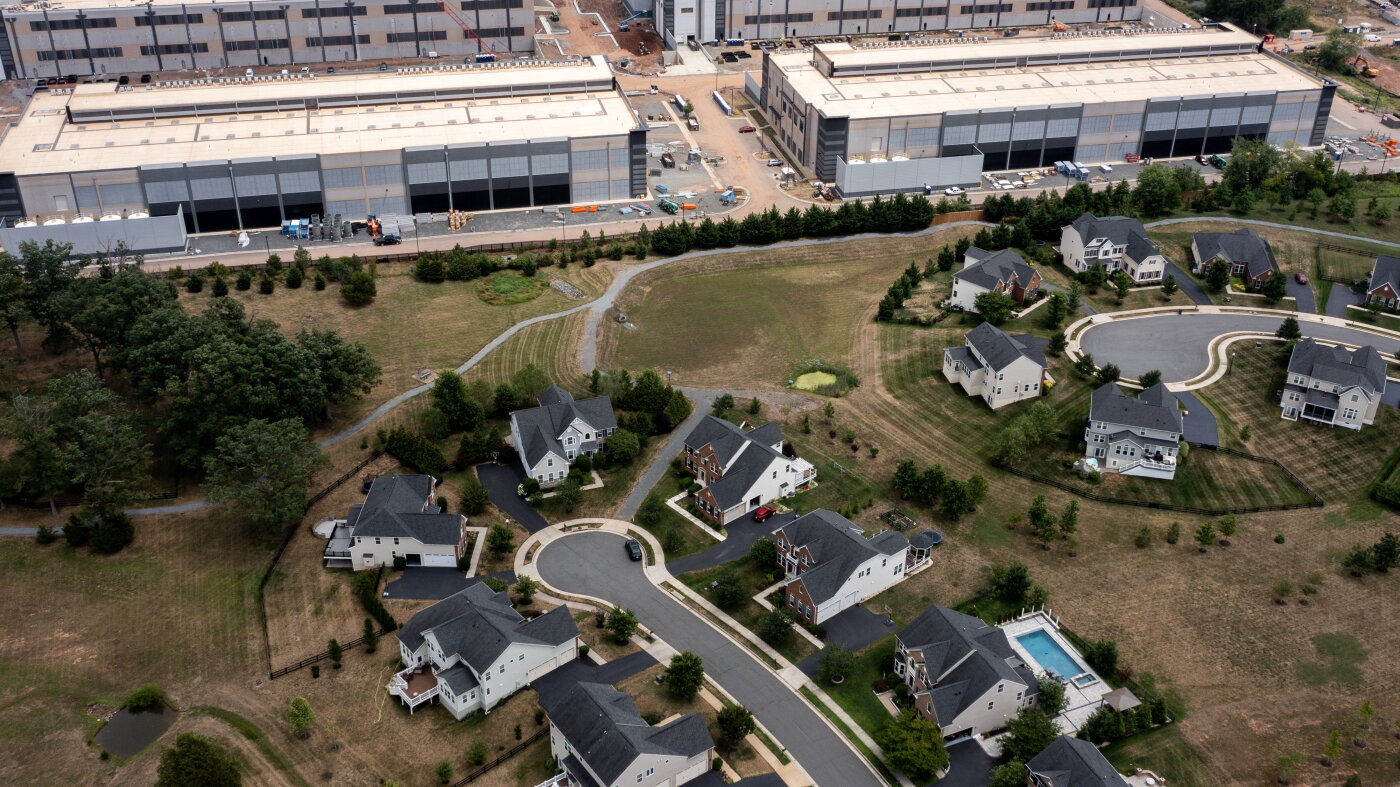
In Loudoun County, Va., data centers are driving a wedge between fellow Democrats. asserted
centers → drive → Democrats
On one side is Juli Briskman, a member of Loudoun County's Board of Supervisors, who has led efforts to slow further data center development. asserted
who → lead → development
On the other is Phyllis Randall, also a Democrat and the board's chair, who has argued in favor of data centers for the tax revenue they bring into the county, even while acknowledging they are "a double-edged sword" for nearby residents. asserted
they → argue → residents
Briskman is running to unseat Randall in next year's primary. asserted
Briskman → run → primary
She says her opposition to data centers dates back to 2020, when the board was seeing land-use cases seeking to convert residential and flex-industrial properties into the centers. asserted
board → say → centers
"I feel like I have been singing this song for a while, and now all of a sudden everyone's grabbing my music and singing along with me," Briskman says. asserted
Briskman → feel → me
Randall did not respond to NPR's request for comment. asserted
Randall → respond → comment
Briskman is tapping into a sentiment in her area. asserted
Briskman → tap → area
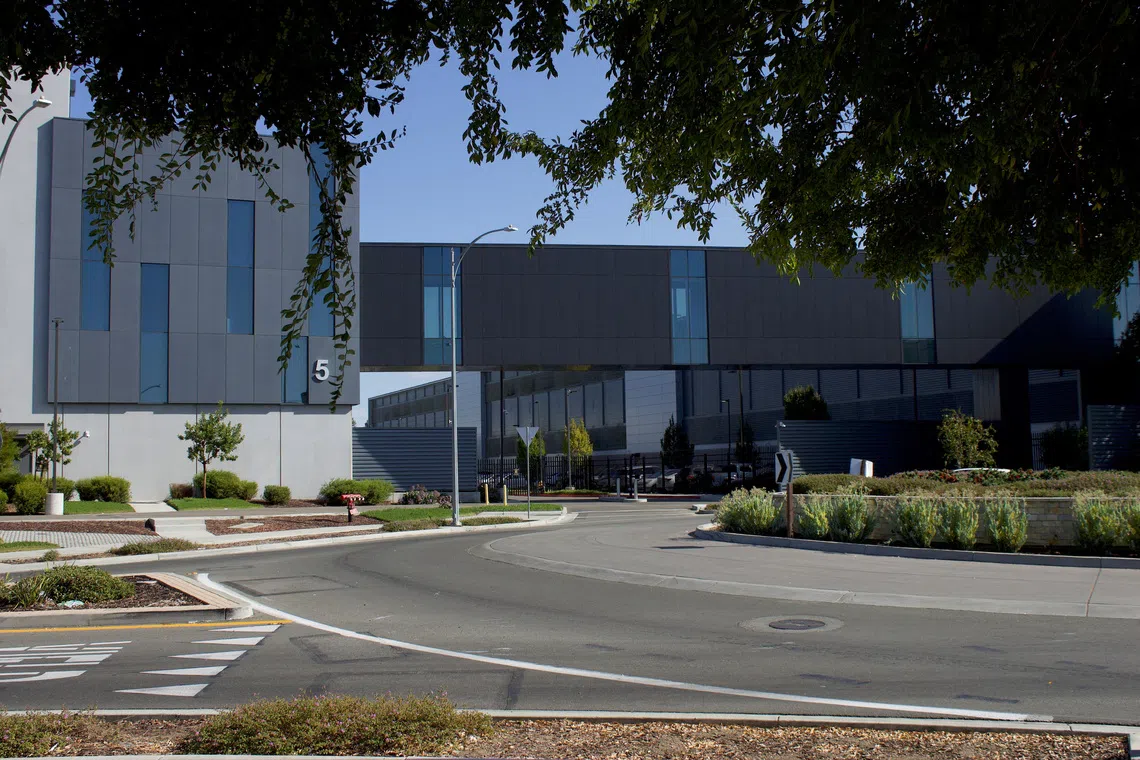
Kasey Hatch lives near Loudoun County's Vantage VA2 data center, which is powered by eight natural-gas-fired turbines. asserted
which → live → turbines
Residents say the turbines produce a constant low-pitched rumble along with a high-frequency whine that has become a major source of noise complaints in the surrounding neighborhoods. asserted
that → say → neighborhoods
Hatch, an IT infrastructure engineer for a bank who uses AI in her job, says she and her staunchly Republican cousin "never saw eye to eye on politics." asserted
she → use → politics
But to her surprise, the last time they met, they were "on the same page about everything" when it came to data centers. asserted
it → meet → centers
At the grassroots level, that translates into Democrats and Republicans working together on an issue of mutual interest. asserted
Democrats → translate → interest
Nusheen Farahani also lives near VA2 and is part of a group of women organized against the facility who regularly show up at public hearings. asserted
who → live → hearings
"I'm a liberal and I'm a Democrat, and the people that are in our little team … not all of them are liberals or Democrats," Farahani says. asserted
Farahani → say → them
A similar story is playing out in Minnesota, Pennsylvania and Indiana, to name just a few, where locally organized groups are uniting against data centers — and elected officials. asserted
groups → play → centers
According to the Data Center Opposition Report, which tracks grassroots nonprofits on the issue, some 640,000 people are active in the anti-data center movement and 220 new groups sprang up in just the three months from June through August. uncertain
groups → accord → August
They are driven by a feeling that government is part of the problem, according to Ben Green, an assistant professor at the University of Michigan's School of Information. uncertain
government → drive → Information
With that comes a real sense of abandonment, he says. asserted
he → come → abandonment
"If the policymakers, if my city council or zoning board or township board and governor, if they're on the side of the companies, who's standing up for me?" asserted
who → stand → me
The economic impact Data centers have been around for a lot longer than the recent AI hype, quietly humming along in the background of the modern internet, powering cloud computing and storing vast amounts of data. asserted
centers → hum → data
AOL set up in Loudoun County, for example, back in the 1990s, giving the tech industry an early beachhead in the county that has only grown due to demand from government agencies in nearby Washington, D.C. To be sure, these facilities have brought economic benefits to the counties where they are located by creating billions of dollars in private investment, construction jobs and a limited number of well-paying positions at the data centers themselves, all the while providing an infusion of tax dollars that have stabilized and even lowered the tax burden for ordinary property owners. asserted
that → set → owners
And among the many people NPR spoke to for this story who oppose data centers, nearly all acknowledge using AI in their daily life. asserted
all → speak → life
Farahani, for example, says she "begrudgingly" uses chatbots for certain tasks "to make things easier. asserted
things → say → tasks
…and 48 more, not listed.

💬Give feedback
🕘History 🎫Support