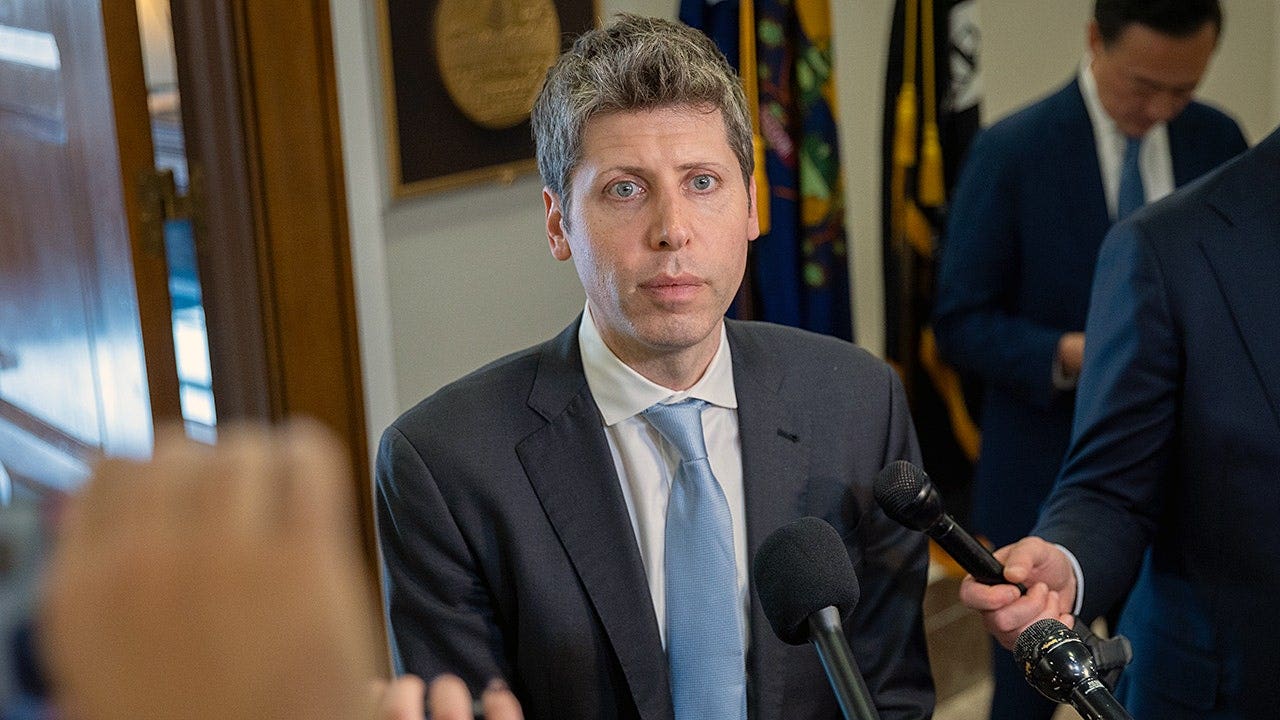
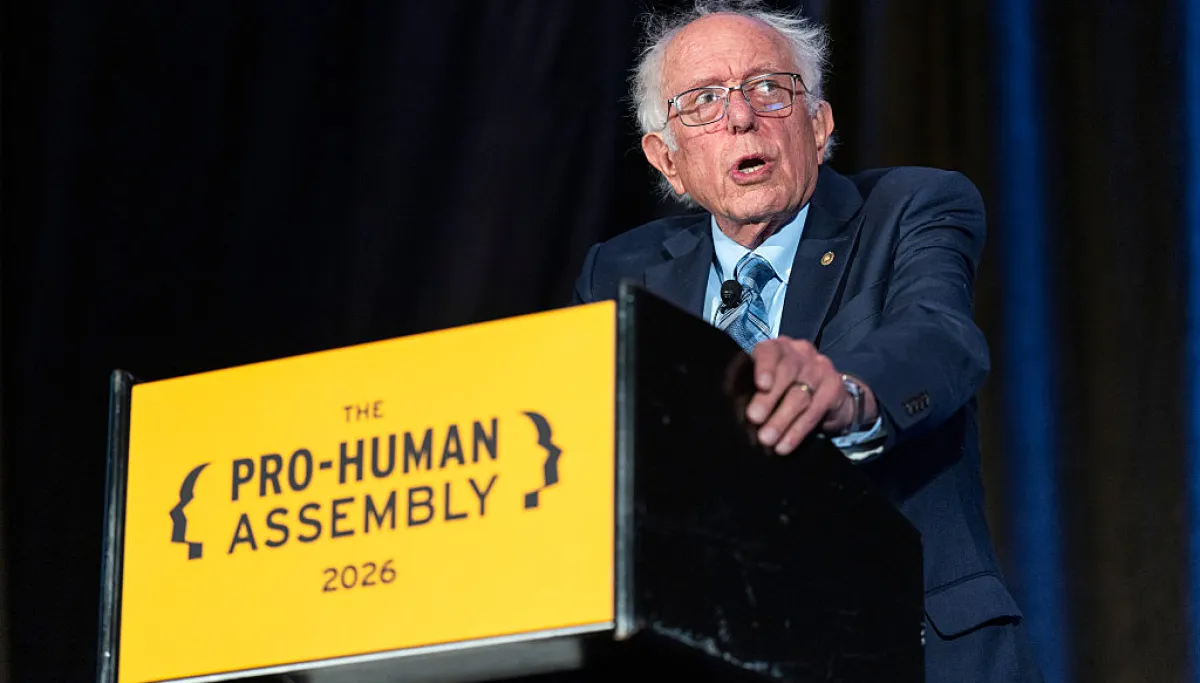
Photo via The Guardian

AI is generating a new wave of US populism. It could be a tipping point | Robert Reich

Read the original at The Guardian ↗
Cite

Reich, R. (2026, September 22). AI is generating a new wave of US populism. It could be a tipping point | Robert Reich. The Guardian. https://www.theguardian.com/commentisfree/2026/sep/22/ai-economic-populism-tipping-point

Dated when The Aporia collected the article, usually within hours of publication. Check the original for its exact date and byline.

The Guardian · collected 2026-09-22 · by Robert Reich

Quick Summary

Robert Reich argues in an opinion piece that artificial intelligence (AI) is fueling a new wave of populism in the US by highlighting economic inequality. Both Bernie Sanders and Steve Bannon recently called for halting AI development during a Washington event, criticizing corporate oligarchs profiting from it while workers suffer. As of mid-2026, wages as a share of the total economy fell to 52.9%, a record low since tracking began in 1947, with AI potentially exacerbating this trend by reducing jobs and real wages while benefiting its backers financially.
Written by AI on 2026-09-22, from this article's own text only (the story summary below draws on all the coverage).

AI analysis

Story summary

Last week, Bernie Sanders and Steve Bannon spoke before a Washington group demanding a halt to AI development, highlighting concerns about wealthy corporate elites. These figures accuse these elites of funding politicians who prioritize deregulation, tax breaks for corporations, and reduced social safety nets over the interests of ordinary workers. Historically, Republicans under Trump directed populist anger at minorities and immigrants rather than focusing on corporate influence. Democrats have similarly avoided criticizing wealthy elites to avoid alienating campaign donors. However, with growing public awareness that large corporations are profiting while workers struggle—by mid-2026, wages accounted for a historically low percentage of the total economy—the tide may be shifting. This shift could see increased populist sentiment in US politics as people become more aligned with anti-establishment views against corporate elites and their influence on Washington policies.

Written for “AI and US Populism” on 2026-11-05, grounded in this article and the 0 other(s) covering the same event.

Story

📰 AI and US Populism
Politics · 1 article(s) covering the same event.

Compared with similar articles

This article reads leans strongly left and hedges 17% of its claims. Each row says how that neighbour differs.
Fox News
Hedges 2 of 34 claims Outlet record 68/100
“The articles describe different events: one covers GOP lawmakers' debate on AI regulation and tech CEOs' warnings, while the other discusses Bernie Sanders and Steve Bannon demanding a stop to AI at a separate event.”
The Sydney Morning Herald
⚖️ Leans right further right than this Hedges 12 of 60 claims Outlet record 61/100
“The articles discuss different events: Article A is about President Trump's views on AI, while Article B covers Bernie Sanders and Steve Bannon speaking against AI at a Washington group.”
404 Media
Hedges 6 of 41 claims Outlet record 95/100
“The articles discuss different aspects of AI's impact and perception in society; one focuses on political reactions to AI by Sanders and Bannon, while the other presents a survey about public sentiment towards AI.”
The Dispatch
⚖️ Leans right further right than this Hedges 5 of 113 claims Outlet record 61/100
“The articles discuss AI's impact on politics but describe different events: one mentions Bernie Sanders and Steve Bannon speaking at a group meeting against AI, while the other discusses a Pentagon official's tweet about President Trump.”
Toronto Star
Hedges 3 of 22 claims Outlet record 64/100
“The articles discuss different aspects of AI's impact on politics in distinct contexts: one focuses on US populism and speeches by Sanders and Bannon, while the other addresses Canadian MPs' concerns about AI use in parliamentary proceedings.”
Washington Examiner
Hedges 6 of 33 claims Outlet record 69/100
“The articles describe different events related to AI but do not cover the same specific incident or occurrence.”
Washington Examiner
⚖️ Leans strongly left Hedges 0 of 36 claims Outlet record 69/100
“The articles discuss similar themes of opposition to AI and data centers but describe different aspects: one focuses on political figures speaking out against AI, while the other highlights community backlash against physical data center construction.”
Toronto Star
⚖️ Leans strongly left Hedges 6 of 35 claims Outlet record 64/100
“While both articles discuss Bernie Sanders's actions regarding AI, Article A describes a speech at a Washington group, while Article B details the unveiling of legislation.”
Washington Examiner
⚖️ Leans strongly right further right than this Hedges 2 of 23 claims Outlet record 69/100
“Both articles discuss similar political alliances against AI but describe different angles and contexts without clearly referring to the exact same happening.”
The Guardian
⚖️ Leans strongly left Hedges 3 of 34 claims Outlet record 66/100
“While both articles mention Bernie Sanders and Steve Bannon advocating against AI, they describe different aspects of their activities (speaking before a group vs. urging Congress to regulate AI).”
How this article was measured signals, leaning charts, publisher record, byline, topics and claims

Signals How these are calculated →

Claims extracted
30
sentences that state something as happening or true
Uncertain
17%
5 of 30 hedged ("reportedly", "may", "according to")
Leaning
Leans strongly left
of the writing, not the subject · beta estimate
Publisher signals
66/100
The Guardian's corrections and hedging, across everything collected from it. Not a measure of accuracy.
Outlets on this story
1
Politics
Same framing elsewhere
1
articles that frame the event the way this one does
Analyzed 2026-09-22 · how these are computed

How this is being covered How these are calculated →

Article leaning vs. publisher reliability
Source leaning vs. consistency

Publisher

The Guardian · 2073 article(s) · 6 correction(s) detected
Running correction rate · 6 correction(s)

Who wrote this

Robert Reich
4 article(s) here · 1 carrying a prediction
🔮 This month, Musk slowed “the speeds at which Ukrainian hardware could stay connected to the satellite-based network … rendering some offensive drones and interceptor drones virtually useless”.
2026-10-27 · assertive framing · Defund Elon Musk | Robert Reich
🔮 Hence, Trump’s executive order declaring that the US government will recognize only a person’s sex assigned at birth, limit the definition of a “male” or “female” to their reproductive cells, and potentially withhold federal funding from programs that acknowledge transgender people or “gender ideology”.
🔮 This may be changing.
🔮 That truth is the captains of corporate America are so rapacious that they’re willing to throw average working Americans under the bus to make billions more.
Also by Robert Reich
Defund Elon Musk | Robert Reich
2026-10-27 · The Guardian
Nothing else under this byline is closely related to this article, so these are simply their most recent.

Topics

America Americans Black Republicans Washington

Subjects

Americans NORP · 6× Trump PERSON · 6× Democrats NORP · 5× America GPE · 3× Republicans NORP · 3× Bernie Sanders PERSON · 2× Black NORP · 1× Latino NORP · 1× Steve Bannon PERSON · 1× Washington GPE · 1×

Narrative

Fears about AI are provoking larger concerns about wealthy corporate elites bribing politicians – not just to get generous subsidies for AI but also to reduce the corporate elite’s tax bills, kill off unions, slash social safety nets, deregulate Wall Street, attain no-bid government contracts, receive exclusive licenses, open tax loopholes, get tariff exemptions, use public lands, and become even bigger monopolies. Because of Trump, Americans are coming to view those wealthy corporate elites as more aligned with Republicans than with Democrats.
framing: assertive · carried by 1 article(s) · first seen 2026-09-22
🔮 This may be changing.

Claims (30 extracted, 5 hedged)

Last week, the unlikely duo of Bernie Sanders and Steve Bannon both spoke before a Washington group demanding a stop to AI and its datacenters. asserted
duo → speak → AI
Notably, both lambasted the corporate oligarchs behind AI. asserted
both → lambast → AI
The most potent force in US politics is anti-establishment fury at a system seen as rigged against average working people. asserted
force → see → people
AI has become Exhibit A. asserted
AI → become → ?
Until recently, both parties largely avoided criticizing the wealthy corporate elites that funded their campaigns. asserted
that → avoid → campaigns
In politics as in nature, one does not bite the hands that feed. asserted
that → bite → hands
Trump Republicans have instead aimed populist fury at immigrants, LGBTQ+ people, Black and Latino people, “communists”, Muslims, so-called “woke” leaders, “coastal elites”, “childless cat ladies” and other scapegoats. asserted
Republicans → aim → immigrants
Democrats – with the exceptions of Bernie Sanders, AOC and a few others – have also avoided criticizing wealthy corporate elites, aiming their populist fury at Trump. asserted
Democrats → avoid → Trump
This may be changing. uncertain
This → change → ?
It’s becoming obvious to much of the US that giant corporations have been raking it in while workers have been taking it on the chin. asserted
workers → become → chin
As of mid-2026, according to the Bureau of Labor Statistics, the percentage of the total economy going to workers as wages had fallen to a record low of 52.9% (down from above 65% when tracking began in 1947) – leaving the rest to investors, business owners, and corporate profits. uncertain
tracking → accord → investors
AI is on the way to causing far more inequality – generating billions for its backers while reducing the number of jobs and real wages. asserted
AI → cause → jobs
Trump and his regime, meanwhile, have exposed the greed, venality, cupidity and corruption of the US’s wealthy corporate elites by allowing them to do anything they wish – including create energy-guzzling, water-depleting AI datacenters – as long as they kiss his assets by funding his Pac, paying for his ballroom and singing his praises. asserted
they → expose → praises
Trump has thereby revealed the truth about corporate America that for years had been hidden behind corporate PR about “corporate social responsibility”, corporate charity and “trickle-down” economics: the captains of corporate America are willing to throw average working Americans under the bus to make billions more. asserted
captains → reveal → billions
Corporate avarice under Trump has become so blatant and corporate America’s contempt for the needs of average Americans so flagrant that most Americans are now catching on. asserted
Americans → become → Americans
In a recent NBC poll, 54% of Americans agreed that “when it comes to politics and society, nothing really matters because powerful people will always do whatever they want. asserted
they → agree → whatever
Data centers are unpopular – about 70% of the public opposes them. asserted
% → oppose → them
And Americans harbor deep suspicions of AI. asserted
Americans → harbor → AI
More than 60% believe AI could destroy humanity (this includes 60% of Trump supporters). uncertain
this → believe → supporters
Fears about AI are provoking larger concerns about wealthy corporate elites bribing politicians – not just to get generous subsidies for AI but also to reduce the corporate elite’s tax bills, kill off unions, slash social safety nets, deregulate Wall Street, attain no-bid government contracts, receive exclusive licenses, open tax loopholes, get tariff exemptions, use public lands, and become even bigger monopolies. Because of Trump, Americans are coming to view those wealthy corporate elites as more aligned with Republicans than with Democrats. asserted
Americans → provoke → Democrats
According to last week’s Times-Sienna poll, when likely voters were asked which party the word “elitist” describes, a remarkable 43% said Republicans while 33% said Democrats. uncertain
% → accord → Democrats
This is something of a return to how the US’s two major political parties used to be seen. asserted
parties → use → return
Ninety years ago, Democrats were assumed to be on the side of working people against wealthy corporate elites. asserted
Democrats → assume → elites
On the eve of his 1936 re-election, Franklin D Roosevelt told the American people they were fighting “business and financial monopoly, speculation, reckless banking, class antagonism, war profiteering … asserted
they → tell → monopoly
We now know that government by organized money is just as dangerous as government organized by the mob. asserted
government → know → mob
Will Democrats seize the moment and embrace the new AI-fueled economic populism? asserted
Democrats → seize → populism
Or will they continue to succumb to the siren songs of big money? asserted
they → continue → money
According to Politico, some Democratic political consultants are quietly urging candidates in the toughest battleground races to stay mum on AI “over fears that powerful and well-resourced pro-AI interest groups could spend money pummeling them in the final weeks of the midterms”. uncertain
groups → accord → midterms
It’s not just the future of the Democratic party that’s at stake; it’s the future of America. asserted
it → ’ → America
His new book, Coming Up Short: A Memoir of My America, is out now in the US and in the UK asserted
book → come → UK

💬Give feedback · no sign-in needed

No sign-in needed for now. Your note is sent without a name, so it cannot be answered.

🕘History 🎫Support