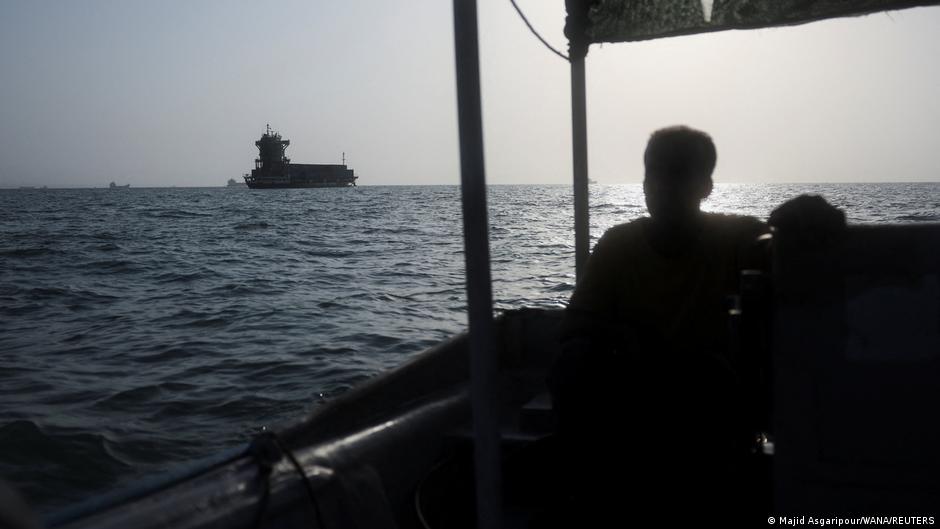
Photo via Deutsche Welle

Can new US sanctions cripple Iran's shadow economy?

Read the original at Deutsche Welle ↗
Cite

Soltanzadeh, A. (2026, August 26). Can new US sanctions cripple Iran's shadow economy? Deutsche Welle. https://www.dw.com/en/can-new-us-sanctions-cripple-iran-s-shadow-economy/a-78494630?maca=en-rss-en-world-4025-rdf

Dated when The Aporia collected the article, usually within hours of publication. Check the original for its exact date and byline.

Deutsche Welle · collected 2026-08-26 · by Amir Soltanzadeh

Quick Summary

US Treasury Secretary Scott Bessent has announced a new phase of economic sanctions against Iran, targeting its international networks used for illicit money movement and five key sectors: digital assets, technology, gold, aviation, and shipping. The US is warning foreign entities that help facilitate money laundering for Iran that they will be removed from the US dollar-based financial system. Around 60 individuals, entities, and vessels have been targeted by the new sanctions, but major Chinese banks are not included in the measures. This approach aims to tighten secondary sanctions on companies outside Iran rather than solely restricting its economy.
Written by AI on 2026-08-26, from this article's own text only (the story summary below draws on all the coverage).

AI analysis

Story summary

President Trump announced on August 18, 2026, what he described as "the most crushing economic operation ever taken against any country" targeting Iran, aiming to escalate pressure beyond existing sanctions. This move came after a 60-day ceasefire expired without diplomatic resolution to the war initiated by the US and Israel in February. Iran's military has signaled a shift towards more aggressive offensive operations, threatening retaliation against Gulf states like the United Arab Emirates (UAE) that assist the U.S. In response, the UAE halted all trade and financial dealings with Iran following accusations of missile attacks on August 18. Treasury Secretary Scott Bessent later detailed new sanctions targeting five key economic areas: digital assets, technology, gold, aviation, and shipping, aiming to cut off Iran's remaining economic lifelines globally, while China remains a major concern due to its significant trade ties with Iran.

Written for “US Sanctions on Iran Economy” on 2026-11-02, grounded in this article and the 40 other(s) covering the same event.

Story

📰 US Sanctions on Iran Economy
Politics · 41 article(s) covering the same event. See how they differ ↓

Compared with similar articles

This article reads leans right and hedges 26% of its claims. Each row says how that neighbour differs.
The Hindu
⚖️ Centre further left than this Hedges 2 of 33 claims Outlet record 60/100
Morning news brief Same event
NPR
⚖️ Centre further left than this Hedges 0 of 2 claims Outlet record 60/100
Al Jazeera
Hedges 6 of 35 claims Outlet record 60/100
BBC News
Hedges 2 of 45 claims Outlet record 68/100
Mother Jones
⚖️ Leans strongly left further left than this Hedges 1 of 17 claims Outlet record 60/100
Los Angeles Times
Hedges 9 of 50 claims Outlet record 95/100
TIME
⚖️ Leans strongly right further right than this Hedges 15 of 61 claims Outlet record 59/100
CBS News
⚖️ Leans right Hedges 16 of 136 claims Outlet record 66/100
“Article A mentions a 'war to heap economic pressure on Iran's rulers in the hope of breaking the stalemate between them and the U.S.', but Article B does not mention war, only sanctions”
ABC News (US)
⚖️ Leans strongly left further left than this Hedges 0 of 5 claims Outlet record 70/100
“Article A reports a statement by an Iranian official about not exporting oil, while Article B reports on new US sanctions against Iran, which is related but not the same specific event”
How this article was measured signals, leaning charts, publisher record, byline, topics and claims

Signals How these are calculated →

Claims extracted
46
sentences that state something as happening or true
Uncertain
26%
12 of 46 hedged ("reportedly", "may", "according to")
Leaning
Leans right
of the writing, not the subject · beta estimate
Publisher signals
95/100
Deutsche Welle's corrections and hedging, across everything collected from it. Not a measure of accuracy.
Outlets on this story
41
Politics
Same framing elsewhere
1
articles that frame the event the way this one does
Analyzed 2026-08-26 · how these are computed

How this is being covered How these are calculated →

Article leaning vs. publisher reliability
Source leaning vs. consistency

Publisher

Deutsche Welle · 554 article(s) · 0 correction(s) detected
No corrections detected for this publisher. That may mean careful reporting, or simply that nothing has been checked.

Who wrote this

Amir Soltanzadeh
7 article(s) here · 1 carrying a prediction
🔮 Another official said Pakistan's Munir presented Iran with a solution to the conflict that would offer something both to Washington and Iran, with the three Mecca states and Qatar acting as mediators.
🔮 Parts of the establishment appear aware that a return to large-scale confrontations between police and women could carry significant social and political costs.
🔮 A passenger told DW that agencies would still sell him a ticket but could not guarantee the flight would actually operate.
🔮 Northern routes offer room to expand Alireza Salavati, a London-based political economy commentator, told DW that Iran does have unused capacity. "Iran has more room to maneuver than its dependence on southern ports might suggest,” he said.
2026-09-14 · assertive framing · Can Iran replace sea trade with land routes?
🔮 The institution added that the suspension could be temporary, but no date had been given for exams to resume.
🔮 Speaking on August 24, Bessent said the United States would target what he called five economic lifelines: digital assets, technology, gold, aviation and shipping.
🔮 Ebrahim Rezaei, a member of the National Security and Foreign Policy Commission, said a withdrawal would be the "best response" to increased US economic pressure.
Also by Amir Soltanzadeh
Can Iran replace sea trade with land routes?
2026-09-14 · Deutsche Welle
Nothing else under this byline is closely related to this article, so these are simply their most recent.
All 7 articles by Amir Soltanzadeh →

Topics

Iran Iranian Tehran US Treasury Washington

Subjects

Iran GPE · 11× Iranian NORP · 9× Bessent PERSON · 2× Dubai GPE · 2× Tehran GPE · 2× Chinese NORP · 1× Scott Bessent PERSON · 1× US Treasury ORG · 1× Washington ORG · 1× the United States GPE · 1×

Narrative

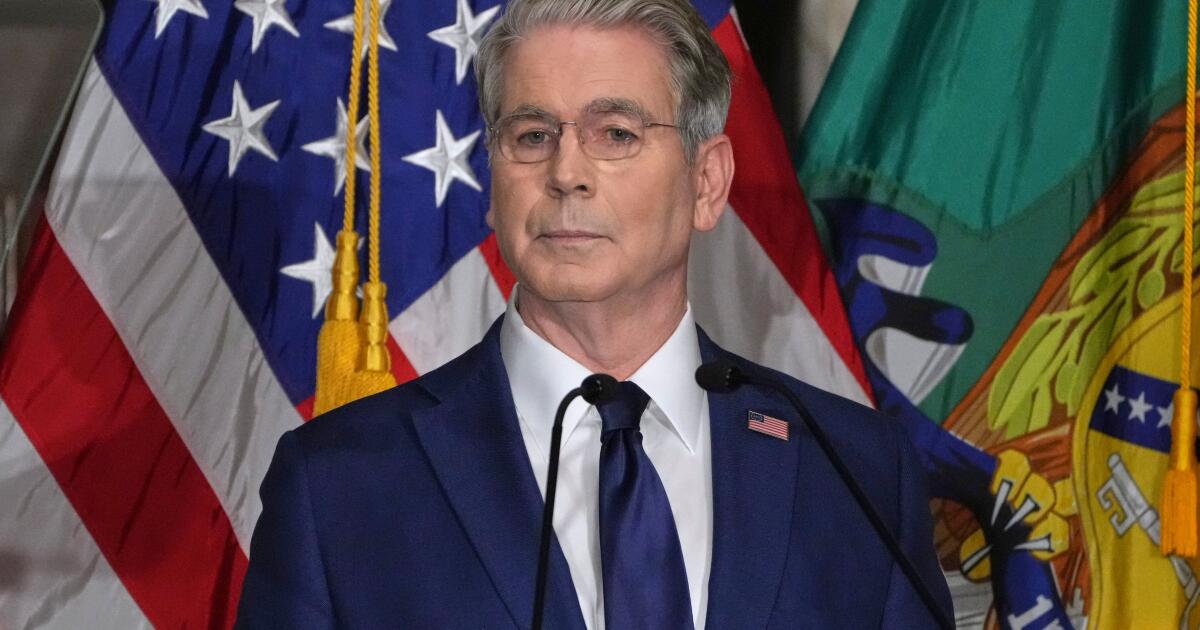
US Treasury Secretary Scott Bessent has unveiled a new phase of Washington's economic campaign against Iran, this time aimed not only at sanctioned Iranian institutions but at the international networks Tehran has used to keep money and goods moving.
framing: mixed · carried by 1 article(s) · first seen 2026-08-26
🔮 Speaking on August 24, Bessent said the United States would target what he called five economic lifelines: digital assets, technology, gold, aviation and shipping.
2026-08-26 · Deutsche Welle
Can new US sanctions cripple Iran's shadow economy? · mixed framing

Claims (46 extracted, 12 hedged)

US Treasury Secretary Scott Bessent has unveiled a new phase of Washington's economic campaign against Iran, this time aimed not only at sanctioned Iranian institutions but at the international networks Tehran has used to keep money and goods moving. asserted
money → unveil → networks
Speaking on August 24, Bessent said the United States would target what he called five economic lifelines: digital assets, technology, gold, aviation and shipping. asserted
he → speak → what
He also warned foreign entities that help the country illicitly move money around. asserted
country → warn → money
"Any entity that facilitates money laundering for Iran will be removed from the US dollar-based financial system," Bessent said. asserted
Bessent → facilitate → system
"The countdown starts now." asserted
countdown → start → ?
The approach represents an effort to tighten secondary sanctions, putting pressure on companies, financial intermediaries and trading partners outside Iran rather than simply adding restrictions on an economy already heavily sanctioned. asserted
approach → represent → economy
The US announced measures against around 60 individuals, entities and vessels. asserted
US → announce → individuals
But it stopped short of targeting major Chinese banks, highlighting the limits of how far the US may be willing to push enforcement against Iran's biggest remaining trading partner. uncertain
US → stop → partner
How Iran has been evading US sanctions For years, Iran has relied on networks outside the formal banking system to move money. asserted
Iran → evade → money
Exchange houses, gold, cryptocurrency, front companies and opaque shipping networks have helped Iran bypass sanctions. asserted
Iran → help → sanctions
The latest US strategy appears designed to make those methods more difficult by increasing the cost for foreign intermediaries and comes at a vulnerable moment for Iran. asserted
methods → design → Iran
Oil exports have fallen sharply amid US efforts to disrupt Iranian oil shipments. asserted
exports → fall → shipments
Shipments to China, Iran's main oil customer, dropped to about 534,000 barrels per day in August from 823,000 in July and from a peak of around 1.58 million barrels earlier this year. asserted
Shipments → drop → barrels
At home, food prices rose around 128% year on year in July, according to official data cited by Reuters news agency. uncertain
prices → rise → agency
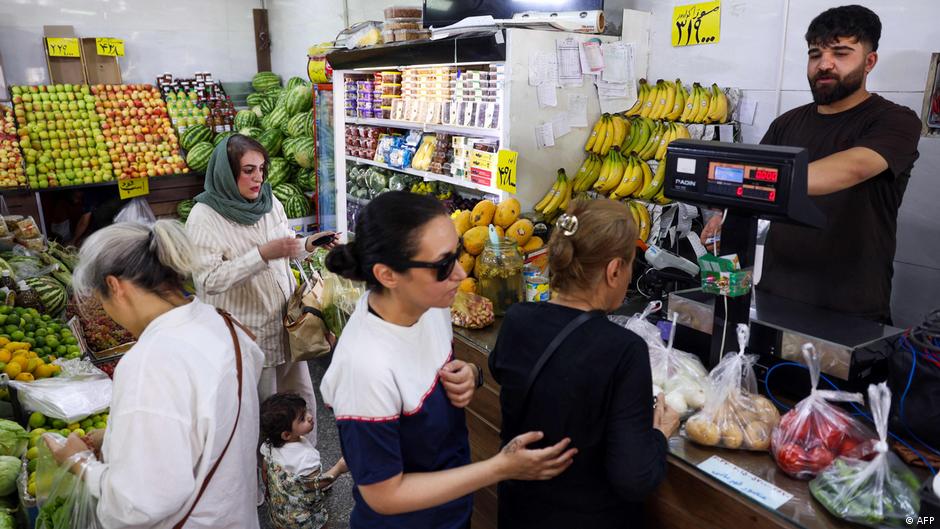
Iran's currency has lost so much value that many transactions, including property and car sales, are now conducted in US dollars. asserted
transactions → lose → dollars
Advertisements are sometimes even priced in dollars. asserted
Advertisements → price → dollars
Rising inflation hits Iranian businesses asserted
inflation → rise → businesses
A building materials seller in the capital, Tehran, told DW that inflation has become so severe that simply holding goods can sometimes be more profitable than selling them. "If I keep something in my warehouse for a month, its price may rise by more than the profit I would make by selling it today," he said. uncertain
he → tell → it
He also owns a stone-cutting business and said fulfilling older contracts has become increasingly painful because replacement materials may cost considerably more a few weeks later. uncertain
materials → own → more
And raising prices offers no easy solution. asserted
raising → raise → solution
"If I increase the price beyond a certain point, nobody can afford to buy it," he said. asserted
he → increase → it
The restrictions also disrupt how private companies pay suppliers, import raw materials and maintain employment. asserted
companies → disrupt → employment
Another Iranian who works at a trading company told DW that more than 70% of its employees had been laid off during the past six months. asserted
% → work → months
The company imported raw materials for various personal products and previously transferred payments through exchange houses in the United Arab Emirates. asserted
company → import → Emirates
"Now no exchange house is willing to work with us," the employee said. asserted
employee → work → us
How sanctions affect Iranian businesses abroad The effects are also spreading to Iranian businesspeople outside the country. asserted
effects → affect → country
An Iranian businessman who moved to Dubai told DW that he had previously owned several cosmetics and hygiene brands in Iran. asserted
he → move → Iran
Restrictions on imports and difficulties obtaining raw materials eventually pushed him to relocate. asserted
Restrictions → obtain → him
But since the war, that has changed, he said. asserted
he → change → war
"These days, having an Iranian passport makes almost every transaction more difficult," he told DW. asserted
he → have → DW
He said Iranian entrepreneurs are increasingly uncertain whether banks will maintain their accounts or whether residency rules could be tightened. uncertain
rules → say → accounts
"In an environment where there is no stability and the outlook is unclear, you cannot really run a business," he said. uncertain
he → be → business
Can more sanctions change Tehran's behavior? asserted
sanctions → change → behavior
Alireza Salavati, a London-based political economy commentator, is skeptical that the new US measures will produce a fundamental strategic shift. asserted
measures → base → shift
Iran is already sanctioned across most major sectors, he told DW. asserted
he → sanction → DW
Further restrictions may involve expanding enforcement of existing networks rather than creating entirely new forms of economic pressure. uncertain
restrictions → involve → pressure
"Their principal effects are likely to be psychological, intensifying inflationary expectations," Salavati said. asserted
Salavati → intensify → expectations
Salavati also warns that economic pressure could weaken the remaining middle-income and professional groups that traditionally provide space for more moderate politics. uncertain
that → warn → politics
Rather than producing rapid political change, he believes the pressure could deepen polarization and encourage the state to reduce already limited subsidies and social assistance. Could US sanctions strengthen Iran's shadow economy? uncertain
sanctions → produce → economy
The more Washington restricts formal financial channels, the stronger the incentive becomes to develop informal ones. asserted
incentive → restrict → ones
…and 6 more, not listed.

💬Give feedback
🕘History 🎫Support