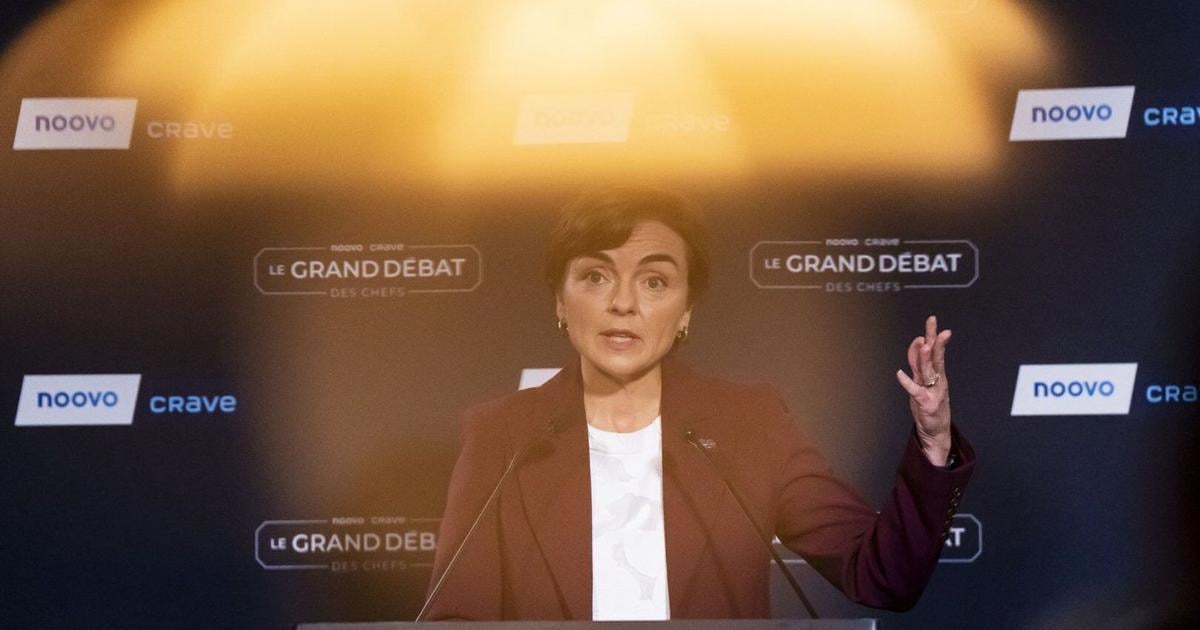
Photo via The Globe and Mail

Crowded political landscape leaves Quebec voters lukewarm as election nears

Read the original at The Globe and Mail ↗
Cite

Forrest, M. (2026, September 22). Crowded political landscape leaves Quebec voters lukewarm as election nears. The Globe and Mail. https://www.theglobeandmail.com/canada/article-quebec-election-pq-caq-liberals-crowded-landscape/

Dated when The Aporia collected the article, usually within hours of publication. Check the original for its exact date and byline.

The Globe and Mail · collected 2026-09-22 · by Maura Forrest

Quick Summary

Quebec voters are grappling with an election featuring five major parties, each struggling to gain widespread support as the October 5 vote approaches. The Parti Québécois, Coalition Avenir Québec (CAQ), and Liberals are polling within a few points of each other, all below 30%, indicating voter uncertainty. Parties cater to specific demographics—like PQ's core supporters in rural areas and Québec solidaire’s appeal to urban progressives—but none has managed to capture the enthusiasm of a majority. For example, voters in Quebec City’s Charlesbourg suburb remain undecided, citing dissatisfaction with both sovereignty debates and past government decisions.
Written by AI on 2026-09-22, from this article's own text only (the story summary below draws on all the coverage).

AI analysis

Story summary

Voters in Quebec are feeling overwhelmed and disengaged as they prepare for an October 5 election among a crowded field of five major political parties. The Parti Québécois, while favored to win the most seats, is constrained by its pledge to hold another sovereignty referendum, which polls show most Quebecers do not support. The Coalition Avenir Québec (CAQ), currently in power but struggling with eight years of governance, faces challenges as well. Meanwhile, the opposition Liberals remain unpopular among francophone voters despite their efforts to regain favor. This fragmented political landscape leaves many Quebeckers uncertain and disenchanted, with no clear favorite emerging from the election lineup.

Written for “Quebec Election Approaches” on 2026-10-30, grounded in this article and the 0 other(s) covering the same event.

Story

📰 Quebec Election Approaches
Politics · 1 article(s) covering the same event.

Compared with similar articles

This article reads unscored and hedges 2% of its claims. Each row says how that neighbour differs.
Toronto Star
Hedges 0 of 2 claims Outlet record 64/100
“Article A discusses Christine Fréchette's claims about public opinion towards fracking during the election campaign, while Article B focuses on voter sentiment and choice in an upcoming election with no mention of specific issues like fracking.”
CBC News
Hedges 8 of 38 claims Outlet record 74/100
“The articles discuss voter sentiment and party support in different provinces (Quebec vs. Alberta) with distinct political contexts.”
The Globe and Mail
Hedges 0 of 9 claims Outlet record 52/100
“The articles discuss different aspects of the Quebec election and do not describe the same specific incident or occurrence.”
Global News
⚖️ Leans right Hedges 6 of 42 claims Outlet record 63/100
“The articles discuss different elections in distinct provinces with separate political landscapes and issues.”
Global News
Hedges 0 of 5 claims Outlet record 63/100
“Article A describes specific campaign events and appearances of political leaders on a particular day, while Article B discusses voter sentiment and party choices in the context of the upcoming election over a broader timeframe.”
Toronto Star
Hedges 1 of 11 claims Outlet record 64/100
“The articles describe different stages of the Quebec election campaign, with Article A discussing voter sentiment before the election and Article B covering party leaders campaigning for advance polls.”
National Post
⚖️ Leans strongly left Hedges 10 of 39 claims Outlet record 60/100
“Article A describes the general political landscape and voter sentiment leading up to the election, while Article B focuses on a debate and poll results specific to one day.”
How this article was measured signals, leaning charts, publisher record, byline, topics and claims

Signals How these are calculated →

Claims extracted
62
sentences that state something as happening or true
Uncertain
2%
1 of 62 hedged ("reportedly", "may", "according to")
Leaning
not political
takes no side on a contested political question
Publisher signals
52/100
The Globe and Mail's corrections and hedging, across everything collected from it. Not a measure of accuracy.
Outlets on this story
1
Politics
Same framing elsewhere
1
articles that frame the event the way this one does
Analyzed 2026-09-22 · how these are computed

How this is being covered How these are calculated →

Article leaning vs. publisher reliability
Source leaning vs. consistency

Publisher

The Globe and Mail · 1012 article(s) · 35 correction(s) detected
Running correction rate · 35 correction(s)

Who wrote this

Maura Forrest
13 article(s) here · 1 carrying a prediction
🔮 The federal government denied the province’s request to have its leader deliver a speech and hold its own reception, instead offering a seat at the head table for the opening supper and a role greeting visiting dignitaries at the airport. “The federal government would have us believe that the Premier of Quebec being granted permission to serve shrimp cocktails at a reception constitutes an acceptable and sufficient form of influence for representing Quebec’s interests,” said Mr. St-Pierre Plamondon in a social-media post on Tuesday.
🔮 Ms. Poulin did not respond to questions about how the alleged theft of military ammunition could have taken place, and when the CAF became aware of the issue.
🔮 With the PQ at 59 seats, five shy of a majority, premier-designate Paul St-Pierre Plamondon has vowed to collaborate across the aisle, while his rival party leaders are starting to hint at what they will demand in return. “It will be a context of rivalry and contention on many issues,” said André Lamoureux, a political-science lecturer at the University of Quebec at Montreal.
🔮 We’ve got plenty of urgent problems to solve, so I think the upcoming months will more be about … things that are urgent,” he said.
🔮 The results of Monday’s election will shake up Quebec’s political landscape, with the PQ returning to power after being nearly wiped out four years ago, while the Coalition Avenir Québec is facing extinction after eight years in government.
2026-10-06 · assertive framing · Five takeaways from the Quebec election results
🔮 The separatist Parti Québécois is projected to form government in Quebec after promising to hold an independence referendum in the next four years, with the prospect of such a vote increasing if the PQ is able to eke out a majority.
🔮 The Parti Québécois, polls show, will likely take the reins of power from the governing Coalition Avenir Québec on Monday after a lacklustre campaign in which voters expressed a desire for change but little enthusiasm for any of their options.
🔮 The leader of the Parti Québécois says he will break with the monarchy in Quebec if he becomes premier, invoking the spectre of a constitutional battle that critics say could help him drum up support for an unpopular referendum on independence.
🔮 On Oct. 5, Quebeckers will select from five major political parties who are all likely to win at least a handful of seats in the province’s National Assembly.
🔮 On Friday, the PQ confirmed it will cost at least $130-million to hold an independence referendum in a first mandate, as Leader Paul St-Pierre Plamondon has promised to do if his party forms government on Oct. 5.
Also by Maura Forrest
Nothing else under this byline is closely related to this article, so these are simply their most recent.
All 13 articles by Maura Forrest →

Topics

CAQ Liberals Quebec Quebec City francophones

Subjects

CAQ ORG · 8× Quebec GPE · 4× Liberals NORP · 3× Charlesbourg GPE · 2× Conservatives NORP · 2× Coulombe PERSON · 2× Quebec City GPE · 2× Quebeckers NORP · 2× francophones NORP · 2× National Assembly ORG · 1×

Narrative

They later told The Globe and Mail they have no interest in the sovereignty referendum promised by PQ Leader Paul St-Pierre Plamondon, which would be the province’s third vote on the question of whether Quebec should remain in Canada.
framing: assertive · carried by 1 article(s) · first seen 2026-09-22
🔮 On Oct. 5, Quebeckers will select from five major political parties who are all likely to win at least a handful of seats in the province’s National Assembly.
2026-09-22 · The Globe and Mail
Crowded political landscape leaves Quebec voters lukewarm as election nears · assertive framing

Claims (62 extracted, 1 hedged)

Voters in Quebec are facing an almost unprecedented array of choices in this fall’s election, but amid the noise and bluster of a crowded field, they have yet to fall in love with any of their options. asserted
they → face → options
On Oct. 5, Quebeckers will select from five major political parties who are all likely to win at least a handful of seats in the province’s National Assembly. asserted
who → select → Assembly
It should be an embarrassment of riches, but voters seem unable to muster much enthusiasm for anything on the menu. asserted
voters → seem → menu
The Parti Québécois is favoured to win the most seats, but is hamstrung by its promise to hold a referendum on Quebec sovereignty that most people don’t want. asserted
people → favour → that
The Coalition Avenir Québec is weighed down by the baggage of eight years in power. asserted
Québec → weigh → power
When the CAQ formed its first government in 2018, promising a new brand of nationalism that didn’t include a referendum on separation, it blew up a political landscape that had been defined for decades by the debate over sovereignty. asserted
that → form → sovereignty
Eight years on, the electoral battlefield is littered with shrapnel from that explosion. asserted
battlefield → litter → explosion
The result is five parties that all cater to subsets of the Quebec electorate. asserted
that → cater → electorate
But none of those parties has so far proved capable of seducing a critical mass of voters in a campaign that feels strangely stagnant. asserted
that → prove → campaign
Each of the five contenders has a core of loyal support, often concentrated in certain regions. asserted
Each → have → regions
Sovereigntists mostly vote for the PQ. asserted
Sovereigntists → vote → PQ
Anglophones (largely in and around Montreal) consistently support the Liberals. asserted
Anglophones → support → Liberals
The CAQ is the party of choice for older francophones who don’t want a referendum. asserted
who → want → referendum
Urban progressives support Québec solidaire, a left-leaning sovereigntist party, while the Conservatives have a strong base among right-leaning voters around Quebec City. asserted
Conservatives → support → City
But with all five parties polling below 30 per cent, two- and three-way races are playing out in ridings across the province. asserted
races → poll → province
The three leading parties – the PQ, CAQ and Liberals – are all within a few points of each other, while roughly 40 per cent of voters still say their choice isn’t locked in. asserted
choice → lead → voters
On a doorstep in the Quebec City suburb of Charlesbourg, PQ candidate Gabriel Coulombe recently made his pitch to a couple who said they haven’t made up their minds about which way to vote. asserted
they → make → way
“The goods were not delivered” under the CAQ government, Mr. Coulombe told the couple. asserted
Coulombe → deliver → couple
They later told The Globe and Mail they have no interest in the sovereignty referendum promised by PQ Leader Paul St-Pierre Plamondon, which would be the province’s third vote on the question of whether Quebec should remain in Canada. asserted
Quebec → tell → Canada
Ms. Dinel said she’s thinking about voting for the Quebec Conservatives, a relatively new party projected to win seats for the first time this year. asserted
she → say → time
She voted for the CAQ four years ago, but they made some “bad choices,” she said. asserted
she → vote → choices
Mr. Simard seemed more inclined to give the CAQ another chance, though he didn’t offer the party a ringing endorsement. asserted
he → seem → endorsement
Leader Christine Fréchette “is already in place,” he said. asserted
he → say → place
The riding of Charlesbourg voted solidly CAQ in the last two elections. asserted
riding → vote → elections
But as voters seek change this time around, the campaign is a tight three-way race between the PQ, the CAQ and the Conservatives. asserted
campaign → seek → PQ
“It’s the kind of election that could be decided by a few hundred or a few dozen votes,” Mr. Coulombe said in an interview. uncertain
Coulombe → ’ → interview
Quebeckers have once before elected members of five parties to the provincial legislature, back in 1976. asserted
Quebeckers → elect → 1976
That election was an inflection point for the province, said Youri Rivest, co-founder of polling firm Synopsis Recherche. asserted
Rivest → say → Recherche
That year, René Lévesque led the Parti Québécois to form its first government, while the once-powerful Union Nationale won seats for the last time. asserted
Nationale → lead → time
Two of the other parties were bit players that dissolved not long after. asserted
that → dissolve → parties
This time, Mr. Rivest said, the five parties competing for votes are the result of a “fragmentation of the sociopolitical values of Quebeckers.” asserted
parties → say → Quebeckers
After decades of elections fought between the sovereigntist Parti Québécois and the federalist Liberals, the CAQ in 2018 suddenly made it possible to vote on other issues. asserted
it → fight → issues
“There was a very strong tension between federalists and sovereigntists,” he said. asserted
he → be → federalists
“But once you remove that tension, it reveals another axis – one that’s left-right.” asserted
that → remove → axis
Québec solidaire, the left-leaning party, won 10 seats for the first time in 2018. asserted
solidaire → lean → 2018
The Conservatives claimed nearly 13 per cent of the vote four years ago, but won no seats. asserted
Conservatives → claim → seats
Evelyne Brie, an assistant professor of political science at Université de Montréal, said the regionalization of politics is not unique to Quebec, and is partly driven by the rise of alternative media. asserted
regionalization → say → media
“It’s possible to get information from media outlets that are very specialized,” she said. asserted
she → ’ → outlets
“This creates echo chambers.” asserted
This → create → chambers
Two weeks ahead of election day, none of the leaders has managed to trigger one of the waves of popular sentiment for which Quebec is known, and the result on Oct. 5 will most likely be a minority government. asserted
result → manage → Oct.
…and 22 more, not listed.

💬Give feedback
🕘History 🎫Support