Last night, Marist College published a poll showing Democrat Josh Turek leading by 8 points in Iowa’s Senate race.
asserted
Turek → publish → race
Our Silver Bulletin polling average forecasts a much closer race — with Turek ahead by 1.9 points — though that would still be an impressive result in a state that Donald Trump won by 13 points in 2024.
asserted
Trump → forecast → 2024
For Democrats, the Marist poll may bring up anxious memories about the now-infamous Selzer poll that put Kamala Harris 3 points ahead of Trump in Iowa in November 2024.1
uncertain
that → bring → November
But I’m going to save the metaphysical discussion for tomorrow’s episode of Still Counting and/or a future Model Talk.
asserted
I → go → Counting
For now I’d just say: there’s much stronger evidence that Democrats are in a strong political position than there was in 2024.
asserted
Democrats → say → 2024
Kamala Harris’s polling was mediocre, and many of the fundamentals from immigration to inflation to Joe Biden’s disastrous debate worked against the party.
asserted
many → work → party
I’d be surprised if Turek wins Iowa by 8 points, but not as surprised as if Harris had won the Hawkeye State somehow.
asserted
Harris → win → State
Although the definition of “outlier” is subjective, the Selzer poll well and truly came out of nowhere.
asserted
poll → come → outlier
If Harris was really ahead in Iowa, you’d have expected polls in neighboring Wisconsin to show her with a big lead, or for her to be polling competitively in nearby Ohio.
asserted
her → expect → Ohio
None of that ever really happened.
asserted
None → happen → that
Democrats again achieved new highs across the board in our FLIPR update today, while Trump reached a new approval rating low.
asserted
Trump → achieve → rating
If you take the polls at face value, then not only is Iowa polling as a toss-up — maybe even leaning Democratic — but Kansas and Nebraska (!)
asserted
polling → take → up
FLIPR considerably hedges its bets in the latter two states, noting their strong Republican lean.
asserted
FLIPR → hedge → lean
It’s the gas prices, stupid — but also, diesel prices
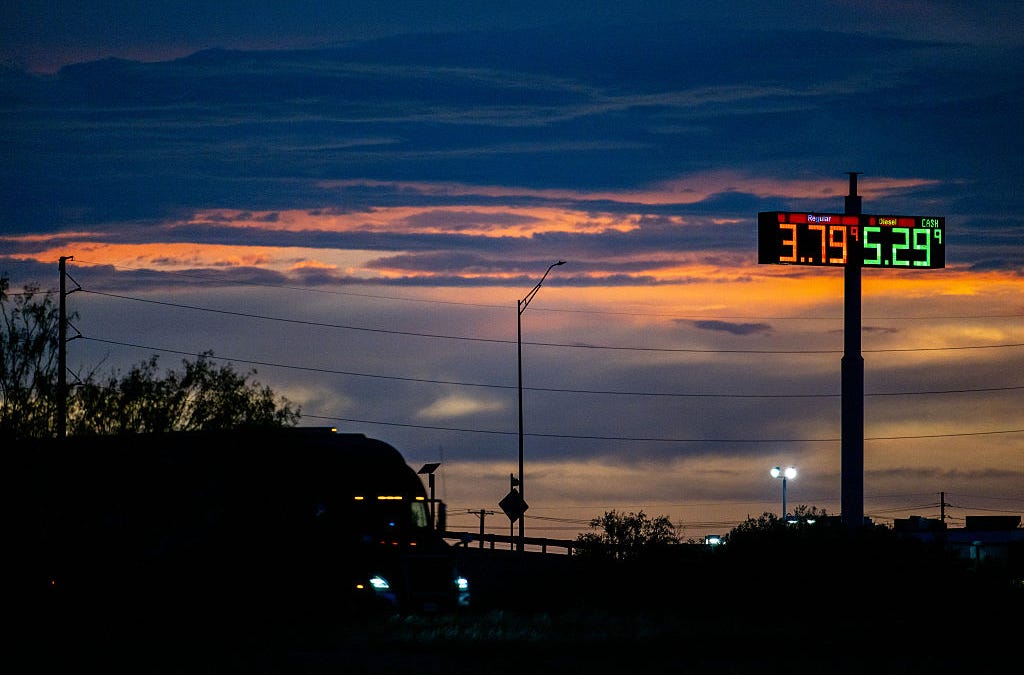
Could it be gas prices, which have recently spiked to almost $4.50 a gallon amid Iran’s effective shutdown of the Strait of Hormuz?
uncertain
which → ’ → Hormuz
In Michigan, Mike Rogers called for an end to the Iran War and a suspension of state and federal gas taxes.
asserted
Rogers → call → taxes
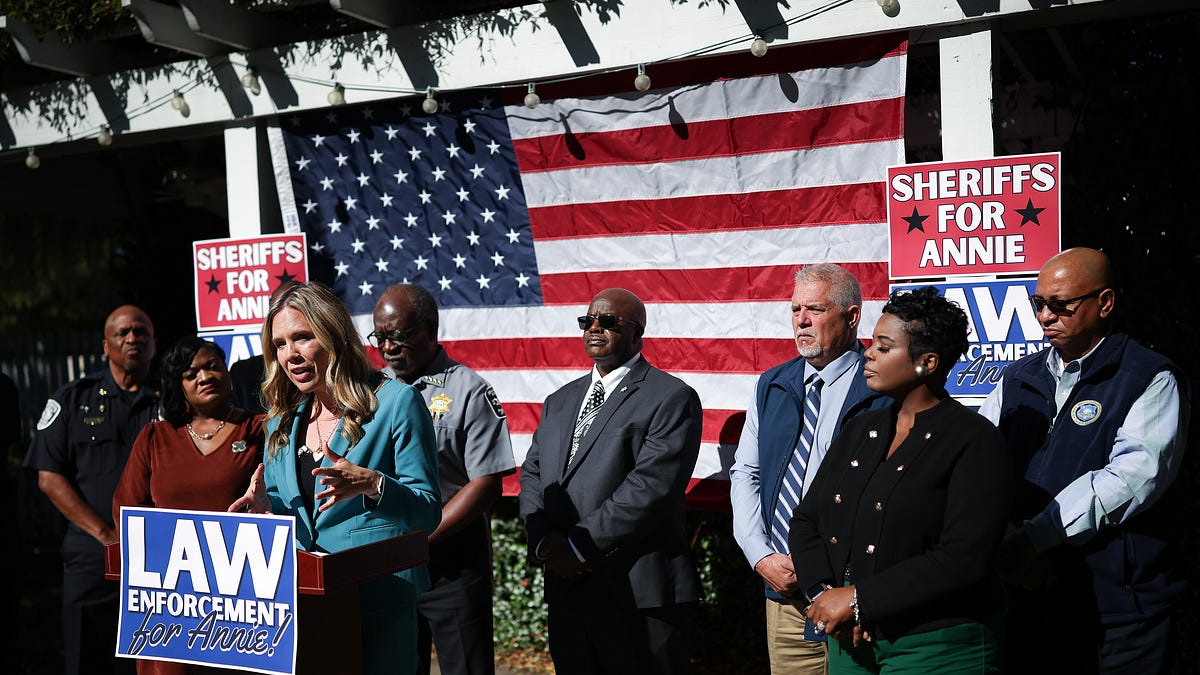
Turek’s opponent in Iowa, Ashley Hinson, likewise asked for an “immediate end” to the conflict on Monday — although she’s voted against numerous resolutions that would have directed Trump to end the war.2
Inflation in regular gas prices has been somewhat higher in the Midwest and in the heartland generally than on the coasts (though that’s partly because gas prices were already high on the West Coast in particular).
asserted
prices → ask → Coast
As compared with one year ago, Michigan has seen the largest rise in retail gas prices, a 55 percent jump from Sept. 22, 20253, based on this morning’s data from the AAA.
asserted
Michigan → compare → AAA
(States are hatched if they have competitive Senate races, which I’ve defined as the dozen states that FLIPR assigns as having at least a 3 percent chance of being the tipping-point state.
asserted
FLIPR → hatch → chance
But those figures actually understate the burden to consumers.
asserted
figures → understate → consumers
That’s because inflation in the price of diesel fuels has been considerably higher.
asserted
inflation → ’ → fuels
Nationally, a gallon of diesel cost $6.53 this morning as compared to $3.69 a year ago, a 77 percent increase.
asserted
gallon → cost → 3.69
Diesel engines aren’t all that common for American consumers, accounting for only a small fraction of new vehicle sales in the U.S., mostly pickup trucks.
asserted
engines → account → U.S.
However, they’re used intensively by truckers, farmers, and in other industrial and agricultural applications.
asserted
they → use → applications
Based on data from the EIA, I’ve estimated what percentage diesel (including heating oil) represents as a share of total diesel + gasoline consumption.
asserted
diesel → base → consumption
That runs from a low of 17 percent in Delaware to 70 percent in Alaska.
asserted
That → run → Alaska
There are several patterns here: it’s higher in colder states that spend more on heating oil, it’s higher in oil-producing states, and it’s higher in farm states
asserted
it → be → states
States like Alaska and North Dakota are especially high because they combine two or more of these factors.
asserted
they → combine → factors
For long-haul truckers, for example, the government’s estimates are based on how many miles the trucker drove in each state, and not necessarily where he fueled up.
asserted
he → base → state
Mileage driven in New Mexico won’t necessarily be a burden to New Mexico consumers.
asserted
Mileage → drive → consumers
Still, these estimates ought to at least point in the right direction — heating oil + farming + petroleum production are the big difference makers here.
asserted
oil → point → direction
And if you estimate the combined inflationary shock from diesel + regular gas compared to each state’s baseline, a lot of the territory gets very, very red, especially in the heartland.
asserted
lot → estimate → heartland
In Iowa, for instance, the combined price shock is 62 percent instead of 48 percent.
asserted
shock → combine → instance
It’s 63 percent in Nebraska, 62 percent in Michigan, and 61 percent in Kansas and Texas.
asserted
It → ’ → Kansas
And the diesel adjustment moves Maine and Alaska up substantially, to 54 percent from 42 and 30 percent, respectively.
asserted
adjustment → move → 42
What these states have in common, of course, is that they all have competitive Senate races.
asserted
they → have → races
This is one of those cases where the charts pretty much tell the story, so I’ll leave it at that.
asserted
I → tell → that
But it helps to explain why Democrats’ polling has been especially strong in the heartland.
asserted
polling → help → heartland
 The Aporia