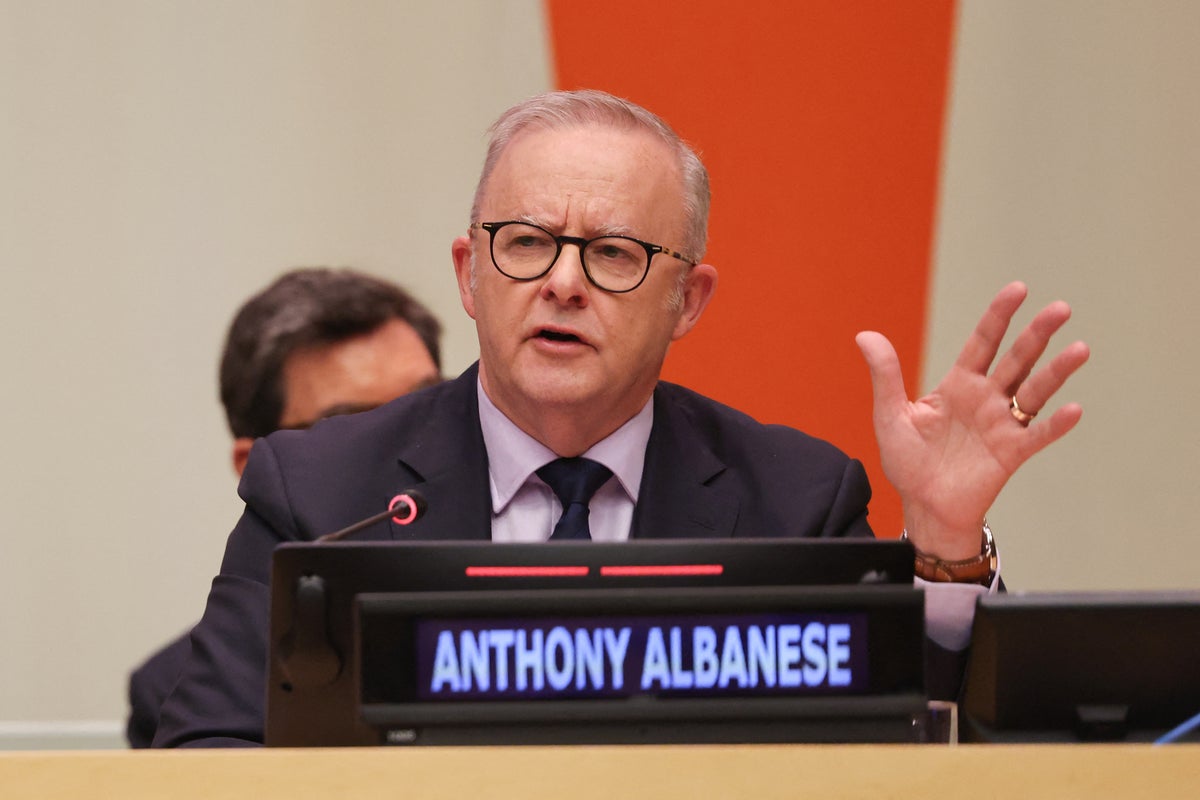
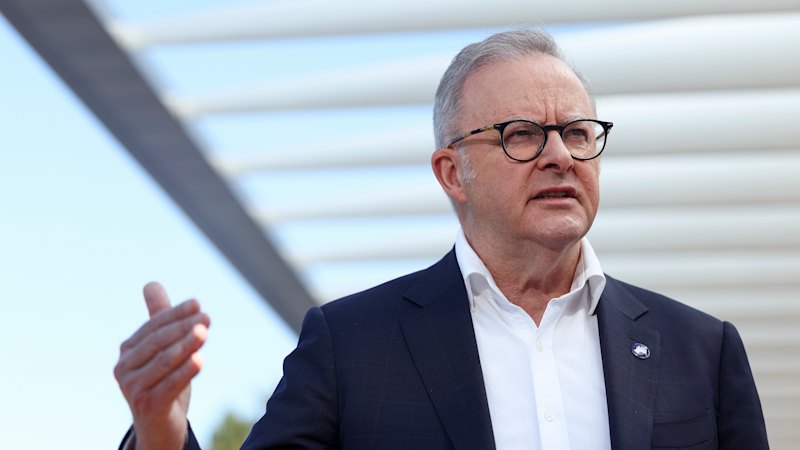
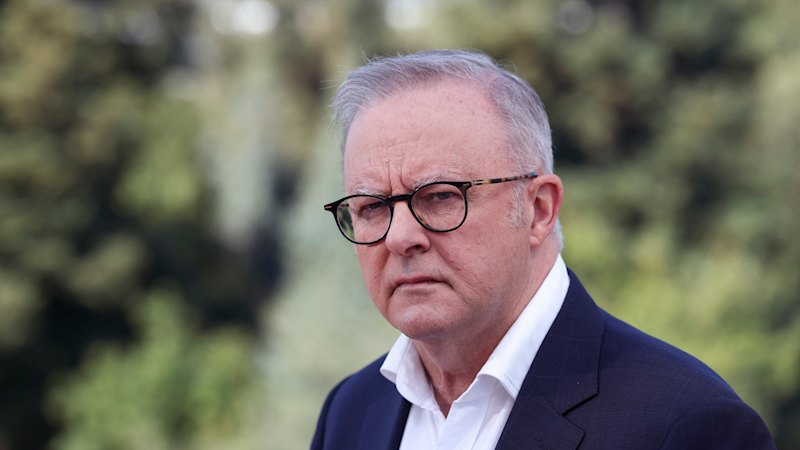
Photo via The Independent

US says Australia’s proposed law to opt out of social media algorithm is ‘censorship’

Read the original at The Independent ↗
Cite

Sankaran, V. (2026, September 23). US says Australia’s proposed law to opt out of social media algorithm is ‘censorship’. The Independent. https://www.independent.co.uk/tech/australia-social-media-algorithm-opt-out-censorship-b3054663.html

Dated when The Aporia collected the article, usually within hours of publication. Check the original for its exact date and byline.

The Independent · collected 2026-09-23 · by Vishwam Sankaran

Quick Summary

The US embassy has expressed serious concerns over Australia’s proposed law that would allow social media users to opt out of algorithms, calling it censorship. The draft bill, expected to be introduced after a consultation period, requires Big Tech firms to provide an opt-out option for algorithmic feeds or face fines up to $72 million. The US government argues that the vague definitions of "harm" in the proposed laws could lead to viewpoint-based censorship and affect users globally, potentially harming independent journalists’ reach.
Written by AI on 2026-09-23, from this article's own text only (the story summary below draws on all the coverage).

AI analysis

Story summary

In an unusual move, the US government publicly criticized Australia’s proposed digital duty of care bill, which aims to give users control over algorithmic recommendation feeds. The Trump administration warned that excluding US social media companies from this law would be "extraterritorial censorship of protected speech," potentially neutering the legislation by removing major platforms like Facebook and Twitter from its scope. This rare intervention occurred while Australian Prime Minister Anthony Albanese was in New York promoting tech policies at the United Nations. The US embassy submitted concerns that enforcing vague definitions of harm could lead to viewpoint-based censorship, affecting independent journalists who cover sensitive topics. Australia’s draft bill would impose fines of around $72 million (A$100m) on tech firms if they do not provide users with an opt-out option for algorithms.

Written for “US Criticizes Australian Digital Care…” on 2026-10-31, grounded in this article and the 2 other(s) covering the same event.

Story

📰 US Criticizes Australian Digital Care…
Politics · 3 article(s) covering the same event. Compare every outlet's account →

Compared with similar articles

This article reads unscored and hedges 29% of its claims. Each row says how that neighbour differs.
BBC News
Hedges 4 of 15 claims Outlet record 68/100
The Sydney Morning Herald
⚖️ Leans left Hedges 0 of 29 claims Outlet record 61/100
“The articles describe different events related to AI and social media algorithms, with different dates and contexts.”
The Sydney Morning Herald
Hedges 0 of 8 claims Outlet record 61/100
“Article A reports on PM Albanese's call for international AI safeguards at the UN, while Article B discusses US concerns over Australia's proposed laws to opt out of social media algorithms.”
The Guardian
Hedges 4 of 47 claims Outlet record 66/100
“The articles describe different events: one is about Anthony Albanese joining other world leaders in signing a statement on AI control, while the other reports on the US embassy's reaction to Australia's proposed law for social media users to opt out of algorithms.”
Brickbat: Unclipped Different event
Reason
⚖️ Leans right Hedges 1 of 4 claims Outlet record 67/100
“The articles describe different proposals: one about restricting social media sharing of parliamentary clips and another about opting out of algorithmic content curation.”
ABC News (AU)
Hedges 3 of 28 claims Outlet record 68/100
New York Post
⚖️ Leans left Hedges 1 of 12 claims Outlet record 66/100
“The articles discuss different perspectives on the same proposed Australian law but describe distinct reactions and statements made at different times.”
ABC News (AU)
⚖️ Leans left Hedges 0 of 3 claims Outlet record 68/100
“Article A focuses on Prime Minister Albanese defending social media reforms amid US backlash, while Article B specifically addresses the US embassy's criticism of Australia’s proposed law to opt out of social media algorithms.”
The Guardian
Hedges 1 of 42 claims Outlet record 66/100
“The articles discuss different aspects of the proposed law and reactions to it, rather than a single specific incident.”
How this article was measured signals, leaning charts, publisher record, byline, topics and claims

Signals How these are calculated →

Claims extracted
17
sentences that state something as happening or true
Uncertain
29%
5 of 17 hedged ("reportedly", "may", "according to")
Leaning
withheld
no quote in the article backed the model's score
Publisher signals
59/100
The Independent's corrections and hedging, across everything collected from it. Not a measure of accuracy.
Outlets on this story
3
Politics
Same framing elsewhere
1
articles that frame the event the way this one does
Analyzed 2026-09-23 · how these are computed

How this is being covered How these are calculated →

Article leaning vs. publisher reliability
Source leaning vs. consistency

Publisher

The Independent · 3430 article(s) · 7 correction(s) detected
Running correction rate · 7 correction(s)

Who wrote this

Vishwam Sankaran
11 article(s) here · 1 carrying a prediction
🔮 Saturday’s suspected murder-robbery could complicate the Japanese prime minister’s efforts to move some US marines from the busy Futenma air base in Okinawa to a more remote facility at Henoko.
🔮 The Indian pilot said the cockpit could be opened only using a code from the outside, but could be more easily opened from the inside.
🔮 Ukraine will double down on attacking Russian oil refineries in response to a new policy of airstrikes by Moscow designed to force people to abandon Kyiv and other cities, but will not target civilians, he said.
🔮 In pictures: US carrier George HW Bush visits Thailand after six-month Middle East deployment Iran says Strait of Hormuz will not reopen until conditions are met, Nournews reports The Strait of Hormuz will not reopen until conditions set out in a June interim agreement with the US are met, Nournews reported Iran's parliament speaker Mohammad Bager Ghalibaf as saying on Sunday, a few days after Tehran received Washington's reply to its diplomatic proposal.
🔮 The project will see URIF develop a "joint investment platform" with the BGV Group, founded by Ukrainian billionaire Hennadii Butkevych.
🔮 President Trump warned the US would retaliate if the link is established to Iran, telling reporters: “Oh, they’ll be hit, very hard, don’t worry.”
🔮 Researchers could not catch even a single glimpse of the nationally endangered quoll in 12 months of camera-trap surveys at the Litchfield National Park.
🔮 The US embassy in Canberra has raised “serious concerns” over Australia’s proposed laws that would give its social media users the choice to opt out of Big Tech algorithms, calling it “censorship of protected speech”.
🔮 They caught fewer ticks during midday in the UK in May, associated with higher temperatures. “The results of the present study suggest that during warm weather there is greater risk of tick exposure at night and around dawn,” the researchers concluded.
Also by Vishwam Sankaran
Nothing else under this byline is closely related to this article, so these are simply their most recent.
All 11 articles by Vishwam Sankaran →

Topics

Australia Australian Big Tech Canberra The White House

Subjects

Australia GPE · 7× Australian NORP · 4× Albanese PERSON · 1× Anthony Albanese PERSON · 1× Big Tech ORG · 1× Canberra GPE · 1× New York GPE · 1× The White House ORG · 1× the UN General Assembly ORG · 1×

Narrative

Under the proposed laws, if platforms are forced to filter content “to satisfy a government mandate and such filtering draws in protected speech, the effect on a disfavoured speaker or media source’s reach would not be meaningfully different than outright removal,” the US said.
framing: mixed · carried by 1 article(s) · first seen 2026-09-23
🔮 The US embassy in Canberra has raised “serious concerns” over Australia’s proposed laws that would give its social media users the choice to opt out of Big Tech algorithms, calling it “censorship of protected speech”.

Claims (17 extracted, 5 hedged)

The US embassy in Canberra has raised “serious concerns” over Australia’s proposed laws that would give its social media users the choice to opt out of Big Tech algorithms, calling it “censorship of protected speech”. asserted
that → raise → speech
A draft bill for the “My Feed, My Way” initiative was released by the Anthony Albanese government earlier this month, and it is expected to be introduced in Australia's parliament after the consultation period. asserted
it → release → period
Under the proposed law, Big Tech firms risk hefty fines of around $72m (A$100m) if they do not provide Australia’s over 21 million social media users the choice to opt out of online platform algorithms via pop-up messages. asserted
they → propose → messages
The Australian government reasoned that the proposed rules would give users the option to make their social media feeds feature only content from accounts they follow, curbing people’s exposure to harmful content online. asserted
they → reason → content
But in a rare submission to the proposed laws, the US government said it has “serious concerns about the Australian government’s stated goal”. asserted
it → propose → goal
“We are particularly concerned by potential mandates that would allow regulators to impose rigid, one-size-fits-all platform design requirements – such as forced chronological feeds or opt-in recommendation systems,” the US government said in its submission. asserted
government → allow → submission
It said the framework’s “vague definitions of ‘harm’” risks becoming a mechanism for “viewpoint-based censorship” that could also affect users outside of Australia. uncertain
that → say → Australia
The White House had previously flagged that such measures could impose unfair restrictions on US-based tech companies. uncertain
measures → flag → companies
"Mandated platform design features, especially when applied to algorithms, may affect what users see, say, and hear not just in or from Australia, but globally,” the US government said. uncertain
government → mandate → Australia
“We ask that Australia clarify how exactly ‘harm’ and ‘risks’ shall be determined, if there are any standard definitions that will be utilised, and by whom in the context of the proposed plans, ensuring these definitions do not encroach on protected speech,” it said. asserted
it → ask → speech
The proposed laws, according to the US, may also risk “reducing the reach of independent journalists or other voices whose content touches on sensitive or controversial topics”. uncertain
content → propose → topics
Under the proposed laws, if platforms are forced to filter content “to satisfy a government mandate and such filtering draws in protected speech, the effect on a disfavoured speaker or media source’s reach would not be meaningfully different than outright removal,” the US said. asserted
US → propose → removal
“The US government would likely consider such a measure as facilitating censorship,” it said, adding that it could also “affect Australia’s reputation as a jurisdiction that enables innovation”. uncertain
that → consider → innovation
The submission comes amid the Australian prime minister’s US visit to speak at the UN General Assembly. asserted
submission → come → Assembly
Mr Albanese defended his government’s proposed laws, stating he would "always stand up for Australian interests". asserted
he → defend → interests
Speaking to journalists in New York, he said the proposed move is “not about giving government control”. asserted
move → speak → control
“It's about giving people back control over what they receive on their devices,” he said, adding that his administration would "engage constructively" before finalising the legislation. asserted
administration → give → legislation

💬Give feedback
🕘History 🎫Support