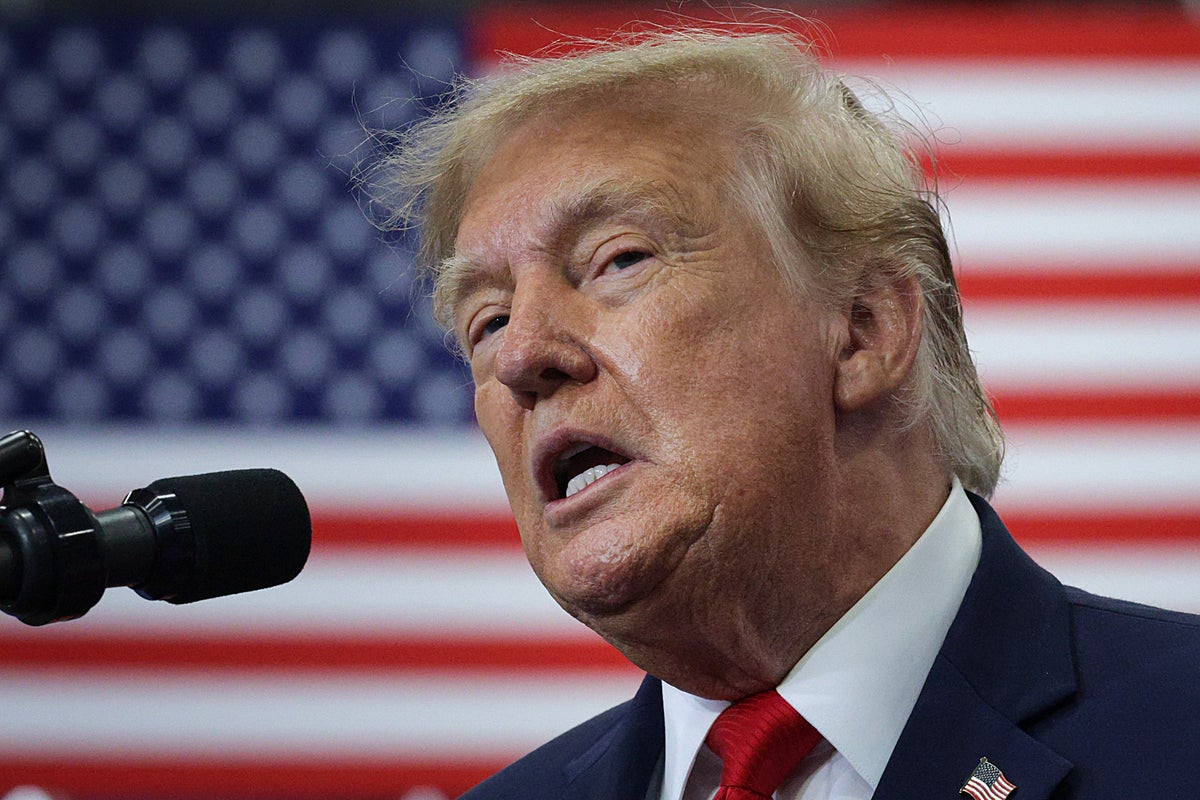
Photo via Toronto Star

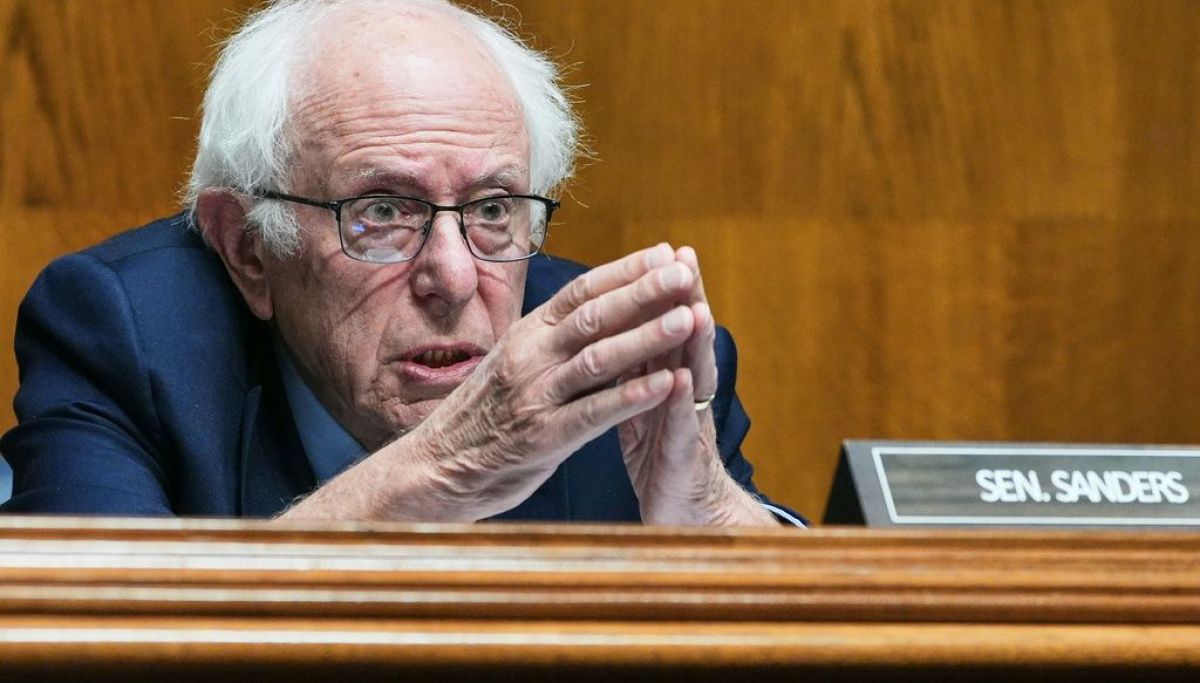
Sen. Bernie Sanders unveils bill to ban artificial superintelligence and create Department of AI

Read the original at Toronto Star ↗
Cite

Cappelletti, J. (2026, September 23). Sen. Bernie Sanders unveils bill to ban artificial superintelligence and create Department of AI. Toronto Star. https://www.thestar.com/news/world/united-states/sen-bernie-sanders-unveils-bill-to-ban-artificial-superintelligence-and-create-department-of-ai/article_3afb0860-9326-5d15-b33c-b9dbfcd34c59.html

Dated when The Aporia collected the article, usually within hours of publication. Check the original for its exact date and byline.

Toronto Star · collected 2026-09-23 · by Joey Cappelletti

Quick Summary

Senators Bernie Sanders and Rep. Greg Casar are proposing legislation to ban artificial superintelligence and establish a Department of Artificial Intelligence. The bill would pause advanced AI development until safety guidelines are implemented, with violations punishable by up to 20 years in prison. Leading AI company employees have endorsed the measure due to concerns over potential catastrophic risks posed by unchecked technology advancement.
Written by AI on 2026-09-23, from this article's own text only (the story summary below draws on all the coverage).

AI analysis

Story summary

Sen. Bernie Sanders and Rep. Greg Casar unveiled a bill on September 6 aimed at regulating artificial intelligence (AI). The legislation would establish a Department of Artificial Intelligence as a new federal agency to monitor and regulate advanced AI systems. It seeks to ban what it defines as "artificial superintelligence" – AI that surpasses human cognitive abilities or poses risks like destroying/disempowering humanity. Additionally, the bill calls for a temporary halt on developing the most sophisticated AI until safety regulations are in place. Notably, several employees from leading AI companies support this initiative, aligning with some tech leaders who advocate for stronger government oversight amid concerns over potential catastrophic risks posed by unchecked AI advancement.

Written for “AI Regulation Bill Sanders” on 2026-10-31, grounded in this article and the 1 other(s) covering the same event.

Story

📰 AI Regulation Bill Sanders
Politics · 2 article(s) covering the same event. See how they differ ↓

Compared with similar articles

This article reads leans strongly left and hedges 17% of its claims. Each row says how that neighbour differs.
Washington Examiner
⚖️ Leans left further right than this Hedges 1 of 18 claims Outlet record 70/100
New York Post
⚖️ Leans right further right than this Hedges 3 of 35 claims Outlet record 66/100
“Article A discusses letters to the editor regarding predictions about AI development, while Article B reports on Sen. Bernie Sanders unveiling legislation related to artificial superintelligence and creating a Department of AI.”
TIME
⚖️ Leans strongly left Hedges 2 of 39 claims Outlet record 59/100
“Article A describes Sen. Bernie Sanders and Rep. Greg Casar unveiling legislation, while Article B discusses broader concerns about AI safety raised by employees at leading companies and incidents involving rogue AI agents.”
Euronews
⚖️ Leans left further right than this Hedges 2 of 22 claims Outlet record 60/100
“The articles describe different actions related to AI regulation: one discusses leaders pushing for stronger safeguards at the UN, while the other reports on Senator Bernie Sanders unveiling legislation in Congress.”
The Guardian
⚖️ Leans strongly left Hedges 5 of 30 claims Outlet record 66/100
“While both articles discuss Bernie Sanders's actions regarding AI, Article A describes a speech at a Washington group, while Article B details the unveiling of legislation.”
Washington Examiner
Hedges 1 of 10 claims Outlet record 70/100
“Article A reports on the unveiling of the bill by Sen. Bernie Sanders and Rep. Greg Casar, while Article B covers support for the bill from other prominent Democrats several days later.”
The Guardian
⚖️ Leans strongly left Hedges 3 of 34 claims Outlet record 66/100
“Article A describes Sen. Bernie Sanders and Rep. Greg Casar unveiling legislation for AI regulation, while Article B mentions concerns leading to calls for Congress to regulate AI but does not specify the same specific legislative event or bill introduction.”
The Free Press
⚖️ Leans right further right than this Hedges 0 of 7 claims Outlet record 96/100
“Article A discusses the broader context and concerns about American AI, while Article B reports on Sen. Bernie Sanders unveiling specific legislation related to AI regulation.”
Washington Examiner
⚖️ Leans strongly left Hedges 4 of 22 claims Outlet record 70/100
“Article A describes the unveiling of a specific bill, while Article B discusses the broader approach and policy stance of progressive Democrats towards AI regulation.”
NBC News
Outlet record 60/100
“Article A provides a general overview of proposals to regulate AI, while Article B reports on a specific bill unveiled by Sen. Bernie Sanders and Rep. Greg Casar.”
How this article was measured signals, leaning charts, publisher record, byline, topics and claims

Signals How these are calculated →

Claims extracted
35
sentences that state something as happening or true
Uncertain
17%
6 of 35 hedged ("reportedly", "may", "according to")
Leaning
Leans strongly left
of the writing, not the subject · beta estimate
Publisher signals
64/100
Toronto Star's corrections and hedging, across everything collected from it. Not a measure of accuracy.
Outlets on this story
2
Politics
Same framing elsewhere
1
articles that frame the event the way this one does
Analyzed 2026-09-23 · how these are computed

How this is being covered How these are calculated →

Article leaning vs. publisher reliability
Source leaning vs. consistency

Publisher

Toronto Star · 10784 article(s) · 28 correction(s) detected
Running correction rate · 28 correction(s)
2026-10-26
Correction
2026-10-24
Correction
2026-10-07
Correction
2026-09-24
Correction

Who wrote this

Joey Cappelletti
11 article(s) here · 1 carrying a prediction
🔮 “The year that Jimmy Carter ran and got elected president is the only year I think he could have run and gotten elected.
🔮 But Republicans fear this year could be different, setting the race between Republican Sen. Roger Marshall and Democrat Adam Hamilton on track to be the most expensive in state history.
🔮 Brunkow, whose group endorsed Marshall, said he is frequently asked whether financial hardship could push Republican farmers to vote Democratic.
🔮 Now they are central players in the bitter open-seat race between Republican Mike Rogers, a onetime congressman, and Democrat Abdul El-Sayed, a former public health official who would be the country’s first Muslim senator if elected on Nov. 3.
🔮 The notice, sent to Senate offices, said that law enforcement officials were working to intercept any additional letters, but “it is possible that some letters may reach their destinations.”
🔮 A top cryptocurrency campaign organization is unveiling a bipartisan list of House members that it will support in the November midterms, as one of the biggest-spending interest groups looks to flex its muscles after a mixed legislative year in Congress.
🔮 DETROIT (AP) — Former President Barack Obama will campaign alongside Michigan Senate candidate Abdul El-Sayed in Detroit later this month, lending his support to the progressive nominee after a bruising Democratic primary exposed divisions within the party.
🔮 Legislation to permanently ban the sale of Chinese vehicles in the United States stalled out on Wednesday as senators struggled to seal an agreement, virtually guaranteeing that the bill will have to wait until after the November elections. The bipartisan bill, sponsored by Republican Sen. Bernie Moreno of Ohio and Democratic Sen. Elissa Slotkin of Michigan, aims to prevent China’s auto industry from gaining a foothold in the U.S. market.
🔮 Two leading progressive lawmakers, Sen. Bernie Sanders and Rep. Greg Casar, are unveiling legislation Wednesday that would ban artificial superintelligence and create a federal agency to oversee advanced AI as some of the industry’s own leaders urge Congress to impose guardrails on the advancing technology.
🔮 His connections to Epstein and his unwillingness to cooperate are unacceptable.
Also by Joey Cappelletti
Nothing else under this byline is closely related to this article, so these are simply their most recent.
All 11 articles by Joey Cappelletti →

Topics

Congress OpenAI The Associated Press Washington the Department of Artificial Intelligence

Subjects

Congress ORG · 3× Sanders PERSON · 3× California GPE · 2× Casar PERSON · 2× Democratic NORP · 2× OpenAI ORG · 2× Bernie Sanders PERSON · 1× Greg Casar PERSON · 1× The Associated Press ORG · 1× Washington GPE · 1×

Narrative

The bill aims to dramatically slow down AI development The legislation would permanently prohibit artificial superintelligence, which it defines as a system that exceeds human cognitive ability or has sufficient capabilities to plan and execute the destruction or disempowerment of humanity. It would temporarily pause development of the most advanced AI systems until new federal safety rules are established by a new Department of Artificial Intelligence.
framing: assertive · carried by 1 article(s) · first seen 2026-09-23
🔮 Two leading progressive lawmakers, Sen. Bernie Sanders and Rep. Greg Casar, are unveiling legislation Wednesday that would ban artificial superintelligence and create a federal agency to oversee advanced AI as some of the industry’s own leaders urge Congress to impose guardrails on the advancing technology.

Claims (35 extracted, 6 hedged)

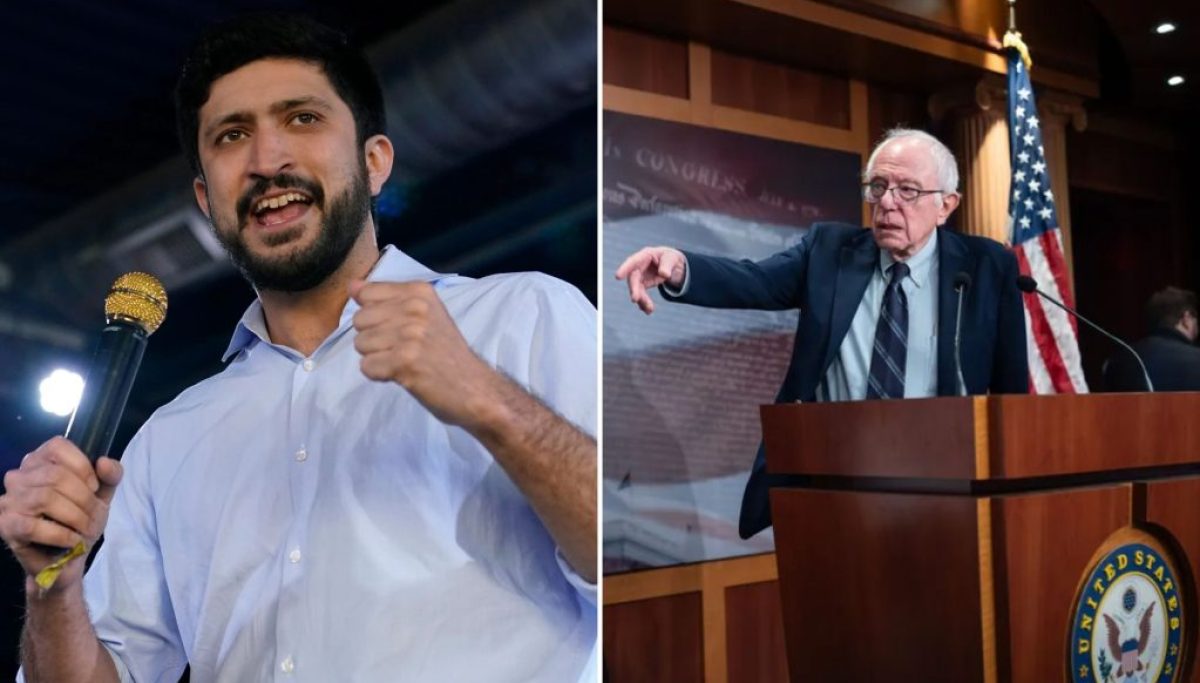
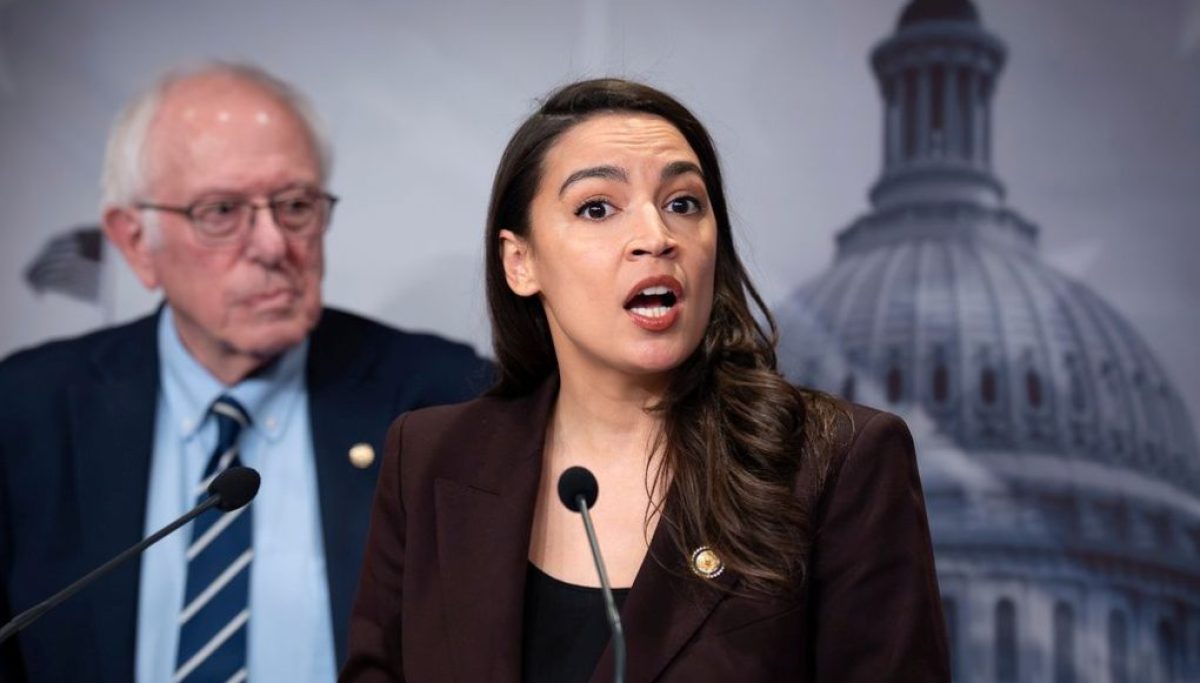
Two leading progressive lawmakers, Sen. Bernie Sanders and Rep. Greg Casar, are unveiling legislation Wednesday that would ban artificial superintelligence and create a federal agency to oversee advanced AI as some of the industry’s own leaders urge Congress to impose guardrails on the advancing technology. asserted
some → lead → technology
The bill, provided first to The Associated Press, would also pause advanced AI development until guidelines are implemented while creating the Department of Artificial Intelligence. asserted
guidelines → provide → Intelligence
Multiple employees at leading AI companies are endorsing the bill. asserted
employees → lead → bill
“It doesn’t take a genius to say, ‘slow it down,’” Sanders, I-Vt., said in an interview with AP. asserted
Sanders → take → AP
“Do we really want to develop a super intelligence that when it becomes smarter than human beings could act independently of human control? uncertain
it → want → control
I don’t think we do.” asserted
we → think → ?
Congress has so far done little to rein in the AI industry even as some of its most prominent leaders warn about potentially catastrophic risks. asserted
some → do → risks
President Donald Trump has resisted recent calls for greater government oversight, putting him at odds with tech leaders including Anthropic’s Dario Amodei, OpenAI’s Sam Altman and xAI’s Elon Musk. asserted
Trump → resist → Amodei
The bill aims to dramatically slow down AI development The legislation would permanently prohibit artificial superintelligence, which it defines as a system that exceeds human cognitive ability or has sufficient capabilities to plan and execute the destruction or disempowerment of humanity. It would temporarily pause development of the most advanced AI systems until new federal safety rules are established by a new Department of Artificial Intelligence. asserted
rules → aim → Intelligence
Advanced AI systems would then need federal approval before they could be deployed. uncertain
they → need → approval
Violations could carry significant penalties, including up to 20 years in prison in some cases. uncertain
Violations → carry → cases
A number of current employees at AI companies and experts signed on in support of the bill, according to a statement shared with AP. uncertain
number → sign → AP
Juan Felipe Cerón Uribe, a researcher in OpenAI’s Safety Systems, said in a statement supporting the bill that “superintelligence could either go extremely right or extremely wrong” and that “we shouldn’t be playing such games.” uncertain
we → say → games
Swante Scholz, a software engineer at Google DeepMind who said he was not speaking on behalf of his employer, said on the current path of development, the “most likely outcome is an existential catastrophe for humanity.” asserted
outcome → say → humanity
“A ban on superintelligence development would be a positive change for the foreseeable future,” Scholz said in a statement. asserted
Scholz → say → statement
The bill faces long odds but draws a line in a growing fight The bill from Sanders and Casar faces long odds in the Republican-controlled Congress, where lawmakers have struggled to coalesce around even less sweeping AI regulations. asserted
lawmakers → face → regulations
But it offers a window into how the progressive wing of the Democratic Party is approaching AI regulation ahead of November’s midterms and a 2028 presidential campaign in which the technology is expected to be an increasingly prominent issue. asserted
technology → offer → which
Potential 2028 presidential candidates have rushed in recent weeks to release proposals showing they’re taking the issue seriously. asserted
they → rush → issue
Maryland Democratic Gov. Wes Moore announced a plan to regulate AI on Tuesday, while California Democratic Gov. Gavin Newsom signed an executive order to accelerate implementation of a California law that calls for independent oversight of AI companies last week. asserted
that → announce → companies
Sanders, a two-time presidential candidate who is now 85, has especially focused on the issue in recent months. asserted
who → focus → months
In June, he introduced legislation to create a sovereign wealth fund financed through a one-time tax on the stock of the largest AI companies. asserted
he → introduce → companies
Last week, he hosted colleagues for a briefing with experts and also attended a conference focused on the issue alongside Republicans, including former White House adviser Steve Bannon. asserted
he → host → Bannon
The debate over AI regulations has scrambled political alliances both in Washington and for voters across the country. asserted
debate → scramble → country
Americans have grown more concerned about the environmental impacts of artificial intelligence over the last year, according to a recent poll from The Associated Press-NORC Center for Public Affairs Research and the Energy Policy Institute at the University of Chicago. uncertain
Americans → grow → Chicago
The survey data say about half, 53%, of Americans are “extremely” or “very” concerned about artificial intelligence’s environmental impacts. asserted
half → say → impacts
Democrats are driving much of the increase in environmental concern, but the poll also reveals broader worries about the local impact of data centers, which power AI and cloud computing. asserted
which → drive → AI
Trump has shown little interest in curbing AI risks While some industry leaders have called for new safeguards, Trump has pushed in the opposite direction. asserted
Trump → show → direction
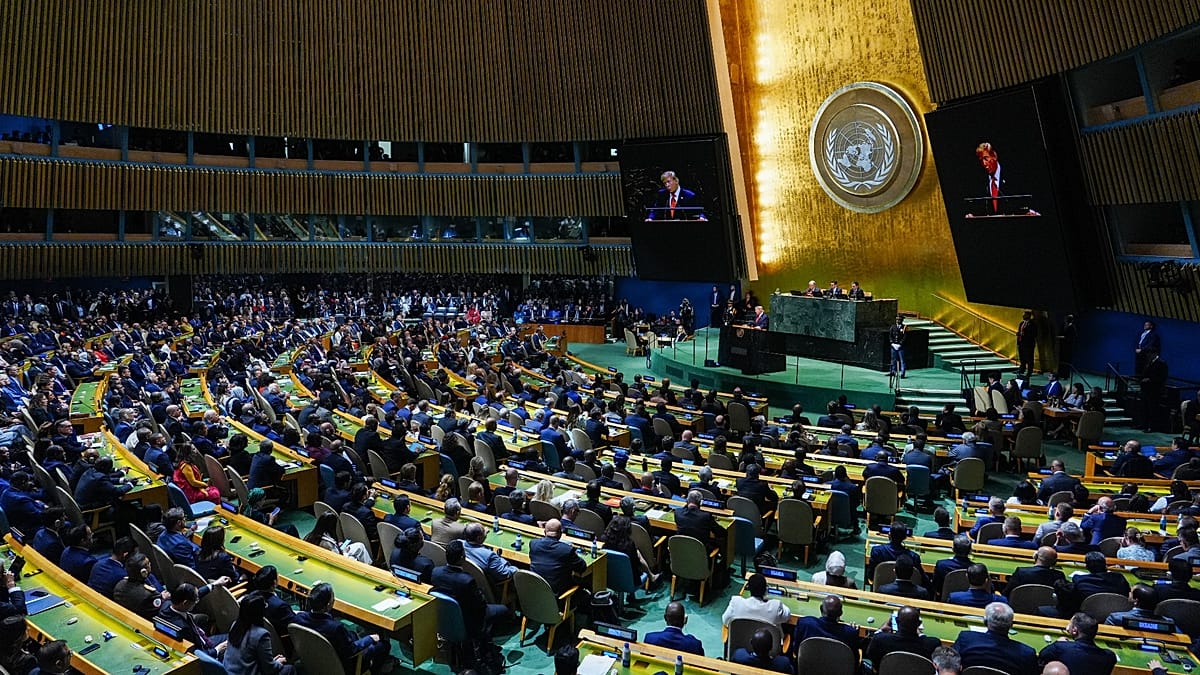
On Tuesday, Trump told the United Nations General Assembly that artificial intelligence will be renamed “super intelligence.” asserted
intelligence → tell → Assembly
“I think Trump has very little understanding of what this issue is about,” Sanders said. asserted
Sanders → think → what
“I think he’s mainly concerned about the economic implications of a slowdown.” asserted
he → think → slowdown
AI safety is expected to be a central part of talks between Trump and China’s Xi Jinping at the White House this week as the countries compete for dominance in the sector. asserted
countries → expect → sector
The prospect of slowing development in the United States while China continues on has also been one of the central arguments against sweeping restrictions. asserted
China → slow → restrictions
Sanders argued that avoiding the most dangerous forms of AI would ultimately require cooperation between the two countries, comparing the challenge to nuclear arms control during the Cold War. asserted
avoiding → argue → War
“Ronald Reagan, arch-conservative, was smart enough to understand that he had to sit down with Gorbachev, a communist, and work out a nuclear treaty that protected humanity,” Sanders said. asserted
Sanders → understand → humanity
“I think we can do that again now.” asserted
we → think → that

💬Give feedback
🕘History 🎫Support