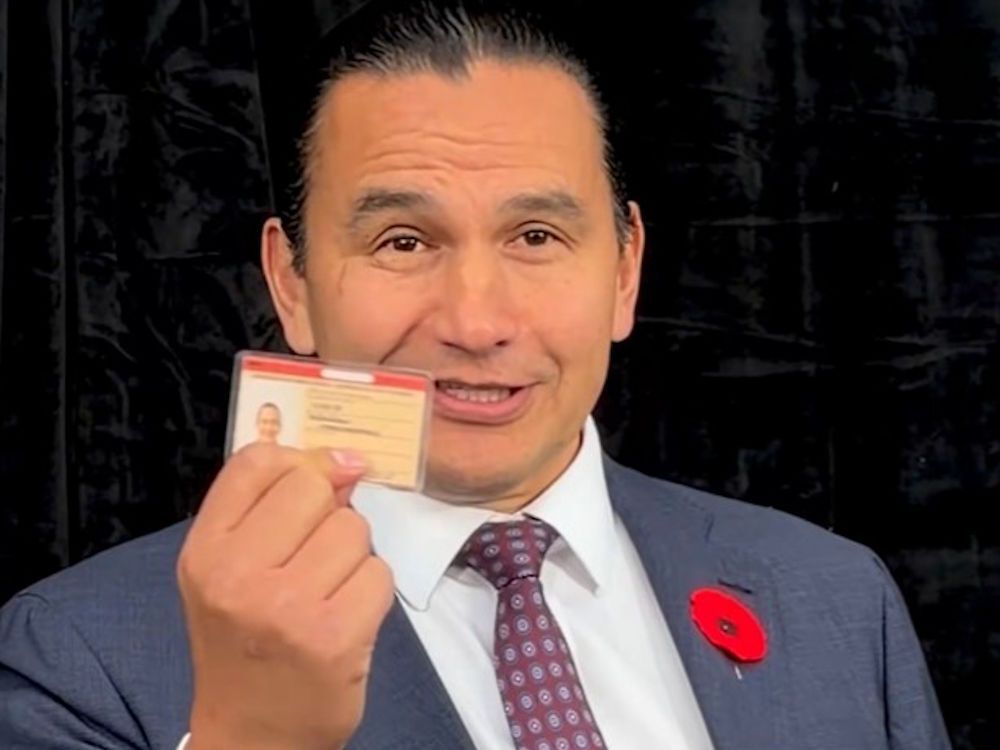
Photo via National Post

FIRST READING: David Eby’s snap election could blow up in his face

Read the original at National Post ↗
Cite

Hopper, T. (2026, September 23). FIRST READING: David Eby’s snap election could blow up in his face. National Post. https://nationalpost.com/opinion/first-reading-david-ebys-snap-election-could-blow-up-in-his-face

Dated when The Aporia collected the article, usually within hours of publication. Check the original for its exact date and byline.

National Post · collected 2026-09-23 · by Tristin Hopper analysis

Quick Summary

B.C. Premier David Eby has called for a snap election despite having two years left until the next scheduled vote and holding a majority government. He cites U.S. President Donald Trump as an existential threat to B.C., needing his mandate renewed immediately. However, similar gambles in Canadian politics have often backfired, with examples like Ontario Premier David Peterson’s 1990 snap election call that led to the loss of both his party's majority and government to the NDP.
Written by AI on 2026-09-23, from this article's own text only (the story summary below draws on all the coverage).

AI analysis

Story summary

In 1976, Quebec Premier Robert Bourassa called a snap election despite having two years left in his term and a majority government. He cited "important events affecting Quebec’s future" as reasons for the early poll. However, this move backfired spectacularly when the newly founded Parti Québécois, which Bourassa had mocked during the campaign, won an upset victory, even causing him to lose his own seat to a separatist poet.

On Tuesday, B.C. Premier David Eby announced a snap election in British Columbia, despite having two years left until the next scheduled vote and maintaining a majority government himself. Eby justified the early poll by arguing that U.S. President Donald Trump poses an existential threat to B.C., necessitating renewed legislative support.

Political scientists generally warn against such moves, as Canadians tend to punish politicians who force unnecessary elections on them. Given this historical context and public sentiment, Eby’s decision could similarly backfire, potentially benefiting the opposition NDP or other parties critical of his move.

Written for “BC Snap Election” on 2026-11-03, grounded in this article and the 0 other(s) covering the same event.

Story

📰 BC Snap Election
Politics · 1 article(s) covering the same event.

Compared with similar articles

This article reads unscored and hedges 7% of its claims. Each row says how that neighbour differs.
Toronto Star
⚖️ Leans left Hedges 2 of 33 claims Outlet record 64/100
“Article A discusses David Eby's announcement of a snap election in British Columbia, while Article B refers to a historical example from Quebec and does not describe the same specific incident.”
Global News
Hedges 3 of 20 claims Outlet record 63/100
“Article A discusses a historical example from Quebec, while Article B covers a current snap election in British Columbia involving NDP Leader David Eby.”
National Post
⚖️ Leans left Hedges 5 of 46 claims Outlet record 60/100
“The articles discuss different snap elections in different provinces and times.”
How this article was measured signals, leaning charts, publisher record, byline, topics and claims

Signals How these are calculated →

Claims extracted
60
sentences that state something as happening or true
Uncertain
7%
4 of 60 hedged ("reportedly", "may", "according to")
Leaning
withheld
no quote in the article backed the model's score
Publisher signals
60/100
National Post's corrections and hedging, across everything collected from it. Not a measure of accuracy.
Outlets on this story
1
Politics
Same framing elsewhere
1
articles that frame the event the way this one does
Analyzed 2026-09-23 · how these are computed

How this is being covered How these are calculated →

Article leaning vs. publisher reliability
Source leaning vs. consistency

Publisher

National Post · 1242 article(s) · 2 correction(s) detected
Running correction rate · 2 correction(s)

Who wrote this

Tristin Hopper
24 article(s) here · 1 carrying a prediction
🔮 The basic premise of U.S. President Donald Trump’s trade war on Canada was simple: The massive U.S. economy could dictate favourable terms to a smaller and more dependent neighbour.
🔮 But even this reduced number will end up charting as one of the highest annual intakes of permanent residents over the last century.
🔮 Framers of the Indian Act at the time were open about its paternalistic goals, agreeing in House of Commons debates that Indians were “like children to a very great extent” who “required a great deal more protection than white men.” Nowadays, it would be difficult to name a piece of Canadian federal legislation that is more disliked than the Indian Act.
🔮 If they are a non-citizen, a judge may consider the “immigration consequences” of a conviction and assign a lighter sentence than would be received by a citizen who had committed the same crime.
🔮 In 2024, a Nova Scotia grandmother was in a hospital gown being prepared for breast cancer surgery when, out of the blue, a doctor suggested she could instead consider death. Miriam Lancaster, 84, had just arrived at Vancouver General Hospital with severe back pain when she was offered MAID in the ER.
🔮 Across Canada, rents have been in decline almost from the moment that the federal government announced in October 2024 that it would be “turning off the taps” on what had previously been the largest migration surge in Canadian history.
🔮 It may sound like standard Ottawa boilerplate, but the rhetoric is eerily similar to one of the preferred themes of Prime Minister Mark Carney, who is similarly known to begin speeches with a description of the planet being plagued by division and uncertainty.
2026-10-08 · assertive framing · FIRST READING: Mark Carney’s favourite catchphrase
🔮 In one exchange, killer Jesse Van Rootselaar, an 18-year-old male who identified as female, worried that a video livestream of the massacre might reveal his “ugly” voice.
🔮 That would be the Order of Merit, a decoration handed out under the personal discretion of the British sovereign and limited to 24 living recipients at any one time.
Also by Tristin Hopper
Nothing else under this byline is closely related to this article, so these are simply their most recent.
All 24 articles by Tristin Hopper →

Topics

B.C. Liberal NDP Ontario Quebec

Subjects

Liberal NORP · 6× NDP ORG · 5× Quebec GPE · 5× B.C. GPE · 4× Bourassa PERSON · 4× Ontario GPE · 3× Canadian NORP · 2× Liberals NORP · 2× Peterson PERSON · 2× Turner PERSON · 2×

Narrative

The electoral consequences of snap elections has been examined in depth by political scientists, and the usual takeaway is that Canadians don’t like being asked to vote if they don’t have to, and they’re inclined to punish whoever made them do it.
framing: assertive · carried by 1 article(s) · first seen 2026-09-23
🔮 When Quebec Premier Robert Bourassa called a snap election in 1976, the official reason was that he needed a new mandate to address “a number of very important events (that) will affect the future of Quebec.”
2026-09-23 · National Post
FIRST READING: David Eby’s snap election could blow up in his face · assertive framing

Claims (60 extracted, 4 hedged)

When Quebec Premier Robert Bourassa called a snap election in 1976, the official reason was that he needed a new mandate to address “a number of very important events (that) will affect the future of Quebec.” asserted
that → call → Quebec
Bourassa already had a majority government. asserted
Bourassa → have → government
He also had two years left in his mandate; Quebecers weren’t scheduled to go to the polls until the fall of 1978. asserted
Quebecers → have → 1978
But optimism was riding high in the wake of the 1976 Montreal Olympics, and Bourassa pegged it as a good time to cash in that goodwill for a mandate that could at least last into the 1980s. uncertain
that → rid → 1980s
Instead of renewing his majority, Bourassa was steamrolled by the first election win by the newly founded Parti Quebecois – a party that Bourassa had spent the campaign mocking. asserted
Bourassa → renew → campaign
The Quebec Liberal even lost his own seat to a separatist poet. asserted
Liberal → lose → poet
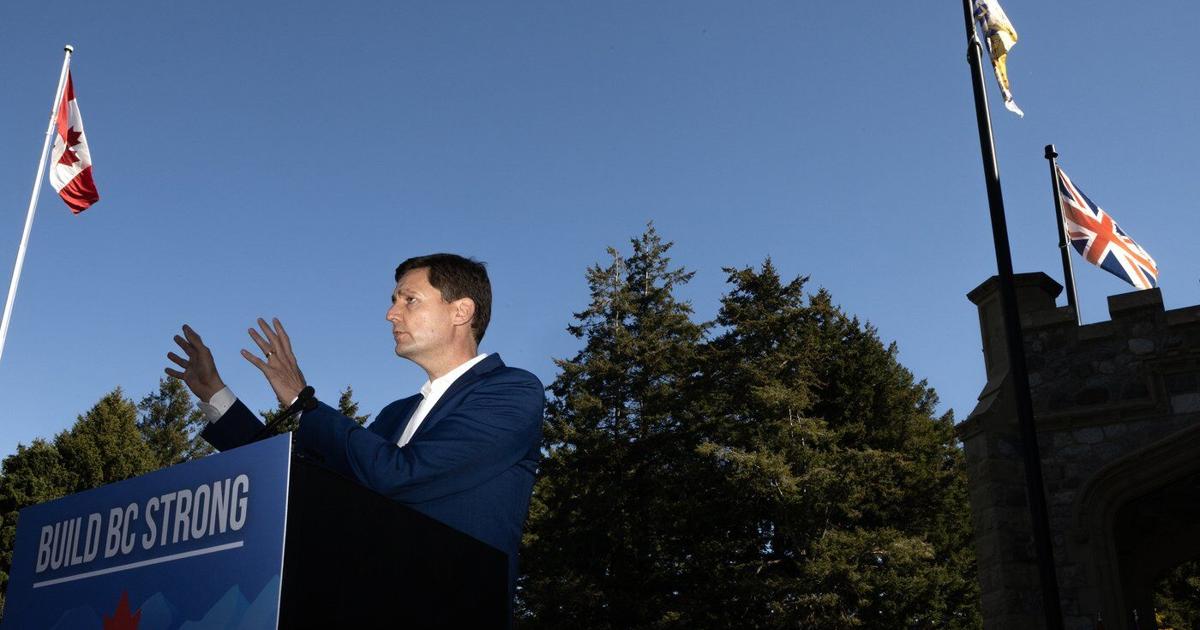
On Tuesday, B.C. Premier David Eby called a snap election, also with a majority, and also with two years left in his mandate. asserted
Eby → call → mandate
The stated reason was that U.S. President Donald Trump is an “existential” threat to B.C., and the NDP premier needs his mandate renewed immediately to deal with it. asserted
mandate → state → it
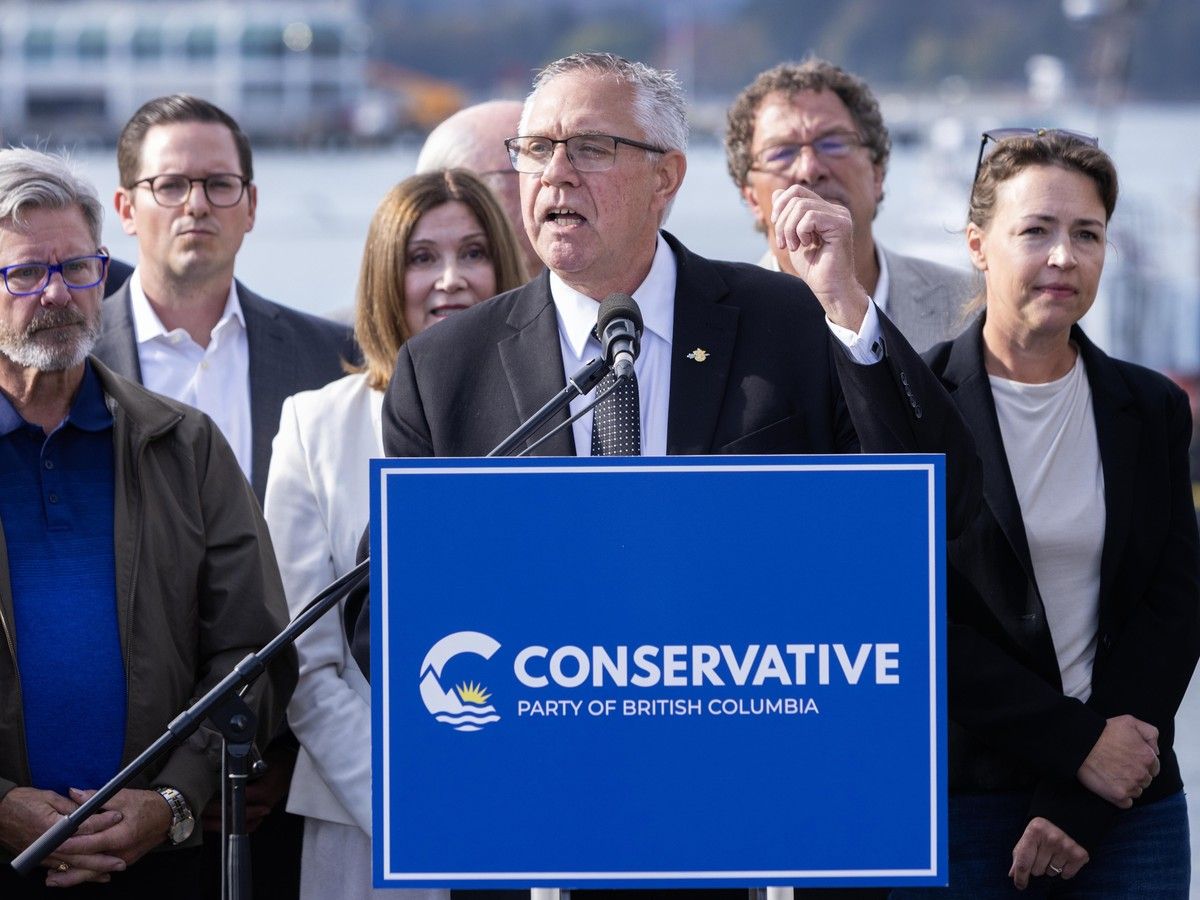
The more likely reason is that, after an entire summer of polling behind the B.C. Conservatives, the opposition’s sudden collapse under leader Kerry-Lynne Findlay suddenly turned the tide, yielding two weeks’ worth of polls with an NDP lead. asserted
collapse → turn → lead
It’s a gamble, and a gamble that has often paid off for premiers in recent years. asserted
that → ’ → years
Ontario Premier Doug Ford secured his third consecutive majority with a snap election in 2025. asserted
Ford → secure → 2025
Eby’s own predecessor, John Horgan, used a snap election in the opening months of the COVID-19 pandemic to secure not only a majority, but the most decisive result in B.C. NDP history. asserted
predecessor → use → history
But such gambles have also precipitated some of the most catastrophic reversals in Canadian political history. asserted
gambles → precipitate → history
In 1990, after just three years of his four-year mandate, he called an early election to capitalize on polls showing his Liberal party with a commanding 50 per cent of the vote. asserted
party → call → vote
In an instant, Ontarians who had been telling pollsters they liked Peterson changed their tune once it meant they had to mark it on a ballot. asserted
they → tell → ballot
The first poll issued after Peterson’s election call showed that his lead had instantly evaporated, and that he probably wasn’t going to retain his majority. asserted
he → issue → majority
“I’m getting a lot of questions about the early election. asserted
I → get → election
Maybe we didn’t do a good job explaining why we called this early election,” one Liberal candidate, Bernard Grandmaître, told the Ottawa Citizen at the time. asserted
candidate → do → time
The Liberals not only lost their majority, but they lost the election entirely to a majority win by the Ontario NDP. asserted
they → lose → NDP
A similar turnaround occurred in Alberta in 2015. asserted
turnaround → occur → 2015
There again, a comfortably established incumbent, the Progressive Conservatives under Premier Jim Prentice, called an early election to consolidate what they assumed was going to be an easy win. asserted
they → establish → election
Instead, Prentice walked into a defeat that even the opposition didn’t see coming: An NDP majority, and his own party devastated beyond repair. asserted
party → walk → repair
Quebec political history even yields a second example of Liberals calling a snap election, only to be punished with a surprise victory from the Parti Quebecois. asserted
Liberals → yield → Quebecois
That’s what happened to Quebec Liberal Premier Jean Charest in 2012. asserted
what → ’ → 2012
He called an early summer election in an apparent attempt to catch the electorate in a good mood, and wound up guaranteeing a defeat bad enough to cost him his own seat. asserted
He → call → seat
In 1984, John Turner had just succeeded the hideously unpopular Pierre Trudeau as federal Liberal leader, and thus prime minister. asserted
Turner → succeed → leader
Turner could have continued overseeing a Liberal majority for at least another year. uncertain
Turner → continue → year
But buoyed by a brief resurgence in Liberal poll numbers, Turner scheduled a summer campaign. asserted
Turner → buoy → campaign
The 1984 election instead transformed into two months of ever-plunging Liberal support until, on Sept. 4, the Canadian electorate handed Progressive Conservative Leader Brian Mulroney a supermajority of 211 out of 282 seats. asserted
electorate → transform → seats
The electoral consequences of snap elections has been examined in depth by political scientists, and the usual takeaway is that Canadians don’t like being asked to vote if they don’t have to, and they’re inclined to punish whoever made them do it. asserted
them → examine → it
In 2022, a paper out of the University of Toronto concluded that Prime Minister Justin Trudeau’s decision to call a snap election in 2021 yielded just enough blowback and voter apathy to deny him a sought-after majority. asserted
decision → conclude → majority
“Negative attitudes toward the election call are a decisive consideration for many voters, inflicting an electoral cost to the Liberal Party which likely deprived it from a legislative majority,” wrote the report authors. asserted
authors → inflict → majority
A 2004 paper in the journal Political Studies concluded that even when incumbents successfully secure power with a snap election, they can expect a measurable hit to their support if the call seems “opportunistic.” asserted
call → conclude → support
The paper’s test case was the 2000 federal election, where Prime Minister Jean Chrétien dropped the writ a year early for no other reason than conditions seemed good to renew his majority. asserted
conditions → drop → majority
He got that majority, but authors calculated it came at the expense of alienating one per cent of Liberal voters. asserted
it → get → voters
“Some voters are prepared to punish prime ministers for opportunistically calling a snap election, but in this case the electoral penalty was small,” it read. asserted
it → punish → case
When snap elections function as intended for the incumbent, it’s often in instances where election day is being moved up a few months, instead of coming in the middle of a term. asserted
day → function → term
It also helps if an incumbent’s lead in the polls is overwhelming. asserted
lead → help → polls
In 2024, Nova Scotia Premier Tim Houston had his snap election call rewarded with an even larger majority. asserted
call → have → majority
But Houston was bumping up election day by just eight months. asserted
Houston → bump → months
…and 20 more, not listed.

💬Give feedback
🕘History 🎫Support