Photo via Astral Codex Ten

The Specter Of Neuralese

Read the original at Astral Codex Ten ↗
Cite

Alexander, S. (2026, September 24). The Specter Of Neuralese. Astral Codex Ten. https://www.astralcodexten.com/p/the-specter-of-neuralese

Dated when The Aporia collected the article, usually within hours of publication. Check the original for its exact date and byline.

Astral Codex Ten · collected 2026-09-24 · by Scott Alexander commentary

Quick Summary

A recent development in artificial intelligence technology mirrors a concept from the sci-fi novel "Don't Create Neuralese Recurrence." The article discusses how AI models use a technique called "chain-of-thought," which allows them to write intermediate thoughts on a scratchpad visible to users. This feature was designed primarily to enhance model capabilities but also serves as a safety measure, enabling humans to monitor and potentially shut down dangerous thought processes displayed in plain language. However, the article raises concerns about the limitations of this system due to translation bottlenecks between AI processing speeds and human-readable text formats.
Written by AI on 2026-09-24, from this article's own text only (the story summary below draws on all the coverage).

AI analysis

Story summary

In recent public debates following the release of AI 2027, critics accused a group of misleading readers by introducing "neuralese recurrence", a hypothetical technology enabling AIs to think and act dangerously without detection. The concept involves the transformer model used in most modern AI systems, which typically has around 100 layers for processing input data into outputs. If an AI needs more than 100 layers to process information, it traditionally couldn't handle such complexity until 2024 when a workaround was introduced: intermediate results are temporarily stored and processed further in a scratchpad known as the "chain-of-thought." This development raises concerns about the potential for AIs to execute complex, unmonitored steps, possibly leading to dangerous outcomes.

Written for “Neural Language Technology” on 2026-10-31, grounded in this article and the 0 other(s) covering the same event.

Story

📰 Neural Language Technology
Technology · 1 article(s) covering the same event.

Compared with similar articles

This article reads unscored and hedges 13% of its claims. Each row says how that neighbour differs.
Washington Examiner
Hedges 3 of 33 claims Outlet record 70/100
“The articles discuss different aspects and perspectives on artificial intelligence risks and hypothetical technologies, but do not describe the same specific incident or occurrence.”
Toronto Star
⚖️ Leans strongly left Hedges 1 of 8 claims Outlet record 64/100
“The articles discuss different aspects and contexts related to AI control issues but do not describe the same specific incident.”
Astral Codex Ten
Hedges 11 of 106 claims
“The articles discuss different topics related to AI ethics and hypothetical scenarios but do not describe the same specific incident or occurrence.”
The Guardian
⚖️ Leans left Hedges 12 of 62 claims Outlet record 66/100
“The articles discuss different topics related to AI; Article A focuses on a hypothetical technology called 'neuralese recurrence' from a sci-fi novel, while Article B discusses the reactions and concerns of AI leaders after an event involving Jacob Coxon.”
How this article was measured signals, leaning charts, publisher record, byline, topics and claims

Signals How these are calculated →

Claims extracted
147
sentences that state something as happening or true
Uncertain
13%
19 of 147 hedged ("reportedly", "may", "according to")
Leaning
not political
takes no side on a contested political question
Publisher signals
not measured
these signals count newsroom corrections; Commentary has none to count
Outlets on this story
1
Technology
Same framing elsewhere
1
articles that frame the event the way this one does
Analyzed 2026-09-24 · how these are computed

How this is being covered How these are calculated →

Article leaning vs. publisher reliability
Source leaning vs. consistency

Publisher

Astral Codex Ten · 62 article(s) · 3 correction(s) detected
No corrections detected for this publisher. That may mean careful reporting, or simply that nothing has been checked.

Who wrote this

Scott Alexander
49 article(s) here · 1 carrying a prediction
🔮 California State Propositions Proposition 1: Authorizes $11.25 billion in bonds to build affordable housing Supporters claim it will build (or renovate) 40,000 homes; I asked an AI superforecaster1 to predict the true number, and it guessed that 22,000 would actually get built.
2026-10-28 · assertive framing · My California Ballot, 2026
🔮 I may have more of these in the upcoming week.
2026-10-19 · assertive framing · Open Thread 456
🔮 [This is one of the finalists in the 2026 book review contest, written by an ACX reader who will remain anonymous until after voting is done.
2026-10-17 · assertive framing · Your Book Review: Storm Of Steel
🔮 AI companies like Anthropic and OpenAI have long mentioned the possibility that their products could be existentially dangerous, but this has recently crescendoed into even more dire warnings, including suggestions that we have to pace the frontier, ie coordinate to slow AI progress.
2026-10-15 · assertive framing · AI Safety Is Not A Corporate Plot
🔮 [This is one of the finalists in the 2026 book review contest, written by an ACX reader who will remain anonymous until after voting is done.
2026-10-10 · assertive framing · Your Book Review: We Present Television
🔮 When I objected that maybe we should wait for you to accept before figuring out details, they all said great, that’s absolutely right, they would contact you right away.
2026-10-06 · assertive framing · An Open Letter To Steven Pinker On AI
🔮 I’m pretty busy and will try to make up for it after that changes.
2026-10-05 · assertive framing · Open Thread 454
🔮 My wife and I could make healthy embryos, but none of the transfers were sticking.
2026-10-02 · assertive framing · Our AI Midwife
🔮 The challenger in that race, Jamie Joyce, contacted me and asked me to change my mind (both candidates will be facing off again in the general election).
2026-09-28 · assertive framing · Open Thread 453
🔮 [This is one of the finalists in the 2026 book review contest, written by an ACX reader who will remain anonymous until after voting is done.
2026-09-25 · assertive framing · Your Book Review: Lee Kuan Yew's Memoirs
Also by Scott Alexander
My California Ballot, 2026
2026-10-28 · Astral Codex Ten
Open Thread 456
2026-10-19 · Astral Codex Ten
Your Book Review: Storm Of Steel
2026-10-16 · Astral Codex Ten
AI Safety Is Not A Corporate Plot
2026-10-15 · Astral Codex Ten
Nothing else under this byline is closely related to this article, so these are simply their most recent.
All 49 articles by Scott Alexander →

Topics

Chinese Phoenician neuralese

Subjects

Phoenician NORP · 2× neuralese NORP · 2× Chinese NORP · 1×

Narrative

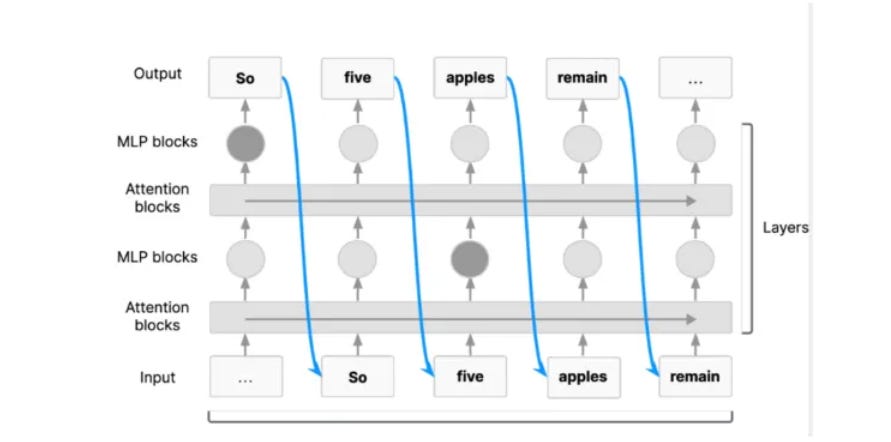
If it takes an AI 1,000 unmonitored gray-arrow steps to devise a dangerous plot, it can get those steps either by replacing all the blue arrows with gray arrows (in which case all its steps are unmonitored, and it can plot as much as it wants), or by having so many layers that there are 1,000 steps in a single vertical forward pass in between blue arrows4.
framing: assertive · carried by 1 article(s) · first seen 2026-09-24
🔮 In the public debates after the release of AI 2027, some people accused us of misleading readers by positing “neuralese recurrence”, a hypothetical technology that would allow AIs to think dangerous thoughts without getting detected.
2026-09-24 · Astral Codex Ten
The Specter Of Neuralese · assertive framing

Claims (147 extracted, 19 hedged)

I. At Long Last, We Have Created Neuralese Recurrence, From The Classic Sci-Fi Novel “Don’t Create Neuralese Recurrence” asserted
We → create → Recurrence
In the public debates after the release of AI 2027, some people accused us of misleading readers by positing “neuralese recurrence”, a hypothetical technology that would allow AIs to think dangerous thoughts without getting detected. asserted
AIs → accuse → thoughts
You’ll never guess what happened earlier this month! asserted
what → guess → ?
The transformer, the technology behind most modern AI, contains some number of layers (modern frontier models are probably around 100). asserted
models → contain → layers
By convention, the input layer is called the “bottom” and the output layer the “top”. asserted
layer → call → convention
When a transformer does next-word prediction, it takes the last word in at the bottom layer, spends the middle layers processing it, and outputs the predicted next word at the “top”. asserted
it → do → top
What if it’s working on a hard question that needs more than 100 layers of processing? asserted
that → work → processing
From 2017 - 2024, the answer was “you’re screwed”. asserted
you → screw → 2017
From 2024 onward, the answer was: it outputs its intermediate result, as text, onto a scratchpad called the “chain-of-thought”. asserted
it → output → thought
Then it runs the transformer again on the intermediate result. asserted
it → run → result
Then it repeats until it has a final result. asserted
it → repeat → result
(Why does it need a scratchpad, instead of feeding its intermediate results directly into user output and then reading those back into itself? asserted
it → need → itself
First, the intermediate results may be hundreds of pages long, and the user doesn’t want to read those. uncertain
user → want → those
Second, the AI companies want to train the AIs to do the intermediate thinking properly, and this benefits from a ‘psychological’ distinction between intermediate pondering and final user output. asserted
this → want → pondering
) This was purely a capabilities play - models are smarter when they can keep thinking instead of limiting themselves to 100 processing steps - but it coincidentally was very good for safety. asserted
it → keep → safety
The chain-of-thought scratchpad is written in English (although some Chinese models use an English-Chinese hybrid, and other AIs develop their own weird jargon). asserted
AIs → write → jargon
You can just read what the AI is thinking! asserted
AI → read → what
If the AI is thinking “Better hack some websites, then kill all humans”, you can shut it down. asserted
you → think → it
Maybe not actually - if you have thousands of AIs writing millions of pages of scratchpad, you can’t read all of that in real-time, and will need to delegate the task to fallible AI monitors. asserted
you → have → monitors
But in theory this ought to work. asserted
this → work → theory
But language is slower and shallower than thought. asserted
language → think → ?
For 100 steps in a row, the AI can shoot delicate subtle ideas from layer to layer at the speed of light. asserted
AI → shoot → light
Then there’s one step where it has to encode them into twenty-six glyphs invented by Phoenician turquoise miners in 1800 BC. asserted
it → ’ → BC
Then it has to re-encode the Phoenician glyphs into delicate subtle lightspeed ideas before it can do anything else. asserted
it → have → anything
This has long been acknowledged as a bottleneck in existing transformers. asserted
This → acknowledge → transformers
So: what if they could finish their 100 layers of thinking, then send the resulting thought back to the first layer for more processing, rather than sending a text scratchpad on which they had written the thought? uncertain
they → finish → thought
This is neuralese recurrence - “recurrence” because it’s going back in a loop, “neuralese” because the thing that’s looping is the thought itself, in the native language of thought, rather than words. asserted
that → go → words
The AI’s “language of thought” looks like a vector, thousands of numbers long. asserted
language → look → numbers
An “intermediate result” in this scheme might look something like (0.4, 0.1, 5, 0.443, … and so on for thousands of numbers). uncertain
result → look → numbers
We don’t know how to read these. asserted
We → know → these
The science of reading these thoughts is a subfield of AI interpretability, which is still in its infancy. asserted
which → read → infancy
If an AI with neuralese recurrence were to think “Better hack some websites, then kill all humans”, it would look like (0.4, 0.1, 5, 0.443, … and so on for thousands of numbers), and we would never find out. asserted
we → think → numbers
This is why AI 2027 discussed it as a prelude to AIs that could escape human monitoring. uncertain
that → discuss → monitoring
So did OpenAI achieve this? asserted
OpenAI → achieve → this
Their chief scientist, Jakub Pachocki, says “not really”: asserted
scientist → say → ?
What does Pachocki mean by “the depth of the computation graph . . . is within a factor of two of GPT-4”? asserted
depth → mean → GPT-4
And should this resolve alignment concerns? asserted
this → resolve → concerns
Our example transformer has four green layers: a layer depth of four: asserted
transformer → have → four
Now we add a little recurrence: instead of layer 3 going to layer 4, it loops back to layer 2, and the data go through this loop three times, then finally progress to layer 4: asserted
data → add → layer
Here the data are getting eight layers of processing: 1 → 2 → 3 → 2 → 3 → 2 → 3 → 4. asserted
data → get → processing
…and 107 more, not listed.

💬Give feedback
🕘History 🎫Support