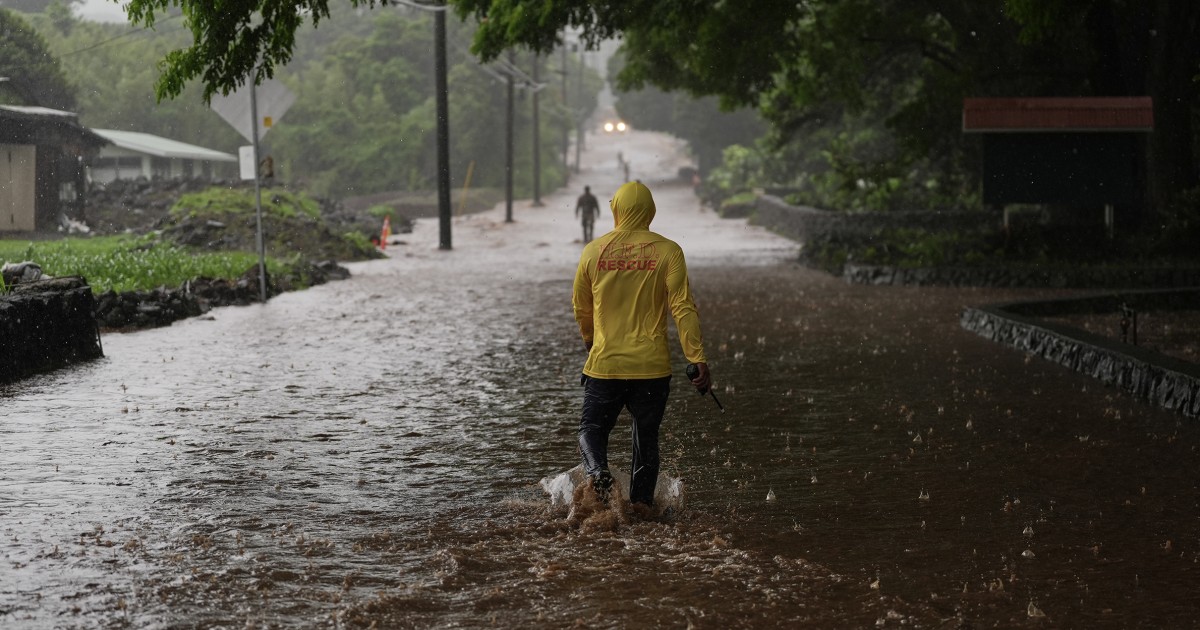
Photo via Toronto Star

It's been an intense hurricane season in the Pacific and there's still a long way to go

Read the original at Toronto Star ↗
Cite

Raby, J. (2026, September 25). It's been an intense hurricane season in the Pacific and there's still a long way to go. Toronto Star. https://www.thestar.com/news/world/united-states/it-s-been-an-intense-hurricane-season-in-the-pacific-and-there-s-still-a-long-way-to-go/article_84de9d27-9511-523d-883f-26e06c6f4b6a.html

Dated when The Aporia collected the article, usually within hours of publication. Check the original for its exact date and byline.

Toronto Star · collected 2026-09-25 · by John Raby

Quick Summary

The current hurricane season in the Pacific Ocean has been notably intense due to El Niño conditions, which have led to warmer waters and more frequent tropical storms. As of September, the eastern Pacific has seen four more named storms than average for this time of year, with three reaching Category 5 strength—a tie with a record set in 2002. The University of Miami’s Brian McNoldy predicts that this El Niño may be among the strongest on record and could last into early 2027.
Written by AI on 2026-09-25, from this article's own text only (the story summary below draws on all the coverage).

AI analysis

Story summary

The Pacific hurricane season has been unusually intense, with University of Miami hurricane expert Brian McNoldy predicting it could be one of the strongest El Niño events on record. El Niño conditions, which began in June, have caused ocean temperatures to rise above normal, leading to an increase in tropical storms and hurricanes. This week alone, Hurricane Polo hit Mexico’s Pacific Coast, fluctuating between Category 4 and 5 strength, while Tropical Storm Nolo threatens Hawaii with potential catastrophic flooding. The number of hurricanes in the eastern Pacific has already surpassed a typical season's total, with El Niño causing disruptions to low-level surface winds across the Pacific, leading to record global heat and severe droughts worldwide. McNoldy predicts that this current El Niño will peak during winter and linger into 2027.

Written for “Hurricane Season Intensity” on 2026-11-03, grounded in this article and the 0 other(s) covering the same event.

Story

📰 Hurricane Season Intensity
Environment · 1 article(s) covering the same event.

Compared with similar articles

This article reads unscored and hedges 8% of its claims. Each row says how that neighbour differs.
The Independent
Hedges 4 of 17 claims Outlet record 59/100
“The articles describe different types of storms affecting distinct regions (Pacific hurricanes vs. an East Coast nor'easter) and do not refer to the same specific incident.”
CBC News
Hedges 6 of 33 claims Outlet record 60/100
“Article A focuses on Hurricane Polo specifically, while Article B discusses the overall intense hurricane season and does not mention Hurricane Polo directly.”
New York Post
Hedges 6 of 15 claims Outlet record 66/100
“Article A describes the impact of Hurricane Polo on Mexico's Pacific coastline with specific details about its strength and location, while Article B provides a broader overview of the intense hurricane season in the Pacific without focusing on any single event.”
CBS News
⚖️ Leans left Hedges 1 of 3 claims Outlet record 66/100
“The articles discuss different aspects of a larger trend (El Niño's impact on Pacific storms) rather than the same specific incident.”
NPR
Hedges 4 of 32 claims Outlet record 60/100
“While both articles discuss the impact of El Niño on hurricane activity in the Pacific and Atlantic, they do not describe the exact same incident or occurrence.”
New York Post
Hedges 6 of 13 claims Outlet record 66/100
“Article A describes a specific hurricane warning and its trajectory toward Mexico's Baja Peninsula, while Article B gives a broader overview of an intense hurricane season in the Pacific Ocean.”
Al Jazeera
Hedges 3 of 21 claims Outlet record 60/100
“While both articles discuss hurricanes in the Pacific during the same period, Article B describes specific named storms (Hurricane Polo and Nolo) affecting Mexico and Hawaii respectively, while Article A gives a broader overview of the hurricane season without naming specific storms.”
The Independent
Hedges 3 of 31 claims Outlet record 59/100
“Both articles discuss an intense hurricane season due to El Nino conditions, but they do not describe a single specific incident or occurrence at a particular time and place.”
NBC News
Hedges 4 of 27 claims Outlet record 60/100
“Article A discusses the overall intensity of the hurricane season in the Pacific Ocean without focusing on specific locations or events, while Article B focuses on the impact of multiple hurricanes on Hawaii and mentions specific storms.”
How this article was measured signals, leaning charts, publisher record, byline, topics and claims

Signals How these are calculated →

Claims extracted
36
sentences that state something as happening or true
Uncertain
8%
3 of 36 hedged ("reportedly", "may", "according to")
Leaning
not political
takes no side on a contested political question
Publisher signals
64/100
Toronto Star's corrections and hedging, across everything collected from it. Not a measure of accuracy.
Outlets on this story
1
Environment
Same framing elsewhere
1
articles that frame the event the way this one does
Analyzed 2026-09-25 · how these are computed

How this is being covered How these are calculated →

Article leaning vs. publisher reliability
Source leaning vs. consistency

Publisher

Toronto Star · 11143 article(s) · 28 correction(s) detected
Running correction rate · 28 correction(s)
2026-10-26
Correction
2026-10-24
Correction
2026-10-07
Correction
2026-09-24
Correction

Who wrote this

John Raby
11 article(s) here · 1 carrying a prediction
🔮 A university spokesperson said they would provide updates on the investigation online as they become available.
🔮 Family members told detectives that the elder Stone “restricted when family members could leave the residence or spend time with relatives,” Lorah said.
🔮 Cook couldn’t handle an option pitch that went behind him and Molette scooped up the fumble and went 32 yards to put Arizona ahead 14-3.
🔮 “We’ll continue to search and saturate the area until we’re at the point where we are confident that if there were any survivors remaining on the surface of the water, we would have found them,” McTamney said.
🔮 McNoldy anticipates the current pattern will peak this coming winter and persist through 2027.
🔮 McNoldy predicted that the current El Nino will peak during the coming winter but linger into 2027.
🔮 Cook and Hawkins looked as good as advertised but the team’s struggles in the second half will need fixing.
🔮 Nelson said that "without Red Auerbach teaching me the mechanics of running the fast break, none of it would have been possible.
Also by John Raby
Nothing else under this byline is closely related to this article, so these are simply their most recent.
All 11 articles by John Raby →

Topics

El Nino El Ninos Hurricane Polo Mexico University of Miami

Subjects

Hawaii GPE · 4× Lala GPE · 2× McNoldy PERSON · 2× Mexico GPE · 2× Rosencrans PERSON · 2× Arizona ORG · 1× Matthew Rosencrans PERSON · 1× NOAA ORG · 1× National Weather Service ORG · 1× University of Miami ORG · 1×

Narrative

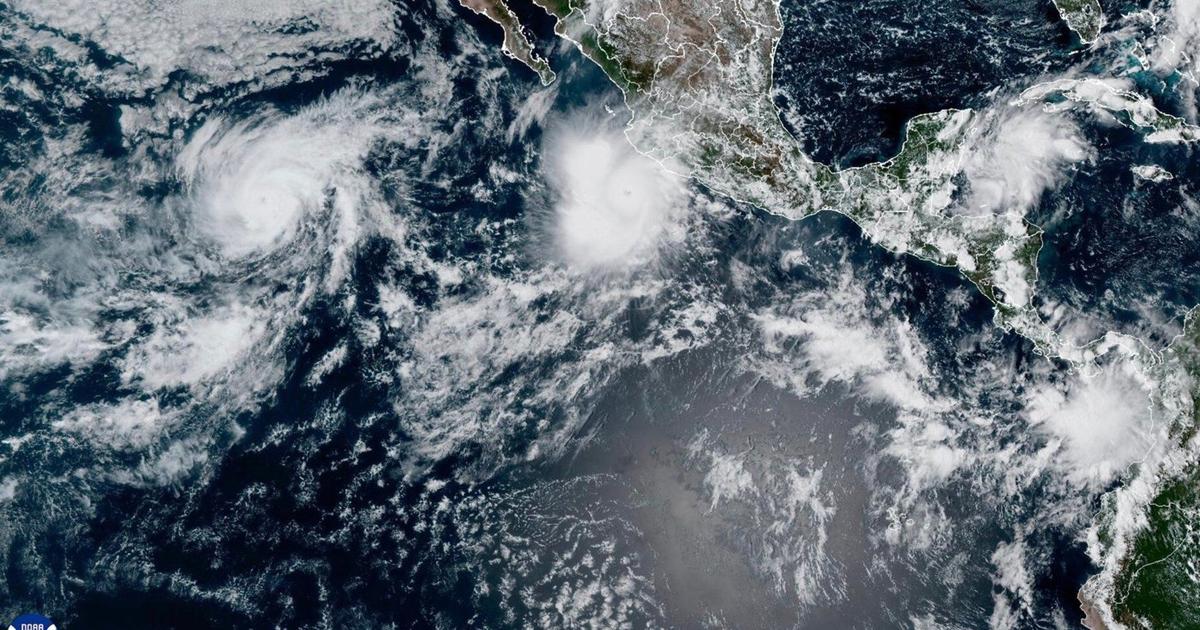
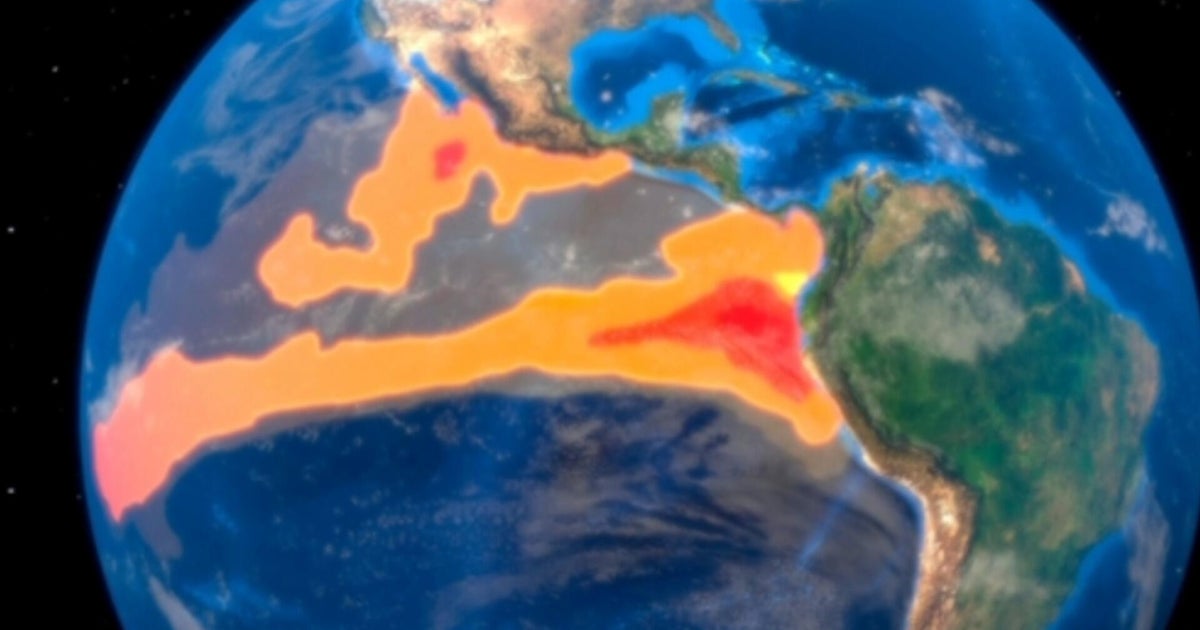
Tropical storms have spawned in what seems like assembly-line fashion in recent weeks, as El Nino conditions that emerged in June have caused waters to grow warmer than normal, setting off a chain of unusual weather around much of the world. “It’s ramping up to be perhaps the strongest El Nino on record,” University of Miami hurricane expert Brian McNoldy said.
framing: assertive · carried by 1 article(s) · first seen 2026-09-25
🔮 McNoldy predicted that the current El Nino will peak during the coming winter but linger into 2027.

Claims (36 extracted, 3 hedged)

It’s already been an intense hurricane season in the Pacific Ocean — and there’s still quite a ways to go. asserted
It → ’ → Ocean
Tropical storms have spawned in what seems like assembly-line fashion in recent weeks, as El Nino conditions that emerged in June have caused waters to grow warmer than normal, setting off a chain of unusual weather around much of the world. “It’s ramping up to be perhaps the strongest El Nino on record,” University of Miami hurricane expert Brian McNoldy said. asserted
McNoldy → spawn → Miami
The number of hurricanes in the eastern Pacific has already surpassed what occurs in a typical season. asserted
what → surpass → season
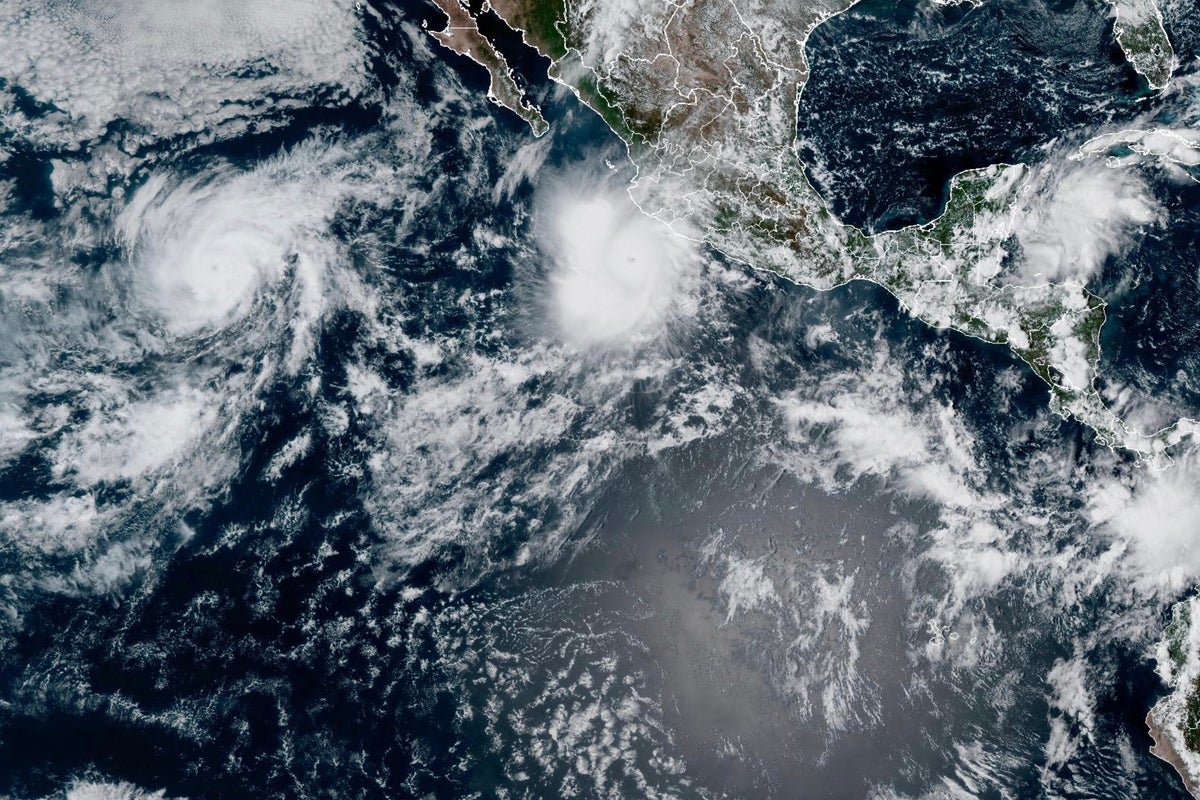
This week alone, Hurricane Polo drenched Mexico’s Pacific Coast as it seesaws between Category 4 and 5. asserted
it → drench → Category
During El Nino, low-level surface winds blowing from east to west across the Pacific are weakened or sometimes reversed. asserted
winds → blow → Pacific
It causes a shift in the jet stream and drives record global heat, severe droughts, wildfires and shrinking water supplies. asserted
It → cause → heat
El Ninos don’t follow a regular schedule, occurring every two to seven years on average. asserted
Ninos → follow → schedule
Others can pack a punch. asserted
Others → pack → punch
McNoldy predicted that the current El Nino will peak during the coming winter but linger into 2027. asserted
Nino → predict → 2027
“It doesn’t turn off right away,” he said. asserted
he → turn → ?
While the focus is on the increased number of Pacific storms, El Ninos conversely curtail hurricane activity in the Atlantic Ocean: Tropical weather activity in the Atlantic has been virtually silent this year. asserted
activity → increase → Atlantic
A turbocharged hurricane year in the Pacific Thanks to El Nino, both the eastern Pacific and the central Pacific have seen four more tropical storms than is normal to date with more than two months left in the hurricane season, said Matthew Rosencrans, lead hurricane season forecaster with NOAA’s National Weather Service. asserted
Rosencrans → see → Service
From 1991 to 2020, there were an average of 15 named storms in the eastern Pacific per season, which runs from May 15 to Nov. 30. uncertain
which → be → Nov.
“That’s a different story,” Rosencrans said. asserted
Rosencrans → ’ → ?
What also sets this year’s El Nino-fueled storms apart is that three Pacific hurricanes have reached Category 5 strength, tying a record set in 2002, also during an El Nino, he said. asserted
he → set → Nino
The most active season on record in the eastern Pacific was 1992, when there were 25 named storms, Rosencrans said. asserted
Rosencrans → be → Pacific
Due to El Nino, forecasters said the eastern Pacific storms formed farther west and tracked more westward, remaining over the open ocean throughout their cycle. asserted
storms → say → cycle
During another strong El Nino in 1997, hundreds of people died when Hurricane Pauline tore across Mexico’s Pacific coast. asserted
Pauline → die → coast
That same year Tropical Storm Nora gave landlocked southwestern Arizona an unusual soaking. asserted
Nora → give → soaking
And a December storm in Southern California caused flooding that swept cars into a storm channel and prompted evacuations of some mobile home parks. asserted
that → cause → parks
In 1998, El Nino was blamed for flooding in China that killed 4,150 people, most along the Yangtze River. asserted
that → blame → River
Hawaii finds itself in the crosshairs again The state has felt the wrath of two hurricanes over the past month. asserted
state → find → month
Lala in August and Lowell in early September combined to destroy or damage more than 510 homes and cause $168 million in damage to public infrastructure. asserted
Lala → combine → infrastructure
Lala also caused $21.5 million in damage to 38 schools. asserted
Lala → cause → schools
Assuming Tropical Storm Nola follows current forecasts for it to strengthen dramatically in the coming days south of the islands, that will make it three. asserted
it → assume → islands
Forecasters say the storm could drop rainfall amounts on Hawaii that are measured in feet, not inches. uncertain
that → say → feet
On top of that, heavy rains in March caused the worst flooding to hit Hawaii in two decades. asserted
flooding → cause → decades
That was followed in May by a magnitude-6.0 earthquake, prompting Gov. Josh Green to remark that this year has been “unlike anything I can recall.” uncertain
I → follow → anything
Two hurricanes came within 200 miles (320 kilometers) of Hawaii in 1957, but that did not happen again for more than a half century. asserted
that → come → century
Then it occurred in 2014, 2016 and 2018 before this year’s predicted trifecta. asserted
it → occur → trifecta
Meteorologists often worry about “preparedness fatigue,” when communities gear up for storms that never arrive or fall short of their potential strength. asserted
that → worry → strength
But John Bravender, a weather service warning coordination meteorologist, said 2026 has yielded a different type of weariness in Hawaii. asserted
2026 → say → Hawaii
“The fact that we’ve had these damaging impacts that keep happening, and as we’re recovering from them, we have to get ready for the next event — that’s a new one that really drains the resources and leads to this overall sense that this is a very busy hurricane season for us,” he said. asserted
he → keep → us
Residents understand the risks and are getting more accustomed to preparing. asserted
Residents → understand → risks
“I think community members realize how dangerous the weather can be, how important it is for them to be self-sufficient, have food, water and also look out for their neighbors,” Bravender said. asserted
Bravender → think → neighbors
__ Associated Press writer Gabriela Aoun Angueira contributed. asserted
Angueira → contribute → ?

💬Give feedback
🕘History 🎫Support