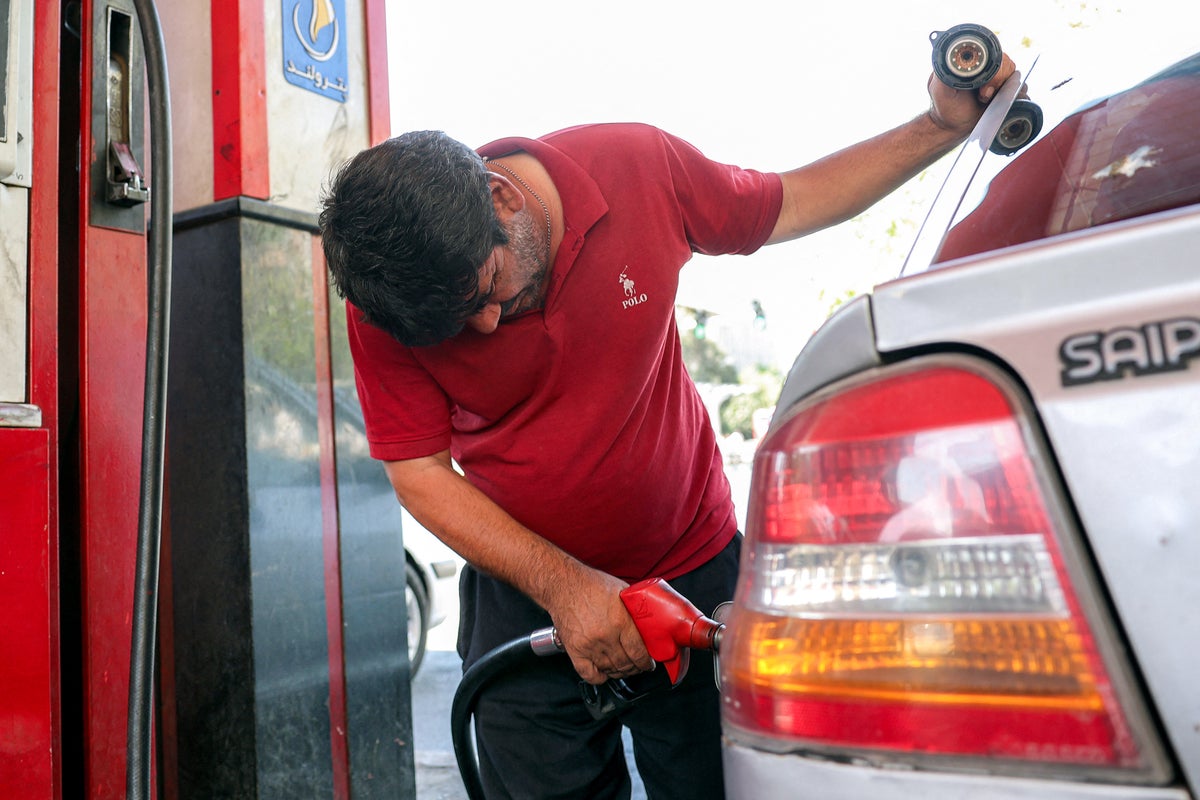
Photo via New York Post

Blockade bites hard at Iran’s borders — Trump can’t cave now

Read the original at New York Post ↗
Cite

Dubowitz, M., & Maleki, M. (2026, September 25). Blockade bites hard at Iran’s borders — Trump can’t cave now. New York Post. https://nypost.com/2026/09/24/opinion/blockade-bites-hard-at-irans-borders-us-cant-cave-now/

Dated when The Aporia collected the article, usually within hours of publication. Check the original for its exact date and byline.

New York Post · collected 2026-09-25 · by Mark Dubowitz, Miad Maleki

Quick Summary

The United States blockade against Iran is causing severe economic hardship for the country, as evidenced by long lines of trucks waiting at land borders with Turkey and Afghanistan, the only routes available to circumvent air and naval blockades. Since July, Iran’s oil exports have dropped by 85%, leading to a significant decline in GDP and a halving of the national currency's value. President Trump is advised not to ease sanctions, as doing so would undermine the effectiveness of the economic pressure aimed at forcing Iran to stop its attacks on ships transiting the Strait of Hormuz. The article advocates for tightening the blockade further by targeting land transportation networks, thereby isolating Iran more effectively from international trade.
Written by AI on 2026-09-25, from this article's own text only (the story summary below draws on all the coverage).

AI analysis

Story summary

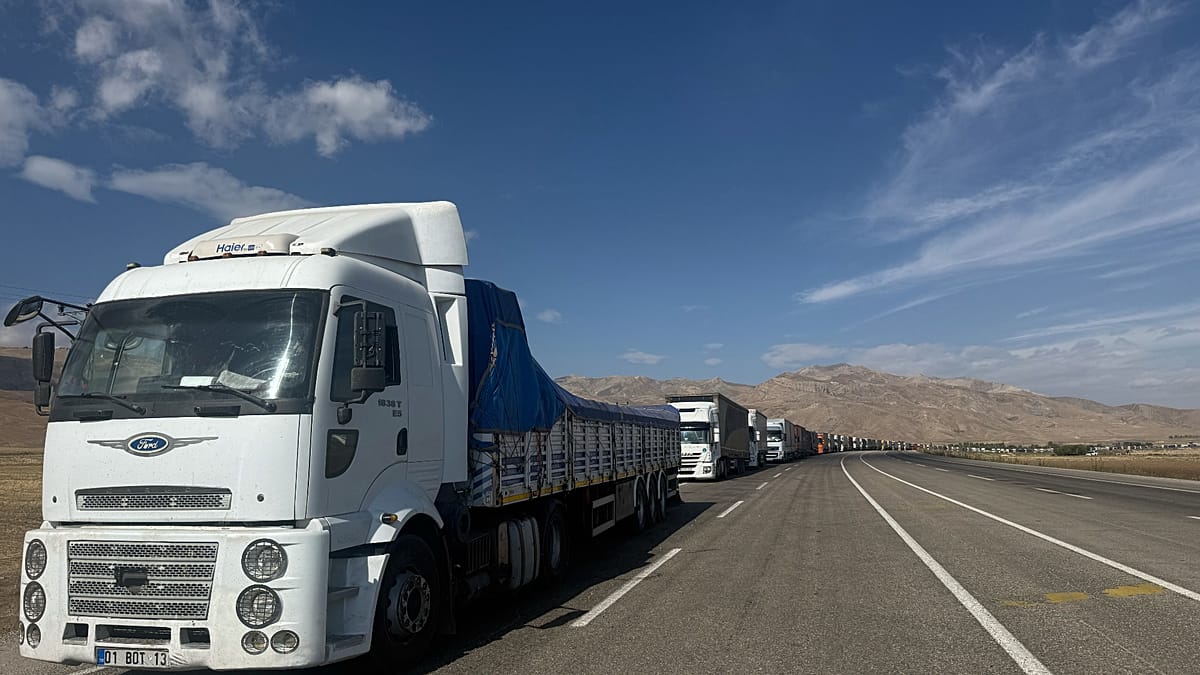
Hundreds of trucks are idle along the road into Iran from Turkey's eastern border, stretching for miles at the Gurbulak crossing. The delays have grown due to increased reliance on overland trade following a U.S. naval blockade that limits most imports and exports by sea. Truck drivers, who once waited only three days, now face waits exceeding five days or even weeks. For example, Muhammed Rıza Shiri has been waiting four days to carry his load of rubber into Iran after queuing for seven kilometers. The bottleneck is exacerbated by bureaucratic hurdles; at most, 500 trucks can cross daily from Turkey compared to pre-war volumes needing around 20,000 to match previous seaborne trade levels. This situation underscores the economic pressure on Tehran as it struggles with reduced cargo loads and decreased driver income, highlighting Iran's difficulty in maintaining its economy without maritime routes.

Written for “US Blockade Affects Iran Trade” on 2026-11-04, grounded in this article and the 2 other(s) covering the same event.

Story

📰 US Blockade Affects Iran Trade
Politics · 3 article(s) covering the same event. Compare every outlet's account →

Compared with similar articles

This article reads leans strongly right and hedges 3% of its claims. Each row says how that neighbour differs.
Semafor
⚖️ Leans left further left than this Hedges 5 of 41 claims Outlet record 59/100
“The articles discuss different aspects of the broader conflict and economic impact in Iran but do not describe the same specific incident or occurrence.”
Euronews
Hedges 0 of 5 claims Outlet record 60/100
The Straits Times
⚖️ Leans left further left than this Hedges 1 of 14 claims Outlet record 66/100
“The articles describe different aspects of sanctions against Iran: Article A discusses border blockades and their economic impact, while Article B mentions a specific sanction waiver for religious flights between Iran and Iraq.”
Al Jazeera
⚖️ Leans right further left than this Hedges 3 of 22 claims Outlet record 60/100
“The articles describe different actions: one discusses border blockades affecting truck drivers, while the other reports on US sanctions against entities supporting Iran's military.”
New York Post
⚖️ Leans strongly right Hedges 1 of 16 claims Outlet record 66/100
“The articles discuss different aspects of the sanctions against Iran; one focuses on border bottlenecks for overland trade, while the other discusses oil shipments and their impact on global energy supply.”
BBC News
Hedges 0 of 7 claims Outlet record 68/100
“Article A describes President Pezeshkian's speech at the UN General Assembly, while Article B discusses the economic impact of the blockade on Iran's borders.”
Al Jazeera
⚖️ Leans right further left than this Hedges 9 of 33 claims Outlet record 60/100
“The articles describe different aspects of the ongoing conflict between Iran and the United States, but they do not report on a single specific incident occurring at the same time.”
Al Jazeera
Hedges 4 of 31 claims Outlet record 60/100
“The articles describe different aspects of Iran's situation—one focusing on economic impacts due to border blockades and the other on Iran's mistrust in talks with the US.”
Washington Examiner
⚖️ Leans strongly right Hedges 0 of 35 claims Outlet record 69/100
“The articles discuss different aspects of US policy towards Iran and geopolitical strategies, not the same specific incident.”
The Independent
⚖️ Leans left further left than this Hedges 1 of 40 claims Outlet record 59/100
“The articles describe different aspects of the economic crisis in Iran but do not clearly refer to the exact same incident or time.”
How this article was measured signals, leaning charts, publisher record, byline, topics and claims

Signals How these are calculated →

Claims extracted
34
sentences that state something as happening or true
Uncertain
3%
1 of 34 hedged ("reportedly", "may", "according to")
Leaning
Leans strongly right
of the writing, not the subject · beta estimate
Publisher signals
66/100
New York Post's corrections and hedging, across everything collected from it. Not a measure of accuracy.
Outlets on this story
3
Politics
Same framing elsewhere
1
articles that frame the event the way this one does
Analyzed 2026-09-25 · how these are computed

How this is being covered How these are calculated →

Article leaning vs. publisher reliability
Source leaning vs. consistency

Publisher

New York Post · 16647 article(s) · 36 correction(s) detected
Running correction rate · 36 correction(s)

Who wrote this

Mark Dubowitz
1 article(s) here · 1 carrying a prediction
🔮 Doing so would further seal Iran from the international trade the regime depends on for its survival.
The only article under this byline in the corpus.
Miad Maleki
2 article(s) here · 1 carrying a prediction
🔮 “Do I finish it off, which would be very easy to do, or do I make a deal?” he mused in a Fox News interview.
🔮 Doing so would further seal Iran from the international trade the regime depends on for its survival.
Also by Miad Maleki
Nothing else under this byline is closely related to this article, so these are simply their most recent.

Topics

Afghanistan Iran Turkey the UN General Assembly the United States

Subjects

Iran GPE · 17× Turkey GPE · 3× Iranian NORP · 2× Israeli NORP · 2× the United States GPE · 2× Afghanistan GPE · 1× Donald Trump PERSON · 1× New York GPE · 1× Tehran GPE · 1× the UN General Assembly ORG · 1×

Narrative

At most, 500 trucks can cross from Turkey daily because of the bureaucratic hurdles involved; you’d need 20,000 to duplicate Iran’s pre-war volume of seaborne traffic. The regime is ill-prepared for what it now faces. For 47 years, it plowed its oil revenues into building its nuclear program and arming its terrorist proxies, at the expense of vital infrastructure. Rather than engaging in yet more fruitless negotiations, the United States should now focus on a land blockade alongside its naval and air blockades.
framing: assertive · carried by 1 article(s) · first seen 2026-09-25
🔮 Doing so would further seal Iran from the international trade the regime depends on for its survival.
2026-09-25 · New York Post
Blockade bites hard at Iran’s borders — Trump can’t cave now · assertive framing

Claims (34 extracted, 1 hedged)

To understand the economic devastation Iran is now experiencing, look no further than the trucks choking its borders. asserted
Iran → understand → borders
Thousands of them have lined up at land crossings into neighboring Turkey and Afghanistan, with many drivers sitting idle for weeks. asserted
drivers → line → weeks
They are there because overland routes are the only way that Iran can circumvent the punishing air and naval blockade imposed by the United States — but the regime can’t escape the cumbersome customs and security inspections that cause endless bottlenecks at the border. asserted
that → circumvent → border
Yet to listen to Iran’s leaders, you’d think they held all the cards. asserted
they → listen → cards
At the UN General Assembly in New York this week, Tehran named its price for a deal: Lift the blockade, release frozen assets and end the “economic war.” asserted
Tehran → name → war
In return, it pledges to halt its attacks on ships transiting the Strait of Hormuz — a waterway it has no right to close. asserted
it → pledge → right
President Donald Trump should impolitely decline: Time is on America’s side. asserted
Time → decline → side
“Economic Fury,” the operation launched by the Treasury Department as a complement to the US military’s “Epic Fury,” is biting hard. asserted
Fury → launch → Fury
The reimposition of the blockade in July has resulted in Iran’s oil loadings collapsing by 85% — even as US forces supported the transit of more than 1 billion barrels of crude oil through the Strait of Hormuz, assisting more than 2,000 commercial-vessel transits. asserted
forces → result → transits
Iran’s domestic supply has been suffocated by the lack of imports, with reportedly only two months of fuel remaining. uncertain
months → suffocate → fuel
More broadly, Iran’s GDP dropped by more than 10% in a matter of weeks — and over the last year the national currency, the rial, has lost half of its value. asserted
currency → drop → value
But getting goods in and out is now much slower, much costlier, and woefully inefficient. asserted
getting → get → goods
Transporting a container overland costs about four times as much as by sea. asserted
Transporting → transport → sea
Worse for the regime, the truckers, railways and shippers who carry these loads demand payment in precious hard currency — preferably dollars — not in Iran’s beleaguered rial. asserted
who → carry → rial
At most, 500 trucks can cross from Turkey daily because of the bureaucratic hurdles involved; you’d need 20,000 to duplicate Iran’s pre-war volume of seaborne traffic. The regime is ill-prepared for what it now faces. For 47 years, it plowed its oil revenues into building its nuclear program and arming its terrorist proxies, at the expense of vital infrastructure. Rather than engaging in yet more fruitless negotiations, the United States should now focus on a land blockade alongside its naval and air blockades. asserted
States → cross → blockades
Doing so would further seal Iran from the international trade the regime depends on for its survival. asserted
regime → do → survival
No troops are required to set up a land blockade. asserted
troops → require → blockade
Treasury has already declared Iran’s aviation, shipping and gold sectors off-limits to international actors. asserted
sectors → declare → actors
Now it should add transportation and logistics, putting every trucking firm, freight forwarder and dry port handling Iranian cargo at risk of losing access to the dollar. asserted
it → add → dollar
A 2010 law already mandates sanctions on anyone who sells gasoline to Iran or helps deliver it. asserted
who → mandate → it
Enforce it against every refiner, trader and carrier moving fuel to Iran’s transportation, and its trucks will be stuck. asserted
trucks → enforce → transportation
Washington can also lean on Iran’s neighbors to deny banking services. asserted
Washington → lean → services
Because of US pressure, Turkey revoked Bank Mellat’s license, while the UAE has banned Bank Melli. asserted
UAE → revoke → Melli
Iraq can the effort to pressure Iran by settling the billions it owes for gas and electricity imports in medicines and food only, not in cash. asserted
it → pressure → cash
All this would have a profound impact on what remains of Iran’s armed forces, which last year gobbled up 51% of the nation’s oil revenue. asserted
which → have → revenue
And where sanctions can’t reach, cyber operations can. asserted
operations → reach → ?
Last year, suspected Israeli hackers destroyed data at Bank Sepah, the Iranian military’s own bank, and wiped out $90 million at Iran’s largest crypto exchange. US and Israeli cyber forces should target the payment mechanisms used by the regime to pay its security forces. asserted
forces → suspect → forces
Given all these factors, a US deal now would hand Iran’s rulers the very lifeline that a combined air, land and sea blockade would deny. asserted
blockade → give → that
It wouldn’t change the regime’s behavior, as recent experience demonstrates: Eight days after signing a memorandum of understanding with the United States in June, Iran was attacking ships again. asserted
Iran → change → ships
Instead, Trump’s administration should help foster a new popular uprising inside Iran. asserted
administration → help → Iran
The regime crushed the last one with violence — much as it has done during more than 15 years of periodic revolts — at a cost of 43,000 lives. asserted
it → crush → lives
Washington should prepare accordingly, by securing internet access, providing strike funds for workers and merchants, and targeting every commander who orders his men to fire on demonstrators. asserted
who → prepare → demonstrators
The next phase belongs to the Iranians themselves. asserted
phase → belong → Iranians
America’s job is to make sure the regime can’t pay, fuel or move the forces it will send against the rising tide of discontent. asserted
it → make → discontent

💬Give feedback
🕘History 🎫Support