Photo via The Guardian

In his final UN speech, Macron may have given other leaders a valuable parting gift: the guts to stand up to Trump | Steve Bloomfield

Read the original at The Guardian ↗
Cite

Bloomfield, S. (2026, September 26). In his final UN speech, Macron may have given other leaders a valuable parting gift: the guts to stand up to Trump | Steve Bloomfield. The Guardian. https://www.theguardian.com/commentisfree/2026/sep/26/un-speech-macron-parting-gift-stand-up-to-trump

Dated when The Aporia collected the article, usually within hours of publication. Check the original for its exact date and byline.

The Guardian · collected 2026-09-26 · by Steve Bloomfield

Quick Summary

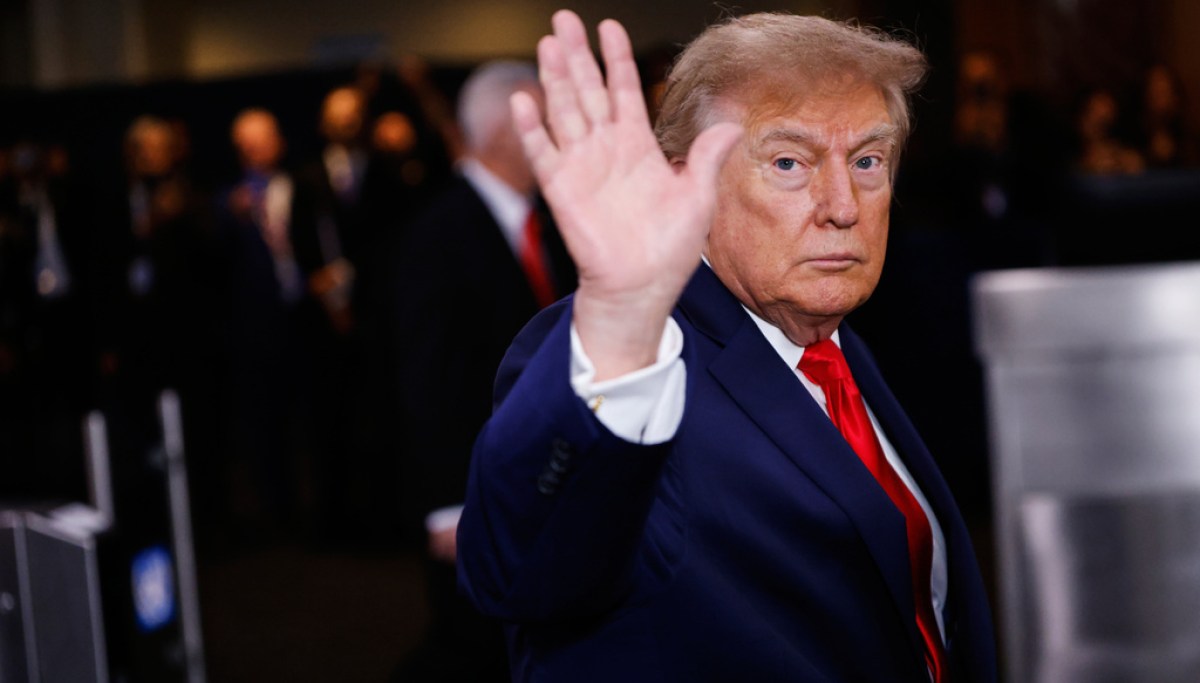
In his final UN speech before stepping down, French President Emmanuel Macron criticized the unilateral approach championed by US President Donald Trump and called for upholding international law and multilateralism. Macron challenged leaders to choose between living under a "law of the jungle" or in a civilized society, directly confronting Trump’s aggressive stance on Iran and other issues. Despite offering a morally intelligent analysis of the need for European strategic autonomy, Macron's concrete policy proposals were limited, reflecting broader challenges in achieving significant change within the EU.
Written by AI on 2026-09-26, from this article's own text only (the story summary below draws on all the coverage).

AI analysis

Story summary

As of September 2026, President Donald Trump told reporters that the U.S. is "hopefully toward the end" of its ongoing war with Iran, which began on February 28 and has lasted for seven months. Despite this hopeful statement, there are no clear timelines or significant de-escalation efforts in sight. The conflict continues to disrupt global oil supplies through the Strait of Hormuz, pushing up oil prices to over $108 per barrel. Additionally, Iran's foreign minister is under pressure from China and international concerns to reopen the strait and return to a previous interim peace deal with the U.S.

Meanwhile, tensions have escalated beyond Iran into Yemen, where Houthi rebels, aligned with Iran, pose significant threats near the Red Sea, complicating efforts at regional stability. The conflict has also drawn in other nations such as Saudi Arabia, which is offering extra crude oil through Oman to ease supply disruptions and stabilize oil prices.

At the United Nations General Assembly, Trump further alarmed global leaders by threatening to "annihilate" Iran if necessary, raising concerns about the potential for catastrophic outcomes involving nuclear weapons. This rhetoric contrasts sharply with past U.S. presidents who emphasized caution regarding such extreme measures. Despite these challenges, there is an urgent need for multilateral solutions and effective engagement through international bodies like the UN to address ongoing conflicts and crises around the world.

Written for “Trump's UN Speech Controversies” on 2026-11-02, grounded in this article and the 206 other(s) covering the same event.

Story

📰 Trump's UN Speech Controversies
Politics · 207 article(s) covering the same event. See how they differ ↓

Compared with similar articles

This article reads unscored and hedges 11% of its claims. Each row says how that neighbour differs.
Toronto Star
⚖️ Leans left Hedges 1 of 36 claims Outlet record 64/100
“The articles describe different speeches given at the UN by Trump and Guterres, not the same specific incident or time.”
TIME
⚖️ Leans left Hedges 6 of 48 claims Outlet record 59/100
“The articles discuss different speeches by Trump at separate times - one from his inaugural address in 2017 and another during a UN assembly in 2026.”
NPR
⚖️ Leans left Hedges 1 of 14 claims Outlet record 60/100
The Independent
⚖️ Leans strongly left Hedges 0 of 17 claims Outlet record 59/100
“While both articles discuss Trump's speech at the UN General Assembly, Article B refers to it as part of a broader context involving other leaders' reactions and Macron's response, indicating they are describing different aspects or subsequent reflections on the same event rather than the identical occurrence.”
BBC News
Hedges 2 of 33 claims Outlet record 68/100
“The articles describe different speeches or parts of speeches at the UN, with Article A focusing on Trump's speech about a 'big decision' and Article B summarizing Trump's broader vision for global dominance including military threats against Iran.”
The Independent
⚖️ Leans right Hedges 4 of 40 claims Outlet record 59/100
“The articles describe different parts of the same week-long event, not the exact same speech or moment.”
Daily Mail
Hedges 0 of 13 claims Outlet record 69/100
“Article A describes Trump's speech at the UN General Assembly, while Article B discusses a broader analysis of competing visions presented by leaders including Trump's speech and Macron's response.”
Washington Examiner
⚖️ Leans right Hedges 1 of 15 claims Outlet record 70/100
“The articles describe different speeches: Article A focuses on Trump's speech at the UN General Assembly, while Article B describes a contrasting vision presented by Macron in his final UN speech.”
Zeteo
⚖️ Leans strongly left Hedges 0 of 16 claims
“While both articles discuss Trump's speech at the UN General Assembly, Article A refers to a hypothetical future scenario from 2026, whereas Article B describes an actual past event from the same year.”
The Straits Times
⚖️ Leans strongly left Hedges 2 of 14 claims Outlet record 66/100
“The articles describe different parts of the UN General Assembly meetings, with Article A mentioning Trump's schedule for meetings while Article B focuses on Trump's speech content.”
How this article was measured signals, leaning charts, publisher record, byline, topics and claims

Signals How these are calculated →

Claims extracted
44
sentences that state something as happening or true
Uncertain
11%
5 of 44 hedged ("reportedly", "may", "according to")
Leaning
withheld
no quote in the article backed the model's score
Publisher signals
66/100
The Guardian's corrections and hedging, across everything collected from it. Not a measure of accuracy.
Outlets on this story
207
Politics
Same framing elsewhere
1
articles that frame the event the way this one does
Analyzed 2026-09-26 · how these are computed

How this is being covered How these are calculated →

Article leaning vs. publisher reliability
Source leaning vs. consistency

Publisher

The Guardian · 1929 article(s) · 6 correction(s) detected
Running correction rate · 6 correction(s)

Who wrote this

Steve Bloomfield
5 article(s) here · 1 carrying a prediction
🔮 In 10 days, Donald Trump will enter his own twilight zone.
🔮 Trips to Indonesia and Brunei are also on the cards, while the Philippines has indicated that it too would like to see relations normalised.
🔮 It was a brazen document, laying out how his government would interfere in the political life of countries it considered part of its sphere of influence, rewarding governments and movements that are “broadly aligned with our principles and strategy”.
🔮 “They say might is right … but we will not yield,” he argued.
🔮 If all goes to plan, at some stage in the coming weeks 15 diplomats will emerge from a small sound-proofed room deep in the bowels of the United Nations headquarters in New York and announce the organisation’s next secretary-general.
Also by Steve Bloomfield
Nothing else under this byline is closely related to this article, so these are simply their most recent.

Topics

French Iran Russia United Nations the Islamic Republic

Subjects

Macron PERSON · 5× Trump PERSON · 5× Angela Merkel PERSON · 2× British NORP · 2× European ORG · 2× New York GPE · 2× Donald Trump’s PERSON · 1× Iran GPE · 1× United Nations ORG · 1× the Islamic Republic GPE · 1×

Narrative

The Australian prime minister, Anthony Albanese, warned that “the UN mission cannot be entrusted solely to the great powers, or the biggest countries, or even the loudest voices alone”, while Spain’s PM, Pedro Sánchez, said he sought to “defend what so many are trying to destroy” and called for countries to come together to fight “political actors and governments that want to take us back to a dark past”.
framing: assertive · carried by 1 article(s) · first seen 2026-09-26
🔮 “They say might is right … but we will not yield,” he argued.

Claims (44 extracted, 5 hedged)

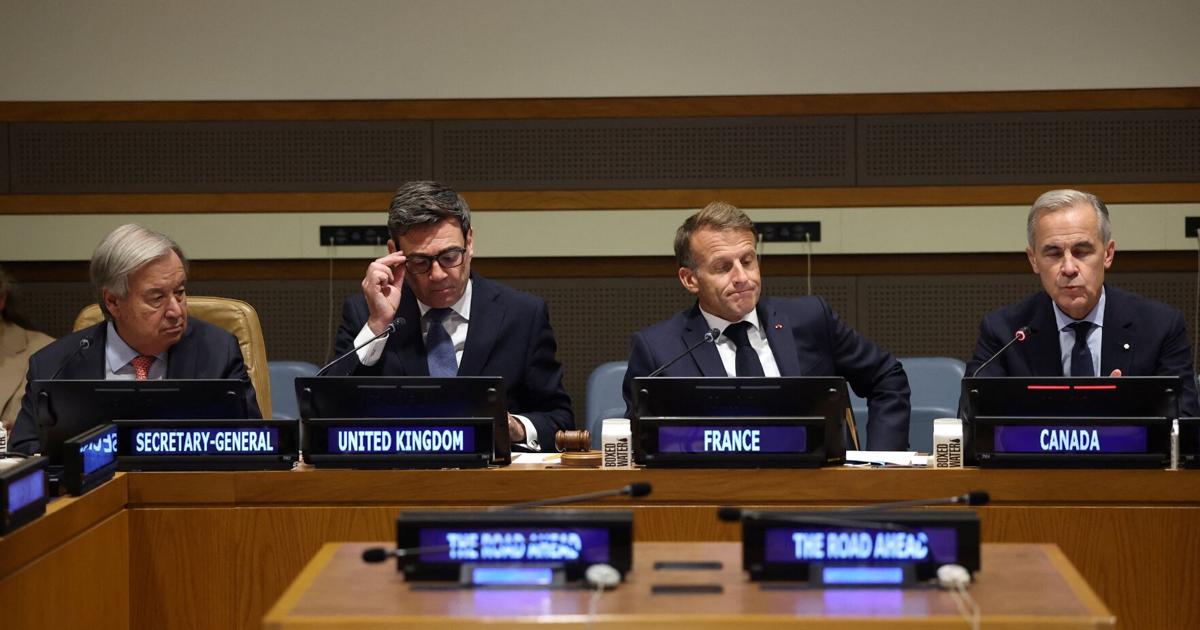
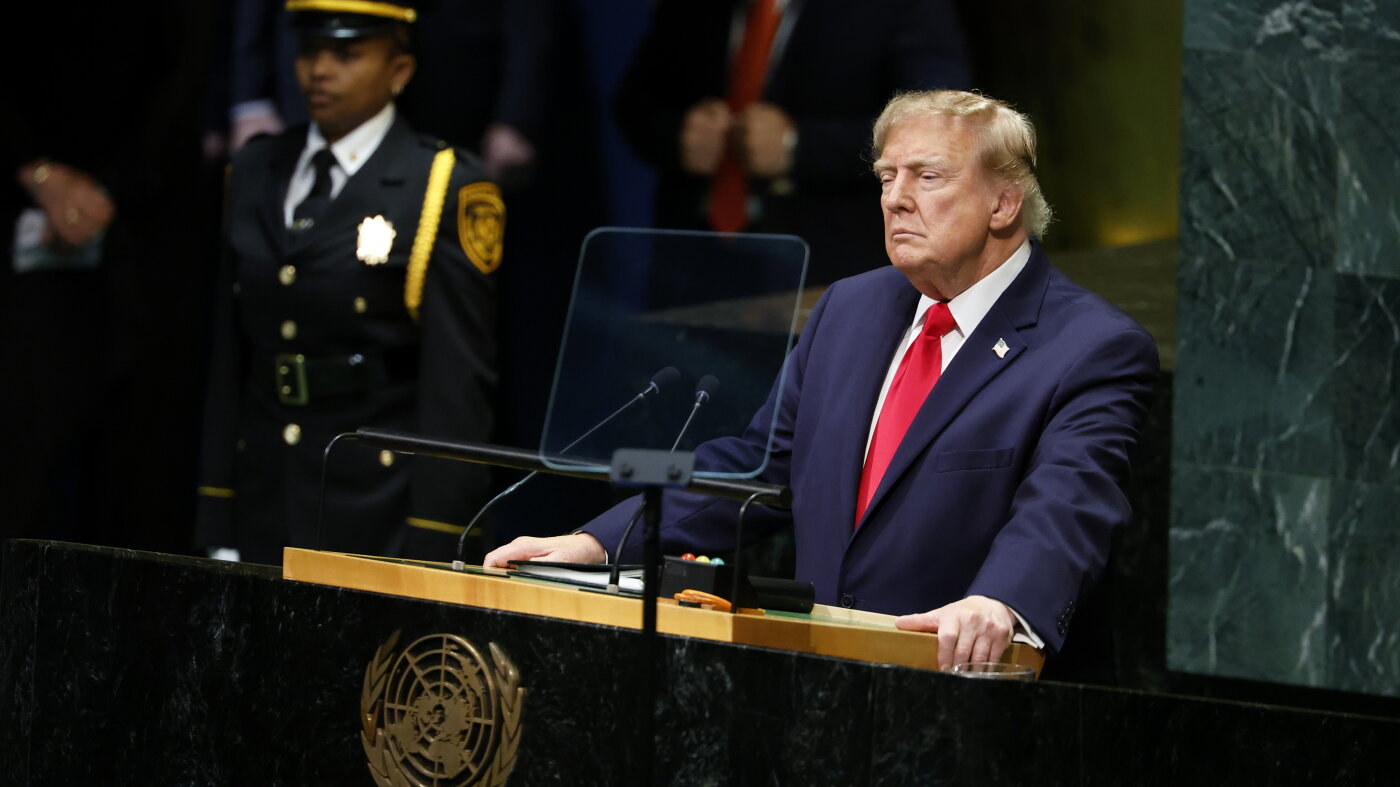
On the first day of the United Nations general assembly this week, two world leaders outlined competing visions for the future. asserted
leaders → outline → future
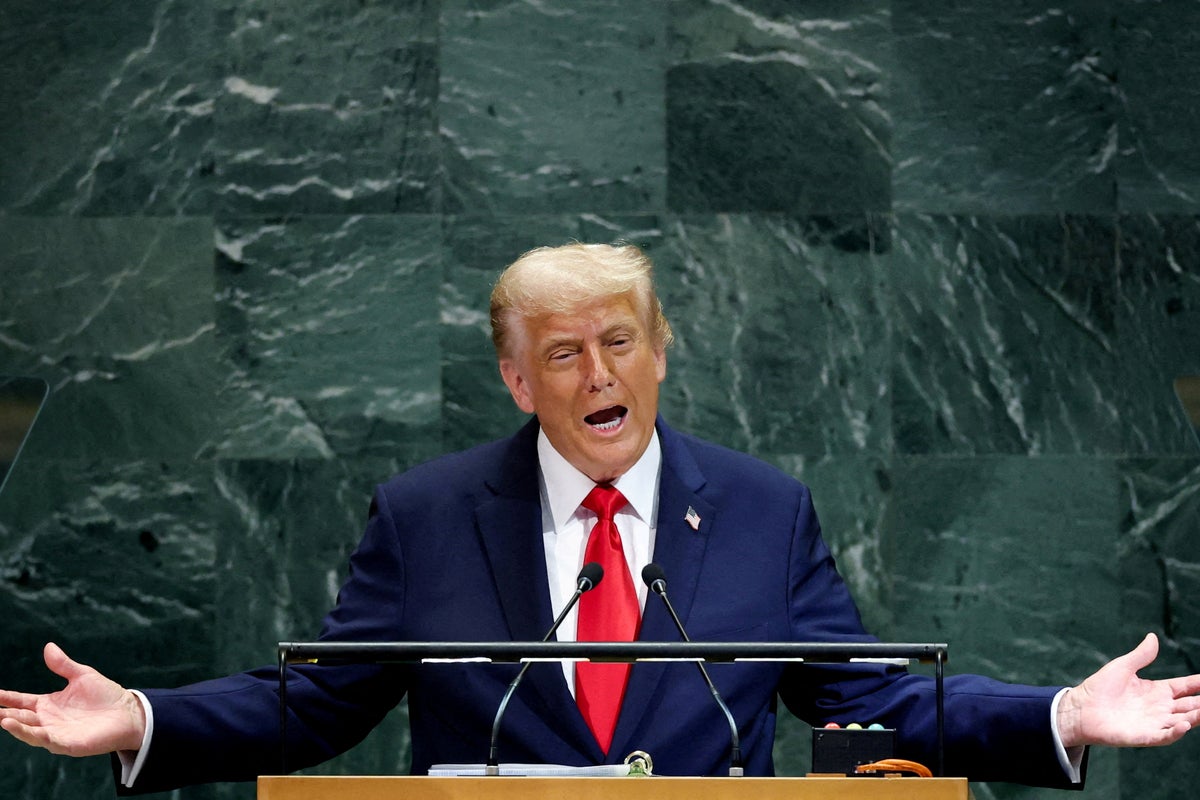
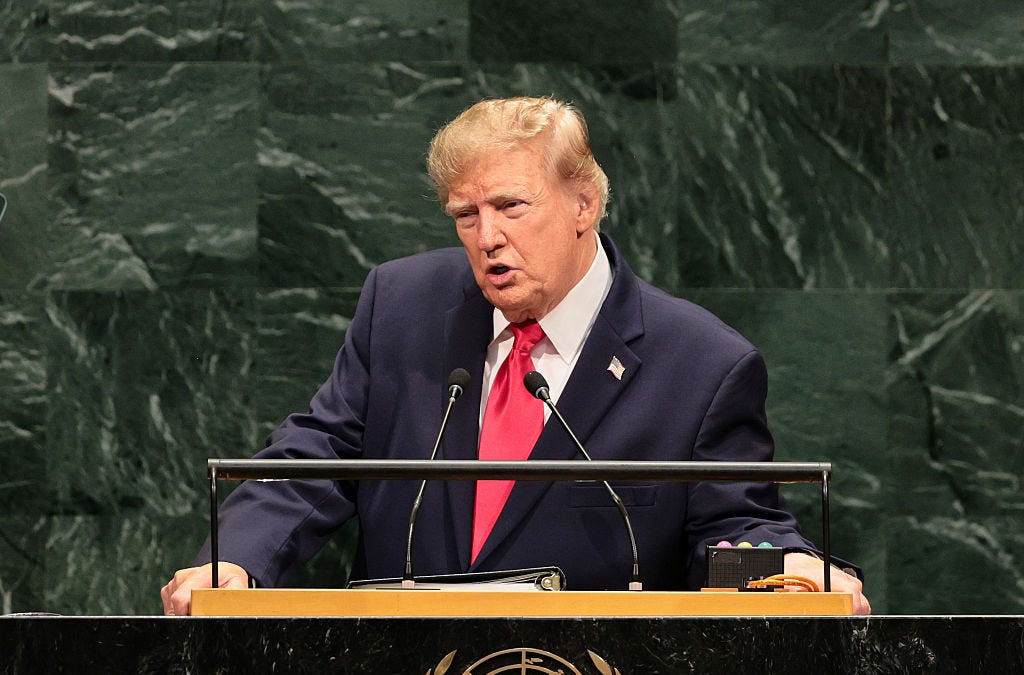
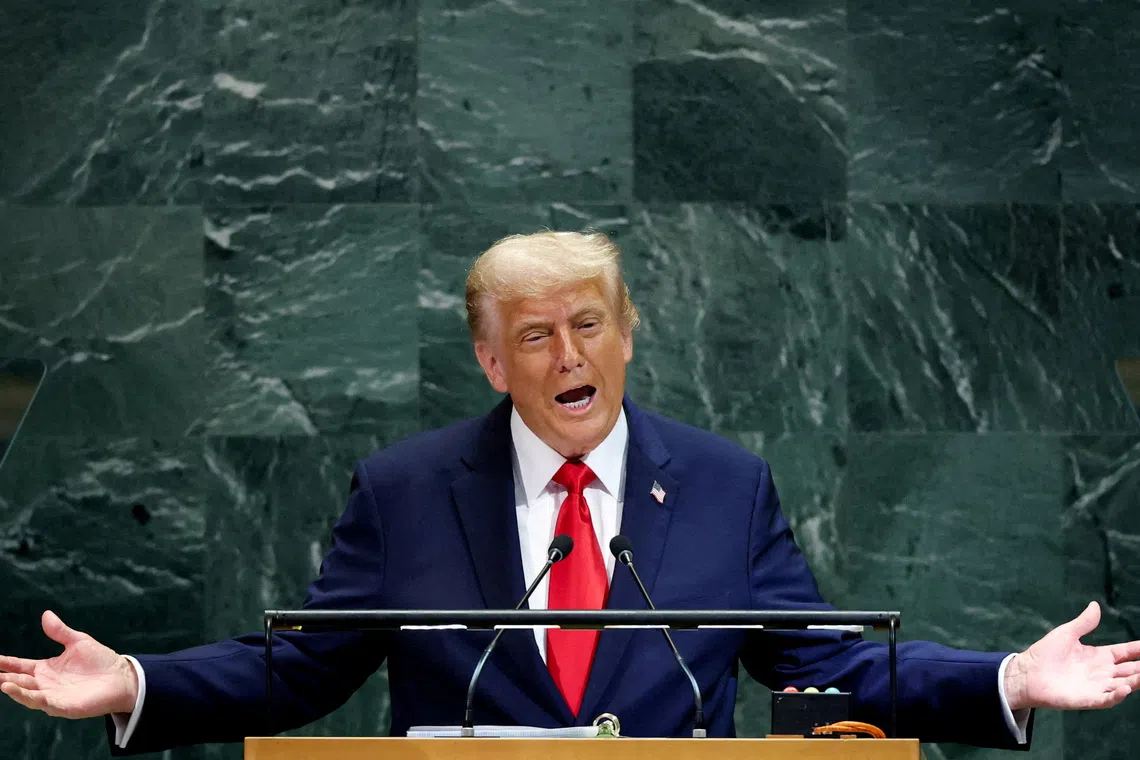
Donald Trump’s speech was disturbingly familiar to those he’s given before: a litany of false boasts and odd tangents, peppered with grim military threats against a variety of nation states. asserted
he → give → states
Discussing his seven-month war with Iran, he mused over whether to “annihilate the Islamic Republic and do it quickly”. asserted
he → discuss → it
In Trump’s eyes, the world is there to be ruled – and ruled only by the US, whose economy is “the envy of the world” and military is “the most powerful on Earth”. asserted
military → rule → Earth
A couple of hours later, Emmanuel Macron took to the podium to offer an alternative. asserted
Macron → take → alternative
In a full-throated defence of international law, multilateralism and the rules-based order, the French president said we were living in a “new era of barbaric acts”. asserted
we → base → acts
He directly criticised Russia and Israel, but much of it was clearly aimed at Trump. asserted
much → criticise → Trump
“They say might is right … but we will not yield,” he argued. uncertain
he → say → ?
“We cannot simply accept this new order of impunity which some are trying to erect … asserted
some → accept → which
Do we want to live under … the law of the jungle or do we want to live in a civilised international society?” asserted
we → want → society
Importantly, he also acknowledged the west’s “permanent temptation to espouse double standards”. asserted
he → acknowledge → standards
“How many times have we heard that people’s sovereignty has value in Europe, but if we look at the Middle East and Africa, it is less valuable,” he asked. asserted
he → hear → East
Peace and security are indivisible, and everyone has a right to them. asserted
everyone → have → them
Over the past decade, Macron has consistently been one of the only western leaders with a morally intelligent analysis of what Europe and the world should look like. asserted
Europe → look → what
As Trump, Vladimir Putin and Benjamin Netanyahu have ushered us into an age of impunity, he has defended the rules-based order and, in recent months, been at the forefront of attempts to forge new alliances to support the crumbling old ones. asserted
he → usher → ones
He has pushed the idea of European strategic autonomy more than anyone else, understanding that while Europe is an economic power, it is yet to fully realise its potential as either a military or geopolitical force. asserted
it → push → force
During Trump’s first term, Macron was the only major leader willing to publicly acknowledge that Nato could no longer rely on the US, leaving the alliance all but dead. And yet the big speeches have rarely led to any substantial change. uncertain
speeches → acknowledge → change
His ambitious call for EU reform in 2017 went nowhere, in essence scotched by Angela Merkel, who praised his “passion” and “verve” but failed to back the substance. asserted
who → go → substance
He came to power in May 2017 as the new world order was crumbling. uncertain
order → come → May
The EU was in crisis: one of its largest members had just voted to leave, while the remaining member states were still fatally split over the fallout from the eurozone crisis earlier in the decade and the migration wave in the summer of 2015. asserted
states → vote → 2015
He has had to work with three German chancellors, the most recent two less popular than their predecessors, and is now on his sixth British prime minister. asserted
He → have → minister
More urgently, Trump had taken office four months earlier, signalling the start of the break up of the rules-based order that had guided the west since the end of the second world war. asserted
that → take → war
Had Macron had the chance to work with Barack Obama, Angela Merkel at the peak of her popularity and a British prime minister committed to the EU, things might have turned out differently. uncertain
things → have → EU
Macron’s domestic woes have increased his impotence on the world stage. asserted
woes → increase → stage
He has in effect been a lame duck for the past two years, since his disastrous snap election in 2024 left him without a majority. asserted
election → leave → majority
But his speech in New York, his final UN address before he steps down as president next spring, may have a more lasting impact. uncertain
he → step → impact
It certainly set the tone for the week. asserted
It → set → week
Over the following days, a procession of leaders of the so-called middle powers defended the principles of the UN and offered coded criticisms of Trump. asserted
procession → follow → Trump
Many of those who would have been scared of speaking out last year feel more emboldened now. asserted
who → speak → those
The Australian prime minister, Anthony Albanese, warned that “the UN mission cannot be entrusted solely to the great powers, or the biggest countries, or even the loudest voices alone”, while Spain’s PM, Pedro Sánchez, said he sought to “defend what so many are trying to destroy” and called for countries to come together to fight “political actors and governments that want to take us back to a dark past”. asserted
that → warn → past
The middle powers are united in their opposition. asserted
powers → unite → opposition
The question is whether they can agree on what they’re for. asserted
they → agree → what
The events of the past few weeks suggest that process is under way. asserted
process → suggest → way
New alliances based on values, not geography or size, are being formed – a reinvention of multilateralism, rather than a simple defence of the old model. asserted
alliances → base → model
So far this month, the EU and Canada have discussed the idea of “associate membership”, while the UK has formed a new coalition of middle powers to impose sanctions targeting Israel’s unlawful occupation of the West Bank. asserted
UK → discuss → Bank
Another new group was created at the UN this week, with Finland and Norway launching a call for an international body to oversee the safety of AI models. asserted
Finland → create → models
It is a direct challenge to Trump, who has called concerns about AI safety a “hoax” – nonetheless, 27 world leaders signed up, including Macron, Canada’s Mark Carney, Germany’s Friedrich Merz and Albanese. asserted
leaders → call → Macron
What ties all this together is the idea of “values-based realism”, an argument first put forward by the Finnish president, Alexander Stubb, and echoed this week by Carney, who arguably lit the “middle powers” spark in Davos earlier this year when he spoke of the “rupture” in the world order caused by Trump. asserted
he → tie → Trump
The new world Carney, Macron and others are trying to build will be one of different, sometimes overlapping alliances of like-minded states. asserted
Carney → try → states
Which of these groups do they join, which do they try to form themselves and which do they politely decline? asserted
they → join → which
…and 4 more, not listed.

💬Give feedback
🕘History 🎫Support