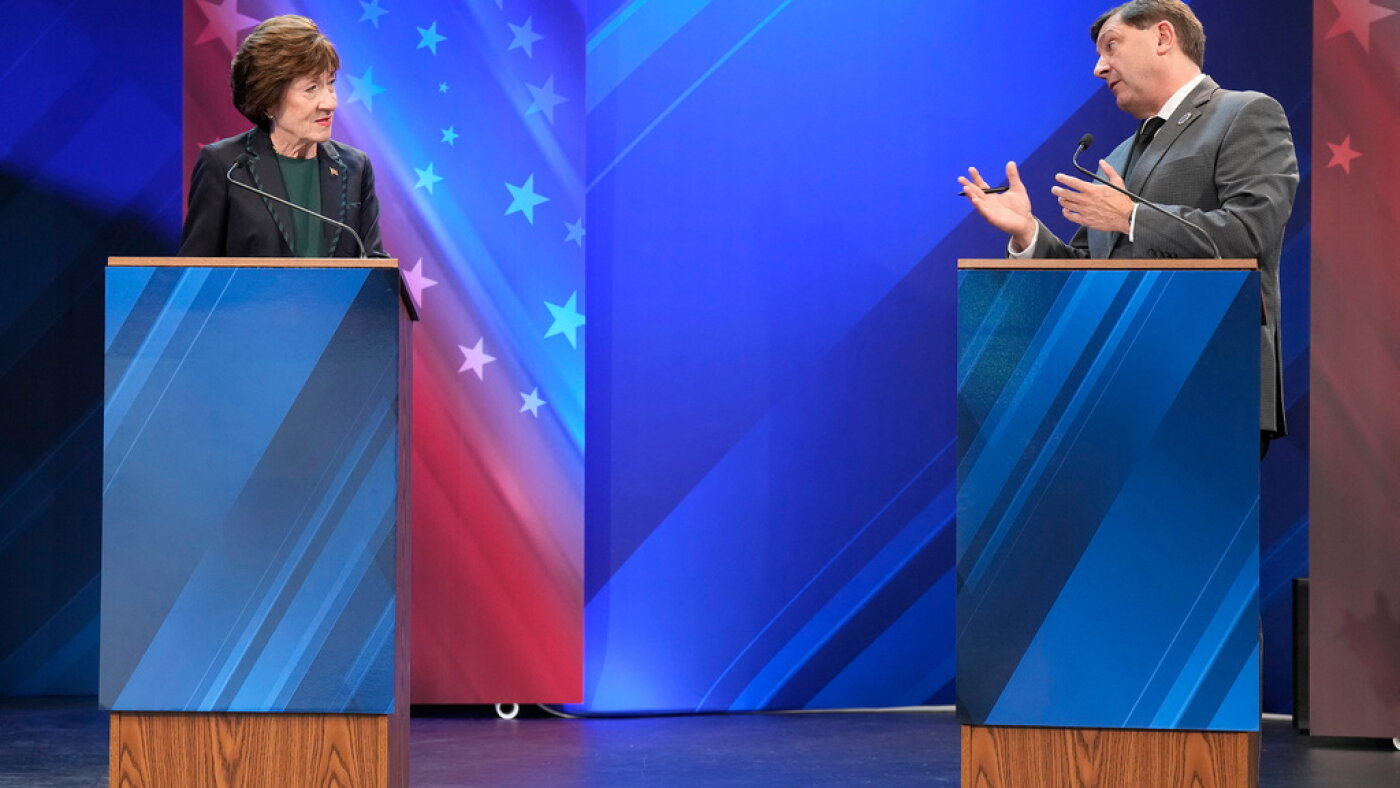
Photo via NPR

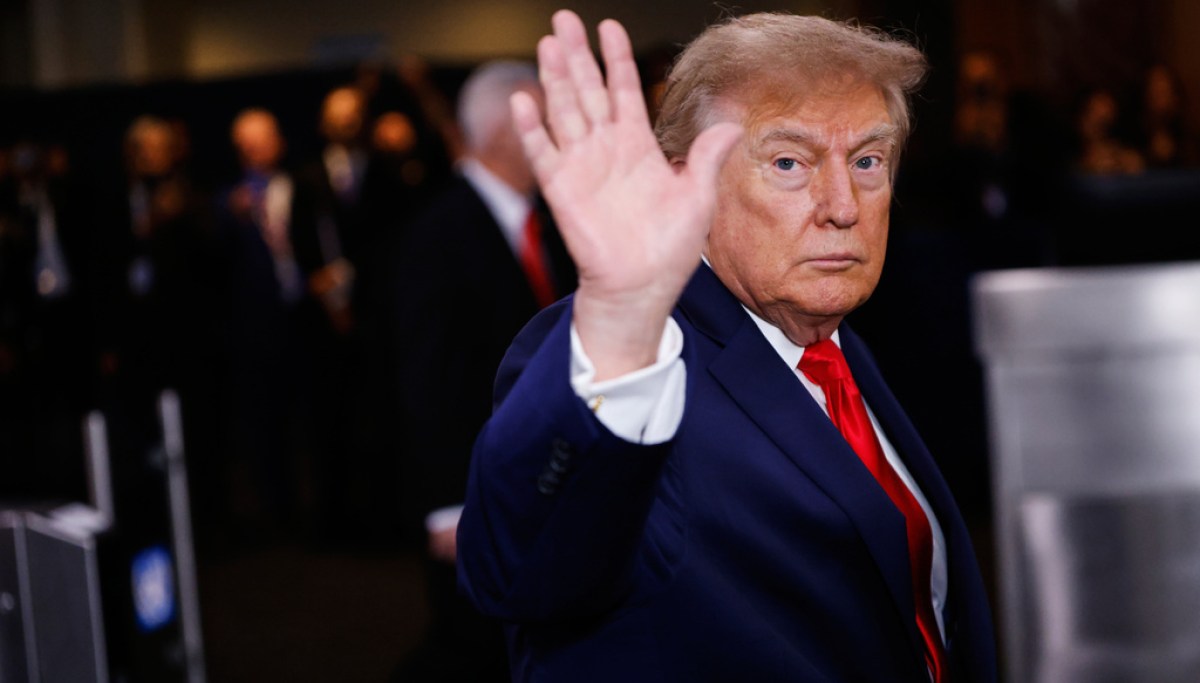
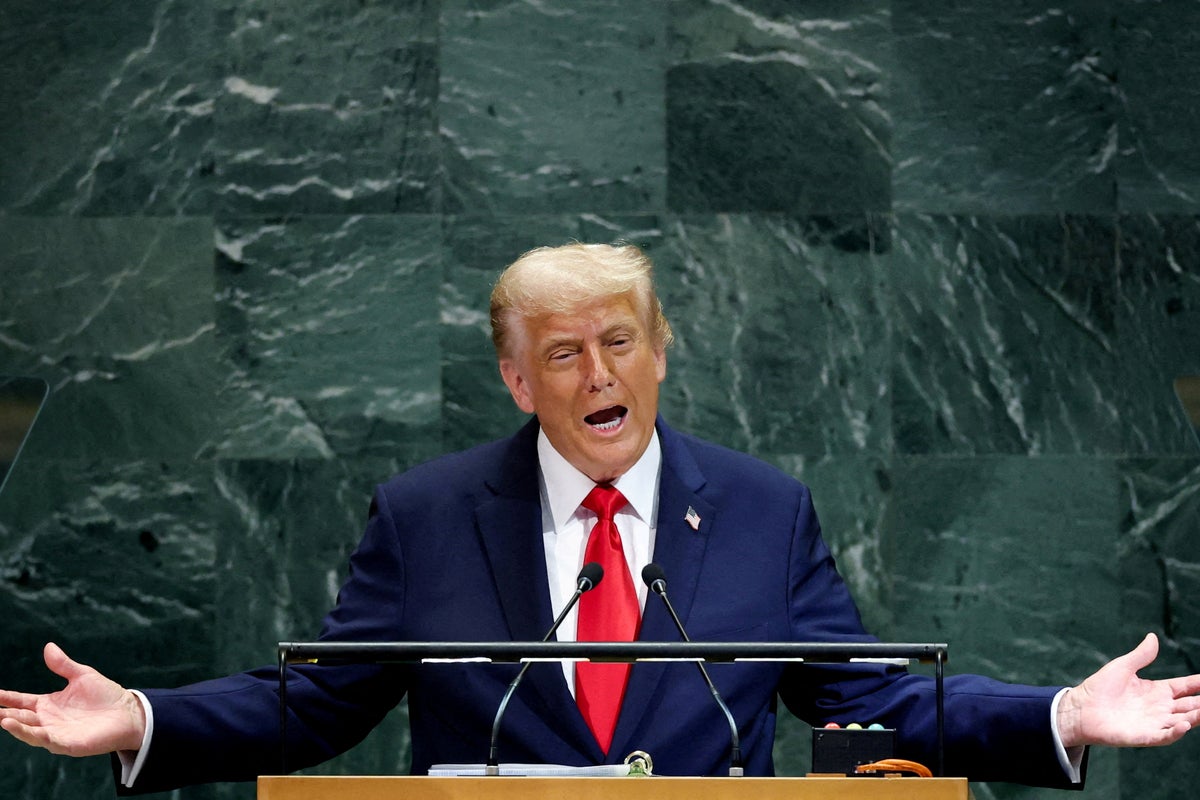
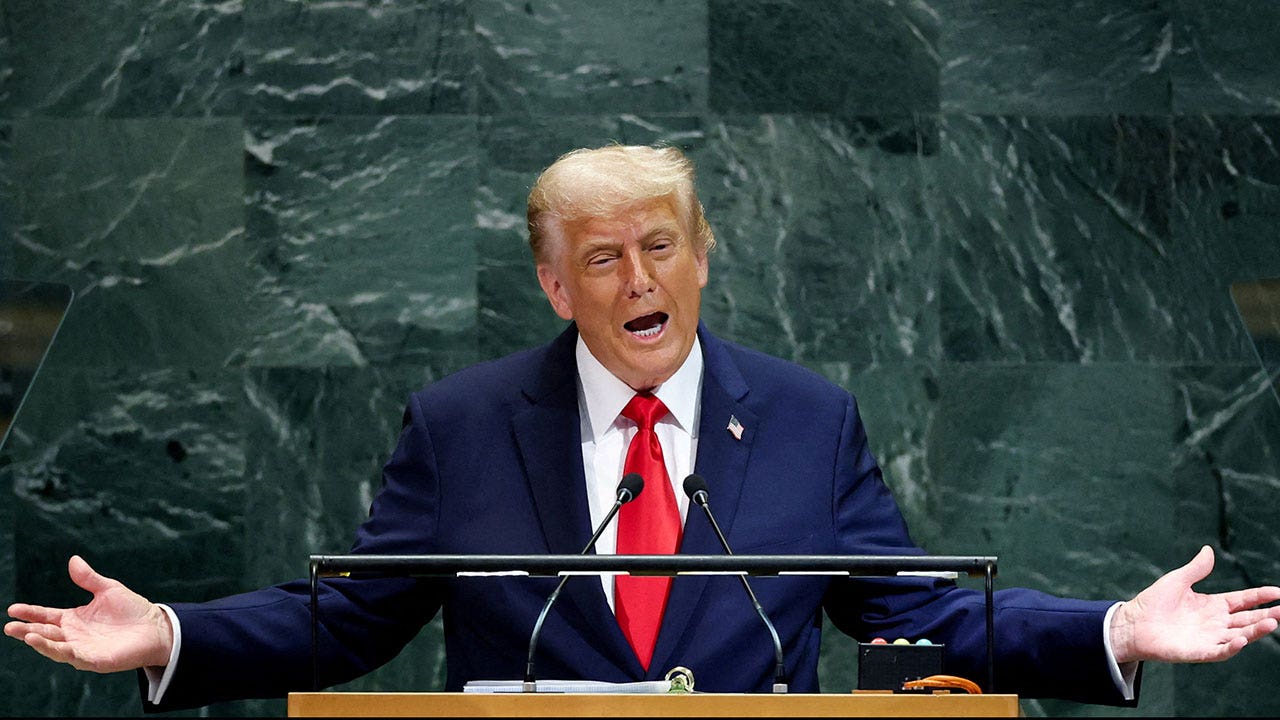
OPINION: Trump's U.N. speech, a stark contrast with past presidents

Read the original at NPR ↗
Cite

Simon, S. (2026, September 26). OPINION: Trump's U.N. speech, a stark contrast with past presidents. NPR. https://www.npr.org/2026/09/26/nx-s1-5974096/essay-09-26-26

Dated when The Aporia collected the article, usually within hours of publication. Check the original for its exact date and byline.

NPR · collected 2026-09-26 · by Scott Simon

Quick Summary

This opinion piece contrasts President Trump's recent U.N. speech with those of past presidents, highlighting a shift in rhetoric regarding nuclear weapons and their use. The author notes that while former leaders used strong but measured language when discussing the potential for nuclear conflict, Trump's speech included threats of annihilation without offering similar caution or diplomatic considerations.
Written by AI on 2026-09-26, from this article's own text only (the story summary below draws on all the coverage).

AI analysis

Story summary

As of September 2026, President Donald Trump told reporters that the U.S. is "hopefully toward the end" of its ongoing war with Iran, which began on February 28 and has lasted for seven months. Despite this hopeful statement, there are no clear timelines or significant de-escalation efforts in sight. The conflict continues to disrupt global oil supplies through the Strait of Hormuz, pushing up oil prices to over $108 per barrel. Additionally, Iran's foreign minister is under pressure from China and international concerns to reopen the strait and return to a previous interim peace deal with the U.S.

Meanwhile, tensions have escalated beyond Iran into Yemen, where Houthi rebels, aligned with Iran, pose significant threats near the Red Sea, complicating efforts at regional stability. The conflict has also drawn in other nations such as Saudi Arabia, which is offering extra crude oil through Oman to ease supply disruptions and stabilize oil prices.

At the United Nations General Assembly, Trump further alarmed global leaders by threatening to "annihilate" Iran if necessary, raising concerns about the potential for catastrophic outcomes involving nuclear weapons. This rhetoric contrasts sharply with past U.S. presidents who emphasized caution regarding such extreme measures. Despite these challenges, there is an urgent need for multilateral solutions and effective engagement through international bodies like the UN to address ongoing conflicts and crises around the world.

Written for “Trump's UN Speech Controversies” on 2026-10-30, grounded in this article and the 206 other(s) covering the same event.

Story

📰 Trump's UN Speech Controversies
Politics · 207 article(s) covering the same event. See how they differ ↓

Compared with similar articles

This article reads leans left and hedges 7% of its claims. Each row says how that neighbour differs.
New York Post
⚖️ Leans strongly right further right than this Hedges 6 of 43 claims Outlet record 66/100
The Sydney Morning Herald
⚖️ Leans left Hedges 5 of 93 claims Outlet record 61/100
“While both articles discuss President Trump's speech at the United Nations, Article A focuses on analyzing and quoting parts of his speech, while Article B uses the speech as an example to critique the broader role and effectiveness of the UN.”
South China Morning Post
⚖️ Leans right further right than this Hedges 0 of 6 claims Outlet record 64/100
TIME
⚖️ Leans left Hedges 6 of 48 claims Outlet record 59/100
“Article A discusses Trump's inaugural address in 2017 and his overall policy towards international institutions, while Article B focuses on a U.N. speech made by Trump in the recent past, contrasting it with previous presidents.”
Washington Examiner
⚖️ Leans right further right than this Hedges 1 of 15 claims Outlet record 70/100
The Independent
Hedges 1 of 33 claims Outlet record 59/100
“Article A discusses Trump's U.N. speech contrasting it with past presidents' speeches, while Article B reports on a different occasion where Trump spoke to reporters at the White House about Iran and gas prices.”
Al Jazeera
Hedges 0 of 2 claims Outlet record 60/100
“Article A discusses Trump's upcoming return to UN, while Article B provides an opinion on his actual speech that has already occurred.”
The Independent
⚖️ Leans right further right than this Hedges 4 of 40 claims Outlet record 59/100
“Article A reports on the impending speech by Trump amid tensions, while Article B provides an opinionated analysis of a past UN speech.”
Fox News
Hedges 3 of 15 claims Outlet record 70/100
“Article A describes Trump's planned speech at the UN General Assembly, while Article B provides an opinion piece comparing Trump's actual delivered speech to those of past presidents.”
How this article was measured signals, leaning charts, publisher record, byline, topics and claims

Signals How these are calculated →

Claims extracted
14
sentences that state something as happening or true
Uncertain
7%
1 of 14 hedged ("reportedly", "may", "according to")
Leaning
Leans left
of the writing, not the subject · beta estimate
Publisher signals
60/100
NPR's corrections and hedging, across everything collected from it. Not a measure of accuracy.
Outlets on this story
207
Politics
Same framing elsewhere
1
articles that frame the event the way this one does
Analyzed 2026-09-26 · how these are computed

How this is being covered How these are calculated →

Article leaning vs. publisher reliability
Source leaning vs. consistency

Publisher

NPR · 972 article(s) · 3 correction(s) detected
Running correction rate · 3 correction(s)

Who wrote this

Scott Simon
8 article(s) here · 1 carrying a prediction
🔮 Deadline reports that at least three actors will be screen tested: Jack Lowden, Josh O' Connor, and Callum Turner, who are all fine, experienced British actors and...how do I say this? Hunks.
2026-10-24 · assertive framing · Perspective: The next James Bond
🔮 Maybe we should repeat that number: $10 billion dollars.
2026-10-17 · mixed framing · Perspective: Midterm money madness
🔮 Sen. Eric Schmitt of Missouri may not have been exactly hawk-eyed at a Senate Judiciary Committee hearing this week when he asked former special counsel Jack Smith if he had gone to an Atlanta Hawks basketball game in February 2024.
2026-10-03 · assertive framing · Opinion: A Hawk is not the same as a Hawkeye
🔮 When President John F. Kennedy ordered US ships to blockade Cuba to prevent the Soviet Union from installing nuclear missiles in 1962, he told Americans, "We will not prematurely or unnecessarily risk the costs of worldwide nuclear war in which even the fruits of victory would be ashes in our mouth."
🔮 She began the book remembering her old tomcat, who would jump through the bedroom window after prowling outside her home in rural Virginia.
2026-09-19 · assertive framing · Opinion: Remembering Annie Dillard, nature writer
🔮 I still remember — I will always remember —walking the streets of Lower Manhattan through rows of faces in photographs pasted on lampposts and walls with urgent, wrenching words: "Have you seen my wife?" "Last seen, 8:20 AM, Tuesday."
2026-09-12 · assertive framing · OPINION: 25 years on, a nation still mourns
🔮 Blue is a giant stick figure with what seems to be four limbs, standing on what might be one leg, while the other is lifted.
2026-09-05 · mixed framing · Opinion: A sculpture in perpetual motion, removed
Also by Scott Simon
Nothing else under this byline is closely related to this article, so these are simply their most recent.
All 8 articles by Scott Simon →

Topics

Hiroshima Iran U.N. the United Nations General Assembly the United States

Subjects

Hiroshima GPE · 3× Trump PERSON · 3× Truman ORG · 2× U.N. ORG · 2× the United States GPE · 2× Harry Truman PERSON · 1× Iran GPE · 1× Japan GPE · 1× the Islamic Republic GPE · 1× the United Nations General Assembly ORG · 1×

Narrative

When President John F. Kennedy ordered US ships to blockade Cuba to prevent the Soviet Union from installing nuclear missiles in 1962, he told Americans, "We will not prematurely or unnecessarily risk the costs of worldwide nuclear war in which even the fruits of victory would be ashes in our mouth."
framing: assertive · carried by 1 article(s) · first seen 2026-09-26
🔮 When President John F. Kennedy ordered US ships to blockade Cuba to prevent the Soviet Union from installing nuclear missiles in 1962, he told Americans, "We will not prematurely or unnecessarily risk the costs of worldwide nuclear war in which even the fruits of victory would be ashes in our mouth."

Claims (14 extracted, 1 hedged)

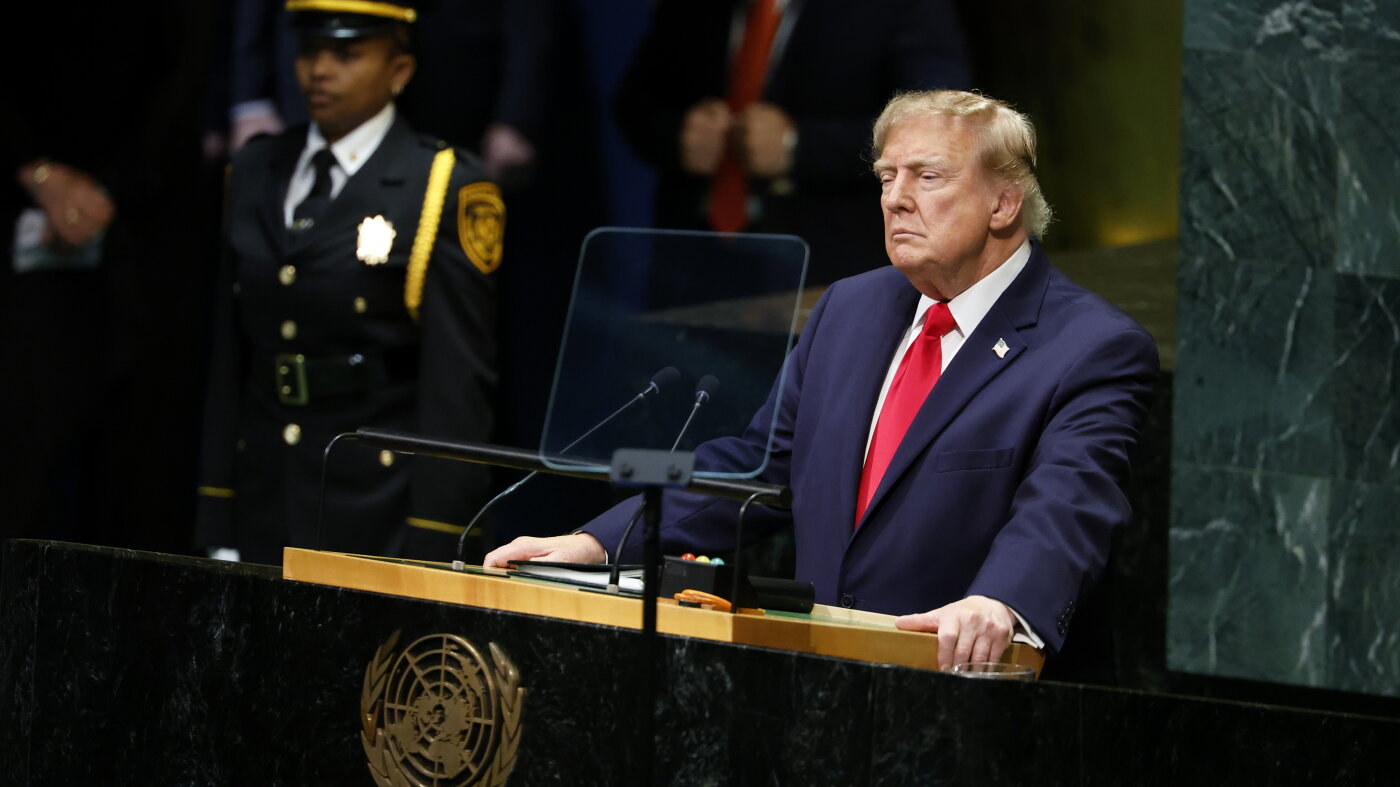
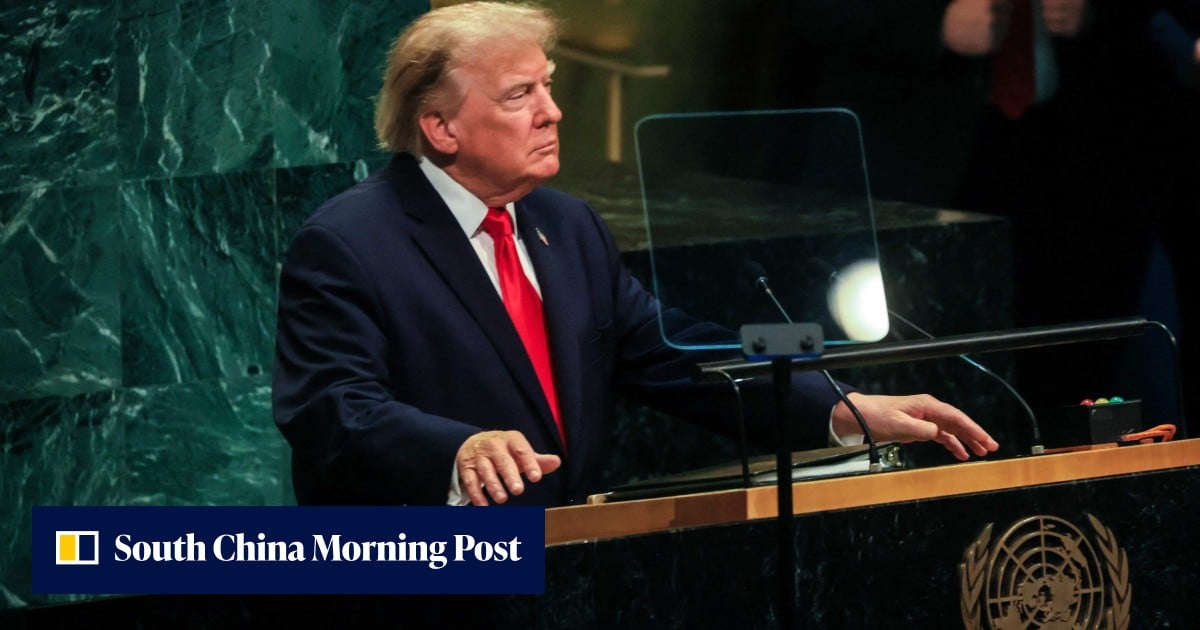
The world took note when President Trump told the United Nations General Assembly this week that he had asked himself whether to make a deal with Iran - or... "Do I annihilate the Islamic Republic… "Do I drive them into hell with no chance of survival and no hope of future greatness or generations?" asserted
I → take → greatness
Those words seem especially forbidding from a leader who can command armies to march and missiles to fly. asserted
who → seem → armies
On August 6, 1945, President Harry Truman told the world the United States had dropped the first atomic bomb, on Hiroshima, Japan. asserted
States → tell → Hiroshima
It instantly killed an estimated 70,000 people. asserted
It → kill → people
Some 40,000 more died days later in Nagasaki, and tens of thousands more from radiation illnesses in the days, weeks, months and years thereafter. asserted
thousands → die → days
In his speech announcing the nuclear attack on Hiroshima, President Truman called it "a harnessing of the basic power of the universe," and added cautions about "protecting the world from the danger of sudden destruction." Nuclear weapons have not been used in war since. asserted
weapons → announce → war
And Truman's successors have been pointedly measured when they talk about them. asserted
they → measure → them
As President Ronald Reagan put it, "a nuclear war cannot be won and must never be fought." asserted
war → put → it
When President John F. Kennedy ordered US ships to blockade Cuba to prevent the Soviet Union from installing nuclear missiles in 1962, he told Americans, "We will not prematurely or unnecessarily risk the costs of worldwide nuclear war in which even the fruits of victory would be ashes in our mouth." asserted
fruits → order → mouth
In 1974, President Gerald Ford told the U.N. General Assembly, "A very stark reality has tempered America's actions for decades and must now temper the actions of all nations. asserted
reality → tell → nations
Prevention of full-scale warfare in the nuclear age has become everybody's responsibility. asserted
Prevention → become → age
Today's regional conflict must not become tomorrow's world disaster. asserted
conflict → become → ?
And in 2017, President Obama visited the Peace Park that now stands in Hiroshima and said, "Among those nations like my own that hold nuclear stockpiles, we must have the courage to escape the logic of fear and pursue a world without them." asserted
we → visit → them
So strong and measured, they might have felt it wasn't necessary to add threats of annihilation, and "no chance of survival…" uncertain
it → measure → survival
💬Give feedback
🕘History 🎫Support