Photo via Deutsche Welle

Backlash over data centers tests Europe's AI ambitions

Read the original at Deutsche Welle ↗
Cite

Ehl, D. (2026, September 26). Backlash over data centers tests Europe's AI ambitions. Deutsche Welle. https://www.dw.com/en/backlash-over-data-centers-tests-europe-s-ai-ambitions/a-79419800?maca=en-rss-en-world-4025-rdf

Dated when The Aporia collected the article, usually within hours of publication. Check the original for its exact date and byline.

Deutsche Welle · collected 2026-09-26 · by David Ehl

Quick Summary

European countries face resistance over plans to construct data centers necessary for artificial intelligence development, amid concerns about resource consumption. In Germany, data centers consume significant amounts of water—between 0.4 and 4.4 liters per kilowatt-hour—to maintain cooling systems. This issue is exacerbated by the continent's recent record-breaking heatwave and anticipated future temperature increases. The European Commission has responded with a new transparency scheme to grade data center efficiency based on energy, water use, and contribution to electricity grids. Protests against proposed data centers are growing, including one in Linz, Austria, where hundreds demonstrated against Google’s planned facility.
Written by AI on 2026-09-27, from this article's own text only (the story summary below draws on all the coverage).

AI analysis

Story summary

In central France, elected officials from Etrechet have resigned over Google's plans to build a massive data center that could require between 880 megawatts and 1.1 gigawatts of electricity at full capacity, equivalent to the output of a nuclear power plant. This reflects broader concerns in Europe about hosting large data centers for AI development and operations. European governments and companies prefer storing data locally rather than relying on U.S.-based services due to sovereignty issues. However, this preference means increased strain on local resources like water; according to Germany’s Ministry for Economic Affairs, cooling these facilities can consume between 0.4 and 4.4 liters of water per kilowatt-hour used. The record-breaking summer in Europe highlighted the severe impact of climate change on water availability, raising questions about future sustainability for such resource-intensive projects.

Written for “Europe AI Ambitions Challenged” on 2026-11-02, grounded in this article and the 0 other(s) covering the same event.

Story

📰 Europe AI Ambitions Challenged
Politics · 1 article(s) covering the same event.

Compared with similar articles

This article reads unscored and hedges 12% of its claims. Each row says how that neighbour differs.
The Straits Times
⚖️ Leans left Hedges 0 of 2 claims Outlet record 66/100
“The articles discuss skepticism and backlash against data centers but focus on different geographical regions (Wall Street vs. Europe) with distinct contexts.”
BBC News
Hedges 0 of 2 claims Outlet record 68/100
“The articles discuss different regions and perspectives on data centers for AI (Inner Mongolia vs. Europe) without describing the same specific incident or happening.”
Daily Mail
⚖️ Leans left Hedges 3 of 20 claims Outlet record 68/100
“The articles discuss related issues concerning AI and data centers but describe different aspects and perspectives without focusing on the exact same incident or occurrence.”
Washington Examiner
⚖️ Leans left Hedges 0 of 32 claims Outlet record 70/100
“The articles discuss general issues related to AI and data centers but describe different aspects and do not focus on a single, specific incident.”
The Guardian
⚖️ Leans strongly left Hedges 3 of 34 claims Outlet record 66/100
“The articles discuss different aspects of AI concerns and debates; one focuses on tech moguls and policy discussions, while the other addresses data center location issues in Europe.”
Fox News
⚖️ Leans left Hedges 2 of 50 claims Outlet record 69/100
“The articles discuss related issues regarding data centers and AI, but they do not describe the same specific incident or occurrence.”
How this article was measured signals, leaning charts, publisher record, byline, topics and claims

Signals How these are calculated →

Claims extracted
25
sentences that state something as happening or true
Uncertain
12%
3 of 25 hedged ("reportedly", "may", "according to")
Leaning
withheld
no quote in the article backed the model's score
Publisher signals
95/100
Deutsche Welle's corrections and hedging, across everything collected from it. Not a measure of accuracy.
Outlets on this story
1
Politics
Same framing elsewhere
1
articles that frame the event the way this one does
Analyzed 2026-09-27 · how these are computed

How this is being covered How these are calculated →

Article leaning vs. publisher reliability
Source leaning vs. consistency

Publisher

Deutsche Welle · 554 article(s) · 0 correction(s) detected
No corrections detected for this publisher. That may mean careful reporting, or simply that nothing has been checked.

Who wrote this

David Ehl
7 article(s) here · 1 carrying a prediction
🔮 If the Bab el-Mandeb Strait also becomes impassable, the situation could deteriorate.
🔮 The economic consequences for Africa is coupled with a refugee inflow African economies are already suffering from crisis in the Strait of Hormuz, which is making fuel and fertilizer in particular scarce and more expensive. If the Bab el-Mandeb Strait also becomes impassable, the situation could deteriorate.
🔮 Tigrayan forces are reportedly fighting to defend other towns, including Mekoni and Maychew in southern Tigray, the source told DW on the strict condition of anonymity.
🔮 In the European Union's most populous city, pressure on the housing market is so great that many of its residents are willing to undertake a historic experiment: Five years ago, Berliners voted in a referendum to instruct the Senate of the German capital to draft a law that would put an end to the power of large real estate companies.
🔮 This is currently a major issue in Europe, where many governments and companies have decided that they would prefer to store data in Europe rather than in the United States, which is the global leader in computing.
2026-09-26 · assertive framing · Backlash over data centers tests Europe's AI ambitions
🔮 Few world leaders would miss a stage like the United Nations General Assembly.
2026-09-23 · assertive framing · Who is skipping the UN General Assembly — and why
🔮 If we do nothing, they would all be left at the mercy of foreign judges thousands of miles away," he said.
Also by David Ehl
Nothing else under this byline is closely related to this article, so these are simply their most recent.
All 7 articles by David Ehl →

Topics

Fingrid Finland Ministry for Economic Affairs the German the United States

Subjects

Etrechet GPE · 2× Google ORG · 2× Fingrid ORG · 1× Finland GPE · 1× Ministry for Economic Affairs ORG · 1× Teresa Ribera PERSON · 1× the European Commission ORG · 1× the European Commission for a Clean, Just and Competitive ORG · 1× the German ORG · 1× the United States GPE · 1×

Narrative

In central France, meanwhile, several elected officials in the village of Etrechet have resigned over Google's plans to build a massive data center, which, at full capacity, would require between 880 megawatts and 1.1 gigawatts of electricity or the equivalent of the total output of a nuclear power plant.
framing: assertive · carried by 1 article(s) · first seen 2026-09-27
🔮 This is currently a major issue in Europe, where many governments and companies have decided that they would prefer to store data in Europe rather than in the United States, which is the global leader in computing.
2026-09-27 · Deutsche Welle
Backlash over data centers tests Europe's AI ambitions · assertive framing

Claims (25 extracted, 3 hedged)

Like coal-fired power plants and wind turbines, few people actually want a data center in their backyard. asserted
people → fire → backyard
But they do want to use their services. asserted
they → want → services
As a global debate rages about the potential dangers of artificial intelligence, there are also many local discussions about where exactly the data centers needed to train and run AI should be built. asserted
centers → rag → AI
This is currently a major issue in Europe, where many governments and companies have decided that they would prefer to store data in Europe rather than in the United States, which is the global leader in computing. asserted
which → decide → computing
But more digital sovereignty in Europe will mean more consumption of the continent's resources. asserted
sovereignty → mean → resources
According to the German Ministry for Economic Affairs, for every kilowatt-hour of electricity consumed, an average of between 0.4 and 4.4 liters (0.8 and 9.3 pints) of water is used to cool data centers, with the water either evaporating or being diverted back to tanks in a warmed state. Massive water consumption The summer that just ended was the hottest on record in Europe — in some areas, water use was restricted for residents, agriculture and even nuclear power plants. uncertain
use → accord → residents
The summers are expected to get warmer, so many are wondering about the potential water consumption of data centers in the future. asserted
many → expect → future
Fingrid, Finland's national grid operator, recently forecast that electricity consumption would rise by almost 40% if all projects with signed connection agreements were implemented in full. asserted
projects → forecast → agreements
This week, the European Commission announced a new scheme for data centers to increase transparency on their energy and water use. asserted
Commission → announce → use
Those with a capacity of more than 500 kW will receive an efficiency grade that will also take into account their contribution to the grid, such as the reuse of waste heat. asserted
that → receive → heat
"Tripling our data center capacity cannot mean tripling the pressure on our grids, our water and our energy bills," said Teresa Ribera, the Executive Vice-President of the European Commission for a Clean, Just and Competitive Transition. asserted
Ribera → triple → Transition
Europe's most powerful data centers have primarily been built near the major cities of Frankfurt, London, Amsterdam, Paris and Dublin (FLAP-D) because of high connectivity, proximity to users and businesses, and well-established ecosystems with specialized engineers and secure supply chains. asserted
centers → build → engineers
However, according to a report by the investment group CBRE, the situation is changing as these markets face power and grid infrastructure constraints. uncertain
markets → accord → constraints
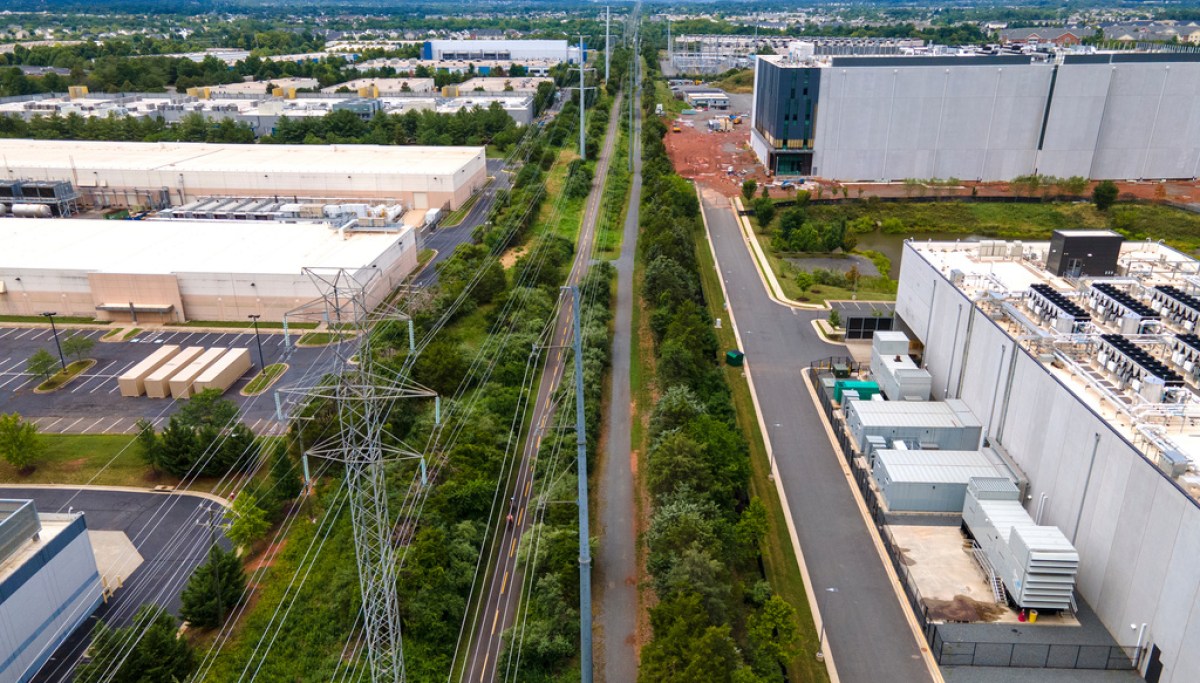
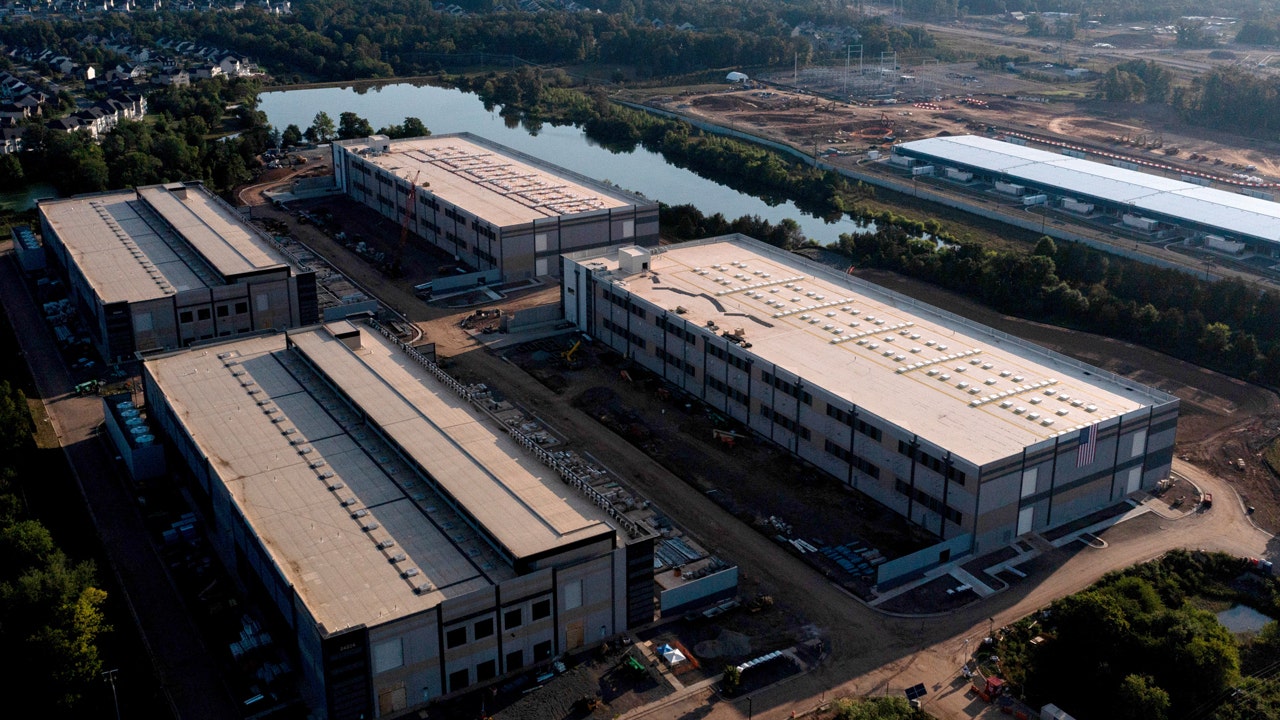
New data centers are being built in the Dutch city of Groningen, Barcelona in Spain or the Belgian capital Brussels, as well as in more rural areas. asserted
centers → build → areas
And as this happens, there are more and more protests taking place, both on and offline. asserted
this → happen → place
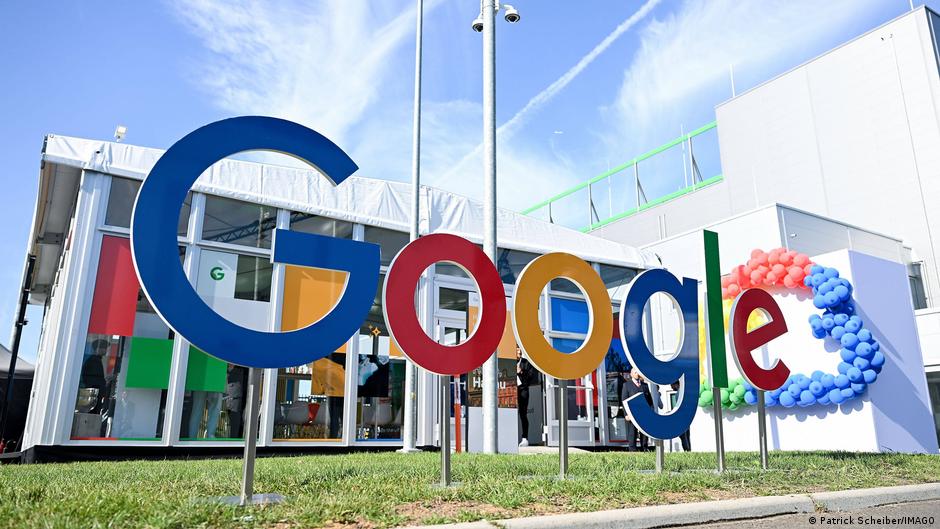
Earlier this month, hundreds turned up for a protest in front of tech giant Google's offices in the Austrian city of Linz, demonstrating against its already advanced plans to build a data center in the small town of Kronstorf. asserted
hundreds → turn → Kronstorf
Earlier this month, bestselling Irish author Sally Rooney successfully led a campaign to overturn planning permission for a proposed data center in the village of Killala, arguing that it would breach national climate policy. asserted
it → lead → policy
In central France, meanwhile, several elected officials in the village of Etrechet have resigned over Google's plans to build a massive data center, which, at full capacity, would require between 880 megawatts and 1.1 gigawatts of electricity or the equivalent of the total output of a nuclear power plant. asserted
which → elect → plant
Etrechet mayor Florence Laurent told the French daily Le Monde that she was resigning out of a "sense of powerlessness, since the village has no decision-making power" regarding the project. asserted
village → tell → project
Some operators of data centers argue that the facilities can be built in such a way that they save energy. asserted
they → argue → energy
A large data center currently being built in Marseille will reportedly use a cooling system that requires 30% less power and consumes no water. uncertain
that → build → water
Other data centers, in Scandinavia, for example, use waste heat from the servers and route it into district heating networks via heat exchangers and pumps. asserted
centers → use → exchangers
This spring, the German energy company E.ON published the results of a survey that found nearly three-quarters of people would be more likely to welcome data centers near residential areas if they fed their waste heat into the heating network. asserted
they → publish → network
Data center operators also argue that the facilities can serve the public by connecting the batteries that usually provide backup power to local grids so that there is uninterrupted service in the event of power outages or at times of peak demand. asserted
that → argue → demand
For proponents of building more data centers in Europe, the facilities not only contribute to the continent's digital sovereignty but also help to strengthen energy independence. Monir Ghaedi contributed to this article, which was translated from German. asserted
which → build → German

💬Give feedback
🕘History 🎫Support