After four decades as a Commonwealth Bank customer, Trevor Vienet is changing banks.
asserted
Vienet → change → banks
That's because CBA has wound up its association with the Qantas Frequent Flyer program in preparation for the upcoming changes to credit and debit surcharges announced by the Reserve Bank of Australia.
asserted
CBA → wind → Australia
It's the lesser-known side effect of the changes that begin on October 1 because banks' revenue will drop as they reduce the amount they charge businesses to bank with them.
asserted
they → know → them
The Commonwealth Bank has introduced a new in-house rewards system called Yello, which Mr Vienet is not eligible for.
asserted
Vienet → introduce → which
"The [CBA] letter was, I'd call it a Dear John letter.
asserted
I → call → it
It's like: 'You've had a long relationship, but it's all over,'" he said.
asserted
he → have → relationship
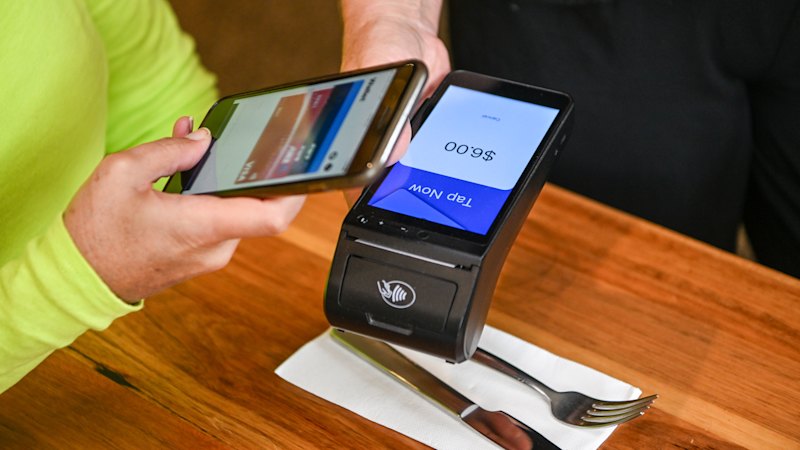
From Thursday, businesses will be banned from adding a surcharge to customers using electronic terminals to pay for goods on card networks including eftpos, Mastercard and Visa.
asserted
businesses → ban → eftpos
The cap on interchange fees paid by Australian businesses to banks for processing credit card fees will reduce from 0.8 per cent to 0.3 per cent, meaning businesses will pay lower fees but bank revenues will take a hit.
asserted
revenues → pay → hit
In preparation for these changes, the major Australian banks are increasing credit card fees, reducing reward program perks and cutting back on travel insurance inclusions.
"I was pretty angry ...
asserted
I → increase → inclusions
I've been a customer for 40 years, have held several accounts and three mortgages and paid those off," Mr Vienet said.
asserted
Vienet → hold → those
Banks not prepared to cop loss
The surcharge ban is expected to save consumers about $1.6 billion and businesses $200 million in surcharge fees annually.
The changes to interchange fees — the fees banks charge businesses for using their systems — are estimated to reduce transaction fees from businesses to banks by about $910 million each year.
asserted
banks → cop → million
Canstar's data insights director Sally Tindall said it was clear the banks weren't willing to wear the reduction in interchange fees.
asserted
banks → say → fees
"They're looking to recoup at least some of that loss …
asserted
They → look → loss
the consumer, in many cases, will end up paying for part of this ban at the minimum, but also small businesses.
asserted
consumer → end → minimum
But Australian Banking Assocation (ABA) chief executive Simon Birmingham said the changes implemented by the banks were expected.
asserted
changes → say → banks
"That was one of the things that the Reserve Bank called out as not only expecting to see, but basically wanting to see," he said.
asserted
he → call → that
Small businesses say prices may rise
The almost one in six businesses that surcharge have until October 1 to make the necessary changes, and some are worried.
uncertain
some → say → changes
Swim school owner Greg Hodge is working with his customers to change the way they pay for lessons, from credit card payments to bank transactions.
asserted
they → work → transactions
But if they can't switch to bank transfers, they may have to pay extra for each lesson.
uncertain
they → switch → lesson
"We either have to absorb [the fees], or we have to put our fees up to cover [the surcharge ban] ... and you're looking at around about $1 a lesson,"he said.
asserted
you → have → 1
Australian Restaurant and Cafe Association chief executive Wes Lambert said many businesses were considering their options.
asserted
businesses → say → options
"Many have indicated that they are going to increase their prices," he said.
asserted
he → indicate → prices
"Many have [also] told us they are going to stop taking certain credit card types [and] many have said that they're going to go to cash only."
asserted
they → tell → cash
Despite the additional charging that may happen, the RBA's head of payments policy Ellis Connolly said he didn't expect increases would have an "ongoing effect on inflation".
uncertain
increases → happen → inflation
"In the end, the consumer was paying it either way, whether it was paid in a surcharge or whether it was paid in the end price," he said.
asserted
he → pay → price
Not as simple as increasing fees
While some businesses may be forced to increase the price of goods and services, others have argued it's not that simple.
Central Coast councillor Jared Wright said for a council to increase fees, it had to go through a "multi-month process" involving public consultation.
He estimated the impact of the surcharge ban on his council, which is one of the largest in New South Wales, would be about $400,000 in lost fees, and was concerned about the possible flow-on effect to his constituents.
uncertain
which → increase → constituents
"That could buy you some events that you can put on for the community, you could put that into road renewal, you could fill potholes with that, you could potentially build a small footpath," he said.
uncertain
he → buy → footpath
One alternative for businesses to cut costs is using account-to-account (A2A) payments, which transfers money directly between bank accounts without card networks.
asserted
which → cut → networks
While the infrastructure has been in place for nearly a decade, data from payment provider Global Payments shows A2A use in 2025 made up only 5 per cent of Australian e-commerce and 3 per cent of in-store transactions.
asserted
use → show → transactions
"These [surcharge] changes allow both the industry, the ecosystem, the merchants, payment companies to really take advantage of the opportunity of thinking about payment choice," Global Payments Head of Integrated and Platforms APAC Masseh Haidary said.
asserted
Haidary → allow → APAC
Looking more broadly, Canstar's Sally Tindall said the changes were a good opportunity for a "strategic reset".
asserted
changes → look → reset
"For some people, it will be a matter of taking their card shopping and finding a card that better suits their finances," she said.
asserted
she → take → finances
Ban requires system changes
asserted
Ban → require → changes
The surcharge ban and interchange fee changes take effect on the same day, and the peak body for small business said it was concerned it didn't give businesses a transition period to adjust pricing.
asserted
it → take → pricing
"Small business owners are put in a position where they need to make decisions about how much they're going to cost their products before they've seen whether or not there will be a flow-on and a reduction in the charges," Council of Small Business Organisations chief executive Skye Cappuccio said.
asserted
Cappuccio → put → Organisations
The RBA's Ellis Connolly acknowledged these challenges.
asserted
Connolly → acknowledge → challenges
"We thought the 1st of October was a reasonable balance point to give plenty of time since the end of March for implementation, but also getting the changes in place before we hit that peak trading season leading up to Christmas," he said.
asserted
he → think → Christmas
The ABA's Simon Birmingham said the reduced cap was intended to put money back into the pockets of small businesses.
asserted
cap → say → businesses
"Bigger businesses, the RBA acknowledged, had been able to negotiate lower interchange fees as part of their payments arrangements," he said.
asserted
he → acknowledge → arrangements
In a statement to the ABC, a CBA spokesperson said: "We have been preparing our customers and the bank for the industry-wide changes."
"We have been communicating directly with merchants about the changes, what they mean and the steps they may need to take."
uncertain
they → say → what
 The Aporia