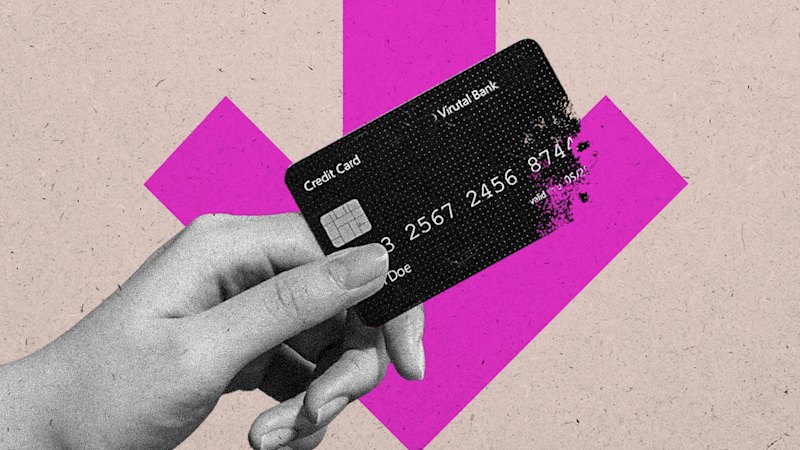
Photo via The Sydney Morning Herald

Cash discounts and refunds: Your card surcharge ban cheat sheet

Read the original at The Sydney Morning Herald ↗
Cite

Yun, J. (2026, October 1). Cash discounts and refunds: Your card surcharge ban cheat sheet. The Sydney Morning Herald. https://www.smh.com.au/business/consumer-affairs/cash-discounts-and-refunds-your-card-surcharge-ban-cheat-sheet-20261001-p611xp.html?ref=rss&utm_medium=rss&utm_source=rss_feed

Dated when The Aporia collected the article, usually within hours of publication. Check the original for its exact date and byline.

The Sydney Morning Herald · collected 2026-10-01 · by Jessica Yun

Quick Summary

The Reserve Bank implemented new rules on October 1st that prohibit merchants from charging extra fees for card payments, affecting credit, debit, and prepaid cards across various networks including Mastercard, Visa, Eftpos, PayPal, American Express, and UnionPay. This change caps interchange fees at 0.3% for consumer credit cards and lowers them to a flat rate of 8¢ or 0.16% for domestic debit and prepaid cards, aiming to reduce processing costs for businesses while ensuring displayed prices reflect the actual cost without surcharges. However, some merchants may still apply surcharges as they adjust their systems and practices.
Written by AI on 2026-10-01, from this article's own text only (the story summary below draws on all the coverage).

AI analysis

Story summary

Starting October 1, the Reserve Bank of Australia implemented a ban on card surcharges, meaning retailers can no longer charge extra fees when customers pay with credit or debit cards. While this was intended to save consumers about $1.6 billion annually, it may lead some businesses to raise prices instead. Smaller shops and local businesses are particularly concerned; Iris Isaacs, owner of online store inSync design, said it's getting increasingly difficult to manage costs. Salon owner Sheridan Shaw echoed similar concerns, stating that absorbing these fees would be detrimental to her business financially. Additionally, the Australian Chamber of Commerce and Industry (ACCI) warns that businesses might not be fully prepared for the new regulations. As a result, some merchants like Monarch Cakes in Melbourne are already planning price hikes to cope with higher bank-imposed card processing costs, which can amount to A$1,200 to A$1,500 weekly for small cafes and delis.

Written for “Australia Card Surcharges Ban” on 2026-10-31, grounded in this article and the 6 other(s) covering the same event.

Story

📰 Australia Card Surcharges Ban
Economy/Business · 7 article(s) covering the same event. Compare every outlet's account →

Compared with similar articles

This article reads unscored and hedges 14% of its claims. Each row says how that neighbour differs.
ABC News (AU)
⚖️ Leans left Hedges 4 of 29 claims Outlet record 68/100
The Sydney Morning Herald
Hedges 9 of 95 claims Outlet record 61/100
“The articles discuss different aspects of the card payment surcharge ban: Article A explains how it works and what has changed, while Article B critiques its implementation and effects.”
ABC News (AU)
⚖️ Leans strongly right Hedges 2 of 36 claims Outlet record 68/100
“While both articles discuss the implementation of new regulations by the Reserve Bank regarding card payment surcharges, they describe different aspects and developments of the same broader topic rather than the exact same specific incident.”
The Sydney Morning Herald
⚖️ Leans left Hedges 6 of 26 claims Outlet record 61/100
“While both articles discuss the Reserve Bank's ban on card surcharge fees, they describe different aspects and impacts of the ban.”
Daily Mail
⚖️ Leans left Hedges 6 of 21 claims Outlet record 68/100
“While both articles discuss the ban on card surcharges implemented by the Reserve Bank of Australia, they refer to different times: Article A mentions the start week (2026-09-27), while Article B discusses the situation a few days later when consumers and businesses are adjusting (2026-10-01).”
South China Morning Post
⚖️ Leans left Hedges 1 of 6 claims Outlet record 64/100
“The articles discuss the broader impact of a new ban on card surcharges but describe different aspects: one focuses on businesses' financial challenges while the other provides consumer guidance.”
ABC News (AU)
⚖️ Leans left Hedges 6 of 40 claims Outlet record 68/100
“Both articles discuss changes related to card payment surcharges but describe different aspects of the implementation and impact.”
Daily Mail
⚖️ Leans left Hedges 3 of 29 claims Outlet record 68/100
“While both articles discuss the Reserve Bank's ban on card payment surcharges, they describe different aspects of it—Article A focuses on businesses' reactions and consequences, while Article B provides a general overview and explanation of the rule change.”
The Sydney Morning Herald
Hedges 4 of 36 claims Outlet record 61/100
“The articles cover different aspects of the implementation of a card surcharge ban: one is about business preparedness on the day before the ban starts, while the other provides consumer guidance on the first day the ban takes effect.”
How this article was measured signals, leaning charts, publisher record, byline, topics and claims

Signals How these are calculated →

Claims extracted
43
sentences that state something as happening or true
Uncertain
14%
6 of 43 hedged ("reportedly", "may", "according to")
Leaning
not political
takes no side on a contested political question
Publisher signals
61/100
The Sydney Morning Herald's corrections and hedging, across everything collected from it. Not a measure of accuracy.
Outlets on this story
7
Economy/Business
Same framing elsewhere
1
articles that frame the event the way this one does
Analyzed 2026-10-01 · how these are computed

How this is being covered How these are calculated →

Article leaning vs. publisher reliability
Source leaning vs. consistency

Publisher

The Sydney Morning Herald · 5640 article(s) · 15 correction(s) detected
Running correction rate · 15 correction(s)

Who wrote this

Jessica Yun
19 article(s) here · 1 carrying a prediction
🔮 An Anchorage Capital spokesperson said company directors were in “intense” active discussions to make a decision by Christmas on what the long-term future and size of the department-store business would look like beyond the holiday period, which could involve some store closures.
🔮 In early 2025, the supermarket group’s chief executive, Amanda Bardwell, reignited speculation that a sale or exit of Big W might be on the cards after announcing a strategic review of the “shape of its business portfolio”.
🔮 Dozens of Aldi staff reported increasing levels of anxiety, stress, and trauma from customer abuse and having to approach customers, which some said was being monitored by management who would replay CCTV footage.
🔮 Rescued activewear brand Stax will relaunch its new online store on Tuesday with a fresh collection and a credit program for thousands of customers who placed $1.7 million in orders that never arrived.
🔮 But one day, and no one is quite sure when, the site will be back up and running.
🔮 If it exercises its right to appoint a receiver, Challenger will be first in line to recover any funds raised by TVSN’s $30 million clearance sale, after employee entitlements are paid.
🔮 If the product dripped onto the trouser, that’s where the reaction would occur …
🔮 Parsons said he was separately taking legal action against transport firm Mainfreight after it erroneously released a shipment of hair dryers to TVSN despite confirming daily to him that they would not be released.
🔮 “Most [pubs] held prices for as long as they could, which is why pub beer may have felt like it lagged the grocery aisle in the early inflation years,” he said.
🔮 Unfortunately, it has not been possible to secure a transaction that would allow TVSN to continue in its current form,” an email sent to customers on Sunday and Monday, seen by this masthead, said.
Also by Jessica Yun
Nothing else under this byline is closely related to this article, so these are simply their most recent.
All 19 articles by Jessica Yun →

Topics

Eftpos Mastercard RBA Visa the Reserve Bank’s

Subjects

ACCC ORG · 3× Eftpos ORG · 2× Mastercard ORG · 2× RBA ORG · 2× Visa ORG · 2× American Express ORG · 1× PayPal ORG · 1× The Reserve Bank ORG · 1× UnionPay ORG · 1× the Reserve Bank’s ORG · 1×

Narrative

Corporate spending platform Archa’s chief executive Oliver Kidd recommends asking your card provider these questions: - Has my points earn rate changed? - Have I lost any complimentary insurance? - Has my interest-free period changed? - Has my interest rate increased? - What am I really paying on foreign exchange fees, including any new mark-ups? - Has my credit limit changed without me knowing? “Business owners shouldn’t assume their card still offers the same value it did a year ago,” he said.
framing: assertive · carried by 1 article(s) · first seen 2026-10-01
🔮 In practice, you may well still see a surcharge on your purchases as merchants and retailers adjust their approach.
2026-10-01 · The Sydney Morning Herald
Cash discounts and refunds: Your card surcharge ban cheat sheet · assertive framing

Claims (43 extracted, 6 hedged)

Consumers and businesses are wrapping their heads around the Reserve Bank’s ban on card payment surcharges today and figuring out how it works. asserted
it → wrap → surcharges
From October 1, you should no longer see an additional charge applied to card payments. asserted
charge → see → payments
If your coffee costs $5, that’s what you should expect to pay – at least, in theory. asserted
you → cost → theory
In practice, you may well still see a surcharge on your purchases as merchants and retailers adjust their approach. uncertain
merchants → see → approach
Here’s a quick cheat sheet on how the ban will work. asserted
ban → ’ → ?
What has changed today? asserted
What → change → ?
The Reserve Bank has changed the rules to now allow card networks – Mastercard, Visa and Eftpos – to ban surcharges for credit, debit and prepaid card payments made in store, online, or via mobile wallets. asserted
networks → change → wallets
PayPal, American Express, UnionPay are also removing surcharges from October 1. asserted
PayPal → remove → October
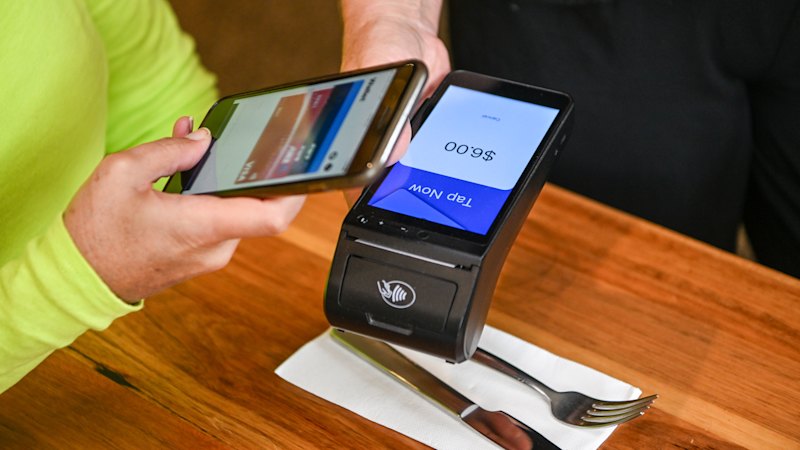
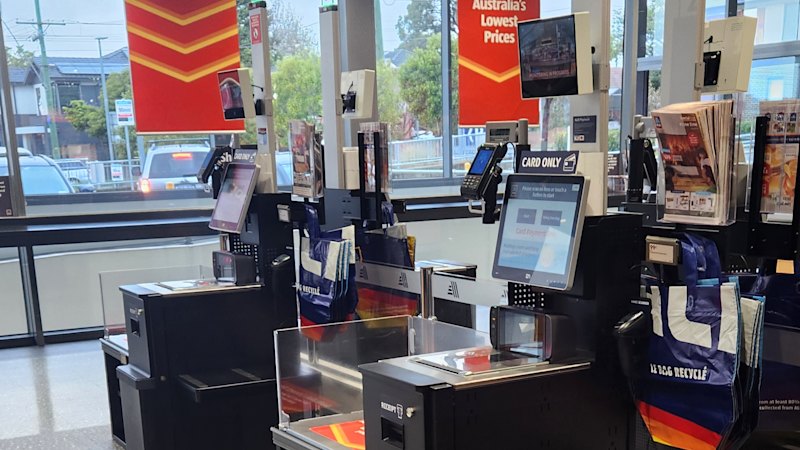
It means merchants are no longer allowed to charge an extra fee when you tap or insert your card at the point of sales, so the prices you see should be the price you pay. asserted
you → mean → sales
Retailers must clearly display how much an item or service costs with any applicable surcharge; so if you’re buying a $5 coffee, the displayed price should look like “$5.05 with card surcharge”. asserted
price → display → surcharge
They must also disable surcharging on their terminals and take down any payment surcharge notices on display. asserted
They → disable → display
Behind the scenes, the new regime lowers processing costs for merchants by capping “interchange fees” – which are the fees paid between banks every time the customer taps or swipes their bank card. asserted
customer → lower → card
That fee now goes from 0.8 per cent to a flat 0.3 per cent on Australian consumer credit cards. asserted
fee → go → cards
On domestic debit and prepaid cards, the ceiling has fallen from 10¢, or 0.2 per cent, to 8¢ or 0.16 per cent. asserted
ceiling → fall → 8¢
What if I’m still being charged? asserted
I → charge → ?
Payment providers and banks have disabled the surcharge function on the terminals they control, but some older terminal machines don’t automatically update and may not yet reflect the changes. uncertain
machines → disable → changes
The RBA and the banking industry have urged patience as some businesses make the transition. asserted
businesses → urge → transition
Some business leaders have warned that some communities may not know about or understand the changes, particularly small business owners of migrant backgrounds or those who don’t speak English as a first language. uncertain
who → warn → language
The surcharge ban doesn’t include weekend and public holiday surcharges, which are still permitted. asserted
which → include → surcharges
Will businesses raise their prices? asserted
businesses → raise → prices
These payment costs haven’t disappeared; they are just no longer allowed to appear as a separate charge. asserted
they → disappear → charge
Most businesses are already facing and absorbing higher costs and overheads on many fronts and don’t feel able to absorb any more, so many will consider adjusting product or service prices and find savings elsewhere. How do I dispute surcharges? The ACCC and RBA can’t help you here – card networks (Visa, Mastercard and Eftpos) and payment providers (Square, Tyro, Stripe and some banks) – are in charge of enforcing the surcharge ban, and will be held responsible if surcharges continue. asserted
surcharges → face → ban
Request a refund on the surcharged amount if necessary, and if they refuse, the next step is to report any unauthorised surcharges to your bank or card provider. asserted
step → request → provider
The ACCC and state consumer protection agencies, such as NSW Fair Trading and Consumer Affairs Victoria, will still be monitoring and enforcing consumer law to make sure businesses don’t mislead customers about prices or reasons for price rises. asserted
businesses → monitor → rises
Should I pay in cash? asserted
I → pay → cash
The consumer watchdog has stated businesses are indeed allowed to offer discounts for a preferred payment method, like cash or PayID. asserted
businesses → state → cash
“Payment method discounts should be clearly disclosed before consumers choose to book, order or pay,” the ACCC states on its website. asserted
ACCC → disclose → website
We may well might start seeing more businesses, especially smaller ones, shifting back to cash as a result. uncertain
businesses → start → result
According to Cash Welcome campaign manager Jason Bryce, this is already happening. uncertain
this → accord → Bryce
“Most small retailers will raise prices to cover card costs and many will offer discounts for cash payments,” he said. asserted
he → raise → payments
Will banks find a way to pass on the lost revenue? asserted
banks → find → revenue
They already have, and not where you might expect to see it. uncertain
you → expect → it
Major banks have already wound back the generosity of credit card sign-on bonuses and rewards points earning rates, which were being funded by the higher interchange fees, and raising annual fees. asserted
which → wind → fees
Commonwealth Bank has overhauled its loyalty program that pushes customers to spend rewards with Virgin’s Velocity scheme instead of Qantas Frequent Flyer points, and CBA customers who bundle multiple products, such as a mortgage or term deposits, will earn more points than those who have one account. asserted
who → overhaul → account
Westpac has also announced fee hikes and cuts to benefits such as free travel insurance on its credit card line-up. asserted
Westpac → announce → up
NAB has made a number of changes that impact MyCard credit card holders (formerly Citibank cards) most dramatically; its premium “Prestige” card – which included 15 airport lounge visits, free hotel stay extensions and cashback on ride-shares, on top of generous points earning rates – has been scrapped entirely. asserted
which → make → rates
American Express has also announced a scaling back of its airport lounge benefits. asserted
Express → announce → benefits
I’m a business owner. What should I do? asserted
I → ’m → What
It’s your responsibility to make sure you don’t continue to apply surcharges from today onwards. asserted
you → ’ → today
Get in touch with your bank or payment provider to implement the changes and update pricing details where you need to. asserted
you → get → details
…and 3 more, not listed.

💬Give feedback
🕘History 🎫Support