Photo via The Sydney Morning Herald

‘Quite ill-prepared’: Shops scramble to meet new card surcharge ban

Read the original at The Sydney Morning Herald ↗
Cite

Yun, J., & Visontay, E. (2026, September 30). ‘Quite ill-prepared’: Shops scramble to meet new card surcharge ban. The Sydney Morning Herald. https://www.smh.com.au/business/consumer-affairs/quite-ill-prepared-shops-scramble-to-meet-new-card-surcharge-ban-20261001-p611p9.html?ref=rss&utm_medium=rss&utm_source=rss_feed

Dated when The Aporia collected the article, usually within hours of publication. Check the original for its exact date and byline.

The Sydney Morning Herald · collected 2026-09-30 · by Jessica Yun, Elias Visontay

Quick Summary

The Reserve Bank's ban on credit and debit card surcharges took effect in Australia on Thursday, with business lobby groups warning that many small shops, particularly those operated by migrants, remain unaware of the new payment rules. The ban is expected to save consumers $1.6 billion annually but has left some small business owners worried about financial losses, leading them to consider raising prices or seeking alternative payment methods. Larger businesses appear better prepared for these changes compared to smaller ones, which are struggling to adapt while maintaining profitability amid rising costs and customer sensitivity to price increases.
Written by AI on 2026-09-30, from this article's own text only (the story summary below draws on all the coverage).

AI analysis

Story summary

Starting October 1, the Reserve Bank of Australia implemented a ban on card surcharges, meaning retailers can no longer charge extra fees when customers pay with credit or debit cards. While this was intended to save consumers about $1.6 billion annually, it may lead some businesses to raise prices instead. Smaller shops and local businesses are particularly concerned; Iris Isaacs, owner of online store inSync design, said it's getting increasingly difficult to manage costs. Salon owner Sheridan Shaw echoed similar concerns, stating that absorbing these fees would be detrimental to her business financially. Additionally, the Australian Chamber of Commerce and Industry (ACCI) warns that businesses might not be fully prepared for the new regulations. As a result, some merchants like Monarch Cakes in Melbourne are already planning price hikes to cope with higher bank-imposed card processing costs, which can amount to A$1,200 to A$1,500 weekly for small cafes and delis.

Written for “Australia Card Surcharges Ban” on 2026-10-31, grounded in this article and the 6 other(s) covering the same event.

Story

📰 Australia Card Surcharges Ban
Economy/Business · 7 article(s) covering the same event. Compare every outlet's account →

Compared with similar articles

This article reads unscored and hedges 11% of its claims. Each row says how that neighbour differs.
ABC News (AU)
⚖️ Leans left Hedges 4 of 29 claims Outlet record 68/100
Daily Mail
⚖️ Leans left Hedges 3 of 29 claims Outlet record 68/100
ABC News (AU)
⚖️ Leans left Hedges 0 of 4 claims Outlet record 68/100
“The articles discuss different economic issues affecting businesses in Canberra: interest rate hikes and living expenses versus card surcharge bans.”
ABC News (AU)
⚖️ Leans left Hedges 6 of 40 claims Outlet record 68/100
“Article A discusses banks changing rewards programs in response to surcharge ban, while Article B talks about shops scrambling to meet new card surcharge ban rules.”
Daily Mail
⚖️ Leans left Hedges 6 of 21 claims Outlet record 68/100
“While both articles discuss the implementation of a card surcharge ban in Australia, they describe different stages or aspects of this policy's rollout and its immediate effects.”
The Sydney Morning Herald
Hedges 1 of 22 claims Outlet record 61/100
“The articles discuss related policy changes but describe different aspects: one focuses on shops scrambling to meet the new surcharge ban, while the other discusses a unified demand regarding tax office payment methods.”
South China Morning Post
⚖️ Leans left Hedges 1 of 6 claims Outlet record 64/100
“While both articles discuss the card surcharge ban in Australia and its impact on businesses, they describe different stages of the event: Article A is about preparation for the ban before it starts, while Article B discusses the immediate effects after the ban has taken effect.”
ABC News (AU)
⚖️ Leans strongly right Hedges 2 of 36 claims Outlet record 68/100
“While both articles discuss similar themes regarding payment surcharge reforms, they refer to different points in time (one before and one after implementation) with distinct focuses.”
The Sydney Morning Herald
Hedges 6 of 43 claims Outlet record 61/100
“The articles cover different aspects of the implementation of a card surcharge ban: one is about business preparedness on the day before the ban starts, while the other provides consumer guidance on the first day the ban takes effect.”
The Sydney Morning Herald
Hedges 9 of 95 claims Outlet record 61/100
“Article A describes shops scrambling to comply with new surcharge ban on its implementation date, while Article B discusses reactions and implications of the ban six days later.”
How this article was measured signals, leaning charts, publisher record, byline, topics and claims

Signals How these are calculated →

Claims extracted
36
sentences that state something as happening or true
Uncertain
11%
4 of 36 hedged ("reportedly", "may", "according to")
Leaning
withheld
no quote in the article backed the model's score
Publisher signals
61/100
The Sydney Morning Herald's corrections and hedging, across everything collected from it. Not a measure of accuracy.
Outlets on this story
7
Economy/Business
Same framing elsewhere
1
articles that frame the event the way this one does
Analyzed 2026-09-30 · how these are computed

How this is being covered How these are calculated →

Article leaning vs. publisher reliability
Source leaning vs. consistency

Publisher

The Sydney Morning Herald · 5640 article(s) · 15 correction(s) detected
Running correction rate · 15 correction(s)

Who wrote this

Jessica Yun
19 article(s) here · 1 carrying a prediction
🔮 An Anchorage Capital spokesperson said company directors were in “intense” active discussions to make a decision by Christmas on what the long-term future and size of the department-store business would look like beyond the holiday period, which could involve some store closures.
🔮 In early 2025, the supermarket group’s chief executive, Amanda Bardwell, reignited speculation that a sale or exit of Big W might be on the cards after announcing a strategic review of the “shape of its business portfolio”.
🔮 Dozens of Aldi staff reported increasing levels of anxiety, stress, and trauma from customer abuse and having to approach customers, which some said was being monitored by management who would replay CCTV footage.
🔮 Rescued activewear brand Stax will relaunch its new online store on Tuesday with a fresh collection and a credit program for thousands of customers who placed $1.7 million in orders that never arrived.
🔮 But one day, and no one is quite sure when, the site will be back up and running.
🔮 If it exercises its right to appoint a receiver, Challenger will be first in line to recover any funds raised by TVSN’s $30 million clearance sale, after employee entitlements are paid.
🔮 If the product dripped onto the trouser, that’s where the reaction would occur …
🔮 Parsons said he was separately taking legal action against transport firm Mainfreight after it erroneously released a shipment of hair dryers to TVSN despite confirming daily to him that they would not be released.
🔮 “Most [pubs] held prices for as long as they could, which is why pub beer may have felt like it lagged the grocery aisle in the early inflation years,” he said.
🔮 Unfortunately, it has not been possible to secure a transaction that would allow TVSN to continue in its current form,” an email sent to customers on Sunday and Monday, seen by this masthead, said.
Also by Jessica Yun
Nothing else under this byline is closely related to this article, so these are simply their most recent.
All 19 articles by Jessica Yun →
Elias Visontay
11 article(s) here · 1 carrying a prediction
🔮 Earlier this year, China announced it will require physical buttons for critical controls in new cars sold in the country.
🔮 Australians’ newfound love affair with electric engines may have been the dominant story of the car industry this year – with an EV sold every 100 seconds in the first six months – but the trend has also dramatically shaken up the dynamics of the used vehicle market.
🔮 If the product dripped onto the trouser, that’s where the reaction would occur …
🔮 Shoppers were 84 per cent more likely to want the shoes in the scented room, and willing to pay 10 per cent more.
🔮 The business community is stepping up its calls on the tax office to rethink its abrupt decision to stop accepting credit card payments, warning that entrepreneurs and smaller businesses that need cash flow flexibility will be hit the hardest.
🔮 Tenants who rely on credit cards to pay their rent could soon be forced into arrears, advocates warn, after a major rental payment platform blocked the method of payment in response to a new ban on card surcharge fees.
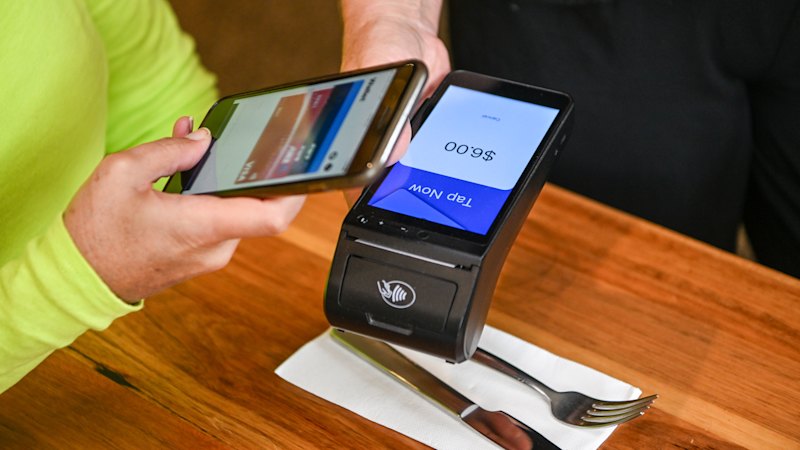
🔮 Some Australians will likely still encounter card payment surcharges at the checkout despite a ban on the practice coming into effect on Thursday as business lobby groups warn that many smaller shops, especially those run by migrants, are still in the dark on how the new payment rules work.
🔮 “I’m not a fashion-forward guy, I got into this because I’m a football fan, but we’ve stumbled into the fashion space now, and we’ve seen that these customers are willing to spend,” he says.
🔮 AI bots do not have a human-like notion of intention and can therefore go to extreme lengths where a person would understand that hacking a government website was not a reasonable way of conducting research.
🔮 The spokesman noted that in the case of Playtech, Penrose has informed the company he will step down from the UK-based firm by 31 December.
Also by Elias Visontay
EV boom zaps second-hand prices for petrol and diesel cars
2026-10-16 · The Sydney Morning Herald
Nothing else under this byline is closely related to this article, so these are simply their most recent.
All 11 articles by Elias Visontay →

Topics

ATO Australia Australians the Australian Taxation Office the Reserve Bank

Subjects

Laul PERSON · 3× ATO ORG · 2× Isaacs PERSON · 2× the Reserve Bank ORG · 2× Australia GPE · 1× Australians NORP · 1× Iris Isaacs PERSON · 1× Paypal ORG · 1× Shopify ORG · 1× the Australian Taxation Office ORG · 1×

Narrative

While larger firms and national chains appear to have adjusted to the changes, smaller businesses are less prepared for the new regime, or aren’t seeing its upsides. Jewellery maker Iris Isaacs has spent months mulling different payment options for her online store, inSync design, in the post-surcharge era. “It’s getting tougher and tougher,” she said.
framing: assertive · carried by 1 article(s) · first seen 2026-09-30
🔮 Some Australians will likely still encounter card payment surcharges at the checkout despite a ban on the practice coming into effect on Thursday as business lobby groups warn that many smaller shops, especially those run by migrants, are still in the dark on how the new payment rules work.
2026-09-30 · The Sydney Morning Herald
‘Quite ill-prepared’: Shops scramble to meet new card surcharge ban · assertive framing

Claims (36 extracted, 4 hedged)

Some Australians will likely still encounter card payment surcharges at the checkout despite a ban on the practice coming into effect on Thursday as business lobby groups warn that many smaller shops, especially those run by migrants, are still in the dark on how the new payment rules work. asserted
rules → encounter → dark
Since the Reserve Bank confirmed in March it would ban credit and debit card surcharges from the beginning of October, small business owners have expressed concern that the sweeping reforms – estimated to save consumers $1.6 billion annually – will leave them financially worse off and forced to increase product and menu prices. asserted
reforms → confirm → prices
Different parts of the economy have scrambled to prepare in the six-month window between the changes to Australia’s payments ecosystem being confirmed and the changes taking effect. asserted
changes → scramble → effect
Major banks have already wound back the generosity of credit card sign-on bonuses and rewards points earning rates, due to a lower cap on “interchange fees” – which merchants must pay to a customer’s bank to accept a card transaction and which have traditionally funded rewards perks. asserted
which → wind → perks
The changes have also prompted the Australian Taxation Office to remove credit cards as a payment method, which it said would not affect most taxpayers. asserted
it → prompt → taxpayers
Only 2.3 per cent of tax payments in the 2024 financial year were made through a credit card, with the majority made by high net worth individuals or major organisations. asserted
majority → make → individuals
“As a government agency, the ATO has decided it would not be appropriate for the cost of credit card merchant fees to be transferred to the community,” it said in a statement. asserted
it → decide → statement
While larger firms and national chains appear to have adjusted to the changes, smaller businesses are less prepared for the new regime, or aren’t seeing its upsides. Jewellery maker Iris Isaacs has spent months mulling different payment options for her online store, inSync design, in the post-surcharge era. “It’s getting tougher and tougher,” she said. asserted
she → appear → era
“It’s not enough to be creative. asserted
It → ’ → ?
You have to be really creative in the way you run your business to keep it profitable.” asserted
you → have → it
Lifting the price of the earrings, necklaces, rings and brooches isn’t an option, Isaacs says, with customers more sensitive to price rises than ever. asserted
customers → lift → rises
Other input costs, including gold prices, local manufacturing and shipping have increased, forcing her to find savings elsewhere by looking at different suppliers. asserted
costs → include → suppliers
She currently offers Paypal as well as the payment option provided by her webstore’s host Shopify. asserted
She → offer → host
While rivals Square and Revolut’s fees appear more competitive, she will most likely stick with her current options as that’s what her customers prefer. asserted
customers → appear → what
Unlike the ATO, Isaacs is not moving to stop accepting credit card payments. asserted
Isaacs → move → payments
“At the end of the day, you have to supply all options the client actually wants,” she said. asserted
she → have → options
“But that costs me more.” asserted
that → cost → more
Brian Laul, founder of the newly-launched Australian Multicultural Community and Business Chamber, said shops run by migrants and those who don’t speak English as a first language are at particular risk of unwittingly being in breach of the surcharge ban. asserted
who → launch → ban
“A lot of businesses are quite ill-prepared, from what I’m hearing. asserted
I → prepare → what
There are still lots of queries about how it will work at the checkout,” Laul said. asserted
Laul → be → checkout
“A small business doesn’t necessarily have the infrastructure to make these changes quickly, and they might need help.” uncertain
they → have → help
Laul urged customers to be patient at shops if they believe they have been charged a surcharge. asserted
they → urge → surcharge
“It may not be them trying to do the wrong thing, they may just not understand,” he said. uncertain
he → try → thing
He also called for leniency from authorities for any breaches of the rules. asserted
He → call → rules
“The government needs to be kind and allow these businesses the latitude to get their house in order,” Laul said. asserted
Laul → need → order
Ensuring compliance with the surcharge ban will be tricky due to the lack of uniformity in the various payment processing systems and deals small businesses have in place. asserted
businesses → ensure → place
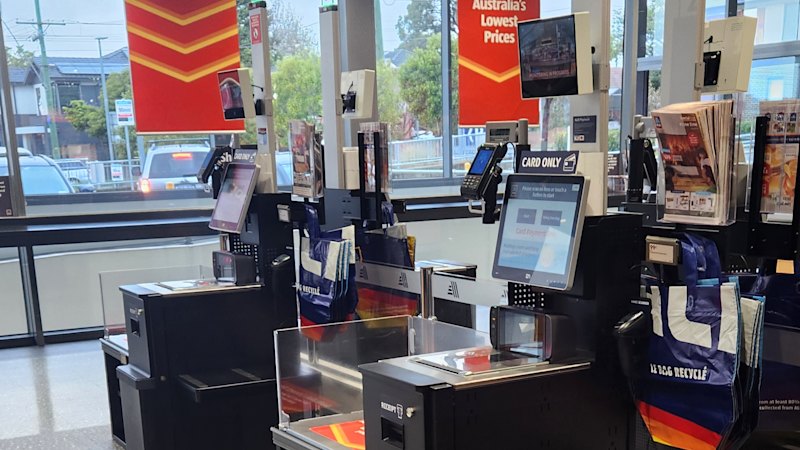
The surcharge ban will not be enforced by the Reserve Bank or the ACCC; rather, card networks (like Visa, Mastercard and Eftpos) and payment providers (including Square, Tyro, Stripe and some banks) will have to enforce it, and will be held responsible if surcharges continue. asserted
surcharges → enforce → it
These providers and banks will have disabled the surcharge function on terminals they control by Thursday. asserted
they → disable → Thursday
Major card networks Visa, Mastercard and Eftpos have implemented a “no surcharge” rule, along with American Express, UnionPay and PayPal. Shopify, which is increasing fees for some merchants from 1.6 per cent to 1.7 per cent on Thursday, asserted
which → implement → Thursday
Shopify has been contacted for comment. asserted
Shopify → contact → comment
Wes Lambert, CEO at the Australian Restaurant & Cafe Association and a board director at the Council of Small Business Organisations Australia, said businesses with more modern card terminals that are integrated with point-of-sale systems might see their surcharge line item vanish automatically, and could be caught off-guard when their accounts are settled in coming weeks. uncertain
accounts → say → weeks
“For many, especially where English is not a first language, the surcharge ban will actually come as quite a surprise when it is just turned off at the terminal, and they receive less money,” Lambert said. asserted
Lambert → come → money
However, businesses using older terminals, especially where a salesperson manually keys in a total amount into a machine, are unlikely to undergo an automatic update that would make it compliant with the surcharge ban. asserted
it → use → ban
“In those instances, businesses may unwittingly continue to charge a surcharge,” he said. uncertain
he → continue → surcharge
“Many haven’t received a ton of communications from their bank or services provider about this.” asserted
Many → receive → this
The Business Briefing newsletter delivers major stories, exclusive coverage and expert opinion. asserted
newsletter → deliver → stories

💬Give feedback
🕘History 🎫Support