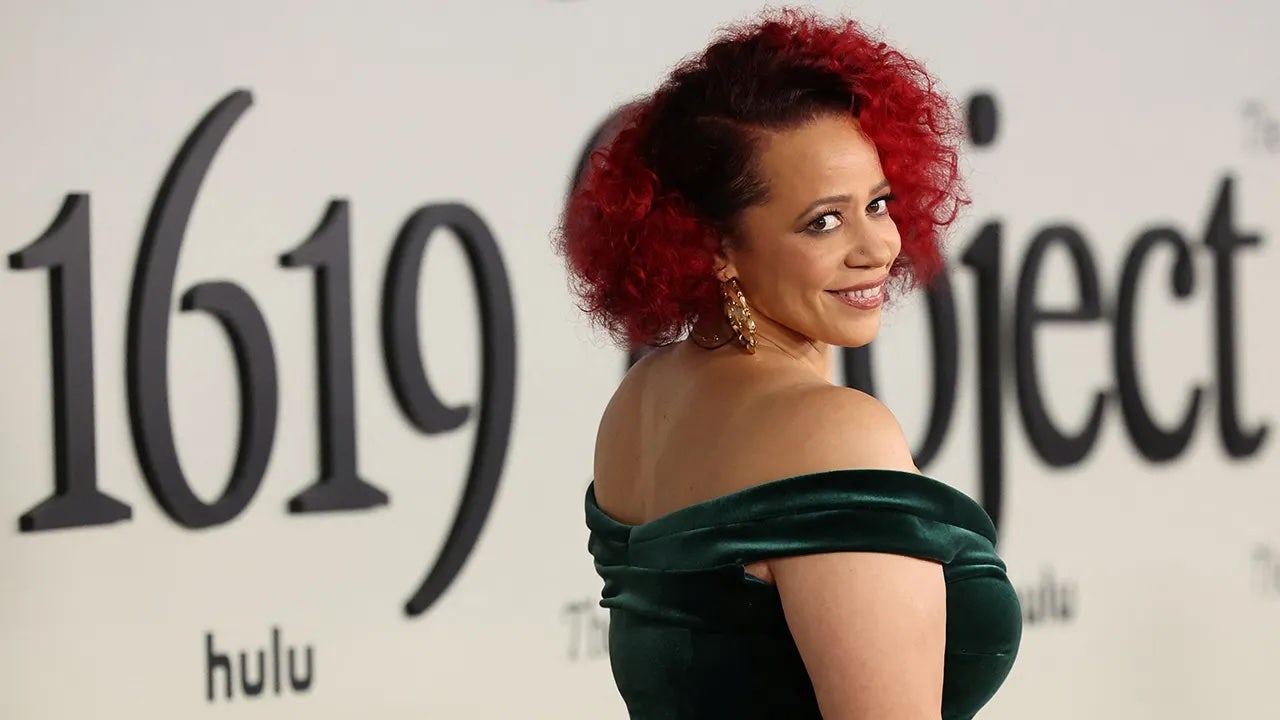
Photo via New York Post

NYT writer Nikole Hannah-Jones’ daughter says she only turned out ‘fine’ after fighting for better high school than her mom wanted

Read the original at New York Post ↗
Cite

Oliveira, A. (2026, September 27). NYT writer Nikole Hannah-Jones’ daughter says she only turned out ‘fine’ after fighting for better high school than her mom wanted. New York Post. https://nypost.com/2026/09/27/us-news/nyt-writer-nikole-hannah-jones-daughter-says-she-only-turned-out-fine-after-fighting-for-better-high-school-than-her-mom-wanted/

Dated when The Aporia collected the article, usually within hours of publication. Check the original for its exact date and byline.

New York Post · collected 2026-09-27 · by Alex Oliveira

Quick Summary

Nikole Hannah-Jones’s daughter Najya, now 16, confronted her mother in an interview about being sent to underperforming schools as part of a social experiment against racism. Najya claimed that attending a competitive high school was the reason for her current success and academic progress, despite her mother’s initial reluctance based on her activism goals. The exchange highlights tensions between personal educational choices and broader societal issues related to race and education in America.
Written by AI on 2026-09-28, from this article's own text only (the story summary below draws on all the coverage).

AI analysis

Story summary

Najya Hannah-Jones, 16, the daughter of New York Times journalist and Pulitzer Prize-winning writer Nikole Hannah-Jones, expressed dissatisfaction with her mother's decision in a recent interview on WBEZ’s This American Life. In her essay for The New York Times, Hannah-Jones admitted sending her daughter to some of the worst schools in New York City, believing that her influence could improve these predominantly black institutions. However, Najya struggled academically and was left years behind her peers by age 12. During their confrontation, Najya asserted she only turned out "fine" because she fought for a better high school against her mother's wishes. Hannah-Jones acknowledged the impact of this decision on her daughter’s education and emotional well-being, highlighting the unintended consequences of using children as tools in social experiments.

Written for “Educational Opportunities Debate” on 2026-11-03, grounded in this article and the 0 other(s) covering the same event.

Story

📰 Educational Opportunities Debate
Education · 1 article(s) covering the same event.

Compared with similar articles

This article reads unscored and hedges 3% of its claims. Each row says how that neighbour differs.
Fox News
Hedges 3 of 48 claims Outlet record 69/100
“While both articles discuss Nikole Hannah-Jones and her daughter Najya's views on school choices, they describe different aspects of the situation: Article A focuses on Hannah-Jones' essay about her experiences, while Article B centers on an interview with Najya discussing her own perspective.”
The Dispatch
⚖️ Leans left Hedges 0 of 2 claims Outlet record 61/100
“The articles discuss different aspects related to Nikole Hannah-Jones and her daughter but do not describe the same specific incident.”
New York Post
⚖️ Leans strongly right Hedges 2 of 30 claims Outlet record 66/100
“Article A describes an interview where Nikole Hannah-Jones' daughter discusses her education choices, while Article B presents letters to the editor criticizing Hannah-Jones' essay about those choices.”
New York Post
Hedges 2 of 32 claims Outlet record 66/100
“While both articles discuss Nikole Hannah-Jones' decision regarding her daughter's education, Article A focuses on Hannah-Jones' perspective in a written essay, whereas Article B discusses an interview with Najya Hannah-Jones reflecting on the same issue.”
New York Post
⚖️ Leans strongly right Hedges 1 of 32 claims Outlet record 66/100
“The articles describe related events involving Nikole Hannah-Jones and her daughter's reflections on their educational choices, but they do not clearly refer to the same specific incident or time.”
How this article was measured signals, leaning charts, publisher record, byline, topics and claims

Signals How these are calculated →

Claims extracted
34
sentences that state something as happening or true
Uncertain
3%
1 of 34 hedged ("reportedly", "may", "according to")
Leaning
withheld
no quote in the article backed the model's score
Publisher signals
66/100
New York Post's corrections and hedging, across everything collected from it. Not a measure of accuracy.
Outlets on this story
1
Education
Same framing elsewhere
1
articles that frame the event the way this one does
Analyzed 2026-09-28 · how these are computed

How this is being covered How these are calculated →

Article leaning vs. publisher reliability
Source leaning vs. consistency

Publisher

New York Post · 16360 article(s) · 35 correction(s) detected
Running correction rate · 35 correction(s)

Who wrote this

Alex Oliveira
57 article(s) here · 1 carrying a prediction
🔮 Bystanders were mercifully able to flag down police and stop trains from barreling into the station until they could free her from the roadbed, but she was severly injured.
🔮 “No rational adult would show up to a job with proximity to kids in a skimpy costume and a reference to a novel about the sexual abuse of a child by a middle-aged man … and then revive the controversy by engaging in lawfare,” she added.
🔮 The attorneys — state AG Letitia James, and city District Attorneys Melinda Katz and Eric Gonzalez — stared blank-faced when asked by The Post about the damning report at a Thursday gun-safety press conference. “Did any of you order prosecutors to downgrade gun charges to keep illegal immigrants in the US, per the Judiciary Committee report the recent house judiciary report?” a reporter asked, explaining the report could clearly indicate a gun-safety issue.
🔮 One ex even said that he claimed he would rape a male intruder breaking into his apartment — to show dominance.
🔮 Mayor Zohran Mamdani should be investigated for using $1.6 million in taxpayer funds to push New Yorkers to back ballot proposals with messaging that plastered his face on buses and kiosks, a city lawmaker said.
🔮 “This is a situation you created and that you could have completely avoided.”
🔮 Republican gubernatorial candidate Bruce Blakeman warned New York voters that congestion pricing could come to a “community near you” if Gov. Kathy Hochul wins reelection Blakeman, the Nassau County executive, vowed to kill the program outright if he beats the Democratic incumbent in the Nov. 3 election as he claimed Hochul could have a menu of new taxes she could unleash if she secures another term. “Doesn’t matter whether it’s New York City, Buffalo, Rochester, Syracuse, Albany, Binghamton or any town in between,” Blakeman claimed while speaking on Fifth Avenue in Manhattan Tuesday.
🔮 Mayor Zohran Mamdani stumped with Gov. Kathy Hochul for the first time Friday — hoping to give the moderate Democrat a boost with his lefty base in New York City less than two weeks before Election Day.
🔮 That means about 200 carriage drivers will see their livelihoods – and entire industry – vanish from the city without a trace in less than two years.
🔮 Mayor Zohran Mamdani has signed just one bill into law in 10 months since taking office — leaving critics to wonder if the millennial mayor is more interested in social media stardom than his daily government duties.
Also by Alex Oliveira
Nothing else under this byline is closely related to this article, so these are simply their most recent.
All 57 articles by Alex Oliveira →

Topics

New York New York Times This American Life Times WBEZ

Subjects

Najya PERSON · 6× Hannah-Jones PERSON · 5× Harvard ORG · 4× Howard PERSON · 2× Hannah Jones PERSON · 1× Najya Hannah-Jones PERSON · 1× New York GPE · 1× New York Times ORG · 1× Nikole Hannah-Jones PERSON · 1× WBEZ ORG · 1×

Narrative

That shocking comment came a week after her mother released an essay confessing her daughter was left years behind her peers after being deliberately sent to some of the Big Apple’s worst schools, where the New York Times journalist thought her own “time and status” would be able to uplift the predominantly black schools.
framing: assertive · carried by 1 article(s) · first seen 2026-09-28
🔮 “I feel like if I picked a different choice that you wanted me to, I don’t think I would be fine,” she added.

Claims (34 extracted, 1 hedged)

The daughter of writer Nikole Hannah-Jones — sent by her mother to weak New York schools as a racism-fighting “sacrifice” — insisted bucking her mother’s wishes and going to a top high school was the only reason she landed on her feet, a confrontational new interview revealed. asserted
interview → send → feet
“I think I’m fine because I’m in the school I am now,” Najya Hannah-Jones, 16, told her mom in a recent showdown on WBEZ’s This American Life. asserted
Jones → think → Life
“I feel like if I picked a different choice that you wanted me to, I don’t think I would be fine,” she added. asserted
she → feel → that
That shocking comment came a week after her mother released an essay confessing her daughter was left years behind her peers after being deliberately sent to some of the Big Apple’s worst schools, where the New York Times journalist thought her own “time and status” would be able to uplift the predominantly black schools. asserted
time → come → schools
Instead, Hannah Jones admitted in the Times essay, her daughter simply ended up struggling to do basic math and writing by the time she was 12 — and that the girl was “boiling” mad when she discovered her education had been used as a tool for her well-heeled mother’s social experiment. asserted
education → admit → experiment
So Najya insisted she be allowed to choose her own high school and drew up a list of potential candidates — which her mother relented to, but not without misgivings. asserted
mother → insist → misgivings
“She comes back with her list of schools, and I internally cringed,” Hannah-Jones told This American Life. asserted
Jones → come → Life
“I’m like, I cannot believe this. asserted
I → ’m → this
My child came up with the exact opposite of my life’s work,” she added. asserted
she → come → work
“And every school on there is a school that screens and has hardly no black kids.” asserted
that → screen → kids
Despite her mother’s reaction, Najya studied hard and got into her top choice. asserted
Najya → study → choice
And while she struggled to keep up with classmates when she was first admitted, she’s since caught up and is thriving. asserted
she → struggle → classmates
And even though Hannah-Jones admitted that she’d “failed” her own daughter to help other people’s kids, she continued to push back on her daughter’s complaints as they had it out on This American Life. asserted
they → admit → Life
“We don’t have to actually agree. asserted
We → have → ?
It’s OK for us to see this in a different way. asserted
us → ’ → way
But ultimately, you got into your first choice of high school,” Hannah-Jones told her daughter. asserted
Jones → get → daughter
“But you could have had me way higher in education,” Najya replied. uncertain
Najya → have → education
“Do you feel like your life is being held back?” her mother said, listing various reasons and examples for sending Najya to the struggling schools. asserted
mother → feel → schools
“What we were trying to do was not just about giving some additional funds to a school. asserted
trying → try → school
We were trying to change the power dynamics. asserted
We → try → dynamics
” “You put me on the line to help a school, but it didn’t work,” Najya said. asserted
Najya → put → school
And Najya’s high school choices weren’t the only ones her mother was uncomfortable with — she even sniffed at the girl’s ambitions to go to Harvard, which she dismissed as a “PWI” or a “predominantly white institution.” asserted
she → sniff → PWI
“I’ve been ingraining Howard into her since she was 3 years old,” Hannah-Jones said, referring to the historically black Washington, DC university. “Then one day she comes back from middle school, and she says she wants to go to Harvard. asserted
she → ingrain → Harvard
And I was like, we have never mentioned the word ‘Harvard’ in our household. asserted
we → mention → household
What the hell is happening?” she said. asserted
she → happen → ?
“We don’t even discuss PWIs as an option in our household.” asserted
We → discuss → household
Because I’m like, did I mishear you? asserted
I → ’m → you
Did you accidentally say Howard? asserted
you → say → Howard
No,” Hannah-Jones continued, only half-joking. asserted
Jones → continue → ?
“I’m disappointed. asserted
I → ’m → ?
I’m like, what is wrong with you?” asserted
what → ’m → you
“I both admired it and was appalled at the same time,” she said. asserted
she → admire → time
“Like, where are you getting these ideas? asserted
you → get → ideas
Who is putting these crazy ideas in your head?” asserted
Who → put → head

💬Give feedback
🕘History 🎫Support