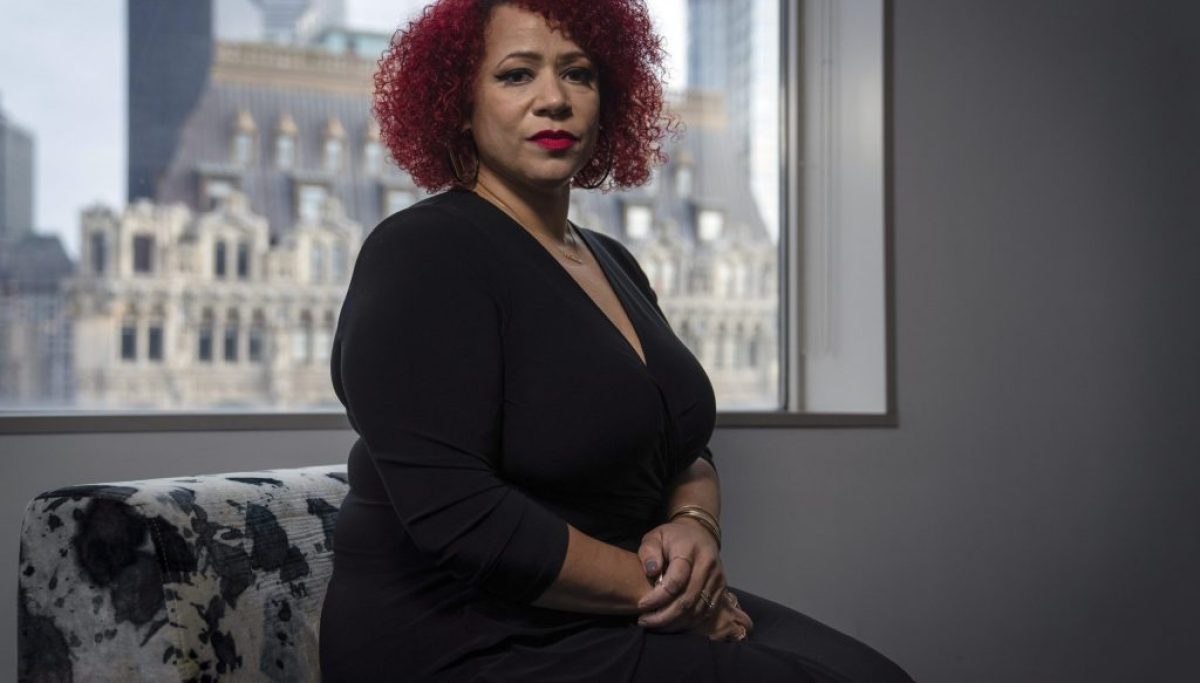
Superstar New York Times reporter Nikole Hannah-Jones confessed to the world this week how she sacrificed her daughter Najya to her own political project.
asserted
she → confess → project
She sent her only child to low-income, low-performing, predominantly black Brooklyn schools “based on the collective good” — not on Najya’s needs.
asserted
She → send → needs
Almost from the beginning, Hannah-Jones writes in a now-viral essay, her daughter hated the chaos at lunch and the laxity in her classrooms.
asserted
daughter → write → classrooms
And she was right to object: When Hannah-Jones finally allowed Najya to attend a screened high school, it turned out she had “huge gaps” in math basics and study skills “that she should have learned in elementary school.”
asserted
she → allow → school
Najya’s own words are heartbreaking: “Did you know my school was bad like this when you decided to put me here?” she asked her mom.
asserted
she → know → mom
As a New York City public-school parent myself, what strikes me about Hannah-Jones’ narrative is how deeply she seems to connect racial and income demographics with school quality.
asserted
she → strike → quality
She writes as if whiter and wealthier schools are necessarily better ones.
But that’s simply not the case.
asserted
that → write → ?
My own kids are growing up in Title I, majority-Latino schools where their education has been good to excellent.
asserted
education → grow → schools
Their experience shows it’s not demographics that drive educational failure.
asserted
that → show → failure
Their teachers are passionate and committed.
asserted
teachers → commit → ?
Their elementary-school principal moved heaven and earth to reopen for in-person instruction during COVID as early as possible.
asserted
principal → move → COVID
Their middle-school principal, now retiring, transformed the borough-wide school into a Regents powerhouse.
asserted
principal → retire → powerhouse
Now, as we navigate high-school applications, our oldest is seeking out precisely the same rigor and challenge that Najya herself longed for.
But I can also say that one aspect of Hannah-Jones’ critique is brilliantly correct.
asserted
aspect → navigate → critique
The wealthy liberals who spent a decade beating their breasts about their own alleged complicity in “white supremacy” will bear any burden and pay any price to avoid educating their children in the same schools as lower-income black and Latino kids — no matter how high-quality those schools may be.
uncertain
schools → spend → kids
My kids’ bilingual elementary education has provoked any number of obliquely racist comments from various “progressive” parents in my neighborhood.
asserted
education → provoke → neighborhood
One acquaintance was horrified that we’d ask our non-Spanish-speaking kids to (as she put it) “compete” in such a setup.
asserted
she → ask → setup
A fellow dad simply asked, with a pause drawn out to impressive length, “So . . . what’s that like?”
asserted
that → ask → what
Combine such racial and class biases with an utter lack of accountability for failing schools and ever-eroding academic standards, and you’ve got the recipe for a perverse system in which the chief exponents of inclusion become exclusionists par excellence.
asserted
exponents → combine → inclusion
Yet the answer is not, as Hannah-Jones suggests, to toss aside what remaining academic standards remain.
uncertain
standards → suggest → ?
After all, she can’t honestly blame nebulous racists for the underperformance of black and Latino kids in NYC’s traditional public-school system: Mississippi, that former education backwater where the KKK murdered civil-rights activists within living memory, has now raised its black students’ 4th-grade reading and math NAEP scores to third among peers in the nation.
asserted
KKK → blame → nation
Even within New York, charter schools show that lower-income black and Latino students can close the gap.
asserted
students → show → gap
Recall, too, that New York spends more than any other jurisdiction per student in America.
asserted
York → recall → America
The elementary school Najya attended, PS 307, notches more than $52,000 in per-student funding, higher than the median US individual income.
asserted
Najya → attend → income
New York must vastly increase the number of screened schools, an essential element in achieving the kind of outcomes Hannah-Jones (and every other loving parent) wants for their child.
asserted
Jones → increase → child
It must raise and harden academic standards from the earliest years, with real consequences for failure to achieve mastery.
It must create schools where kids who are not academically gifted will flourish.
asserted
who → raise → schools
It must break the back of the unions and the DOE bureaucracy — chief patrons of teachers who don’t teach and administrators who don’t administer.
asserted
who → break → teachers
Addressing these true drivers of inequity won’t be easy.
But look at Najya’s tragedy, which occurred even though she had a well-off, well-connected, powerful mother to advocate for her.
asserted
she → address → her
Imagine what the countless others who lack access to that power and privilege suffer.
asserted
who → imagine → power
Hannah-Jones locates the cause of this crisis in macrosocial factors.
asserted
Jones → locate → factors
She ends her essay with a memorable statement that she — and her reader, and everyone else — are all contaminated with a common guilt.
asserted
she → end → guilt
That’s psychologically understandable: To be a parent is to suffer unending doubts about your parenting choices.
asserted
be → ’ → choices
Yet near the story’s beginning, she lands on a truth that strangely does not resurface: “Students respond to the high or low expectations of institutions and the grown-ups who operate them.”
asserted
who → land → them
 The Aporia