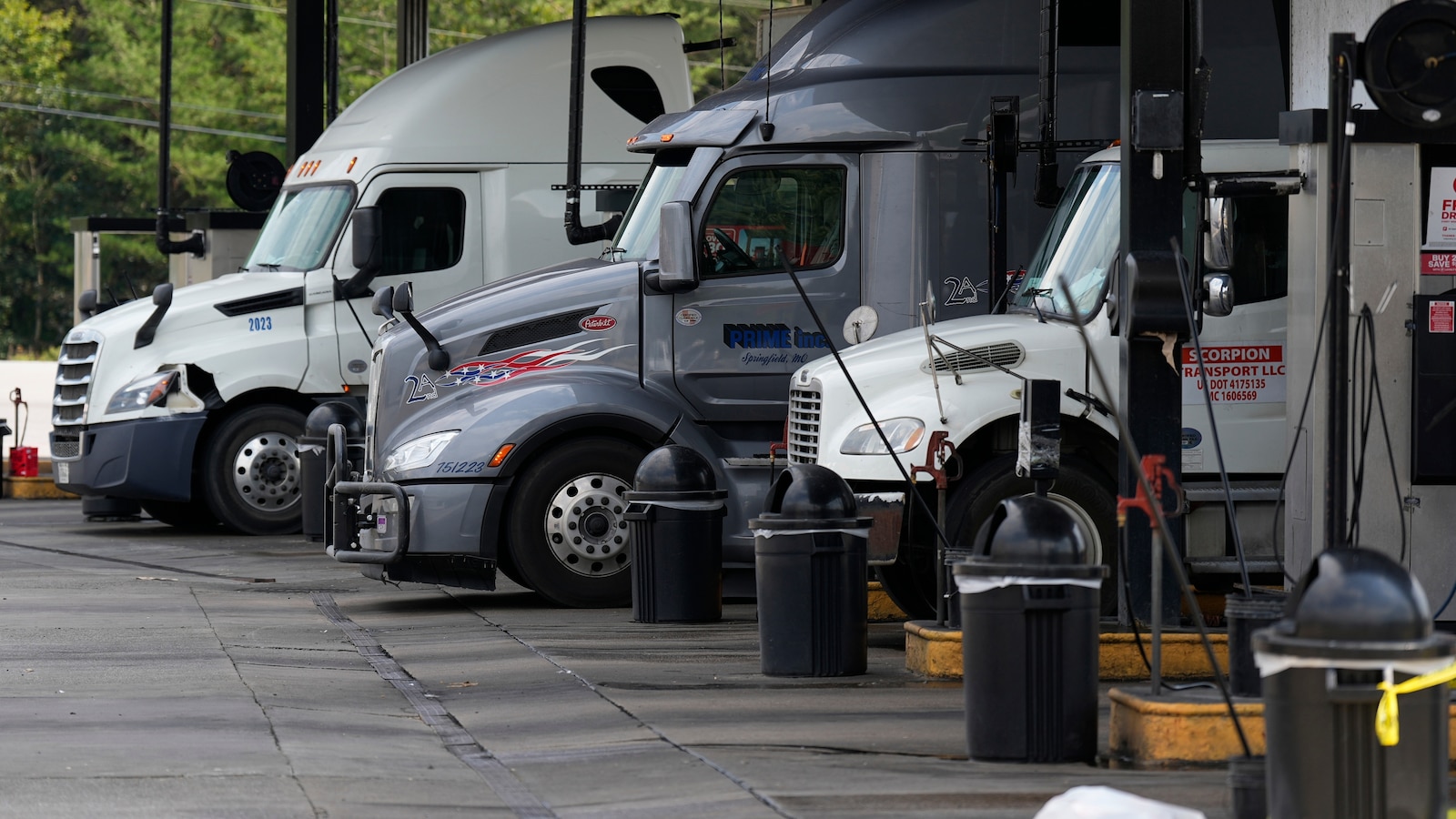
Photo via The Sydney Morning Herald

Australian fuel prices near six-month highs on US-Iran peace deal impasse

Read the original at The Sydney Morning Herald ↗
Cite

Toscano, N. (2026, September 28). Australian fuel prices near six-month highs on US-Iran peace deal impasse. The Sydney Morning Herald. https://www.smh.com.au/business/consumer-affairs/australian-fuel-prices-hit-six-month-highs-on-us-iran-peace-deal-impasse-20260928-p6113s.html?ref=rss&utm_medium=rss&utm_source=rss_feed

Dated when The Aporia collected the article, usually within hours of publication. Check the original for its exact date and byline.

The Sydney Morning Herald · collected 2026-09-28 · by Nick Toscano

Quick Summary

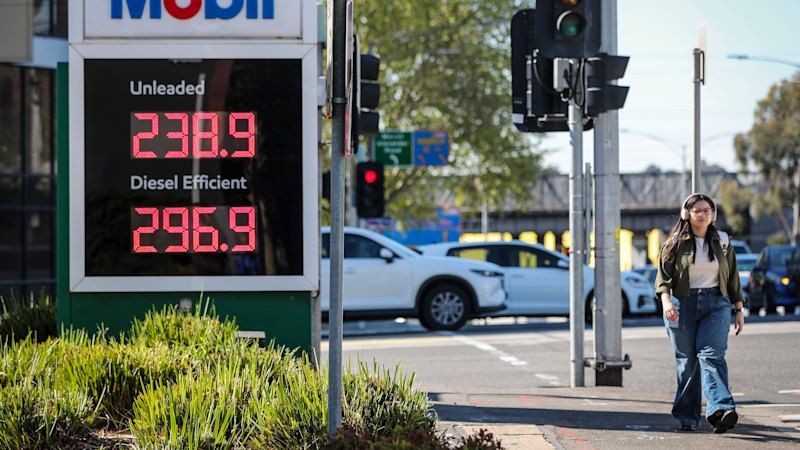
Australian fuel prices have reached six-month highs due to uncertainties surrounding US-Iran peace talks and increased tensions in the Middle East, affecting crude oil supply. Over the past week, regular unleaded petrol averaged $2.37 per litre, up 10 cents from the previous week, while diesel rose nearly 14 cents to $2.87 per litre. The Australian Institute of Petroleum reports these increases are partly due to Iran’s refusal to compromise on reopening the Strait of Hormuz and recent attacks on Saudi Arabian energy infrastructure by Yemen's Houthi militants backed by Iran.
Written by AI on 2026-09-28, from this article's own text only (the story summary below draws on all the coverage).

AI analysis

Story summary

Petrol and diesel prices in Australia reached six-month highs amid tensions between Iran and the United States. According to the Australian Institute of Petroleum, regular unleaded averaged $2.37 a litre nationwide over the past week, up 10¢ from the previous week, while diesel rose nearly 14¢ to $2.87 a litre. These prices are still below the record highs seen earlier this year of $2.53 for unleaded and $3.19 for diesel, which prompted Canberra to temporarily halve the fuel excise in April before reinstating it fully in August.

The price increases are attributed to elevated crude oil costs due to ongoing conflict in the Middle East, impeding millions of barrels from reaching global markets daily. Despite initial hopes that a diplomatic breakthrough might ease tensions and reduce oil prices—Brent crude dropped below $US100 last week—the situation remains volatile. Reports indicate Iran is refusing to compromise on key conditions before reopening the strategic Strait of Hormuz, pushing Brent crude back up to $US106 ($151) a barrel.

This ongoing US–Iran peace impasse continues to drive fuel prices higher in Australia and globally.
Written for “Oil Prices Rise” on 2026-10-31, grounded in this article and the 0 other(s) covering the same event.

Story

📰 Oil Prices Rise
Economy/Business · 1 article(s) covering the same event.

Compared with similar articles

This article reads unscored and hedges 6% of its claims. Each row says how that neighbour differs.
ABC News (US)
Hedges 7 of 54 claims Outlet record 70/100
“The articles discuss rising fuel prices but in different contexts and locations: one focuses on US Republicans reacting to diesel price hikes affecting farmers, while the other reports on Australian fuel prices near six-month highs due to geopolitical tensions.”
Daily Mail
⚖️ Leans left Hedges 1 of 12 claims Outlet record 68/100
“The articles describe rising fuel prices but cite different causes (Iran war vs. US-Iran peace deal impasse) and refer to different locations (UK vs. Australia).”
BBC News
Hedges 1 of 7 claims Outlet record 68/100
“The articles discuss high fuel prices but cover different geographical regions (Australia vs. Northern Ireland) with distinct price details and timeframes.”
Daily Mail
⚖️ Leans strongly left Hedges 3 of 37 claims Outlet record 68/100
“The articles discuss fuel price increases in different countries (Australia and the United States) due to geopolitical tensions with Iran, but describe separate events regarding pricing and impacts on consumers.”
Dawn
Hedges 1 of 20 claims Outlet record 72/100
“The articles describe fuel price changes in different countries (Australia and an unspecified country where currency is mentioned as Rupees) at distinct times.”
Dawn
Hedges 1 of 16 claims Outlet record 72/100
“The articles describe different national responses to similar economic conditions, one in Australia and another in an unspecified country (likely India) reducing prices, not a single identical incident.”
Dawn
Hedges 1 of 20 claims Outlet record 72/100
“The articles describe different pricing actions for petrol and diesel in Australia and India, respectively, and reference distinct price changes with separate currency values.”
The Sydney Morning Herald
⚖️ Leans right Hedges 7 of 26 claims Outlet record 61/100
“The articles discuss different aspects of economic impacts due to tensions in the Middle East, one focusing on fuel prices and the other on gas industry revenue.”
Semafor
Hedges 1 of 5 claims Outlet record 60/100
“While both articles discuss rising fuel and oil prices due to tensions between the US and Iran, they describe different aspects of this situation with distinct focuses.”
Evening Standard
Hedges 4 of 28 claims Outlet record 65/100
“While both articles discuss high fuel prices, they refer to different price peaks and different time periods in Australia and the UK.”
How this article was measured signals, leaning charts, publisher record, byline, topics and claims

Signals How these are calculated →

Claims extracted
18
sentences that state something as happening or true
Uncertain
6%
1 of 18 hedged ("reportedly", "may", "according to")
Leaning
not political
takes no side on a contested political question
Publisher signals
61/100
The Sydney Morning Herald's corrections and hedging, across everything collected from it. Not a measure of accuracy.
Outlets on this story
1
Economy/Business
Same framing elsewhere
1
articles that frame the event the way this one does
Analyzed 2026-09-28 · how these are computed

How this is being covered How these are calculated →

Article leaning vs. publisher reliability
Source leaning vs. consistency

Publisher

The Sydney Morning Herald · 5640 article(s) · 15 correction(s) detected
Running correction rate · 15 correction(s)

Who wrote this

Nick Toscano
15 article(s) here · 1 carrying a prediction
🔮 Mining giant Fortescue Metals Group has warned a protracted stand-off with Beijing over the price of Australia’s biggest export commodity, iron ore, may force it to curtail production at its huge mines across the Pilbara if the deadlock does not break soon.
🔮 “Everyone, regardless of their role or seniority, is expected to meet the standards set by our values,” the spokesperson said.
🔮 Labor last week introduced its long-awaited domestic gas-reservation bill to parliament, which would compel the nation’s largest liquefied natural gas exporters to set aside up 20 per cent of their annual export volumes for local customers from 2028.
🔮 An international mining giant has taken its $38 billion pursuit of Australia’s largest gold producer directly to local investors, offering them the muscle to build a globally competitive gold behemoth and hoping their pressure will help force the board to the negotiating table.
🔮 Worries about the volatile situation in the Middle East are threatening to override hopes that a deal between US President Donald Trump and Russian President Vladimir Putin to partially ease the US ban on Russian diesel could help relieve tightening supplies and lower prices ahead of the US midterm elections.
🔮 The decision to allow a massive NSW coal mine to run until 2045 will be fought in court, legal experts predict, after the High Court struck down a separate approval for failing to grapple with the climate impact of Australian coal being burned in foreign power plants.
🔮 Approval for a major coal mine expansion has been declared invalid by the High Court in a decision that will force NSW planning authorities to reckon with emissions from Australian coal burnt overseas.
🔮 Under the trial, they will be allowed to recover 70 per cent of the costs through regulated charges paid by all electricity consumers on their power bills, with the federal government footing the remainder.
🔮 The war in the Middle East is delivering a huge windfall for Australian gas exporters, as new figures suggest soaring prices could add $23 billion to their combined revenue this year and reverse what was expected to be a period of decline.
🔮 Fuel giant Ampol has struck a deal to acquire one of Australia’s most extensive electric-vehicle charging networks, a move that will more than triple the number of charging bays it owns just as local sales of battery-powered cars surge to record highs.
Also by Nick Toscano
Nothing else under this byline is closely related to this article, so these are simply their most recent.
All 15 articles by Nick Toscano →

Topics

Australia Iran the Australian Institute of Petroleum the Commonwealth Bank’s the United States

Subjects

Iran GPE · 5× Australia GPE · 3× Trump PERSON · 2× Houthi NORP · 1× Saudi Arabian NORP · 1× Vivek Dhar PERSON · 1× Yemen GPE · 1× the Australian Institute of Petroleum ORG · 1× the Commonwealth Bank’s ORG · 1× the United States GPE · 1×

Narrative

Despite the increases, average petrol and diesel prices at service stations across Australia were still below the record highs reached earlier in the conflict of $2.53 a litre for unleaded and $3.19 for diesel – levels that previously prompted Canberra to temporarily halve the fuel excise in April before reinstating the full rate in August.
framing: assertive · carried by 1 article(s) · first seen 2026-09-28
🔮 Petrol and diesel prices in Australia have climbed to their highest average levels since April amid doubts over whether Iran and the United States will agree to a truce any time soon.
2026-09-28 · The Sydney Morning Herald
Australian fuel prices near six-month highs on US-Iran peace deal impasse · assertive framing

Claims (18 extracted, 1 hedged)

Petrol and diesel prices in Australia have climbed to their highest average levels since April amid doubts over whether Iran and the United States will agree to a truce any time soon. asserted
Iran → climb → truce
Regular unleaded averaged $2.37 a litre at service stations nationwide over the past week, up 10¢ a litre from the week earlier, according to new figures from the Australian Institute of Petroleum on Monday. uncertain
unleaded → average → Monday
Diesel rose even more sharply, increasing nearly 14¢ to $2.87 a litre. asserted
Diesel → rise → 2.87
The hikes come as the cost of crude oil, the resource that’s refined into petrol and diesel, remains elevated due to the war in the oil-rich Middle East, which is blocking millions of barrels of the commodity from reaching global markets every day. asserted
which → come → markets
Last week, the price of Brent oil, the global crude benchmark, dropped below $US100 amid hopes of a diplomatic breakthrough. asserted
price → drop → breakthrough
But those hopes appeared to weaken as traders pushed prices higher to $US106 ($151) a barrel on Monday following reports that Iran is refusing to budge on certain conditions it is seeking before agreeing to reopen the Strait of Hormuz, a critical oil and gas shipping corridor off its southern coastline. asserted
it → appear → coastline
US–Iran peace talks were again at an “impasse”, said Vivek Dhar, the Commonwealth Bank’s head of energy and mining commodities research. asserted
Dhar → say → research
“Iran said it would stick to its seven‑day proposal to reopen the Strait of Hormuz, alongside other demands that US President Trump has already rejected.” asserted
Trump → say → that
Concerns over a recent wave of attacks on Saudi Arabian energy infrastructure by Yemen’s Iran-backed Houthi militants were also keeping oil and fuel prices elevated. asserted
Concerns → back → prices
Despite the increases, average petrol and diesel prices at service stations across Australia were still below the record highs reached earlier in the conflict of $2.53 a litre for unleaded and $3.19 for diesel – levels that previously prompted Canberra to temporarily halve the fuel excise in April before reinstating the full rate in August. asserted
that → reach → August
However, shrinking global stockpiles of refined fuels and the prospect of the US government imposing a ban on American diesel exports are keeping analysts and Australian motoring groups on edge about the risk of further price pain to come. asserted
government → shrink → pain
In a bid to ease soaring US fuel prices before the country’s midterm elections, US President Donald Trump has said he is considering imposing a 90-day ban on diesel exports. asserted
he → ease → exports
“I’ve said let’s not send out the diesel – we make a lot of diesel,” Trump said last week. asserted
Trump → say → diesel
Analysts calculate that a US diesel ban, if enacted, risks sidelining roughly 20 per cent of global seaborne diesel trade, which would send Australia’s regional benchmark diesel prices “significantly higher”. asserted
which → calculate → prices
Diesel is already in shorter supply globally following Ukrainian attacks that have severely crippled Russia’s oil-refining sector, which typically accounts for 4 per cent of the world’s capacity. asserted
which → follow → capacity
“Global diesel markets are already dealing with major disruptions to Russian and Middle Eastern exports,” Dhar said. asserted
Dhar → deal → exports
“Both regions accounted for approximately 45 per cent of global diesel seaborne trade just before the Iran war started.” asserted
war → account → trade
The Business Briefing newsletter delivers major stories, exclusive coverage and expert opinion. asserted
newsletter → deliver → stories
💬Give feedback
🕘History 🎫Support