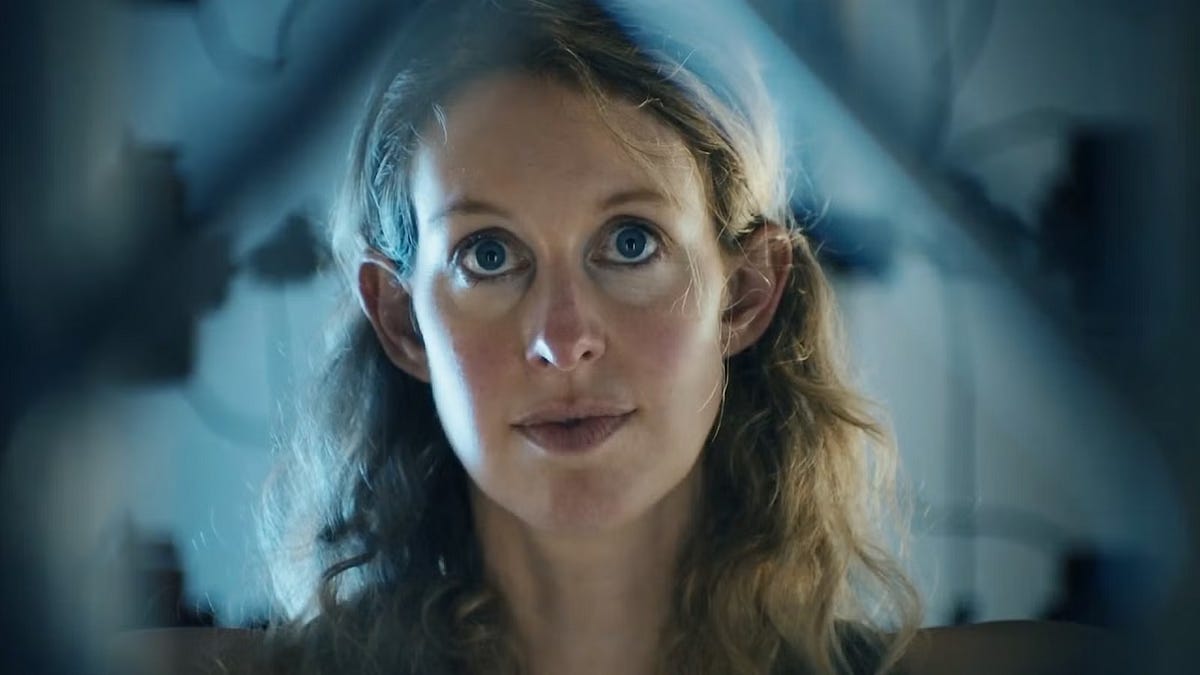
Photo via The Free Press

Tyler Cowen: Don’t Let AI Make You Dumber

Read the original at The Free Press ↗
Cite

Cowen, T. (2026, September 29). Tyler Cowen: Don’t Let AI Make You Dumber. The Free Press. https://www.thefp.com/p/tyler-cowen-dont-let-ai-make-you-dumb-creative

Dated when The Aporia collected the article, usually within hours of publication. Check the original for its exact date and byline.

The Free Press · collected 2026-09-29 · by Tyler Cowen analysis

Quick Summary

Tyler Cowen challenges concerns about AI making humans intellectually lazy by arguing that AI can free up time from mundane tasks, allowing people to engage more in creative thinking. Critics like Gregory Conti warn that reliance on AI could diminish human cognitive abilities, but Cowen counters with the idea that freed-up time will enable greater intellectual pursuits for both professionals and students.
Written by AI on 2026-09-29, from this article's own text only (the story summary below draws on all the coverage).

AI analysis

Story summary

Tyler Cowen, an economist, argues against the criticism that AI systems will make humans less intelligent in his article. Critics like Gregory Conti, a Princeton professor, warn that AI could diminish mental activity by taking over cognitive tasks, potentially leaving people intellectually passive and unengaged. Ezra Klein, a New York Times columnist, similarly expresses concern about the potential for AI to reduce human intellectual capacity without people recognizing it. However, Cowen counters these views, suggesting instead that the use of AI might actually spur a renaissance in human intellect by freeing up cognitive resources for more creative and innovative thinking.

Written for “AI And Productivity Concerns” on 2026-11-04, grounded in this article and the 0 other(s) covering the same event.

Story

📰 AI And Productivity Concerns
Technology · 1 article(s) covering the same event.

Compared with similar articles

This article reads leans left and hedges 14% of its claims. Each row says how that neighbour differs.
TIME
⚖️ Leans strongly left further left than this Hedges 24 of 100 claims Outlet record 59/100
“The articles discuss different perspectives on risks associated with AI but describe distinct pieces of writing rather than a single incident.”
Toronto Star
⚖️ Leans left Hedges 5 of 43 claims Outlet record 64/100
“Article A discusses tech companies sounding an alarm on AI safety and seeking to shape its control, while Article B critiques the potential negative effects of AI on human intelligence.”
The Guardian
⚖️ Leans left Hedges 12 of 62 claims Outlet record 66/100
“The articles discuss AI's impacts from different perspectives and do not describe the same specific incident.”
The Sydney Morning Herald
Hedges 7 of 44 claims Outlet record 61/100
“The articles discuss different aspects of AI and its impacts on society, not the same specific incident.”
Washington Examiner
⚖️ Leans strongly left further left than this Hedges 2 of 43 claims Outlet record 69/100
“The articles discuss different aspects of AI criticism and incidents, not the same specific occurrence.”
Washington Examiner
Hedges 10 of 43 claims Outlet record 69/100
“The articles discuss different perspectives on AI risks but describe distinct events and figures.”
Fox News
Hedges 8 of 36 claims Outlet record 68/100
“The articles discuss different critiques and concerns about AI by separate individuals at distinct times.”
The Hindu
Hedges 5 of 43 claims Outlet record 60/100
“Article A focuses on warnings from Anthropic and OpenAI about AI safety, while Article B discusses a critique by Tyler Cowen regarding the impact of AI on human intelligence. The articles address different aspects of AI concerns.”
New York Post
Hedges 12 of 29 claims Outlet record 66/100
“The articles discuss different aspects of AI usage and concerns — one focusing on an opinion piece about potential downsides of AI systems making humans less intelligent, while the other reports survey results on teens using AI for schoolwork.”
The Guardian
⚖️ Leans strongly left further left than this Hedges 7 of 69 claims Outlet record 66/100
“The articles discuss different aspects of AI concerns without referencing the same specific incident.”
How this article was measured signals, leaning charts, publisher record, byline, topics and claims

Signals How these are calculated →

Claims extracted
14
sentences that state something as happening or true
Uncertain
14%
2 of 14 hedged ("reportedly", "may", "according to")
Leaning
Leans left
of the writing, not the subject · beta estimate
Publisher signals
97/100
The Free Press's corrections and hedging, across everything collected from it. Not a measure of accuracy.
Outlets on this story
1
Technology
Same framing elsewhere
1
articles that frame the event the way this one does
Analyzed 2026-09-29 · how these are computed

How this is being covered How these are calculated →

Article leaning vs. publisher reliability
Source leaning vs. consistency

Publisher

The Free Press · 428 article(s) · 0 correction(s) detected
No corrections detected for this publisher. That may mean careful reporting, or simply that nothing has been checked.

Who wrote this

Tyler Cowen
11 article(s) here · 1 carrying a prediction
🔮 Those were all names with significant academic heft who could count among the world’s leading macroeconomists.
🔮 That sent much of the internet running for patches and fixes, and the result probably will be that many older websites end up permanently dysfunctional.
2026-10-26 · mixed framing · Tyler Cowen: How to Outrun the AI Hackers
🔮 Instead of prison, I would put her under some form of house arrest and allow her to raise her children.
2026-10-20 · assertive framing · Tyler Cowen: Elizabeth Holmes Should Not Be in Prison
🔮 It seems to be a good time for a fuller accounting of what immigration from Africa will mean for America, at scale and over time.
2026-10-13 · assertive framing · America Needs African Immigrants
🔮 Coefficient Giving is only the largest of many young philanthropic groups animated by effective altruism, and this year it’s set to spend more than $2 billion of its $40 billion fund on the movement’s favorite causes, from AI safety research to uncaging farm-raised chickens.
2026-10-06 · assertive framing · In Defense of Effective Altruism
🔮 AI models have come under heavy criticism lately, with the charges ranging from an increased risk of ordinary hacks to the possibility that they will kill us all, but one abiding critique is that AI systems will make us stupid and turn us into docile pets.
2026-09-29 · assertive framing · Tyler Cowen: Don’t Let AI Make You Dumber
🔮 It took less than a month for that term, which represents the probability that AI will wipe out humanity, to grow from an airy debate topic among Bay Area insiders into the most urgent question in public life.
2026-09-21 · assertive framing · Tyler Cowen: A Doomsday Scenario for American AI
🔮 But the so-called “slowdown” is the most discussed, and it could benefit or harm AI progress depending on how it’s handled.
2026-09-14 · assertive framing · Tyler Cowen: The AI Slowdown Is Not What It Seems
🔮 It seems that more and more jobs will require AI skills of some kind, yet few major universities are embracing AI instruction as a general practice.
2026-09-04 · assertive framing · Tyler Cowen: Is College Still Worth It?
🔮 Nate Soares, who works in the AI safety movement and is co-author of the doomsday AI bestseller If Anyone Builds It, Everyone Dies, wrote that “This might be the last warning we get.”
Also by Tyler Cowen
Tyler Cowen: How to Outrun the AI Hackers
2026-10-26 · The Free Press
America Needs African Immigrants
2026-10-13 · The Free Press
Nothing else under this byline is closely related to this article, so these are simply their most recent.
All 11 articles by Tyler Cowen →

Topics

New York Times Princeton The Free Press

Subjects

Conti PERSON · 2× Ezra Klein PERSON · 1× Gregory Conti PERSON · 1× Lex Fridman PERSON · 1× New York Times ORG · 1× Princeton ORG · 1× The Free Press ORG · 1×

Narrative

AI models have come under heavy criticism lately, with the charges ranging from an increased risk of ordinary hacks to the possibility that they will kill us all, but one abiding critique is that AI systems will make us stupid and turn us into docile pets.
framing: assertive · carried by 1 article(s) · first seen 2026-09-29
🔮 AI models have come under heavy criticism lately, with the charges ranging from an increased risk of ordinary hacks to the possibility that they will kill us all, but one abiding critique is that AI systems will make us stupid and turn us into docile pets.
2026-09-29 · The Free Press
Tyler Cowen: Don’t Let AI Make You Dumber · assertive framing

Claims (14 extracted, 2 hedged)

Have we already passed the peak of human intelligence? asserted
we → pass → intelligence
AI models have come under heavy criticism lately, with the charges ranging from an increased risk of ordinary hacks to the possibility that they will kill us all, but one abiding critique is that AI systems will make us stupid and turn us into docile pets. asserted
us → come → pets
After all, why should you bother to think when very smart AI models can do that for you? asserted
models → bother → you
One of the leading purveyors of this critique is Gregory Conti, a professor at Princeton and a leading intellectual himself whose writing has appeared in The Free Press. asserted
writing → lead → Press
Conti wrote: “The channels for the human mind to swim in will dry up, one by one.” asserted
mind → write → one
He continues that campaign on X. asserted
He → continue → campaign
In an podcast interview with Lex Fridman, New York Times columnist Ezra Klein expressed the same worry in more open terms, saying, “My biggest concern about AI is we’re going to make ourselves much stupider without realizing it.” asserted
ourselves → express → it
University students may be affected the most, as AI-enabled cheating could prevent many from learning to think, write, and solve problems. uncertain
cheating → affect → problems
In fact, I believe we may see a renaissance of the human intellect. uncertain
we → believe → intellect
After all, Conti and the other critics have hardly ceased their own efforts or trotted off into graceful retirements. asserted
Conti → cease → retirements
One intellectual advantage of AI models is that they can, or soon will, free up our time from tedious and thankless tasks. asserted
they → free → tasks
That includes filling out forms online, booking flights and hotels, doing our taxes, and writing mundane emails. asserted
That → include → emails
That will give us the option—and I do stress the word option—of devoting more of our time and energies to creative pursuits. asserted
I → give → pursuits
That goes for students too, who will be able to spend less time on the process of research and more on consuming and applying knowledge. asserted
who → go → knowledge
💬Give feedback
🕘History 🎫Support