Photo via The Guardian

Danger zone: why war in the Middle East has landed the RBA’s inflation fight in tricky territory

Read the original at The Guardian ↗
Cite

Commins, P. (2026, September 29). Danger zone: why war in the Middle East has landed the RBA’s inflation fight in tricky territory. The Guardian. https://www.theguardian.com/australia-news/2026/sep/29/michele-bullock-rba-interest-rate-rise-middle-east-war-fuel-prices-analysis

Dated when The Aporia collected the article, usually within hours of publication. Check the original for its exact date and byline.

The Guardian · collected 2026-09-29 · by Patrick Commins

Quick Summary

Reserve Bank of Australia (RBA) Governor Michele Bullock addressed journalists about the bank's strategy to control inflation amid rising fuel and fertiliser prices due to prolonged conflicts in the Middle East. The RBA has raised interest rates four times this year but remains concerned that these gradual measures might not be sufficient as businesses may continue to increase prices, complicating efforts to return inflation to its 2-3% target range without causing significant economic downturns. Economists predict further rate hikes in six weeks and potentially next year, balancing the need for tighter monetary policy with the risk of economic slowdown.
Written by AI on 2026-09-29, from this article's own text only (the story summary below draws on all the coverage).

AI analysis

Story summary

The Reserve Bank of Australia (RBA) has raised interest rates to their highest level in 15 years, increasing the cash rate target from 4.35% to 4.60%. This is the fourth increase this year and reflects the RBA's ongoing efforts to combat high inflation.

On a $700,000 loan with a 25-year term at an interest rate of 6.50%, monthly mortgage repayments will increase by approximately $93 following the latest rise. Over four increases this year, borrowers would see their monthly payments increase by about $364 on a $600,000 loan and roughly $7,300 annually.

The impact extends beyond mortgages: higher interest rates attract foreign investment to Australia due to better returns, potentially strengthening the Australian dollar. However, increased borrowing costs will likely slow down spending in other sectors such as dining out and retail shopping, which could affect businesses reliant on consumer spending.

Despite the hikes, housing remains unaffordable for many, with further rate increases forecasted by some analysts up to 5.1% by mid-2027, posing significant challenges for household finances already strained by rising costs like petrol prices nearing $2.40 per liter. The Bureau of Statistics is set to release September's inflation data soon, which will provide more insight into the effectiveness of these measures and future policy directions.

Written for “RBA Interest Rate Hikes” on 2026-10-30, grounded in this article and the 17 other(s) covering the same event.

Story

📰 RBA Interest Rate Hikes
Economy/Business · 18 article(s) covering the same event. Compare every outlet's account →

Compared with similar articles

This article reads unscored and hedges 9% of its claims. Each row says how that neighbour differs.
The Bulwark
Hedges 0 of 4 claims
“The articles discuss different economic issues in distinct contexts and do not describe the same specific incident or time frame.”
Washington Examiner
⚖️ Leans left Hedges 3 of 34 claims Outlet record 70/100
“The articles describe different central banks (Federal Reserve and RBA) making separate decisions in distinct geographic regions.”
The Sydney Morning Herald
Hedges 8 of 83 claims Outlet record 61/100
“The articles describe different events: Article A covers Governor Michele Bullock's overall approach to setting interest rates since February 2024, while Article B focuses on a specific press conference where the RBA announced its fourth interest rate hike in 2026.”
Daily Mail
Hedges 0 of 37 claims Outlet record 68/100
“The articles discuss different aspects of monetary policy and economic conditions, not a single specific incident or meeting.”
The Sydney Morning Herald
Hedges 5 of 35 claims Outlet record 61/100
“The articles discuss different topics related to economic conditions, with Article A focusing on gold price volatility and Article B on inflation challenges faced by the RBA.”
The Sydney Morning Herald
Hedges 2 of 23 claims Outlet record 61/100
Daily Mail
⚖️ Leans strongly left Hedges 6 of 41 claims Outlet record 68/100
Al Jazeera
Hedges 1 of 15 claims Outlet record 60/100
Daily Mail
Hedges 1 of 53 claims Outlet record 68/100
“The articles discuss different aspects of inflation and interest rates but do not describe the same specific incident or occurrence.”
The Sydney Morning Herald
⚖️ Leans left Hedges 8 of 35 claims Outlet record 61/100
“The articles discuss different aspects of economic and monetary policy, with Article A focusing on the impact of rate hikes on voters and budgets, while Article B discusses the Reserve Bank's strategy regarding inflation and unemployment.”
How this article was measured signals, leaning charts, publisher record, byline, topics and claims

Signals How these are calculated →

Claims extracted
22
sentences that state something as happening or true
Uncertain
9%
2 of 22 hedged ("reportedly", "may", "according to")
Leaning
not political
takes no side on a contested political question
Publisher signals
66/100
The Guardian's corrections and hedging, across everything collected from it. Not a measure of accuracy.
Outlets on this story
18
Economy/Business
Same framing elsewhere
1
articles that frame the event the way this one does
Analyzed 2026-09-29 · how these are computed

How this is being covered How these are calculated →

Article leaning vs. publisher reliability
Source leaning vs. consistency

Publisher

The Guardian · 2729 article(s) · 6 correction(s) detected
Running correction rate · 6 correction(s)

Who wrote this

Patrick Commins
8 article(s) here · 1 carrying a prediction
🔮 The Reserve Bank of Australia’s preferred measure of consumer prices, called underlying inflation, came in at an annual 3.6% to September. RBA officials have strongly indicated the board may need to lift borrowing costs further to drag price growth back toward its 2.5% target, citing concerns of a “materially worse” inflation outlook.
🔮 The explosion of discontent that led to major protests and violence in France and across Europe is a “warning signal” that Australia could follow the same path without an “honest conversation” about the budget, economists say.
🔮 Jim Chalmers in a speech last week offered the scant encouragement that the economy would be “a bit better” in a year’s time.
🔮 Stephen Wu, an economist at investment bank UBS, said resilient consumer demand and a high inflation environment “may be allowing merchants to use the change as ‘cover’ to pass through broader cost pressures”.
🔮 Mark Cully, an economist and author of Waves of Plenty: Immigration and the Making of Australia, says such a policy would be “unprecedented”.
🔮 Would slashing net overseas migration “trash the economy” or deliver the necessary population “reset” to restore Australia’s stagnant living standards?
🔮 Yet there are signs that the central bank may be losing faith in this “slowly, slowly” strategy.
🔮 Tony Burke has promised to make Labor’s existing migration policy work better rather than announcing a dramatic cut in numbers, arguing that populist promises to slash net overseas migration will “trash Australian services and trash the Australian economy”.
Also by Patrick Commins
Nothing else under this byline is closely related to this article, so these are simply their most recent.
All 8 articles by Patrick Commins →

Topics

Melbourne Cup day RBA the Reserve Bank

Subjects

Bullock PERSON · 5× RBA ORG · 5× Michele Bullock PERSON · 1× the Reserve Bank ORG · 1×

Narrative

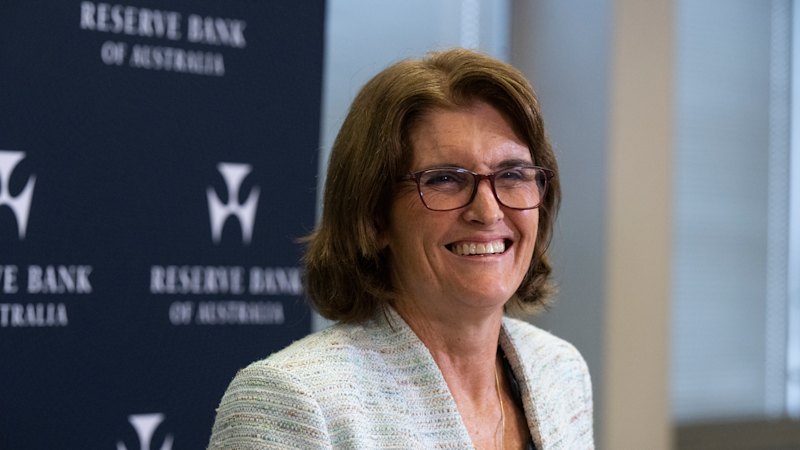
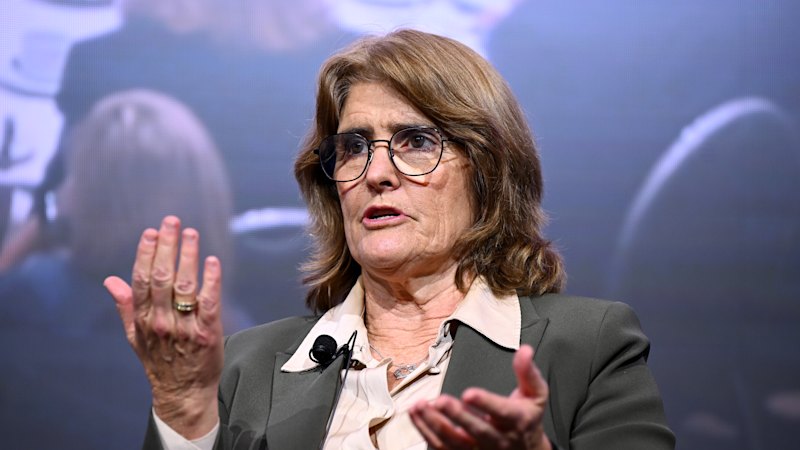
For years, the Reserve Bank has been attempting, as gently as possible, to steer inflation back to its 2.5% target while trying to retain as many of the post-pandemic job gains as possible. “That still remains the strategy,” Michele Bullock, the RBA’s governor, told journalists on Tuesday afternoon, an hour after the board announced the fourth interest rate hike for the year.
framing: assertive · carried by 1 article(s) · first seen 2026-09-29
🔮 Yet there are signs that the central bank may be losing faith in this “slowly, slowly” strategy.

Claims (22 extracted, 2 hedged)

The fight against inflation has entered a new, more dangerous phase. asserted
fight → enter → phase
For years, the Reserve Bank has been attempting, as gently as possible, to steer inflation back to its 2.5% target while trying to retain as many of the post-pandemic job gains as possible. “That still remains the strategy,” Michele Bullock, the RBA’s governor, told journalists on Tuesday afternoon, an hour after the board announced the fourth interest rate hike for the year. asserted
board → attempt → year
Unemployment has climbed by 1 percentage point over the past four years, sure, but at 4.6% it’s “still quite low historically,” Bullock said. Other central banks have managed to get inflation lower, sure, but at the cost of higher unemployment, she said. asserted
she → climb → unemployment
Yet there are signs that the central bank may be losing faith in this “slowly, slowly” strategy. uncertain
bank → be → strategy
Bullock explained the RBA has been outside the 2-3% target range for six years now. asserted
RBA → explain → years
That’s a problem, because households and businesses need to believe that inflation will fall again, one day. asserted
inflation → ’ → ?
“We came in [to the range] briefly in 2025, and then we’ve popped back out again. asserted
we → come → 2025
We are aiming to get it back,” she said. asserted
she → aim → it
But how to get inflation back under control “in a reasonable time”, when unreasonable things keep happening? asserted
things → get → time
It’s the unending Middle East conflict that now looms as the biggest threat to the RBA’s careful approach to taming inflation. asserted
that → ’ → inflation
As Bullock said: “When the Middle East conflict first started, everyone was sort of thinking, ‘Oh, it will probably not last very long’.” asserted
it → say → ?
“Well, that’s clearly not true. asserted
that → ’ → ?
It’s lasted, and there doesn’t seem to be any end to it,” she said. asserted
she → last → it
“So this idea that they would go up and then come down again just hasn’t happened.” asserted
they → go → ?
The RBA governor is worried that businesses are also coming to the same conclusion, and will start lifting their prices. asserted
businesses → worry → prices
That will make it even harder to get inflation back to target without a more dramatic increase in interest rates. asserted
it → make → rates
Bullock and her board have long made it clear they will “do what it takes” to get inflation back to target, a phrase they repeated on Tuesday. asserted
they → make → Tuesday
After Tuesday’s announcement, a number of economists are betting the RBA will hike again in six weeks’ time, at the Melbourne Cup day meeting. asserted
RBA → bet → meeting
Financial markets see a 50% chance of yet another increase next year. asserted
markets → see → increase
All up, it sounds like the RBA is ready to start pushing harder against inflation. asserted
RBA → sound → inflation
That might be the right call, but it increases the risk the central bank will push too hard and, in Bullock’s words, drive the economy into a “dramatic slowdown”. uncertain
bank → increase → slowdown
“Hopefully, in the next couple of years, when we get inflation back down, this will have all been worth it.” asserted
this → get → inflation
💬Give feedback
🕘History 🎫Support