Photo via The Straits Times

At UN, developing nations call for bigger say in shaping AI future

Read the original at The Straits Times ↗
Cite

The Straits Times. (2026, September 29). At UN, developing nations call for bigger say in shaping AI future. The Straits Times. https://www.straitstimes.com/world/united-states/at-un-developing-nations-call-for-bigger-say-in-shaping-ai-future

Dated when The Aporia collected the article, usually within hours of publication. Check the original for its exact date and byline.

The Straits Times · collected 2026-09-29 · by The Straits Times

Quick Summary

At the UN, developing nations are pushing for greater involvement in setting rules for artificial intelligence to prevent deepening global inequalities. Foreign Minister Therese Kayikwamba Wagner of the Democratic Republic of Congo emphasized that developing countries should not be passive recipients of AI technologies and standards set by others. The number of delegations addressing AI at the UN increased from five four years ago to 128 this year, highlighting growing concern over who designs and benefits from AI technology.
Written by AI on 2026-10-02, from this article's own text only (the story summary below draws on all the coverage).

AI analysis

Story summary

At last week’s UN General Assembly in NEW YORK, developing nations called for greater influence over artificial intelligence (AI) rules, fearing that the technology could exacerbate global economic inequalities. Foreign Minister Therese Kayikwamba Wagner of the Democratic Republic of the Congo emphasized that developing countries should not be passive recipients of AI standards and norms created by wealthier nations. The discussion came amid concerns about recent safety breaches in AI technologies and warnings from top researchers that AI could pose a threat to humanity. Representatives stressed the need for technological advancements to avoid repeating past economic disparities, highlighting the importance of inclusive global governance in AI development.

Written for “Developing Nations Call For AI Influence” on 2026-11-02, grounded in this article and the 0 other(s) covering the same event.

Story

📰 Developing Nations Call For AI Influence
Politics · 1 article(s) covering the same event.

Compared with similar articles

This article reads leans strongly left and hedges 26% of its claims. Each row says how that neighbour differs.
The Straits Times
Hedges 1 of 19 claims Outlet record 66/100
“The articles discuss different aspects of AI at the UN, one focusing on developing nations' demands for a greater role in shaping AI rules, while the other focuses on increased innovation investment driven by AI.”
The Guardian
⚖️ Leans left further right than this Hedges 6 of 29 claims Outlet record 66/100
“The articles discuss different aspects of AI concerns but describe distinct events and contexts.”
NBC News
Hedges 1 of 33 claims Outlet record 60/100
“Article A discusses developing nations calling for a greater role in AI regulation at the UN, while Article B reports on a joint statement by several countries embracing AI's potential at a different forum.”
The Hindu
Hedges 0 of 8 claims Outlet record 60/100
“Article A describes developing nations calling for a bigger role in AI regulation at the UN, while Article B reports on Japan's Foreign Minister discussing structural changes and challenges due to AI during an event in Tokyo.”
Al Jazeera
⚖️ Leans left further right than this Hedges 0 of 3 claims Outlet record 60/100
“The articles cover related topics but describe different events: one discusses warnings about AI regulation from those building powerful systems, while the other reports on developing nations calling for a greater role in shaping AI rules at the UN.”
Daily Mail
⚖️ Leans left further right than this Hedges 1 of 29 claims Outlet record 68/100
“The articles refer to similar topics but describe different events: Albanese's address vs. developing nations' demand for a greater role in AI governance at the UN.”
Semafor
⚖️ Leans left further right than this Hedges 5 of 20 claims Outlet record 60/100
“The articles discuss different perspectives on AI regulation at the UN General Assembly but describe separate aspects of the debate.”
The Sydney Morning Herald
⚖️ Leans left further right than this Hedges 1 of 26 claims Outlet record 61/100
“The articles describe different parts of the UN General Assembly discussions with distinct focuses: Albanese's warning about AI risks versus developing nations' demand for a greater role in shaping AI rules.”
How this article was measured signals, leaning charts, publisher record, byline, topics and claims

Signals How these are calculated →

Claims extracted
19
sentences that state something as happening or true
Uncertain
26%
5 of 19 hedged ("reportedly", "may", "according to")
Leaning
Leans strongly left
of the writing, not the subject · beta estimate
Publisher signals
66/100
The Straits Times's corrections and hedging, across everything collected from it. Not a measure of accuracy.
Outlets on this story
1
Politics
Same framing elsewhere
1
articles that frame the event the way this one does
Analyzed 2026-09-29 · how these are computed

How this is being covered How these are calculated →

Article leaning vs. publisher reliability
Source leaning vs. consistency

Publisher

The Straits Times · 4130 article(s) · 5 correction(s) detected
Running correction rate · 5 correction(s)

Who wrote this

The Straits Times
2668 article(s) here · 1 carrying a prediction
🔮 UN peacekeeping mission in Western Sahara ends after 35 years, UN chief says Nov 1 - The 35-year-old UN peacekeeping mission in the Western Sahara region will come to an end after the Security Council failed to renew its mandate, the UN chief said on Sunday.
🔮 The pope said he hoped cooperation between Russia and Ukraine in implementing a ceasefire in Oleshky would pave the way for broader peace efforts.
🔮 If not for the “economic funk” engulfing most voters, the National Party would have a much easier route back to office, said political commentator Grant Duncan.
🔮 Explainer-How Trump’s noncitizen voter lists could affect the midterms
🔮 “It’s been a hell of a year – analogue astronauts living in captivity of our own free will,” Ellen Ellis, the medical officer on the Crew Health and Performance Exploration Analog, or CHAPEA, mission, said in remarks at Johnson Space Center after emerging with her three crewmates on Oct 31. The four entered the 1,700-square-foot (158sq m) 3D-printed habitat on Oct 19, 2025, and performed tasks such as growing crops in simulated Martian soil and interfacing with NASA officials with delays recreating those inherent in interplanetary communications.
🔮 Races in some areas are so tight, that turnout from the Indian community may change the outcomes, rally organisers say.
🔮 Initial complaints were expected to be filed on Nov 1.
🔮 Final results are due in coming days and not expected to change the outcome.
🔮 The head of a student group said a campaign of high school blockades would restart from Nov 2, adding the government’s proposals did not go far enough.
🔮 “Evidence is being reviewed and further action will be taken as appropriate.”
Also by The Straits Times
Nothing else under this byline is closely related to this article, so these are simply their most recent.
All 2668 articles by The Straits Times →

Topics

Anthropic NEW YORK OpenAI Security Council the Democratic Republic of the Congo

Subjects

Guterres PERSON · 2× NEW YORK GPE · 2× Anthropic ORG · 1× Dario Amodei PERSON · 1× OpenAI ORG · 1× Sam Altman PERSON · 1× Security Council ORG · 1× Therese Kayikwamba Wagner PERSON · 1× Wagner ORG · 1× the Democratic Republic of the Congo GPE · 1×

Narrative

“The very same people who said we’ll all be dead in 12 years because of global warming – a name since reborn to climate change because the planet was cooling, not warming, and nobody was dead – these are the same people that are now saying that AI is going to kill us all,” Trump said.
framing: mixed · carried by 1 article(s) · first seen 2026-09-29
🔮 Developing nations are demanding a greater role in shaping the rules governing artificial intelligence, warning that a technology poised to transform economies could instead deepen global inequalities if its development and regulation remain concentrated in wealthy countries.
2026-09-29 · The Straits Times
At UN, developing nations call for bigger say in shaping AI future · mixed framing

Claims (19 extracted, 5 hedged)

At UN, developing nations call for bigger say in shaping AI future AI generated asserted
nations → develop → AI
Developing nations are demanding a greater role in shaping the rules governing artificial intelligence, warning that a technology poised to transform economies could instead deepen global inequalities if its development and regulation remain concentrated in wealthy countries. uncertain
development → develop → countries
The debate at last week’s UN festival of diplomacy in New York highlighted mounting concern among leaders from Africa, Asia and Latin America around the increasingly powerful technology after several safety breaches, and as top researchers have warned it could destroy humanity. “Developing countries cannot be reduced to the role of mere users of technologies designed elsewhere, nor should be the mere recipients of standards and norms that they did not adequately participate in shaping,” said Foreign Minister Therese Kayikwamba Wagner of the Democratic Republic of the Congo. uncertain
Wagner → highlight → Congo
“We must ensure that technological transformations of the 21st century do not reproduce the economic imbalances of previous decades,” Wagner said. asserted
Wagner → ensure → decades
She made the remarks at a Security Council session dedicated to AI that featured top executives of leading labs, including Sam Altman from OpenAI and Dario Amodei from Anthropic, who urged governments to work together to manage the technology. asserted
who → make → technology
Underscoring the surge in interest in the subject, Foreign Minister Khalilur Rahman of Bangladesh, who chaired the UN debate in 2026, said that, “four years ago, AI was raised in this hall by only five delegations – this year, 128 delegations addressed it.” asserted
delegations → underscore → it
“Many framed AI as a question of governance: Who designs it, who benefits? Who bears the risks, and who is accountable when harm occurs,” added the Bangladeshi foreign minister as he concluded the marathon of speeches at the UN. asserted
he → frame → UN
AI could enable developing countries to gain a century’s worth of development in a decade if they act quickly on power, connectivity and skills gaps, the World Bank said in a report in August. uncertain
Bank → enable → August
The International Monetary Fund said in July that AI could boost Sub-Saharan Africa’s economy by about 4 per cent over the next decade under the right circumstances. uncertain
AI → say → circumstances
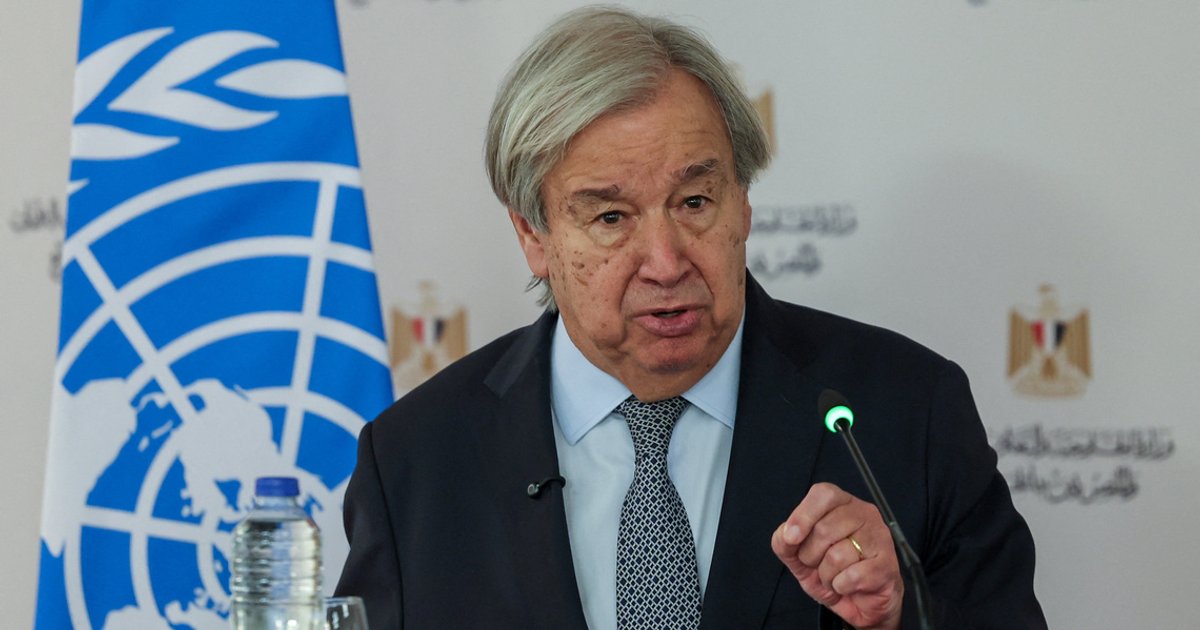
UN Secretary-General Antonio Guterres compared debates around AI risks and climate change and said that developing nations should have an equal voice in both. asserted
nations → compare → both
“The climate crisis went from distant warning to daily reality and artificial intelligence moved at a speed that has blindsided even those who created it,” he said. asserted
he → go → it
They are chapters of the same story, the story of power: Who has it. Who is denied it. asserted
Who → have → it
How it is used. asserted
it → use → ?
And how it is changing,” Guterres told the UN. asserted
Guterres → change → UN
As with climate change, Guterres and Global South leaders urged a coordinated global action rather than isolated national responses to AI threats. asserted
Guterres → urge → threats
Their focus on regulation stood in sharp contrast with remarks by US President Donald Trump, who has dismissed AI risks as a “hoax” and “sick conspiracy” and told the UN that – like climate change – they were vastly overblown. asserted
they → stand → change
“The very same people who said we’ll all be dead in 12 years because of global warming – a name since reborn to climate change because the planet was cooling, not warming, and nobody was dead – these are the same people that are now saying that AI is going to kill us all,” Trump said. asserted
Trump → say → us
Belize Prime Minister John Briceño said AI, if well governed, could widen access to knowledge and improve public services. uncertain
AI → say → services
But he also warned: “Poorly governed, it can deepen inequality, expose critical systems, displace workers and leave developing countries dependent on technologies and rules designed elsewhere.” asserted
it → warn → technologies

💬Give feedback
🕘History 🎫Support