Media coverage of a slew of new polls has generally focused on who is ahead.
asserted
who → focus → polls
Buried in these polls are other fascinating stories that shed light on the country’s mood.
asserted
that → bury → mood
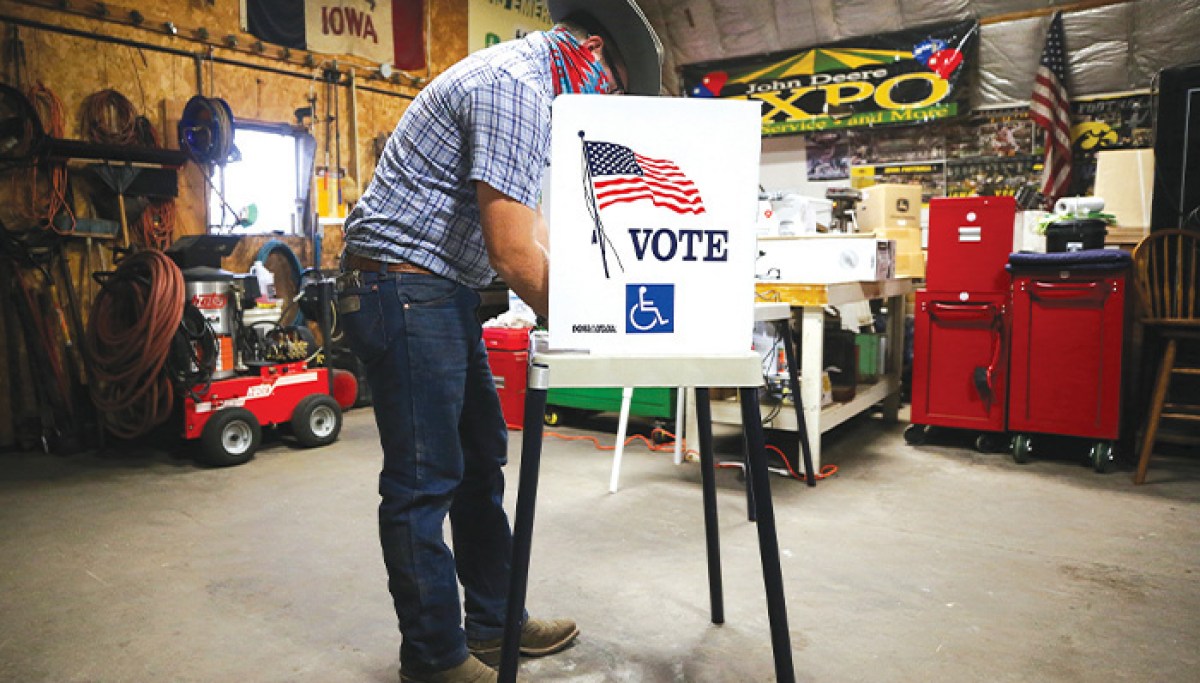
Sixty-five percent of registered voters in the new NPR/PBS News/Marist poll described voting as a duty, feeling that “they should vote in every election however they feel about the candidates and parties.”
asserted
they → register → candidates
Thirty-four percent said voting was a choice for them, feeling “free to vote or not to vote in an election depending on how they feel about the candidates and parties.”
asserted
they → say → candidates
In the NPR/PBS News/Marist poll, 75% of registered voters said they were confident that their “state and local government would run a fair and accurate election in November.”
asserted
government → register → November
Two-thirds of Republicans gave this response.
asserted
thirds → give → response
In the new NBC News poll, 72% of registered voters were confident their state could administer a fair election “where everyone who is eligible to vote has the opportunity to vote and the votes are counted accurately.”
uncertain
votes → register → opportunity
Minds made up?
asserted
Minds → make → ?
Voters make up their minds early.
asserted
Voters → make → minds
In 2022, 68% of voters told exit pollsters they made up their minds about the House vote before October, and another 19% said they did so in October.
asserted
they → tell → October
Just 6% made up their minds in the final days.
asserted
% → make → days
In the new mid-September Economist/YouGov poll, 73% of registered voters said their mind was made up about their House vote, 11% said they would consider voting for a different candidate, and 12% said they were still undecided.
asserted
they → register → candidate
Seventy-four percent of those in states with a Senate contest said their mind was made up, while 14% said they might change their minds.
uncertain
they → say → minds
Thirty-eight percent in the NPR/PBS News/Marist poll said they had been contacted by a campaign, political party, or civic organization encouraging them to vote.
asserted
they → say → them
Do voters like anyone?
asserted
voters → like → anyone
In the 2024 exit poll, only 2% of voters said they had a favorable opinion of both Donald Trump and Kamala Harris.
asserted
they → say → Trump
Of the remainder, 44% had a favorable opinion only of Trump and 44% one of Harris.
asserted
% → have → Harris
In 2016 once again, only 2% of voters had a favorable opinion of both Trump and Hillary Clinton.
asserted
% → have → Trump
Of the remainder, 41% had a favorable opinion only of her, 38% of him.
asserted
% → have → him
A look at the new polls shows no major national figure or party is viewed more positively than negatively.
asserted
figure → show → polls
In the new Economist/YouGov poll of registered voters, the picture was the same.
asserted
picture → register → voters
In the poll, Sen. Jon Ossoff (D-GA) was viewed slightly more favorably than unfavorably, but you couldn’t say he was a national figure yet.
asserted
he → view → poll
Fifty-one percent didn’t know who he was.
asserted
he → know → ?
When the primary season ended this year, the Pew Research Center reported that a record 74 House lawmakers were leaving the body, some to run for another office and others to leave entirely.
asserted
others → end → office
Were most sensing the sour mood about Congress and politics more generally?
asserted
most → sense → Congress
The NPR/PBS News/Marist poll found that 58% believed it was more important to vote for candidates with new ideas who will bring about change versus 38% who chose the response “candidates with experience who have a proven record.”
Public predictions:
asserted
who → find → record
Pew also reported recently that trading volume on Kalshi and Polymarket doubled between May and July, mostly driven by sports betting.
uncertain
volume → report → betting
In the new Economist/YouGov poll, 39% of registered voters said they thought the Democrats would have a majority in the Senate after the November elections and 35% the Republicans.
asserted
% → register → elections
Seventy-three percent of Democrats said their party would take control and 72% of Republicans said their party would.
asserted
party → say → Republicans
Forty-five percent said Democrats would control the House, 31% the Republicans.
asserted
% → say → House
Do we care?
asserted
we → care → ?
Eighty-seven percent in the NPR/PBS News/Marist poll said they cared a great deal or quite a bit about which party wins control of Congress in November’s elections.
asserted
party → say → elections
 The Aporia