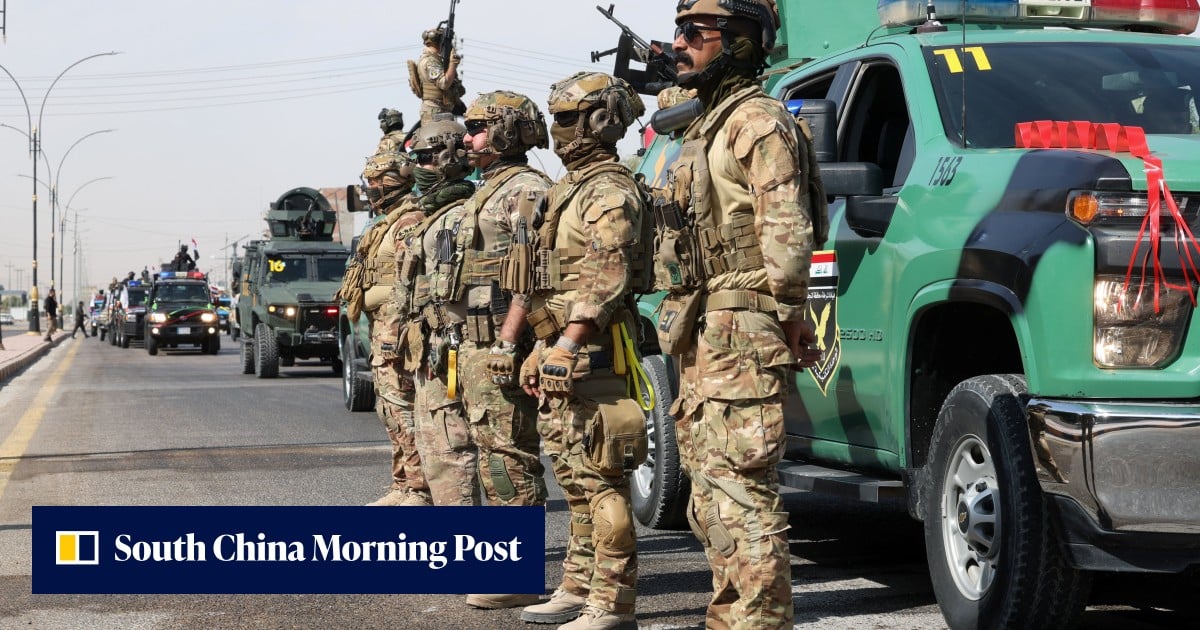
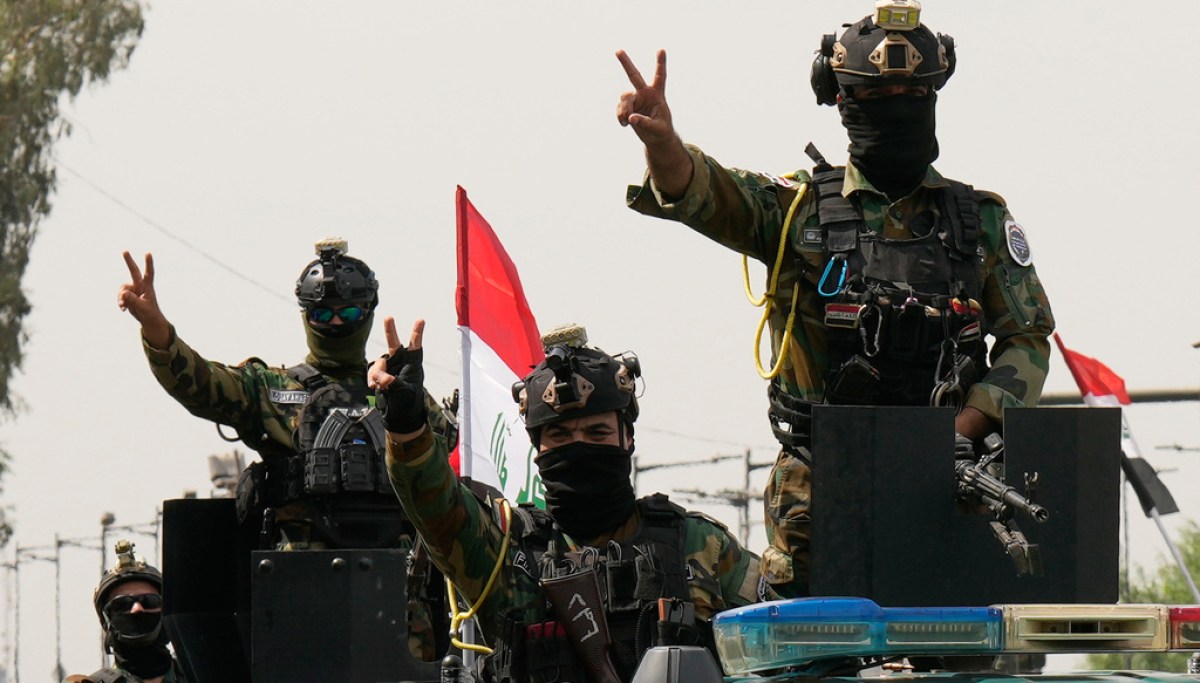
Photo via Letters from an American

September 30, 2026

Read the original at Letters from an American ↗
Cite

Richardson, H. C. (2026, October 1). September 30, 2026. Letters from an American. https://heathercoxrichardson.substack.com/p/september-30-2026

Dated when The Aporia collected the article, usually within hours of publication. Check the original for its exact date and byline.

Letters from an American · collected 2026-10-01 · by Heather Cox Richardson commentary

Quick Summary

Today marks the withdrawal of the last U.S. military forces from Erbil Air Base in northern Iraq after over two decades since the initial invasion in 2003. The pullout follows previous announcements and agreements between former President Joe Biden and Iraqi officials, with an estimated cost of $2.8 trillion for the operation and more than 4,500 U.S. military fatalities. Journalists Mustafa Salim and Alex Horton attribute this development to shifting regional dynamics that have seen Iran's influence grow following sanctions and internal unrest initially weakening its position but later reversing as a result of actions taken during the Trump presidency.
Written by AI on 2026-10-01, from this article's own text only (the story summary below draws on all the coverage).

AI analysis

Story summary

US forces are set to pull out from their last bases in Iraq by September 30, 2026, a departure celebrated as a victory by Iran and its allies who now have deep influence in the country where 4,500 Americans died during more than two decades of war. The withdrawal was agreed upon in 2024 under President Joe Biden and implemented by Donald Trump's administration despite ongoing conflict with Iran.

Some Iraqi security officials fear the pullout could revive Islamic State fighters, who maintain sleeper cells despite their self-proclaimed caliphate's defeat nearly a decade ago. Jasim al-Bahadli, an Iraqi security analyst specializing in armed Shi'ite groups aligned with Iran, predicts pro-Iranian militia groups will leverage this momentum to gain more influence over Iraq’s security and political decision-making.

Abu Mojtaba al-Yasiri, a commander in the Islamic Resistance in Iraq, described the US withdrawal as "a historic victory for Iraqi Islamic resistance groups and honourable Iraqis," marking what he sees as a crushing defeat for American ambitions in the region.

Written for “US Withdrawal From Iraq” on 2026-10-31, grounded in this article and the 33 other(s) covering the same event.

Story

📰 US Withdrawal From Iraq
Politics · 34 article(s) covering the same event. Compare every outlet's account →

Compared with similar articles

This article reads leans left and hedges 8% of its claims. Each row says how that neighbour differs.
The Hindu
⚖️ Leans left Hedges 1 of 32 claims Outlet record 60/100
The Straits Times
Hedges 0 of 7 claims Outlet record 66/100
“Article A describes Italy completing its troop withdrawal from Iraq on September 29, while Article B focuses on the U.S. military's withdrawal from Erbil Air Base in northern Iraq on September 30.”
The Independent
Hedges 2 of 18 claims Outlet record 59/100
The Hindu
⚖️ Leans left Hedges 5 of 36 claims Outlet record 60/100
“Article A describes President Bush's announcement of the end of major combat operations in Iraq in 2003, while Article B discusses the U.S. withdrawal of forces from Iraq in 2026.”
New York Post
Hedges 1 of 21 claims Outlet record 66/100
South China Morning Post
Hedges 1 of 3 claims Outlet record 64/100
Global News
Hedges 3 of 29 claims Outlet record 63/100
Washington Examiner
Hedges 1 of 36 claims Outlet record 70/100
Al Jazeera
Hedges 3 of 23 claims Outlet record 60/100
The Independent
Hedges 3 of 31 claims Outlet record 59/100
How this article was measured signals, leaning charts, publisher record, byline, topics and claims

Signals How these are calculated →

Claims extracted
40
sentences that state something as happening or true
Uncertain
8%
3 of 40 hedged ("reportedly", "may", "according to")
Leaning
Leans left
expected in commentary, which argues a position · beta estimate
Publisher signals
not measured
these signals count newsroom corrections; Commentary has none to count
Outlets on this story
34
Politics
Same framing elsewhere
1
articles that frame the event the way this one does
Analyzed 2026-10-01 · how these are computed

How this is being covered How these are calculated →

Article leaning vs. publisher reliability
Source leaning vs. consistency

Publisher

Letters from an American · 119 article(s) · 0 correction(s) detected
No corrections detected for this publisher. That may mean careful reporting, or simply that nothing has been checked.

Who wrote this

Heather Cox Richardson
104 article(s) here · 1 carrying a prediction
🔮 Those voters might not be highly engaged in politics in general, but they cannot miss the country’s rising prices, especially the cost of gasoline and diesel—and the food delivered by vehicles that use them—resulting from Trump’s war on Iran.
2026-10-31 · assertive framing · October 30, 2026
🔮 U.S. officials told the reporters that the government will likely grant them permanent residency later.
2026-10-30 · assertive framing · October 29, 2026
🔮 After losing the election to become Brazil’s president on Sunday, he suggested he would contest the results of the election, and Brazilian authorities asked him to give up his Brazilian passport because he is under investigation for laundering more than $1 billion through an online gambling scheme, and for financial irregularities involving a bank regulators shut down for fraud.
2026-10-29 · assertive framing · October 28, 2026
🔮 Three weeks ago, many observers thought Bolsonaro would win the election.
2026-10-28 · assertive framing · October 27, 2026
🔮 Obama told attendees that El-Sayed is “fighting for change, real change, that will get money out of politics and put money in your pocket” and would “finish the job we started with the Affordable Care Act and guarantee quality, affordable healthcare to every single American.”
2026-10-27 · assertive framing · October 26, 2026
🔮 He promised the new tariffs he intended to impose would create an economic miracle.
2026-10-26 · assertive framing · October 25, 2026
🔮 Consumers rushed to buy them, along with ready-made clothing, beauty products, and cars, all of which the new advertising industry, which grew out of the government propaganda campaigns of World War I, promised would bring them glamor, sophistication, romance, and power.
2026-10-25 · assertive framing · October 24, 2026
🔮 He continued: “If Trump wanted to help Ukraine militarily and with starshield he could.
2026-10-23 · assertive framing · October 22, 2026
🔮 Two days before congressionally mandated sanctions on Russia were set to take effect, Trump said he would waive them.
2026-10-23 · assertive framing · Politics Chat, October 20, 2026
🔮 I continue to believe that he is holding photos, videos, whatever it might be.”
2026-10-22 · assertive framing · October 21, 2026
Also by Heather Cox Richardson
October 30, 2026
2026-10-31 · Letters from an American
October 29, 2026
2026-10-30 · Letters from an American
October 28, 2026
2026-10-29 · Letters from an American
October 27, 2026
2026-10-28 · Letters from an American
Nothing else under this byline is closely related to this article, so these are simply their most recent.
All 104 articles by Heather Cox Richardson →

Topics

Iran Iraq Iraqi Syria U.S.

Subjects

Iraq GPE · 11× U.S. GPE · 9× Iraqi NORP · 5× Iran GPE · 4× Saddam Hussein PERSON · 4× America GPE · 3× Islamic NORP · 2× Syria GPE · 2× the Soviet Union GPE · 2× the United States GPE · 2×

Narrative

In 2023 the Iraqi government called for complete U.S. withdrawal, and former President Joe Biden and former Iraqi Prime Minister Mohammed Shia al-Sudani agreed to a withdrawal plan in 2024, but Iraq allowed a small contingent of advisors to remain after that deadline when the collapse of Bashar Al-Assad’s regime in Syria led to concerns that the confusion in Syria would allow militant Islamic groups to regain a foothold there.
framing: assertive · carried by 1 article(s) · first seen 2026-10-01
🔮 In 2023 the Iraqi government called for complete U.S. withdrawal, and former President Joe Biden and former Iraqi Prime Minister Mohammed Shia al-Sudani agreed to a withdrawal plan in 2024, but Iraq allowed a small contingent of advisors to remain after that deadline when the collapse of Bashar Al-Assad’s regime in Syria led to concerns that the confusion in Syria would allow militant Islamic groups to regain a foothold there.
2026-10-01 · Letters from an American
September 30, 2026 · assertive framing

Claims (40 extracted, 3 hedged)

A Washington Post headline today read: “U.S. withdraws forces in Iraq as balance of power shifts to Iran.” asserted
balance → read → Iran
Journalists Mustafa Salim and Alex Horton explained: After more than two decades, the deaths of more than 200,000 Iraqi civilians and more than 4,500 U.S. troops, the wounding of more than 30,000 U.S. military personnel, and the cost of more than $2.8 trillion, the last of the U.S. military forces in Iraq today pulled out of Erbil Air Base in northern Iraq. asserted
last → explain → Iraq
In December 2021 the military announced it was ending U.S. combat in Iraq, leaving about 2,500 troops to advise and assist Iraqi forces. asserted
it → announce → forces
In 2023 the Iraqi government called for complete U.S. withdrawal, and former President Joe Biden and former Iraqi Prime Minister Mohammed Shia al-Sudani agreed to a withdrawal plan in 2024, but Iraq allowed a small contingent of advisors to remain after that deadline when the collapse of Bashar Al-Assad’s regime in Syria led to concerns that the confusion in Syria would allow militant Islamic groups to regain a foothold there. asserted
groups → call → foothold
At the time Biden agreed to withdraw from Iraq, Iran appeared to be on the ropes, with its regime isolated from neighboring countries and laboring under sanctions and increasing public unrest. asserted
regime → agree → unrest
Now, as Salim and Horton note, Trump’s impulsive war on Iran has strengthened Iran’s hand in the region. asserted
war → note → region
The U.S. invaded Iraq in 2003, in the wake of the 9/11 attacks on the United States two years before, although Iraq was not involved in that attack. asserted
Iraq → invade → attack
After the fall of the Soviet Union in 1991, a group of foreign policy hawks known as “neocons” were frustrated that Democratic President Bill Clinton was not pushing American ideology overseas as hard as they thought he should. asserted
he → know → ideology
In 1997, political commentator William Kristol brought together Dick Cheney, Donald Rumsfeld, and other neocons to insist that the United States should significantly increase defense spending and lead the world. asserted
States → bring → world
Believing that Iraq’s Saddam Hussein was destabilizing the Middle East, they saw removing him from power as key to their “Project for the New American Century.” asserted
they → believe → Century
Iraq had allied with the Soviet Union during the Cold War, and neocons believed the U.S. must “challenge regimes hostile to our interests and values” and “promote the cause of political and economic freedom abroad.” asserted
U.S. → ally → freedom
Saddam was out of reach until September 11, 2001, when neocons saw al-Qaeda’s attack on the U.S. as an opportunity to “hit” Saddam Hussein, although he had not been involved in the attack. asserted
he → see → attack
The terrorists—fifteen from Saudi Arabia, two from the United Arab Emirates, one from Lebanon, and one from Egypt—were operating out of Afghanistan, where the ruling extremist Islamic government, the Taliban, permitted al-Qaeda to have a foothold. asserted
government → operate → foothold
Although Saddam was not affiliated with the 9/11 attackers, officials in the George W. Bush administration pushed so hard on the idea that the terrorists were affiliated with Iraq that many Americans—especially those who watched the Fox News Channel, which pushed the connection—came to believe, incorrectly, that the 9/11 terrorists either were Iraqi or were working with Saddam Hussein. asserted
terrorists → affiliate → Hussein
Bush launched attacks on the Taliban government, successfully overthrowing it before the end of 2001. asserted
Bush → launch → 2001
And then the administration undertook to reorder the Middle East in America’s image. asserted
administration → undertake → image
In 2002 it announced the Bush Doctrine, arguing that the new conditions of terrorism required the government to act preemptively to forestall hostile acts rather than wait for an attack. asserted
conditions → announce → attack
It embraced the idea that there was “right and wrong” in foreign affairs and demanded that America wage “a war of ideas” by spreading pro-American economic and cultural policies. asserted
America → embrace → policies
It warned that there were few greater threats to America than a terrorist attack with weapons of mass destruction (WMDs), meaning nuclear, chemical, or biological weapons. asserted
It → warn → weapons
To convince recalcitrant foreign policy realists that Saddam Hussein needed to be removed from power, Bush administration officials warned that the dictator was amassing WMDs, including nuclear devices. asserted
dictator → convince → devices
In a television interview, National Security Advisor Condoleezza Rice warned of mushroom clouds rising over American cities and insisted that Saddam was working to obtain a nuclear weapon. asserted
Saddam → warn → weapon
On February 5, 2003, Secretary of State Colin Powell, a former chairman of the Joint Chiefs of Staff, spoke passionately before the United Nations, providing what he insisted was evidence that Saddam had chemical WMDs and had obtained the resources to create nuclear weapons. asserted
Saddam → speak → weapons
He hinted that the Iraqi leader had worked with al-Qaeda in 2001 or that he might in the future. uncertain
he → hint → future
Powell was well known and trusted; if he said Iraq was deadly dangerous, people thought it must be true. asserted
it → know → ?
It later turned out that Powell had not personally vetted the “evidence” he presented and that it was almost entirely either discredited or made up of rumor. asserted
it → turn → rumor
But his speech did the trick. asserted
speech → do → trick
Enough countries to call it a “coalition of the willing”—although the only major power that participated was the United Kingdom—backed an invasion of Iraq. asserted
that → call → Iraq
On March 20, 2003, American troops invaded Iraq with the intention of overthrowing Saddam Hussein’s government. asserted
troops → invade → government
The operation would be a “cakewalk,” the administration thought; desperate Iraqis who hated their leader would welcome coalition forces with open arms. asserted
who → think → arms
Like cowboy heroes—and often portrayed as cowboys—American soldiers would bring democracy and capitalism to the benighted Iraqis. asserted
soldiers → portray → Iraqis
Saddam’s forces crumbled in little over a month. asserted
forces → crumble → month
By May the United States had set up a transitional government in Iraq overseen by former ambassador and State Department official L. Paul Bremer. uncertain
States → set → Bremer
On May 1, 2003, Bush landed in a fixed-wing aircraft on the carrier USS Abraham Lincoln. uncertain
Bush → land → carrier
Wearing a flight suit, he posed for photographs with the vessel’s crew, which had just returned from the Persian Gulf. asserted
which → wear → Gulf
Bush then gave a speech announcing the end of major combat operations in Iraq. asserted
Bush → give → Iraq
Festooning the aircraft carrier was a giant banner emblazoned “Mission Accomplished. asserted
banner → festoon → Mission
Today on social media, Trump took credit to himself for ending the U.S. engagement in Iraq—although he confused the names of two different Iraqi operations—complaining that it was “very bad decision-making that got us involved in this quagmire in the first place.” And yet the United States is entering its eighth month of a war on Iran that Trump apparently began with the same cowboy mentality Bush carried into the war in Iraq. asserted
Bush → take → Iraq
Today Defense Secretary Pete Hegseth delivered a “State of the Force” address at Marine Corps Base Quantico. asserted
Hegseth → deliver → Quantico
He announced he had transformed the military by enforcing the idea of “[n]o fatties, no trannies, no beardos, no weirdos, no wimps, no radicals. asserted
he → announce → fatties
“The ideological clowns are out,” he said. asserted
he → say → ?

💬Give feedback
🕘History 🎫Support