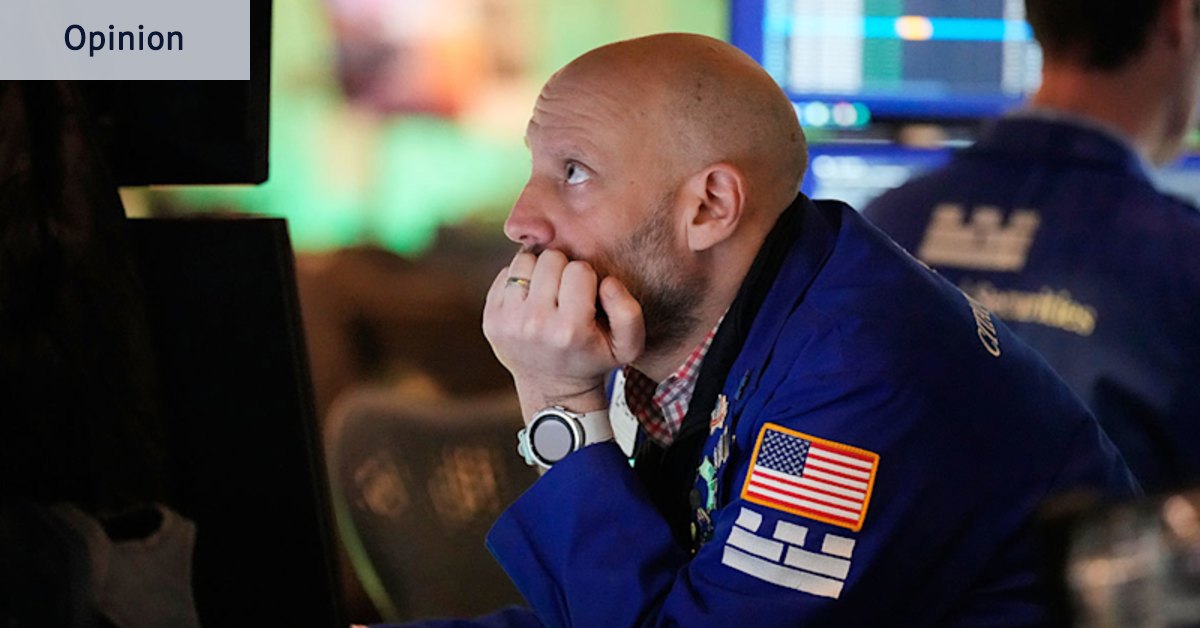
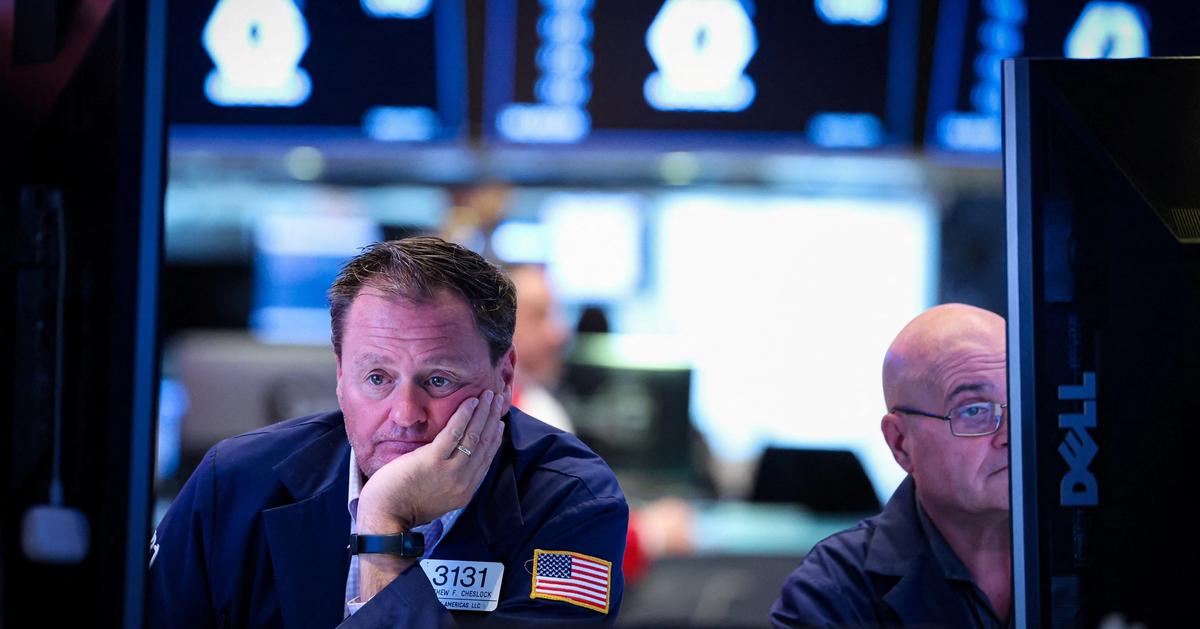
Photo via The Guardian

Global bond sell-off intensifies, as UK long-term borrowing costs pass 6%

Read the original at The Guardian ↗
Cite

Wearden, G., & Inman, P. (2026, October 1). Global bond sell-off intensifies, as UK long-term borrowing costs pass 6%. The Guardian. https://www.theguardian.com/business/2026/oct/01/global-bond-sell-off-uk-long-term-borrowing-costs-us-bond-yield

Dated when The Aporia collected the article, usually within hours of publication. Check the original for its exact date and byline.

The Guardian · collected 2026-10-01 · by Graeme Wearden, Phillip Inman

Quick Summary

Global bond markets are experiencing increased turmoil due to fears over unsustainable US deficits and rising oil costs leading to potential inflation. In this context, UK long-term borrowing rates reached 6% for the first time since 1998, affecting stock markets and pressuring Chancellor John Healey ahead of an upcoming budget. The sell-off is driven by concerns about central bank rate hikes in response to inflation worries, impacting not only UK bonds but also those in the US and Japan.
Written by AI on 2026-10-01, from this article's own text only (the story summary below draws on all the coverage).

AI analysis

Story summary

UK's long-term borrowing costs reached a 28-year high of 6% on Thursday, surpassing the level seen during the eurozone crisis, amid global bond market turmoil. This has significantly increased government borrowing expenses and put pressure on Chancellor John Healey ahead of the budget announcement later this month. The yield on five- and ten-year UK bonds also rose, with the FTSE 100 index falling by 2% in early trading. Similar sell-offs were seen across Europe, affecting Germany’s Dax and France’s CAC 40 indices as well. Rising borrowing costs will limit the government's flexibility to fund essential spending areas like social care and defense amid heightened inflation fears driven by persistently high oil prices.

Written for “UK Bond Market Rout” on 2026-10-31, grounded in this article and the 3 other(s) covering the same event.

Story

📰 UK Bond Market Rout
Economy/Business · 4 article(s) covering the same event. Compare every outlet's account →

Compared with similar articles

This article reads unscored and hedges 5% of its claims. Each row says how that neighbour differs.
Daily Mail
Hedges 3 of 26 claims Outlet record 68/100
Evening Standard
⚖️ Leans strongly right Hedges 2 of 17 claims Outlet record 65/100
Daily Mail
Hedges 2 of 17 claims Outlet record 68/100
“The articles describe different aspects of a broader trend in bond markets, but refer to distinct yield levels for different maturity bonds on separate days.”
Semafor
Hedges 0 of 4 claims Outlet record 60/100
“While both articles discuss global bond market turmoil, they focus on different aspects and regions.”
ABC News (AU)
Hedges 0 of 43 claims Outlet record 68/100
“While both articles discuss bond market sell-offs, they refer to different time periods and specific details (UK long-term borrowing costs passing 6% in Article B).”
The Sydney Morning Herald
Hedges 5 of 35 claims Outlet record 61/100
“The articles describe different aspects of a broader trend in global bond markets, but they do not focus on the exact same incident at the same time and place.”
Semafor
Hedges 1 of 4 claims Outlet record 60/100
“The articles describe different times and contexts of bond market reactions, with Article A referring to an earlier period and focusing on US-Iran diplomacy while Article B focuses on UK borrowing costs reaching a high due to fears over persistent oil prices and the US deficit.”
The Bulwark
Hedges 0 of 18 claims
“Article A discusses the intensification of global bond sell-off due to US deficit fears and UK borrowing costs, while Article B focuses on oil risk premiums and their impact on both oil prices and mortgage rates.”
How this article was measured signals, leaning charts, publisher record, byline, topics and claims

Signals How these are calculated →

Claims extracted
19
sentences that state something as happening or true
Uncertain
5%
1 of 19 hedged ("reportedly", "may", "according to")
Leaning
not political
takes no side on a contested political question
Publisher signals
66/100
The Guardian's corrections and hedging, across everything collected from it. Not a measure of accuracy.
Outlets on this story
4
Economy/Business
Same framing elsewhere
1
articles that frame the event the way this one does
Analyzed 2026-10-01 · how these are computed

How this is being covered How these are calculated →

Article leaning vs. publisher reliability
Source leaning vs. consistency

Publisher

The Guardian · 1846 article(s) · 6 correction(s) detected
Running correction rate · 6 correction(s)

Who wrote this

Graeme Wearden
7 article(s) here · 1 carrying a prediction
🔮 The European Central Bank announced on Thursday morning that Lagarde would step down as its president on 7 February 2027; her term was scheduled to run until the end of October next year.
🔮 Financial markets are wrong to predict the Bank of England will raise UK interest rates by a full percentage point or more by next summer, City economists believe.
🔮 These models improved on John Maynard Keynes’s stabilisation models, which struggled to handle the impact of the oil shock in the 1970s, when countries suffered high inflation, weak growth and high unemployment at the same time.
🔮 The threat of a renewed round of inflation from the persistently high cost of oil has spooked investors, who believe central banks will be forced to raise rates in the coming months to prevent price increases from becoming embedded.
🔮 Powered by the AI revolution, the US stock market had rallied to a fresh all-time high, as investors bet the multitrillion-dollar investment spree would overshadow the hit from the Iran war.
2026-09-20 · assertive framing · Are global stock markets heading for a crash?
🔮 State pension set to rise by 3.9% after wage growth data The UK state pension is set to rise by 3.9% next year, it appears, following today’s wage growth figures.
🔮 The Japanese yen has soared by more than 2% against the dollar amid speculation the Bank of Japan is set to raise interest rates.
Also by Graeme Wearden
Nothing else under this byline is closely related to this article, so these are simply their most recent.
All 7 articles by Graeme Wearden →
Phillip Inman
6 article(s) here · 1 carrying a prediction
🔮 The Resolution Foundation said on Thursday that measures to ease household gas and electricity costs would still leave energy bills higher this year than during the last energy shock.
🔮 John Healey will present his first budget on Wednesday, which will set the tone for Andy Burnham’s premiership.
🔮 The threat of a renewed round of inflation from the persistently high cost of oil has spooked investors, who believe central banks will be forced to raise rates in the coming months to prevent price increases from becoming embedded.
🔮 The UK is losing out on annual exports to the EU that could be worth as much as £6.5bn without a deal with Brussels that allows manufacturers to jettison duplicate product testing.
🔮 Attacks on the government’s independent economic forecaster from left and right of the political spectrum are akin to “shooting the messenger”, according to an influential group of MPs.
🔮 The chancellor could announce tax rises in his first budget to offset the rising cost of government borrowing, which has soared in response to the conflict in the Middle East.
Also by Phillip Inman
Nothing else under this byline is closely related to this article, so these are simply their most recent.
All 6 articles by Phillip Inman →

Topics

Britain France Germany London Saxo UK

Subjects

Britain GPE · 1× France GPE · 1× Germany GPE · 1× Japan PERSON · 1× John Healey PERSON · 1× London GPE · 1× Neil Wilson PERSON · 1× Saxo UK ORG · 1× Treasury ORG · 1× the US Federal Reserve ORG · 1×

Narrative

The threat of a renewed round of inflation from the persistently high cost of oil has spooked investors, who believe central banks will be forced to raise rates in the coming months to prevent price increases from becoming embedded.
framing: assertive · carried by 1 article(s) · first seen 2026-10-01
🔮 The threat of a renewed round of inflation from the persistently high cost of oil has spooked investors, who believe central banks will be forced to raise rates in the coming months to prevent price increases from becoming embedded.
2026-10-01 · The Guardian
Global bond sell-off intensifies, as UK long-term borrowing costs pass 6% · assertive framing

Claims (19 extracted, 1 hedged)

The turmoil in global bond markets has intensified amid fears the US deficit is reaching unsustainable levels, helping drive UK long-term borrowing costs to a 28-year high. asserted
deficit → intensify → high
The threat of a renewed round of inflation from the persistently high cost of oil has spooked investors, who believe central banks will be forced to raise rates in the coming months to prevent price increases from becoming embedded. asserted
banks → renew → increases
In a morning of hectic trading on Thursday, the yield, which is a proxy for the interest rate, hit 6% on Britain’s 30-year bonds for the first time since 1998. asserted
which → hit → 1998
The yield on five- and 10-year UK bonds also rose, driving up the government’s borrowing costs and adding to the pressure on the chancellor, John Healey, before the budget later this month. asserted
yield → rise → budget
Stock market investors also sold heavily, knocking 1.7% off the London stock market in early trading. asserted
investors → sell → trading
Bourses in Europe were also hit, with Germany’s Dax and France’s CAC 40 falling by 1.1%. asserted
Dax → hit → %
“There is carnage in the bond market which is hitting stocks hard,” warned Neil Wilson, Saxo UK Investor Strategist. asserted
Wilson → be → stocks
“It looks like the relentless rout in the bond market is sending investors running for cover.” asserted
rout → look → cover
The bond sell-off around the world is being driven by fears of high inflation, as the Middle East conflict continues to restrict oil supplies from the region. asserted
conflict → drive → region
On Wednesday, US 10-year Treasury yields hit their highest level since 2002, while Japan’s 10-year yield rose towards the 30-year high set last month. asserted
yield → hit → high
US bonds weakened despite inflation data on Wednesday coming in lower than forecast, which was expected to calm investors’ nerves about the prospect of further increases in the cost of borrowing by the US Federal Reserve. asserted
which → weaken → Reserve
Traders remain anxious that the Federal Reserve will continue to raise interest rates to fight inflation, mainly in response to the strength of the economy and the prospect of workers bidding up their wages. asserted
workers → remain → wages
Mohit Kumar, an economist at Jefferies, said there was growing concern at the amount of debt being issued to fund government deficits, as well as inflation concerns. asserted
Kumar → say → deficits
“Inflation, deficit and issuance concerns continue to weigh on the bond market,” he said. asserted
he → continue → market
“There is also a buyers’ strike as investors do not want to step in till we get some form of stability. asserted
we → be → stability
Hedge funds have suffered in the latest round of sell-off and do not have the risk appetite to fade the move. asserted
funds → suffer → move
Real money, potentially has the risk appetite, but won’t step in till we get some stability.” asserted
we → have → stability
Axel Rudolph, the chief technical analyst at the investing and trading platform IG, said: “While the latest data has reduced expectations of an October Fed rate hike, investors remain wary that persistent inflation and higher oil prices could keep rates elevated for longer. uncertain
inflation → say → rates
“The dollar is benefiting from that caution, climbing to a three-month high, while the prospect of a December rate increase keeps pressure on bond markets.” asserted
prospect → benefit → markets

💬Give feedback
🕘History 🎫Support