SEPTEMBER emerged as a politically charged month.
asserted
SEPTEMBER → emerge → month
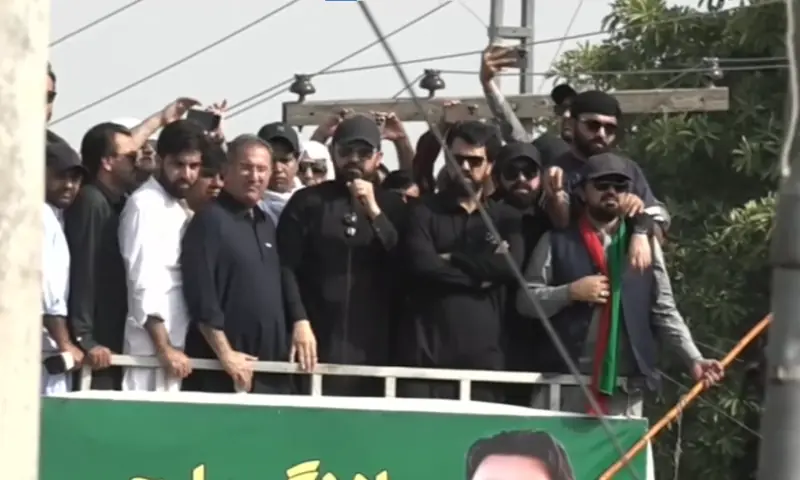
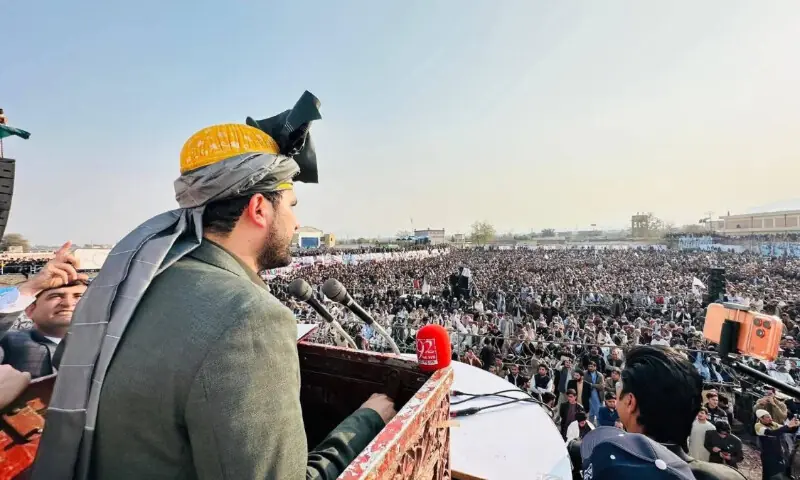
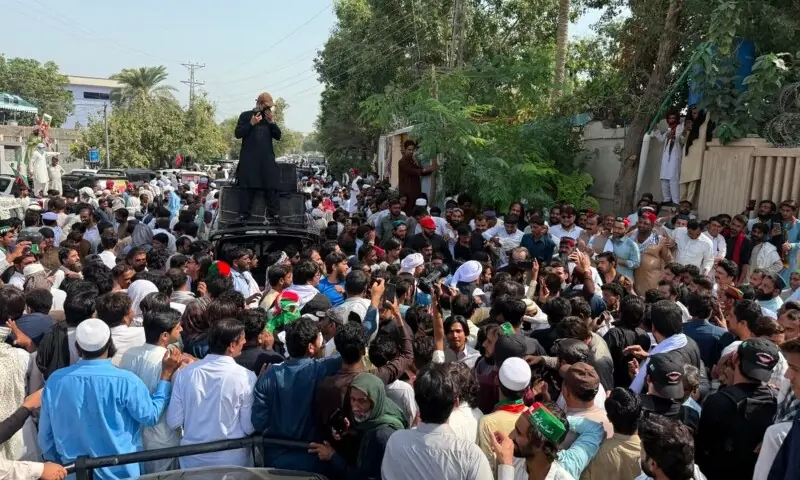
The PTI and Jamaat-i-Islami announced their plans for long marches on Islamabad.
asserted
PTI → announce → Islamabad
The simultaneous mobilisation by the two parties had raised concerns about potentially prolonged street protests and disruptions in the capital.
asserted
mobilisation → raise → capital
However, both parties postponed their marches (although the PTI has indicated it would begin its protest over the weekend), which temporarily eased the immediate concern of large-scale agitation.
asserted
which → postpone → agitation
But, despite the postponements, the episode has once again highlighted the recurring pattern of opposition parties resorting to street agitation.
asserted
parties → highlight → agitation
It has raised several questions regarding the rationale of this politics of agitation.
asserted
It → raise → agitation
Why do some political parties in Pakistan consistently resort to street agitation, road blockades, and prolonged sit-ins, while others continue to place their faith in parliamentary procedures and institutional mechanisms?
asserted
others → resort → procedures
What does this divergence reveal about the country’s political culture?
asserted
divergence → reveal → culture
These questions lie at the heart of understanding the recurring cycle of protests that has come to define much of Pakistan’s contemporary politics.
asserted
that → lie → politics
In Pakistan’s political culture, agitation has recently served as a potent instrument for opposition parties to convert street power into tangible political gains through the ballot box.
asserted
parties → serve → box
By orchestrating prolonged protests and sit-ins, parties have succeeded in mobilising their grassroots workers, reinvigorating cadre loyalty, and projecting an image of resistance against the status quo.
asserted
parties → orchestrate → quo
Excessive media coverage provides publicity that often elevates relatively smaller actors to the level of national relevance, while the narrative of standing up for the ‘common man’ against an unresponsive system helps cultivate a saviour-like persona.
asserted
narrative → provide → persona
This dynamic was most visibly demonstrated by the PTI, whose 2014 Islamabad dharna and 2016 ‘lockdown’ agitation not only kept the party in the headlines for months but also laid the organisational and perceptual groundwork for its dramatic electoral expansion in 2018.
asserted
dharna → demonstrate → 2018
Through this strategy, the PTI secured phenomenal electoral gains, from a modest 34 National Assembly seats in 2013 to 120 seats in 2018.
asserted
PTI → secure → 2018
Since 2012, the state’s response to political agitation has undergone a noticeable evolution.
asserted
response → undergo → evolution
The TLP registered itself as a political party in 2016 and after its long march on Islamabad in November 2017, it remarkably secured 2.2 million votes in the 2018 elections.
asserted
it → register → elections
Maulana Hidayatur Rehman’s sustained agitation in Gwadar transformed him from a marginal local political figure into a formidable voice of Gwadar, while Hafiz Naeemur Rehman’s high-visibility protests in Karachi have allowed the Jamaat-i-Islami to reclaim political space in urban Sindh.
asserted
Islami → transform → Sindh
It is precisely this proven formula of converting agitation into both visibility and voter sympathy that appears to have encouraged the current Jamaat chief to attempt replicating the strategy on a national scale.
asserted
that → prove → scale
At its core, however, the recurring resort to agitation also reflects a deep lack of trust in the government, legitimacy of the electoral system, and the taxation system, compounded by the widespread perception of corruption.
asserted
resort → recur → corruption
When citizens believe that taxes are routinely misappropriated rather than spent on public welfare, protests become the default language of political expression, as institutional channels are viewed as ineffective or compromised.
asserted
channels → believe → expression
However, this strategy of political agitation also carries significant socioeconomic costs.
asserted
strategy → carry → costs
Prolonged protests and road blockades not only disrupt daily economic activities, they also impose heavy financial burdens on businesses, trade, and ordinary citizens.
asserted
they → disrupt → businesses
The PTI’s 2014 Islamabad sit-ins, which stretched for 126 days, and the subsequent waves of agitation in later years, created extended periods of uncertainty, including around 152 days of political and economic instability within a span of two years.
asserted
which → stretch → years
As per a recent statement by the finance minister, every single day of protest may inflict an economic loss of around Rs120 billion on Pakistan’s economy.
uncertain
day → inflict → economy
When this figure is applied to the 152 days of protests witnessed over the past decade, the cumulative financial damage is staggering and exposes the severe economic cost of sustained political agitation.
asserted
damage → apply → agitation
These disruptions led to substantial losses in the trade, transport, and retail sectors, while simultaneously damaging market sentiment and eroding investor confidence, as prolonged street unrest signals political instability and policy unpredictability.
asserted
unrest → lead → instability
Since 2012, the state’s response to political agitation has undergone a noticeable evolution.
asserted
response → undergo → evolution
In the earlier phase, the government largely avoided direct confrontation.
asserted
government → avoid → confrontation
Instead, it opted for dialogue and negotiation.
asserted
it → opt → dialogue
Federal ministers were frequently nominated by the prime minister of the time to engage with protest leaders, as seen during Tahirul Qadri’s 2012-13 sit-ins in Islamabad, the PTI’s prolonged 2014 dharna, and the TLP’s 2017 long march.
asserted
ministers → nominate → Islamabad
These episodes reflected the government’s preference for political management over force.
asserted
episodes → reflect → force
From 2012 to 2017, the state apparatus largely attempted to defuse tensions through concessions or mediated settlements rather than immediate crackdowns.
asserted
apparatus → attempt → crackdowns
Over time, however, this approach has shifted towards greater repression.
asserted
approach → shift → repression
Successive governments have increasingly relied on heavy-handed tactics, including the use of force, communication blackout, mass arrests, and restrictions on movement to disperse protests.
asserted
governments → rely → protests
While this strategy has, to some extent, discouraged repeated large-scale national-level agitations by raising the cost of mobilisation, it has simultaneously deepened public resentment towards state institutions.
asserted
it → discourage → institutions
The perception of an increasingly authoritarian response has further eroded public trust in the system, and reinforced the very sense of institutional alienation that often fuels street protests in the first place.
asserted
that → erode → place
Although both the Jamaat and PTI postponed their long marches to Islamabad, the underlying tension between the opposition’s inclination towards street agitation and the government’s readiness to suppress such mobilisations remains.
asserted
tension → postpone → mobilisations
This recurring pattern continues to raise important questions: Can Pakistan continue to afford the repeated economic and institutional costs of agitation and repression?
asserted
Pakistan → recur → agitation
Or will the state and political actors eventually recognise the need to strengthen formal institutions such as the judiciary, parliament, and the standing committees of the National Assembly and Senate so that grievances can be resolved through dialogue and established democratic mechanisms rather than through the streets?
asserted
grievances → recognise → streets
The views expressed are his own.
asserted
views → express → ?
 The Aporia