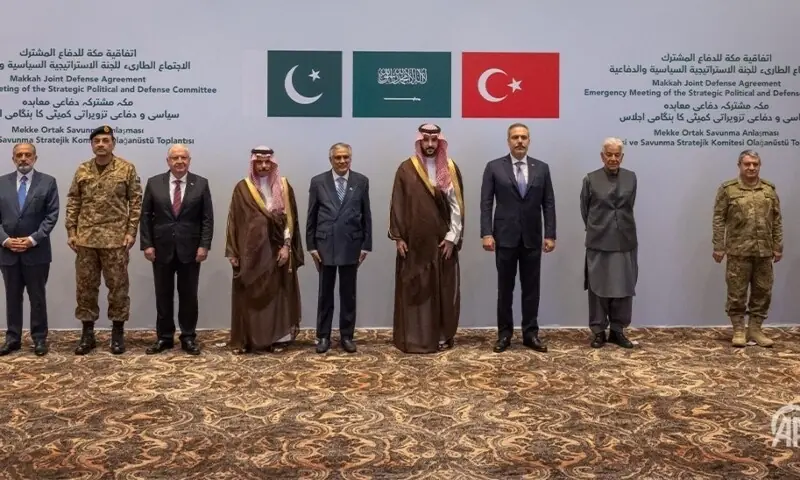
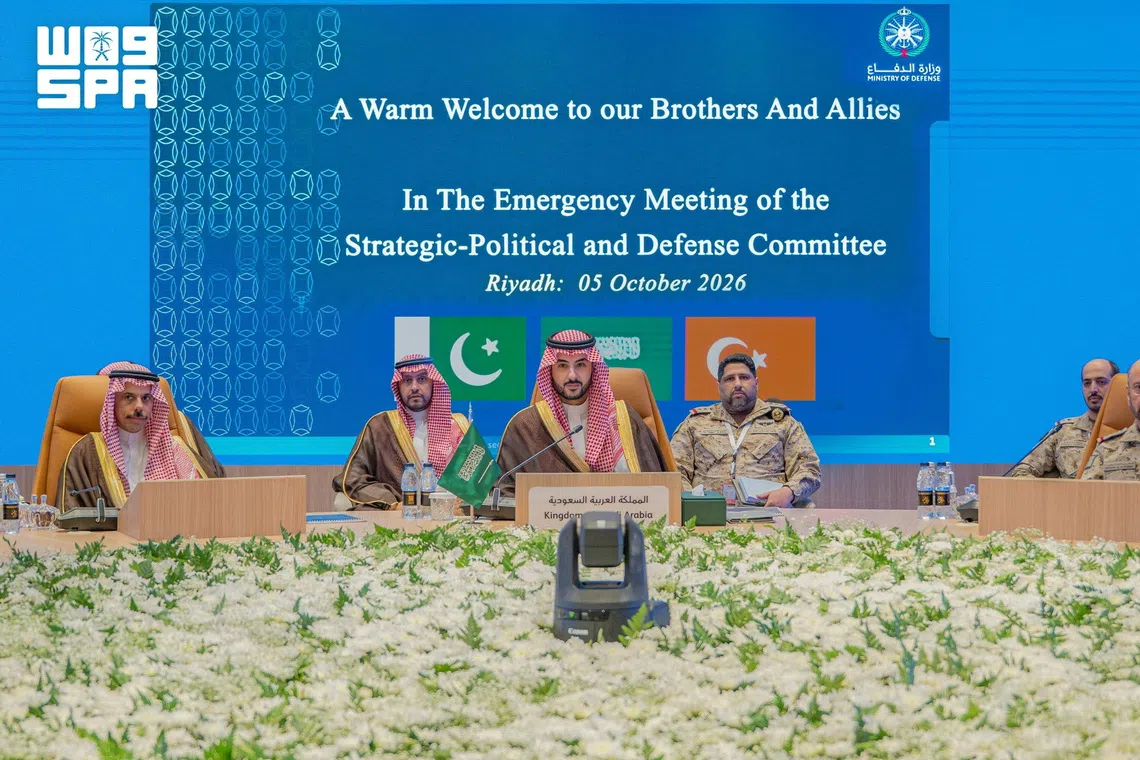
ON Oct 5, in an emergency meeting, the member states of the Makkah Joint Defence Agreement invoked the joint defence clause.
asserted
states → invoke → clause
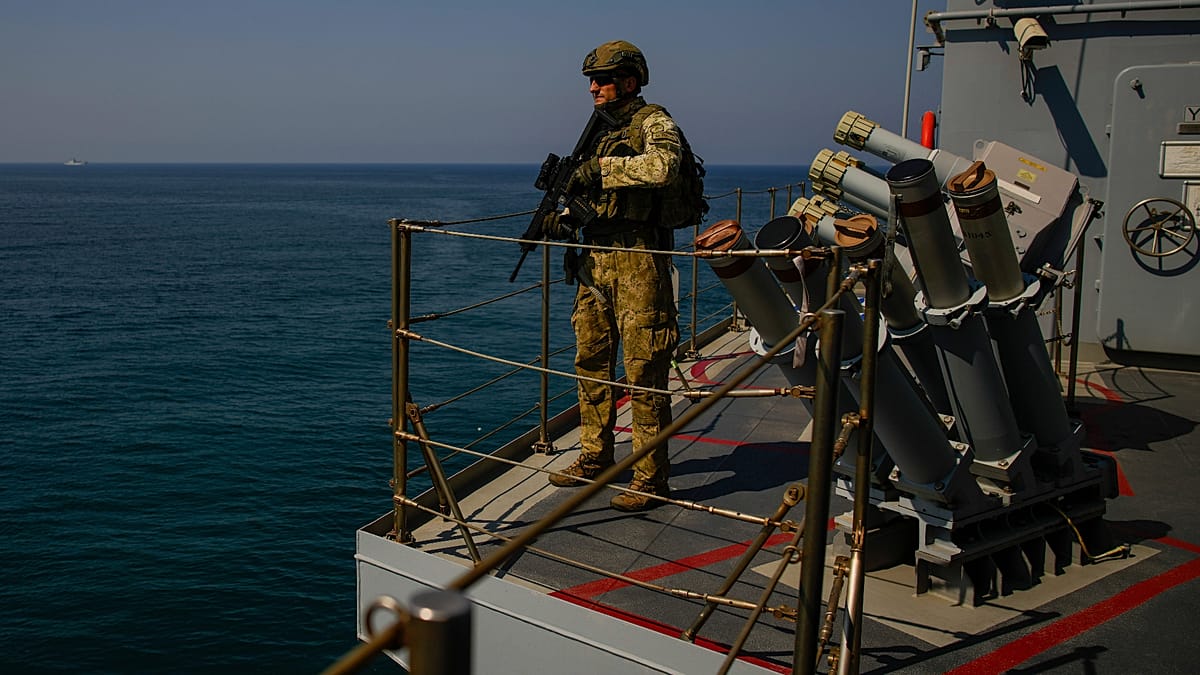
Now, Islamabad and Ankara can actively move towards rapid force deployment to protect Saudi Arabia’s territorial integrity and sovereignty.
asserted
Islamabad → move → integrity
The decision to operationalise the collective defence clause in less than two months of signing the MJDA suggests that Islamabad might remain embroiled in several layers of Middle Eastern conflicts in future under these security commitments.
uncertain
Islamabad → operationalise → commitments
This is a classic Pakistan-Yemen moment, which the previous PML-N government avoided in 2015.
asserted
government → avoid → 2015
Saudi Arabia officially asked Pakistan in 2015 to join its coalition against Yemen’s Houthis.
asserted
Arabia → ask → Houthis
However, Pakistan chose to remain neutral.
asserted
Pakistan → choose → ?
More than a decade after Pakistan took one of its toughest foreign policy decisions, the Yemen moment has resurfaced.
asserted
moment → take → decisions
This time, however, Pakistan has made security commitments to Saudi Arabia under the MJDA in 2026 and the Strategic Mutual Defence Agreement signed last year.
asserted
Pakistan → make → 2026
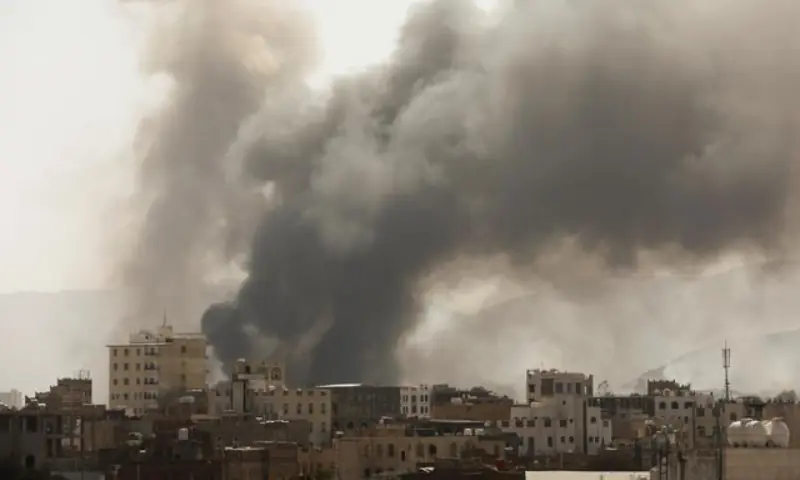
Yemen is one of the most complex cases of civil unrest and conflict, illustrating how external actors can complicate regional and domestic conflict dynamics.
asserted
actors → illustrate → dynamics
Following a Saudi-led coalition’s seven-year intervention from 2015 to 2022, the UN brokered a truce.
asserted
UN → follow → truce
However, a final peace agreement remains pending.
asserted
agreement → pende → ?
Consequently, until a formal Saudi-Houthi accord is finalised, Pakistan alongside Ankara may face prolonged military deployments lasting months or even years to bolster Saudi defence forces within their territory.
uncertain
Pakistan → finalise → territory
Despite these operational challenges, Pakistan must fulfil its security commitments to Saudi Arabia.
asserted
Pakistan → fulfil → Arabia
Having formally elevated its bilateral arrangements into the binding, Nato-like collective security framework of the MJDA, Islamabad cannot afford to hesitate when the pact is invoked.
asserted
pact → elevate → MJDA
Therefore, Pakistan must fulfil its security obligations wholeheartedly to safeguard its strategic credibility.
asserted
Pakistan → fulfil → credibility
Furthermore, the economic dimension of this relationship underpins Pakistan’s very survival.
asserted
dimension → underpin → survival
Saudi Arabia has historically stood as Islamabad’s premier economic anchor during its darkest balance-of-payments and liquidity crises.
asserted
Arabia → stand → crises
To survive a perilous geopolitical tightrope, Pakistan must immediately execute a sophisticated, active, and dual-front diplomatic strategy.
asserted
Pakistan → survive → sophisticated
While Islamabad must deliver on its collective defence commitment to Saudi Arabia, it cannot afford a catastrophic fallout with its western neighbour, Iran.
asserted
it → deliver → neighbour
Pakistan shares a volatile, 900-kilometre border with Iran, a frontier already plagued by cross-border militancy and fragile security dynamics.
asserted
Pakistan → share → militancy
Direct military entanglement with the Iranian ‘Axis of Resistance’, or an operational misstep that Tehran perceives as hostile, would trigger an asymmetric blowback along the Balochistan border, destabilise Pakistan’s internal security, and ruin vital regional trade prospects.
asserted
Tehran → perceive → prospects
To survive this perilous geopolitical tightrope, Pakistan must immediately execute a sophisticated, active, and dual-front diplomatic strategy.
asserted
Pakistan → survive → strategy
The first pillar of this strategy requires active diplomatic engagement with Iran to negotiate a comprehensive, long-term peace treaty between Riyadh and Tehran.
asserted
pillar → require → Riyadh
By signing or even negotiating a peace treaty between the two capitals, Islamabad will likely be able to reduce regional tensions and minimise concerns of direct military confrontation under the MJDA with Iran.
asserted
Islamabad → sign → Iran
Islamabad is uniquely positioned for this role.
asserted
Islamabad → position → role
Recently, Islamabad garnered significant diplomatic goodwill by acting as a trusted backchannel and mediator between the US and Iran.
asserted
Islamabad → garner → US
Islamabad’s mediatory role brought the US and Iran directly to the negotiating table, which culminated in the Islamabad MoU.
asserted
which → bring → MoU.
However, given the immense scale of the current regional mistrust, hostilities, and crisis, Pakistan cannot walk this path alone.
asserted
Pakistan → give → path
To maximise the probability of success, Islamabad must integrate China into a co-mediatory process.
asserted
Islamabad → maximise → process
This joint Beijing-Islamabad peace initiative can offer the perfect synergy of regional solutions for regional tensions.
asserted
initiative → offer → tensions
China has been viewed as a factor of stability in South Asia and the Middle East.
asserted
China → view → Asia
While Pakistan possesses deep, institutionalised defence ties with Riyadh, and a shared diplomatic vocabulary with Tehran, China enjoys immense economic influence over both nations through its Belt and Road Initiative, and comprehensive strategic partnership agreement with Iran.
asserted
China → possess → Iran
Beijing has already demonstrated its diplomatic capability by successfully brokering the historic Saudi-Iran normalisation pact in 2023.
asserted
Beijing → demonstrate → 2023
By combining Islamabad’s strategic clout with China’s economic heft, this collaborative framework can offer Riyadh and Tehran structural security guarantees and economic incentives, respectively.
asserted
framework → combine → guarantees
These two elements can transform a fragile status quo into a durable, written peace treaty.
asserted
elements → transform → treaty
The second, equally critical pillar of Pakistan’s diplomatic strategy demands the immediate establishment of robust, direct, and uninterrupted communication channels between Islamabad and Tehran.
asserted
pillar → demand → Islamabad
As the MJDA moves from a paper agreement to rapid, physical deployment on the ground, the risk of miscalculation and misinterpretation of certain actions escalates exponentially.
asserted
risk → move → actions
In a highly securitised environment, defensive posturing can easily be misconstrued as preparation for an offensive strike.
asserted
posturing → misconstrue → strike
Pakistan must institutionalise a permanent, high-level military-to-military and intelligence-sharing hotline with Iran.
asserted
Pakistan → institutionalise → Iran
This will help Islamabad and Tehran curb disinformation campaigns by adversarial third parties or non-state actors that want to drive a wedge between Pakistan and Iran.
asserted
that → help → Pakistan
…and 6 more, not listed.
 The Aporia