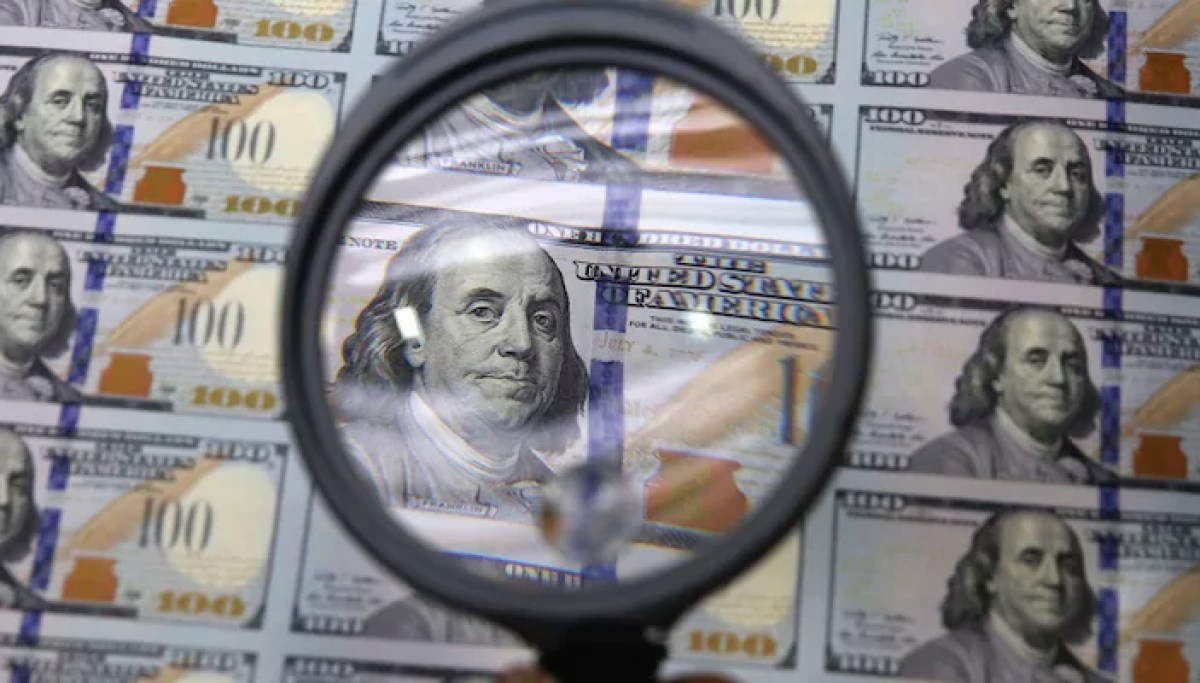
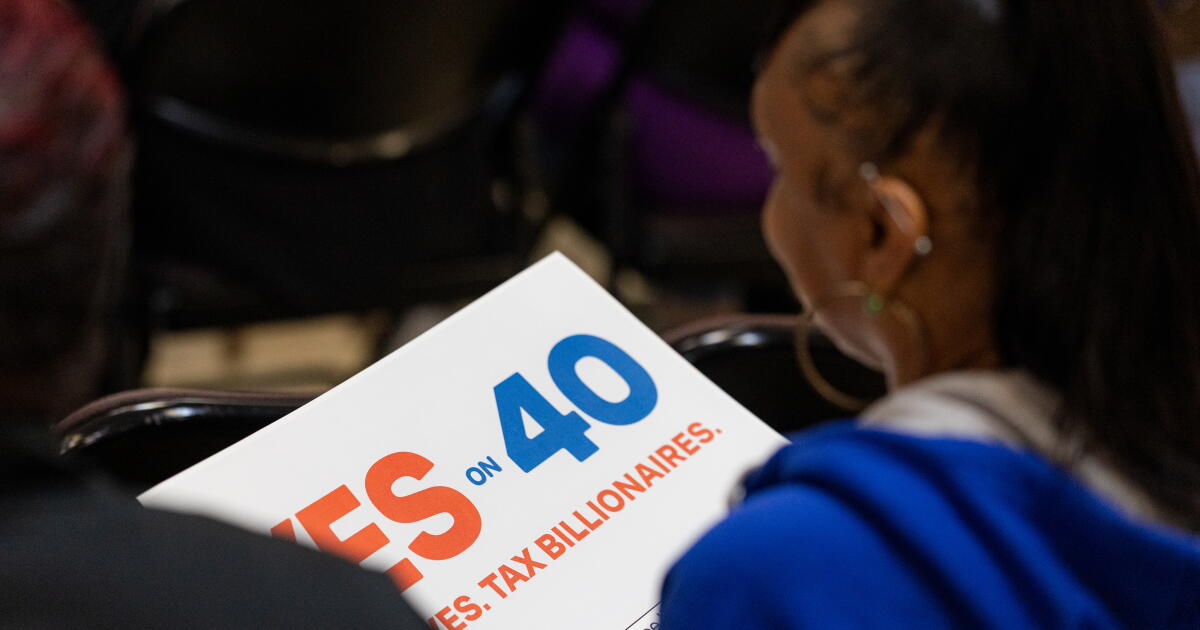
Californians will decide this November whether to impose a historic one-time wealth tax on billionaires.
asserted
Californians → decide → billionaires
If they are successful, proponents hope to launch similar efforts across the country to tax the wealth of the ultra-rich.
asserted
proponents → hope → rich
Passage of Proposition 40 would enact the first state-level wealth tax, which the ballot measure’s backers, including socialists, see as a trial for wealth taxes in other states and at the federal level.
asserted
backers → enact → level
Some on the Left have long been pushing for wealth taxes on billionaires and are hoping that this California referendum could boost the broader movement.
uncertain
referendum → push → movement
The ballot initiative would impose a one-time tax equal to 5% of the accumulated wealth of affected taxpayers.
asserted
initiative → impose → taxpayers
Essentially, if a California taxpayer’s taxable assets, including stocks, homes, artwork, and more, are worth more than $1 billion, the state would impose a tax equivalent to 5% of that wealth.
asserted
state → include → wealth
Six Nobel Prize-winning economists wrote an open letter arguing that the move could “kickstart” a movement for higher taxes on the wealthy across the U.S.
uncertain
move → win → U.S.
The economists — Daron Acemoglu, Abhijit Banerjee, Peter Diamond, Esther Duflo, Paul Krugman, and Joseph Stiglitz — have all supported taxing the wealthy more.
asserted
economists → support → wealthy
“California is the right place to take this historic step,” the group wrote in the letter of support.
asserted
group → take → support
“If the state that houses some of the country’s most powerful billionaires votes to tax their wealth, it will kickstart a movement to tax ultra high-net-worth individuals in other states — and eventually at the federal level and in other countries,” the group said.
asserted
group → house → countries
“As Californians head to the polls, their vote may well come to be seen as a turning point in the battle between democracy and oligarchy.”
uncertain
vote → head → democracy
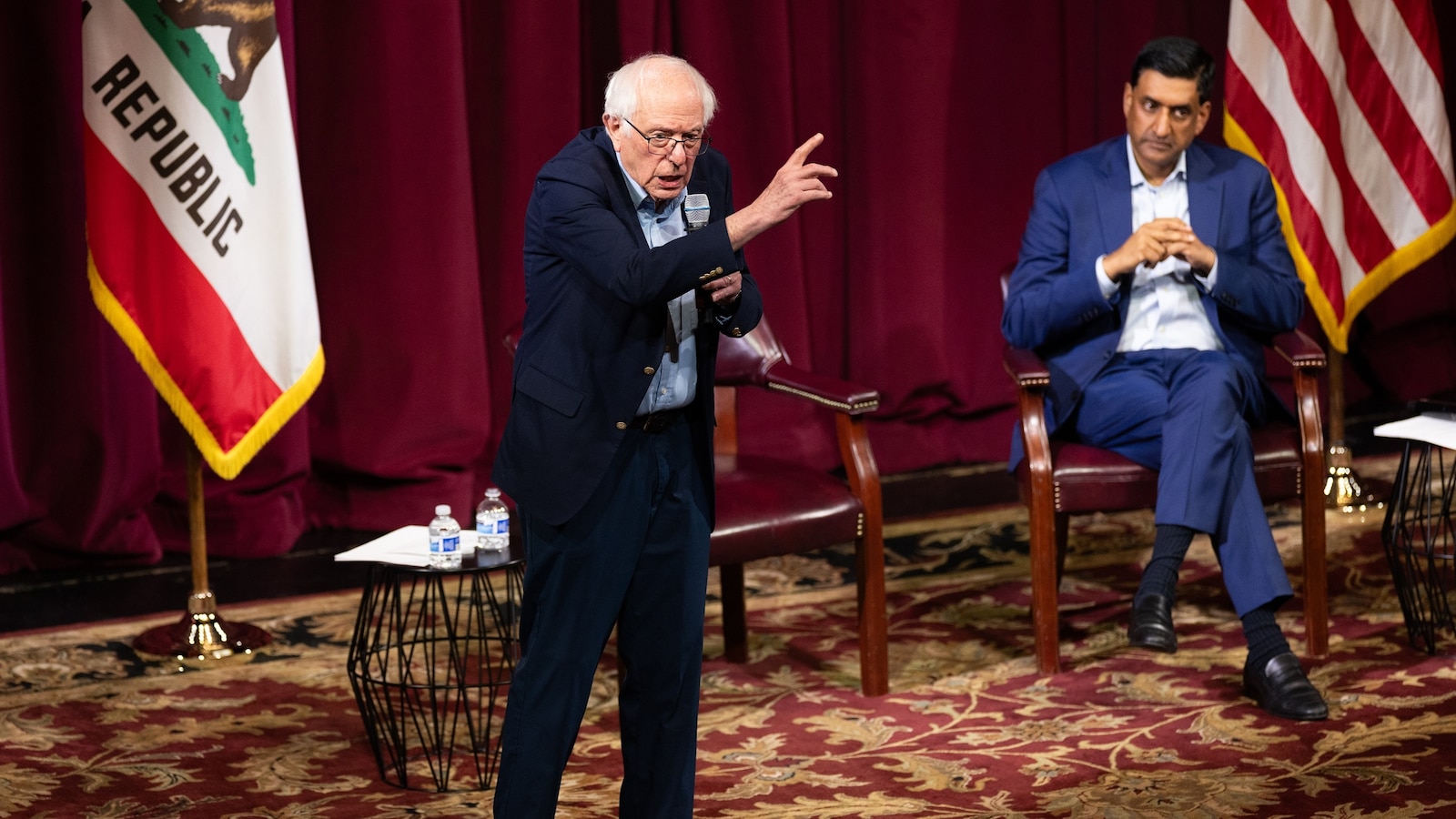
Likewise, Sen. Bernie Sanders (I-VT) has called Proposition 40 “a model that should be emulated throughout the country.”
asserted
that → call → country
Ryan Young, a senior economist at the Competitive Enterprise Institute, told the Washington Examiner that if such a wealth tax were expanded to a national level, it could cause billionaires to shift not just out of California but out of the country.
uncertain
billionaires → tell → country
“Mexico might benefit, Canada might benefit, maybe some tax shelter as in the Caribbean if there’s room,” Young said.
uncertain
Young → benefit → Caribbean
Republicans are vehemently against such a plan, and many Democrats have come out against it as well, most notably Gov. Gavin Newsom (D-CA).
asserted
Democrats → come → it
Jared Walczak, vice president of state projects at the Tax Foundation, told the Washington Examiner that the tax would capture virtually all assets of billionaires, including, controversially, ownership stakes in closely held or private businesses, which makes valuations challenging.
asserted
valuations → tell → businesses
“Potentially paying that tax would require either liquidating a significant share of a closely held or pre-IPO business, or letting the government effectively put a sort of lien on it,” Walczak explained.
asserted
Walczak → pay → it
Newsom, a Democrat seen as a possible 2028 presidential front-runner, has argued that such a law would cause billionaires to move to other states, which would hurt the economy and tax base.
asserted
which → see → economy
“Over the years, you would see a significant reduction in taxes because taxpayers will move, and that is what I fear at a state level,” Newsom said.
asserted
Newsom → see → level
Still, Proposition 40 attempts to correct for that by making it retroactive and applying to all taxpayers residing in the state as of Jan. 1.
asserted
it → attempt → Jan.
But Walczak said making the tax retroactive raises constitutional questions.
asserted
tax → say → questions
“Many observers, myself included, believe that the retroactive elements would not hold up in court,” he said.
asserted
he → include → court
“So billionaires who leave sometime this year would likely be able to avoid some or all of their tax liability, even though the measure is designed to disallow that.
asserted
measure → leave → that
If the ballot initiative passes, and billionaires are soaked, all of their revenue would go into what is being dubbed a Billionaire Tax Reserve Fund.
asserted
what → pass → revenue
The proceeds would fund Medi-Cal, which is California’s Medicaid program, and similar healthcare programs for low-income Californians.
asserted
which → fund → Californians
Lots of money has already been thrown around in support of and against the ballot measure.
asserted
Lots → throw → measure
Over $200 million has already been raised in support and opposition, with the bulk of that coming from opponents of Proposition 40.
asserted
bulk → raise → Proposition
Opponents have raised, so far, $187 million against the proposition, and supporters have raised $32 million so far, according to the Los Angeles Times.
uncertain
supporters → raise → Times
Proposition 41 would, if both measures pass, essentially nullify Proposition 40 if Proposition 41 gets more votes than the former.
asserted
Proposition → pass → former
Likewise, Proposition 42 would ban new taxes on personal property, retirement accounts, intellectual property, and more, while limiting lawmakers from imposing or raising taxes retroactively.
asserted
Proposition → ban → taxes
So if they both passed and Proposition 42 got more votes, it could also nullify the billionaire tax.
uncertain
it → pass → tax
“The billionaires take and take — tax break after tax break — and now they’re spending that money to deceive voters and avoid paying their fair share,” SEIU-UHW chief of staff Suzanne Jimenez said.
asserted
Jimenez → take → staff
Notably, while the tax would be a one-time levy, critics contend that it would be a foot in the door for more taxes on the wealthy down the line.
asserted
it → contend → line
For instance, critics recently released an ad declaring that “when the money runs out, Sacramento will be back with yet another tax.
asserted
Sacramento → release → tax
”
Another one of the questions about the tax comes down to valuations and how the tax liability of these handful of billionaires will be calculated.
asserted
liability → come → billionaires
Instead of the state hiring a squad of assessors for the California Franchise Tax Board, the billionaires themselves would be responsible for the value of their possessions and private businesses.
asserted
billionaires → hire → possessions
The taxpayers would be forced to hire appraisers, and then the FTB would decide whether to accept or reject that valuation.
asserted
FTB → force → valuation
And if the board thinks the valuation is wrong, there can be a big penalty.
asserted
valuation → think → ?
The penalty would be 20% for an understatement of tax liability that exceeds $1 million and 40% for an understatement of liability that exceeds the greater of $10 million.
asserted
that → exceed → million
If substantial underpayment is attributed to a certified appraisal, the board could impose penalties at 2% or 4% of the understatement of tax, according to the Tax Foundation.
uncertain
board → attribute → Foundation
…and 20 more, not listed.
 The Aporia