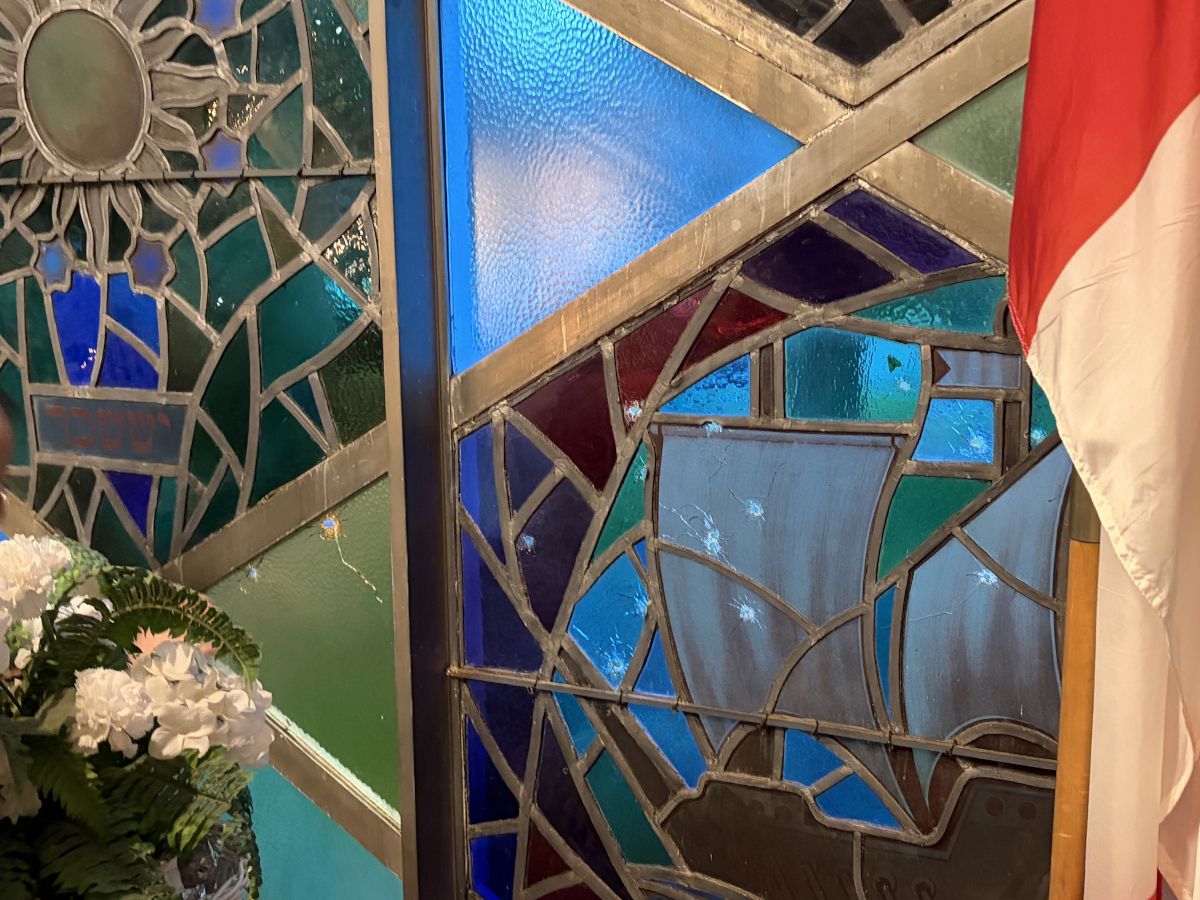
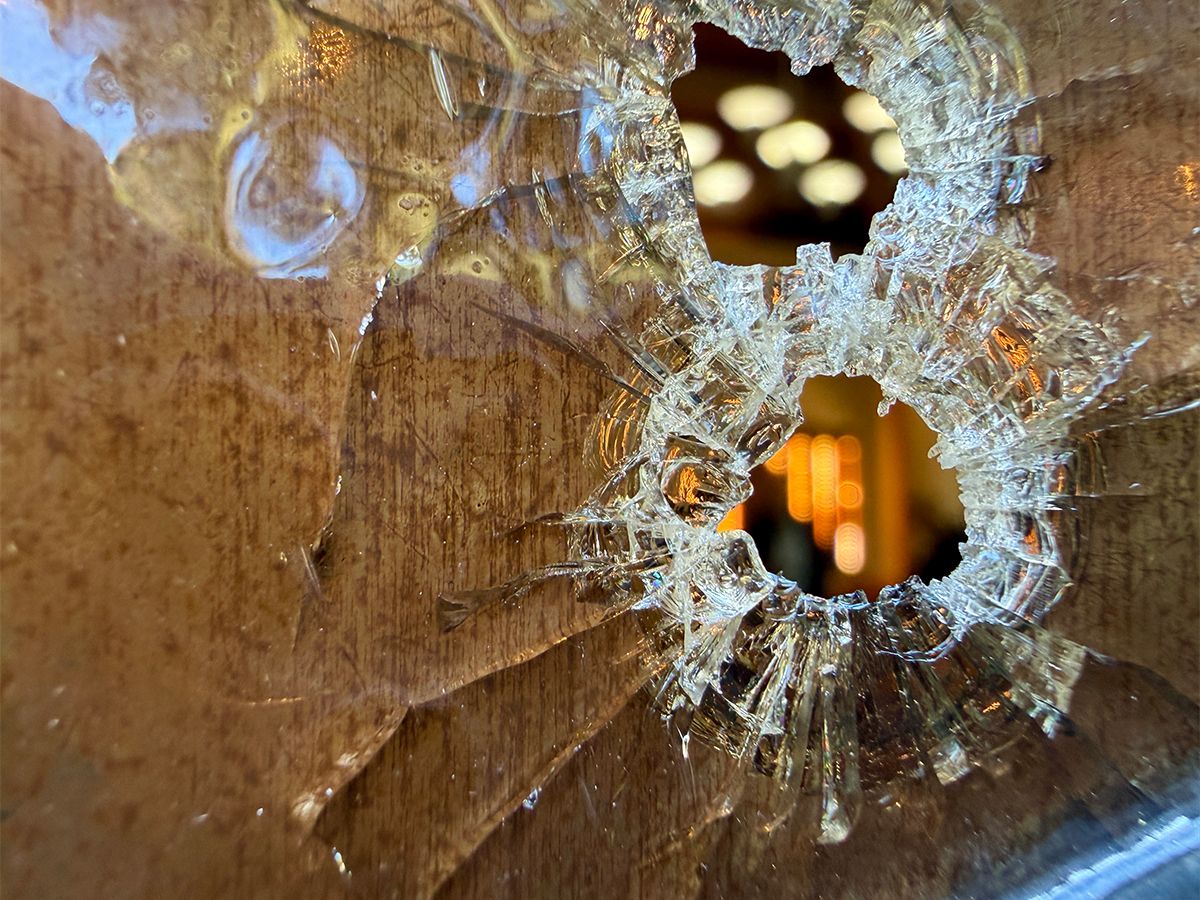
The evening that a murderous antisemite opened fire outside a Yom Kippur service at the Sons of Jacob Synagogue in Belleville, Ont., I guarded a synagogue in Sedona, Ariz., hoping to prevent exactly that sort of incident.
asserted
I → open → incident
Fortunately, my time was less eventful than that of Const. Jeff Smith, who was badly wounded while fighting the attacker.
asserted
who → wound → attacker
But I spent the evening with a pistol and pepper spray on my hip and an AR-15 in reach while sweating under body armour because attacks like the one in Belleville have become all too common around the world.
asserted
attacks → spend → world
And while those gathered at Sons of Jacob were lucky to have Smith in place to defend them, most institutions need to look to their own safety.
asserted
institutions → gather → safety
Inside the Sedona synagogue, my wife and several other members of the congregation carried concealed firearms of their own in case my efforts proved inadequate.
asserted
efforts → carry → own
Like me, most of them are graduates of a well-regarded private Arizona school that offers firearms training to civilians, police officers and members of the military.
asserted
that → regard → military
Several of us have received additional training and we all practice our skills.
asserted
we → receive → skills
That’s not uncommon in the U.S. When Temple Israel in West Bloomfield, Mich., was attacked in March by a Hezbollah-linked terrorist, he was stopped by the synagogue’s armed security detail.
asserted
he → attack → detail
They pinned the attacker in place in his incendiary-filled vehicle, leaving him as the only fatality.
asserted
They → pin → fatality
“As you have no doubt heard, Temple Israel was the victim of a terrorist gunman who was confronted and neutralized by our security personnel who are truly heroes,” Temple Israel posted at the time.
asserted
Israel → hear → time
“Our teachers followed their training and kept the children safe and calm.”
asserted
teachers → follow → children
Const. Smith’s presence at Sons of Jacob was fortuitous, but not the sort of protection on which most houses of worship can rely.
asserted
houses → rely → worship
When the synagogue I guard planned public Hanukkah celebrations, local police were very co-operative and assigned officers to provide protection in addition to our own efforts.
asserted
police → guard → efforts
But they were also clear that their small departments have limited manpower and that officers would be pulled away if they were needed to respond to accidents or crimes.
asserted
they → have → accidents
That’s when local authorities are supportive, which is not always the case.
asserted
which → ’ → ?
In Montgomery County, Md., officials twice tried to ban even defensive weapons at “sensitive public places,” including houses of worship, over the protests of many of the affected institutions.
asserted
officials → try → institutions
I asked the main sponsor of the legislation if she had given any thought to consulting with those affected to learn if they prefer to make their own rules regarding the carrying of firearms, but she ignored the question and insisted she was just restating earlier legislation that had been partly overruled by the courts.
asserted
that → ask → courts
The Montgomery County law makes an exception for police and licensed security guards.
asserted
law → make → police
But as mentioned above, police aren’t always available even in supportive communities, and Montgomery County is not very supportive.
asserted
County → mention → communities
Professional security is expensive, putting its regular use beyond the means of even larger congregations.
asserted
security → put → congregations
Around me, the Roman Catholic parish is the best-funded religious institution in the community, but like the synagogue, it relies on trained volunteer armed security — though I envy their eye-in-the-sky drones.
asserted
I → fund → drones
That’s typical.
asserted
That → ’ → ?
Surveys by Lifeway Research find that “around four in five U.S. Protestant pastors (81 per cent) say their church has some type of security measure in place” and “most (54 per cent) also say armed church members are part of the measures they have in place.”
asserted
they → find → place
Just five per cent rely on police on-site.
asserted
cent → rely → site
Last month, Axios reported, “synagogues across the U.S. are having congregants train to be volunteer security teams” and that one nonprofit group, the Community Security Service, has trained “more than 7,100 active volunteers” to protect “more than 500 synagogues and events across the U.S. each week.”
asserted
group → report → U.S.
No wonder that after Montgomery County passed its ban on firearms at houses of worship, a synagogue security volunteer told the Jerusalem News Syndicate, “We are still carrying.
asserted
We → pass → Syndicate
That remains true, despite Montgomery County’s best efforts.”
asserted
That → remain → efforts
He added, “I’d rather be judged by 12 than carried by six.”
asserted
I → add → six
That commitment won’t be tested.
asserted
commitment → test → ?
Like the earlier county law, after a lawsuit by a synagogue and two rabbis, the gun ban is now under a federal injunction as a violation of the Second Amendment’s protections for the right to keep, carry, and use the means for self-defence as well as First Amendment protections for the right to worship.
asserted
ban → keep → right
“A threat to safety is likely an irreparable harm,” ruled U.S. District Judge Deborah K. Chasanow in finding the plaintiffs suing to block the law were likely to prevail in court.
asserted
plaintiffs → rule → court
“A burden on religious practice cannot be fully remedied by money damages, and thus can be considered irreparable.”
Evading the efforts of government officials hostile to self-defence is an all-too-common necessity.
asserted
Evading → remedie → defence
When I attended a week-long defensive pistol class last year, one of my classmates, back for a refresher course, worked with a national organization to train Jewish security volunteers.
asserted
one → attend → volunteers
He told me that while he and his colleagues are welcomed by synagogues and other institutions, they sometimes need to operate under the radar in communities where authorities put roadblocks in the way of their efforts.
asserted
authorities → tell → efforts
But we’re fortunate in the U.S. to be able, in most places, to adequately provide for the congregation’s defence.
asserted
we → ’re → defence
As that Sunday Yom Kippur service emptied, before we received word of the Belleville attack, an Englishman visiting Sedona, which is a tourist magnet, told me that he worked as a security guard at his synagogue but isn’t permitted to wield much more than a stern look to deter potential threats.
asserted
he → empty → threats
Given the dangers in the U.K. as much as elsewhere, he wished he could carry the gear available to us.
uncertain
he → give → us
Even before the shootout at the Sons of Jacob Congregation, Canadian Jews also pushed for better security measures.
asserted
Jews → push → measures
In a February National Post article, Toronto Jewish community advocate Joseph Reichmann criticized police priorities when it comes to defending Jewish institutions and called for “professionally trained guards held to the same standards as any other armed private security.”
asserted
it → criticize → security
While not prohibited to the same extent as in the U.K., legally providing armed guards for houses of worship would probably require changes to restrictive Canadian laws that currently limit carrying guns to the protection of cash and “other goods of substantial value” or for use against animals in the wilderness.
asserted
that → prohibit → wilderness
…and 4 more, not listed.
 The Aporia