Photo via Reason

I Asked the White House's New AI Chatbot About Tariffs. It Told the Truth.

Read the original at Reason ↗
Cite

Boehm, E. (2026, October 2). I Asked the White House's New AI Chatbot About Tariffs. It Told the Truth. Reason. https://reason.com/2026/10/02/i-asked-the-white-houses-new-ai-chatbot-about-tariffs-it-told-the-truth/

Dated when The Aporia collected the article, usually within hours of publication. Check the original for its exact date and byline.

Reason · collected 2026-10-02 · by Eric Boehm

Quick Summary

The White House's new AI chatbot, America.gov, contradicts President Trump’s claims about tariffs by stating they are taxes paid by Americans and contribute to rising prices. When questioned, the bot confirmed that tariffs increase costs for U.S. importers and can raise domestic product prices too, citing sources like the Bureau of Labor Statistics and Congressional Budget Office reports. It also referenced studies indicating that tariffs reduce manufacturing employment and production in downstream industries while raising input costs for factories and construction, highlighting economic impacts often ignored by the administration.
Written by AI on 2026-10-02, from this article's own text only (the story summary below draws on all the coverage).

AI analysis

Story summary

The White House's newly launched AI chatbot, America.gov, has been responding accurately to questions about tariffs, despite past reprogramming aimed at avoiding fact-checking. When asked about who bears the cost of higher tariffs, America.gov stated that tariffs are taxes on imported goods and the extra cost is initially paid by U.S. importers, leading to higher prices for consumers and increased costs for competing domestic products as well. This contradicts claims made by President Trump and his administration, which have falsely claimed that foreign governments or companies pay these tariffs. Moreover, while the administration highlights specific benefits like a new steel plant opening in Iowa as evidence of tariff success, America.gov references studies from the Federal Reserve and Senate Budget Committee showing statistically significant increases in prices for consumer goods exposed to tariffs, indicating broader economic impacts.

Written for “US Tariff Policy” on 2026-11-03, grounded in this article and the 0 other(s) covering the same event.

Story

📰 US Tariff Policy
Politics · 1 article(s) covering the same event.

Compared with similar articles

This article reads leans strongly left and hedges 16% of its claims. Each row says how that neighbour differs.
Fox News
Hedges 2 of 18 claims Outlet record 69/100
“While both articles discuss America.gov, Article A describes the unveiling and launch of the platform, while Article B discusses its use and functionality days later.”
Toronto Star
Hedges 0 of 3 claims Outlet record 64/100
“Article A describes Trump's speech and promise regarding AI, while Article B focuses on the functionality and responses of America.gov AI chatbot after its launch.”
The Independent
Hedges 5 of 35 claims Outlet record 59/100
“Article A discusses Trump's stance on AI self-regulation, while Article B describes interactions with a White House AI chatbot about tariffs.”
New York Post
⚖️ Leans strongly right further right than this Hedges 3 of 14 claims Outlet record 66/100
“The articles discuss different topics related to AI and its use in government and business contexts.”
Dawn
⚖️ Leans left further right than this Hedges 0 of 13 claims Outlet record 72/100
“While both articles discuss the launch and use of an AI-powered chatbot called America.gov, Article A describes the initial unveiling and capabilities of the platform, while Article B reports on a specific interaction with the bot days later.”
NPR
Hedges 7 of 55 claims Outlet record 60/100
“The articles describe different uses of AI chatbots: one specifically about tariffs and the White House's new AI chatbot, and the other about voters using chatbots to fact-check candidates during an election.”
Washington Examiner
Hedges 0 of 3 claims Outlet record 70/100
“Article A describes the launch event for a new AI tool, while Article B reports on interactions with and revelations about the deployed AI chatbot days later.”
The Straits Times
⚖️ Leans left further right than this Hedges 5 of 22 claims Outlet record 66/100
“While both articles discuss Trump's launch of the AI chatbot America.gov, Article A describes the initial unveiling and its intended purpose to contradict false claims, whereas Article B discusses subsequent interactions with the bot about tariffs after it was reportedly reprogrammed.”
The Guardian
Hedges 11 of 32 claims Outlet record 66/100
“Article A describes the initial launch and capabilities of America.gov, while Article B discusses a later interaction with the AI chatbot about tariffs.”
Fox News
Hedges 1 of 26 claims Outlet record 69/100
“The articles describe different aspects of the new AI-powered America.gov platform, but they are not reporting on the exact same incident or moment.”
How this article was measured signals, leaning charts, publisher record, byline, topics and claims

Signals How these are calculated →

Claims extracted
25
sentences that state something as happening or true
Uncertain
16%
4 of 25 hedged ("reportedly", "may", "according to")
Leaning
Leans strongly left
of the writing, not the subject · beta estimate
Publisher signals
67/100
Reason's corrections and hedging, across everything collected from it. Not a measure of accuracy.
Outlets on this story
1
Politics
Same framing elsewhere
1
articles that frame the event the way this one does
Analyzed 2026-10-02 · how these are computed

How this is being covered How these are calculated →

Article leaning vs. publisher reliability
Source leaning vs. consistency

Publisher

Reason · 1074 article(s) · 4 correction(s) detected
Running correction rate · 4 correction(s)

Who wrote this

Eric Boehm
21 article(s) here · 1 carrying a prediction
🔮 An underappreciated facet of the controversy that has rocked the Alaska Senate race: Voting reforms adopted by the state in 2020 will likely blunt the effectiveness of an apparent Democratic scheme to place a second candidate named Dan Sullivan on the ballot.
🔮 The New York Times reports that Democrats will move quickly on four items that are "consensus items among their members that are basic enough to bypass time-consuming committee consideration and go straight to the floor."
2026-10-30 · mixed framing · What Will Democrats Do?
🔮 Next week's election is a pivotal one for Colorado, as voters will decide a pair of ballot questions that could secure the state's low-tax, small-government reputation—or shatter it.
🔮 Habba will get $50 million over five years to do unspecified work for a company that barely exists, according to The New York Times, while Herrera got a presidential pardon for a 2025 campaign finance charge.
2026-10-22 · assertive framing · The Swamp King
🔮 A proposed "wealth tax" on California's billionaires could backfire and cost the state tens of billions of dollars in the long run.
🔮 America's interminable war with Iran has killed thousands, disrupted commerce that flows through the Strait of Hormuz, and raised prices on the home front. But there may be one silver lining.
🔮 The White House has not said when the purchases will be made, what prices will be paid, or who will be paying (private companies or taxpayers), though the Treasury announced that it would be issuing a "temporary general license to allow the supply of Russian diesel to the global market."
🔮 Instead, Rep. John James (R–Mich.) has introduced a bill that would use some tariff revenue to offset the economic harm being caused by…the tariffs.
🔮 "As of May 2026, USICH had 10 full-time employees and a part-time executive director," the Government Accountability Office (GAO) reported in an audit published last week.
🔮 Pretti's death would quickly become a national news story.
Also by Eric Boehm
What Will Democrats Do?
2026-10-30 · Reason
Nothing else under this byline is closely related to this article, so these are simply their most recent.
All 21 articles by Eric Boehm →

Topics

America.gov American Americans Federal Reserve the White House

Subjects

America.gov ORG · 4× The White House's ORG · 3× American NORP · 2× Americans NORP · 2× Federal Reserve ORG · 2× Trump PERSON · 2× U.S. GPE · 2× the Trump administration ORG · 2× the U.S. Bureau of Labor Statistics ORG · 1× the White House ORG · 1×

Narrative

It pointed me to this Federal Reserve report that "found statistically significant increases in prices of consumer goods more exposed to tariffs," as well as this Senate Budget Committee report on "tariffs as making consumer and capital goods more expensive."
framing: assertive · carried by 1 article(s) · first seen 2026-10-02
🔮 The Trump administration has touted the recent announcement of a new steel plant in Iowa as proof that the tariffs are working to revitalize American manufacturing—which is only true if you look at the benefits while willfully ignoring the costs.

Claims (25 extracted, 4 hedged)

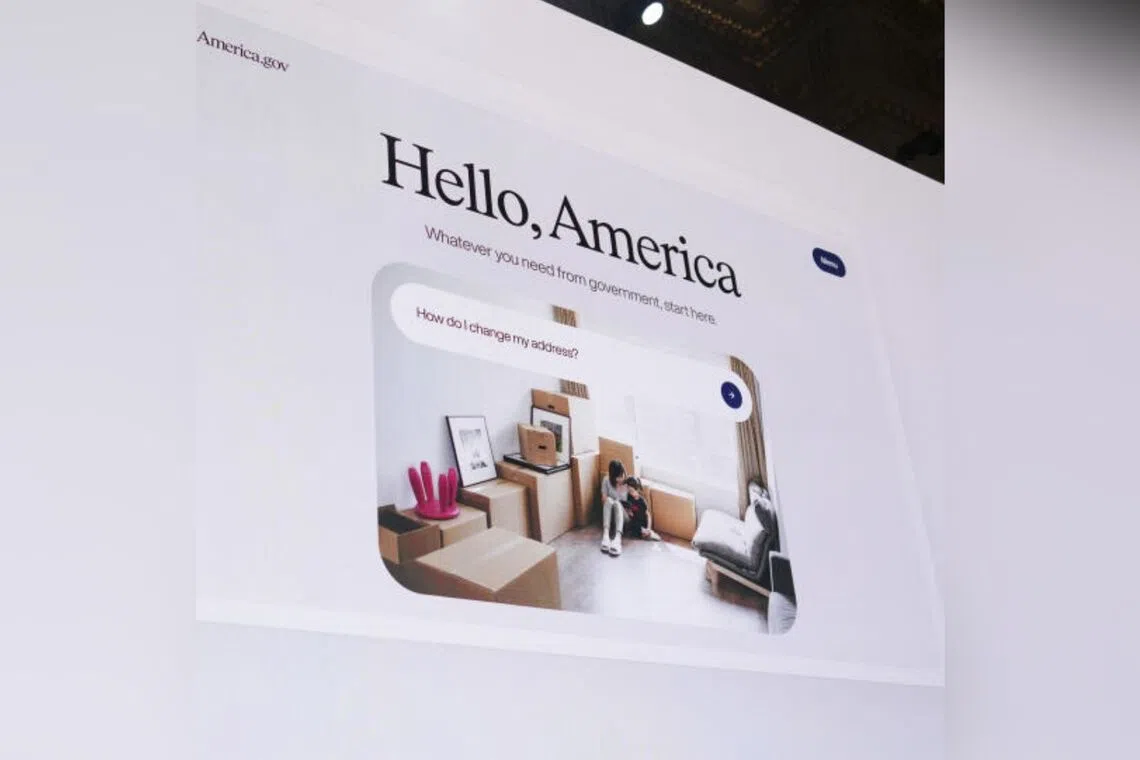
In the days after the White House launched its new AI chatbot, America.gov, the Trump administration reportedly reprogrammed it to stop debunking some of the president's more outlandish claims—like who won the 2020 election. uncertain
who → launch → election
But that hasn't stopped the AI from telling the truth about tariffs: They are taxes, they are paid by Americans, and they have contributed to rising prices throughout the economy. asserted
they → stop → economy
"A tariff is a tax on imported goods. asserted
tariff → import → goods
That extra cost is paid first by the U.S. importer," America.gov told me on Friday morning when I asked it to explain who pays the cost of higher tariffs. asserted
who → pay → tariffs
Citing the U.S. Bureau of Labor Statistics, the AI wrote that "a tariff can raise the price buyers pay. asserted
buyers → cite → price
Domestic goods that compete with those imports can also become more expensive." That contradicts some of the most common claims made by President Donald Trump and others in the administration. uncertain
That → compete → administration
Trump has repeatedly (and falsely) claimed that foreign governments and foreign companies are paying for his tariffs. asserted
governments → claim → tariffs
The Trump administration has touted the recent announcement of a new steel plant in Iowa as proof that the tariffs are working to revitalize American manufacturing—which is only true if you look at the benefits while willfully ignoring the costs. asserted
you → tout → costs
But ask America.gov about how tariffs work, and you'll get a very different—and less economically illiterate—answer. asserted
you → ask → answer
When I asked it if higher tariffs would hurt domestic industries by raising input costs for factories and construction, it agreed. asserted
it → ask → factories
"They can, especially when the tariff hits materials" bought by builders and factories, such as "steel, aluminum, parts, machinery asserted
tariff → hit → machinery
In other words, many of the things that the Trump administration is hitting with higher tariffs. asserted
administration → hit → tariffs
More than half of all American imports are raw materials and intermediate products that go into building other things. asserted
that → go → things
The AI then pointed me to several sources that support that conclusion, like this Congressional Budget Office report that it said "described tariffs as making capital goods more expensive and raising the cost of business investment." asserted
goods → point → investment
The White House's chatbot also highlighted a Federal Reserve study and a U.S. International Trade Commission study, both of which show how tariffs reduce manufacturing employment and production in downstream industries affected by higher costs. asserted
tariffs → highlight → costs
The "bottom line," it told me, was this: "Official evidence supports that tariffs on industrial inputs can reduce output in downstream manufacturing and raise costs for construction and factories that use those inputs." asserted
that → tell → inputs
If only that "official evidence" could make its way into official policy. uncertain
evidence → make → policy
When I asked it whether tariffs could raise prices for consumers, America.gov provided another lengthy list of official government sources showing that they do. uncertain
they → ask → sources
It pointed me to this Federal Reserve report that "found statistically significant increases in prices of consumer goods more exposed to tariffs," as well as this Senate Budget Committee report on "tariffs as making consumer and capital goods more expensive." asserted
goods → point → tariffs
Once again, the "bottom line" was clear: "Tariffs tend to put upward pressure on prices of tariffed imports and related U.S. goods." asserted
Tariffs → tend → imports
The one thing that you can't get America.gov to say, however, is that tariffs are a bad idea. asserted
tariffs → get → that
Even after all this evidence showing the sizable costs created by the Trump administration's tariff policies, the White House's chatbot won't turn against its creators by drawing the obvious conclusion. asserted
chatbot → show → conclusion
We'll have to leave that question in the hands of human beings. asserted
We → have → beings
But if recent polling is any indication—tariffs had a negative 31 approval rating in a recent Economist/YouGov poll—then Americans are fed up with the Trump administration's campaign to make everything more expensive. asserted
everything → have → campaign
Instead of continuing to push a false narrative that doesn't even fool the White House's own "superintelligence" tool, maybe the Trump administration should listen to what the chatbot is saying: Tariffs are increasing costs and harming the economy. asserted
Tariffs → continue → economy

💬Give feedback
🕘History 🎫Support