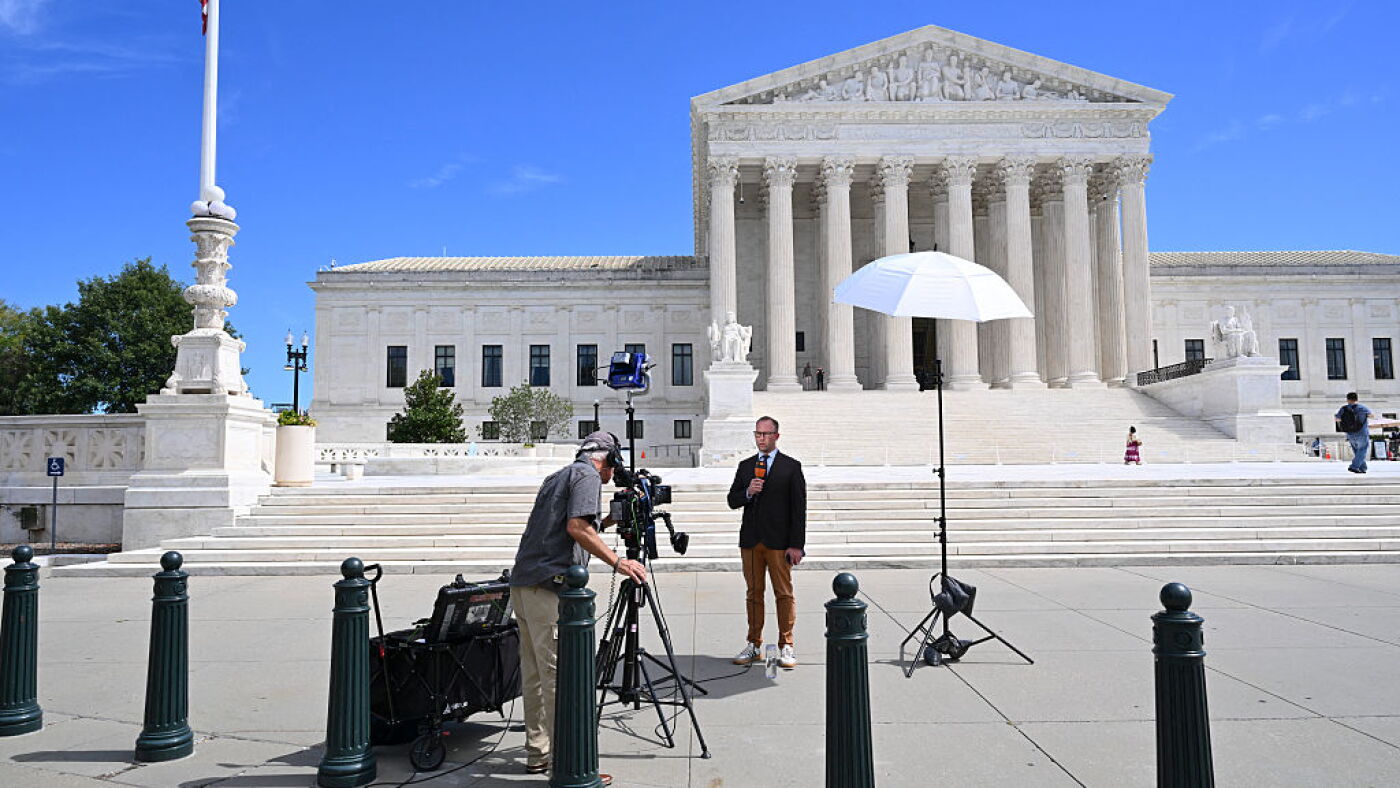
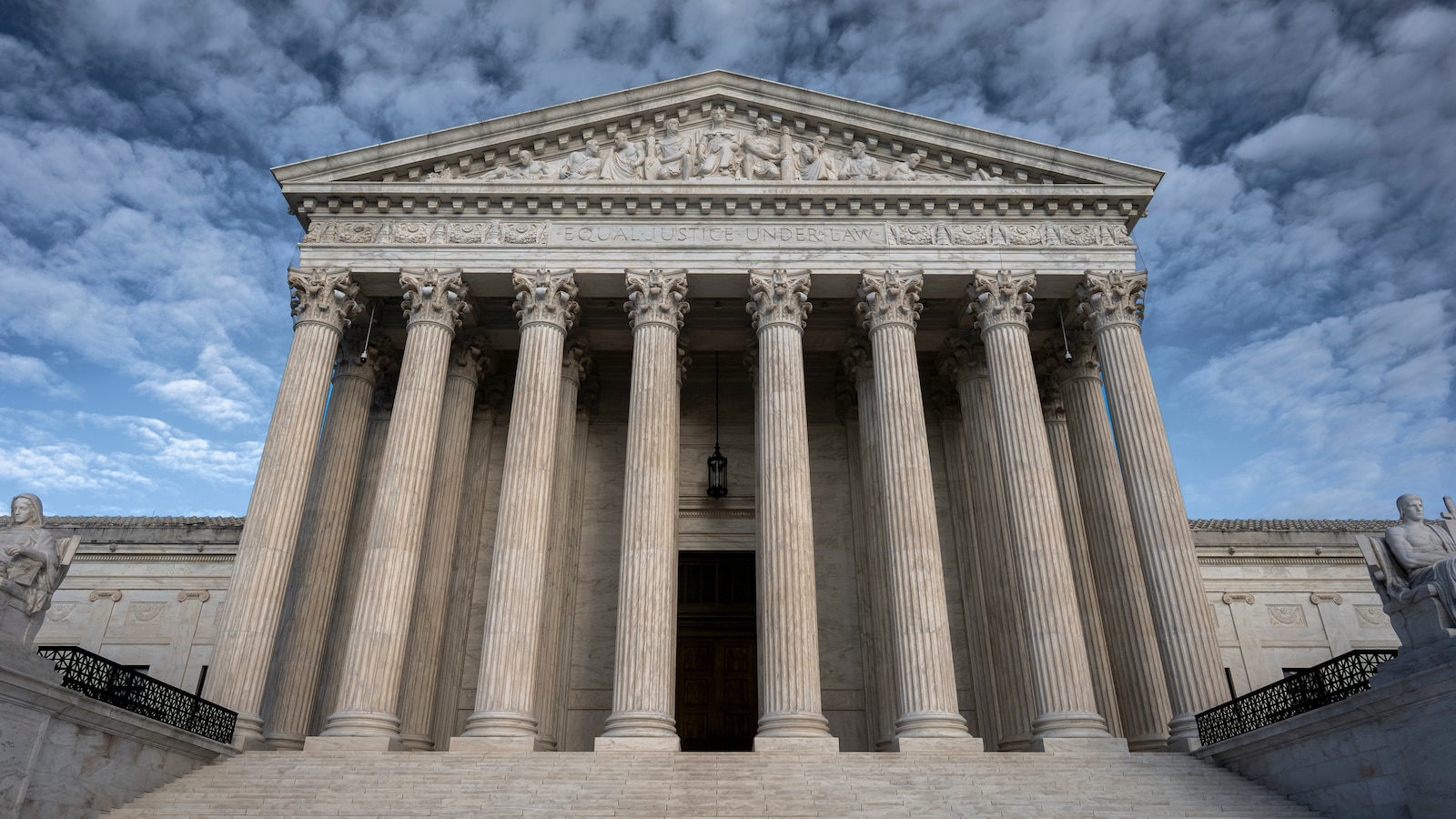
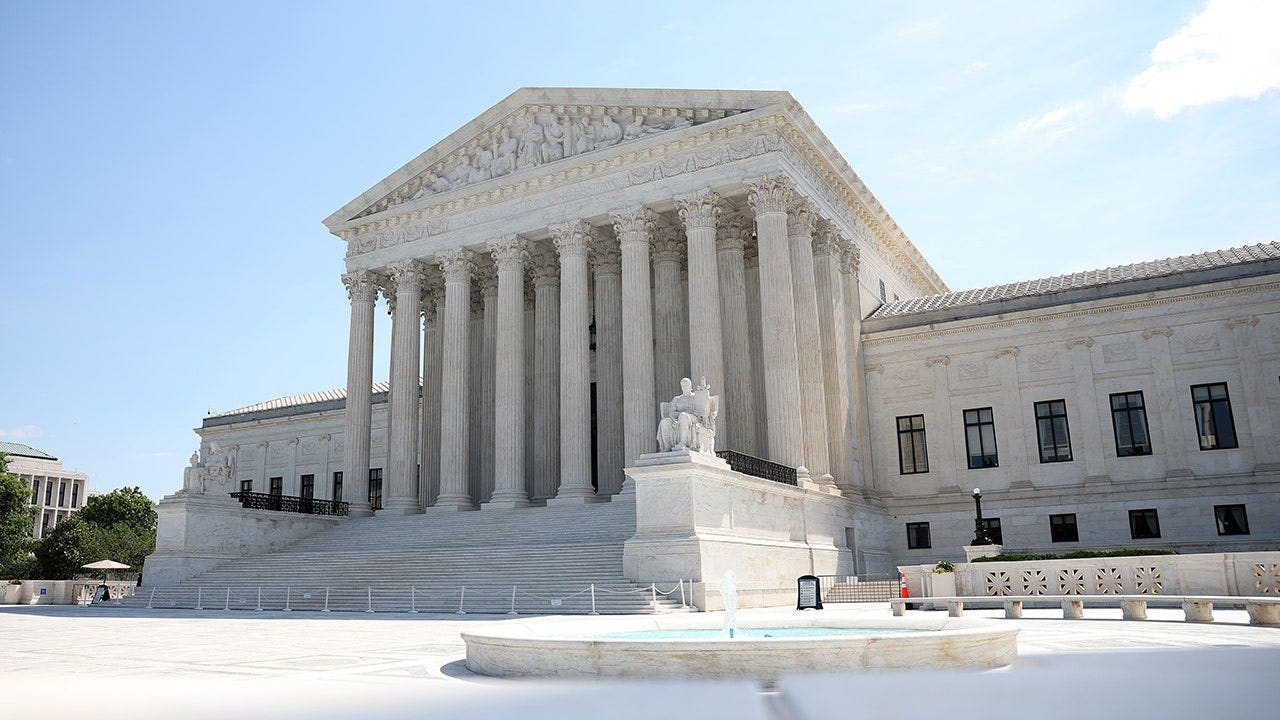
The Supreme Court faces another term jam-packed with controversy
asserted
Court → face → controversy
The U.S. Supreme Court formally opens a new term on Monday, with big test cases on religion, bans on semi-automatic weapons, climate change, immigration and — waiting in the wings — election law cases.
asserted
Court → open → wings
It used to be that the first Monday in October marked the beginning of a new Supreme Court term.
asserted
Monday → use → term
But for all practical purposes, the formerly quiet summer months after the court finishes its opinions in all argued cases no longer exists.
asserted
court → finish → cases
Indeed, as Georgetown University law professor Stephen Vladeck observes, the number of emergency appeals has ballooned during the Trump administration, while at the same time, fully briefed and argued cases have dropped precipitously over the years.
"So now we have twice as many full court rulings on emergency applications as we have on the merits docket," Vladeck observes, adding, "That is a very new phenomenon."
The difference is that decisions on the emergency docket are rendered quickly, with little briefing, no oral arguments, and ultimately little or no explanation of the ruling.
asserted
decisions → observe → ruling
In contrast, a decision on the merits is typically worked on for months after full briefing and lengthy oral arguments.
asserted
decision → work → briefing
Of late, the court seems to be making an effort to offer some limited explanations of its emergency docket rulings, but lower court judges, both liberal and conservative, complain that isn't enough to provide them with adequate guidance.
asserted
that → seem → guidance
And the Trump administration often takes what used to be the rare step of getting to the Supreme Court by leapfrogging over lower appellate courts that the administration views as hostile.
asserted
administration → take → that
With that backdrop, here are the cases the court will be hearing in the coming weeks:
asserted
court → hear → weeks
Climate change
The opening case, to be argued Monday, tests whether state and local governments can sue energy companies for allegedly deceiving the public about the damaging effects of fossil fuels.
uncertain
governments → open → fuels
"The theory is that the energy company defendants deceived the public for many years," says Deepak Gupta, who teaches at Harvard Law School and practices law in Washington, D.C. What the companies were telling the public for years, he says, is "the opposite of what the company's own scientists knew, and the local cost of that deception."
asserted
scientists → deceive → deception
That said, however, most court observers see the case as an uphill battle for environmentalists.
asserted
observers → say → environmentalists
Perhaps the biggest case of the term so far, in terms of ripple effects, involves religion, a subject on which the court's conservative super majority has dramatically changed its legal doctrine.
asserted
majority → involve → doctrine
Indeed for the better part of a century, the Supreme Court emphasized the First Amendment's separation of church and state, with the free exercise of religion playing an important — but secondary — role.
asserted
exercise → emphasize → role
Since President Trump's appointment of three new justices, however, things have changed.
asserted
things → change → justices
"It's literally the opposite of what the law was not that long ago, and it's just a complete shift," observes Michigan State University law professor Frank Ravitch.
asserted
Ravitch → observe → ?
The court may, in fact, be on the verge of requiring taxpayers to fund religious schools that refuse to admit LGBTQ students and parents.
uncertain
that → require → students
Last term the justices deadlocked on the issue in a separate case after Justice Amy Coney Barrett recused herself because of a conflict.
asserted
Barrett → deadlocke → conflict
The 4-4 tie vote automatically left in place an Oklahoma Supreme Court decision that barred overtly religious charter schools from from being funded by the taxpayers.
asserted
that → leave → taxpayers
The case centers on a state law that provides universal preschool programs that are open to all students, regardless of race, ethnicity, religious affiliation, sexual orientation or gender identity.
asserted
that → center → race
St. Mary Catholic Parish in Littleton, Colo., wants the state funding guaranteed in the state's universal pre-k law.
asserted
Parish → want → law
But it doesn't want to admit LGBTQ students or students with gay or trans parents.
asserted
it → want → parents
The parish maintains such admissions would violate church's right to the free exercise of religion.
asserted
admissions → maintain → religion
The state counters that funding the church school would violate the state's anti-discrimination law.
asserted
funding → counter → law
The court's conservative majority has, in multiple cases, ruled in favor of religious exemptions from generally applicable laws.
asserted
majority → rule → laws
Until now, however, the court has never said that religious schools are entitled to full taxpayer funding.
asserted
schools → say → funding
But given the current court's views, and with Justice Barrett participating in the Colorado case, taxpayers could well end up having to fund religious schools in Colorado and elsewhere.
uncertain
taxpayers → give → Colorado
Bans on semi-automatic weapons
In December the court will hear a case testing whether state and local governments violate the Second Amendment right to bear arms when they ban semi-automatic weapons, like the AR-15.
asserted
they → hear → AR-15
Former Solicitor General Don Verrilli Jr., articulates two different ways to look at the question.
asserted
Jr. → articulate → question
On the one hand the AR-15 "can deliver upwards of 100 bullets per minute" without any enhancements, and 500 bullets per minute with various enhancements.
asserted
AR-15 → deliver → enhancements
On the other hand, he notes that millions of Americans own AR-15s, "and it would be quite disruptive to suggest all these Americans ... would be dispossessed of their weapons."
asserted
Americans → note → weapons
Lawyer Erin Murphy, who has litigated lots of cases on behalf of gun owners, says the "single most important question is who gets to decide what guns you have," and he argues it makes no sense to say, "You've got this right against the government, but the government decides which arms you can get."
asserted
you → litigate → arms
The Trump administration has repeatedly taken positions in immigration cases that no other administration has adopted.
asserted
administration → take → that
Most recently, the court announced it would hear arguments and decide a case testing whether the Department of Homeland Security may deport migrants to so-called "third countries," when their countries of origin refuse to accept them.
uncertain
countries → announce → them
Since Trump began his second term, his administration has deported thousands of people to third world countries where they have no connections, may not speak the language, have often been jailed and allegedly subject to torture.
uncertain
they → begin → torture
The court has twice blocked lower court decisions that prevented the third country policy, and now the justices have said they will hear arguments about the policy in December.
asserted
they → block → December
In a second immigration case, the issue is the Trump administration's policy of detaining undocumented immigrants without a bond hearing, regardless of how long they have been in the U.S.
Possible cases: The 10 commandments and much more
There are many more cases waiting in the wings that the justices may take up.
uncertain
justices → detain → that
Among them is a case that seeks to reverse a nearly half-century-old Supreme Court precedent; it bars public schools from posting the Ten Commandments in public school classrooms.
asserted
it → seek → classrooms
Now, however, Texas, Arkansas, Louisiana and Alabama have passed laws that conflict with the Supreme Court's 1980 ruling, and the lower courts are split on the question.
asserted
courts → pass → question
That split all but guarantees the the Supreme Court will revisit the question.
asserted
Court → guarantee → question
…and 11 more, not listed.
 The Aporia