Photo via National Post

Conrad Black: Carney’s invasion musings

Read the original at National Post ↗
Cite

Black, C. (2026, October 3). Conrad Black: Carney’s invasion musings. National Post. https://nationalpost.com/opinion/conrad-black-22

Dated when The Aporia collected the article, usually within hours of publication. Check the original for its exact date and byline.

National Post · collected 2026-10-03 · by Conrad Black analysis

Quick Summary

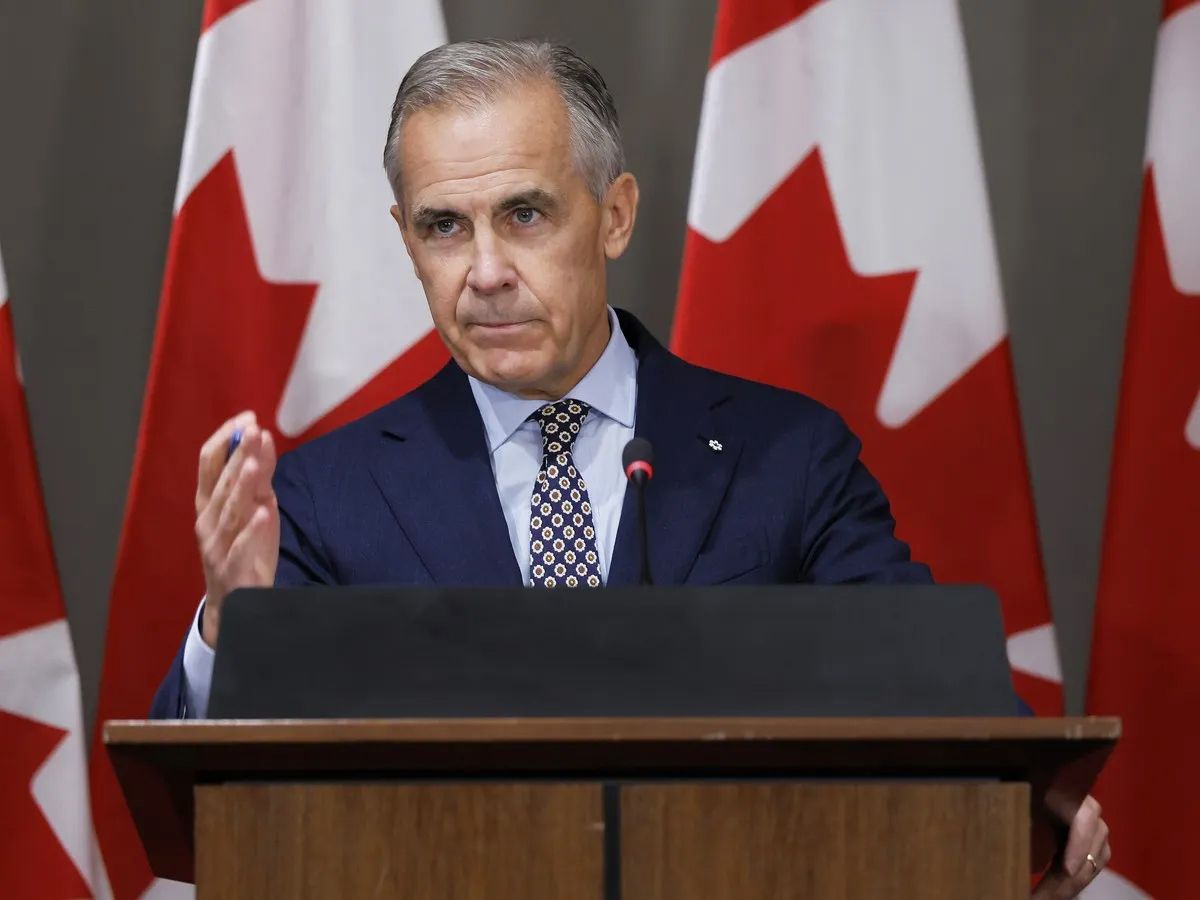
Conrad Black discusses an interview with Prime Minister Carney of Canada where Carney made conciliatory statements regarding tensions between Canada and the United States while asserting Canadian sovereignty. Black humorously refers to historical speculations about a potential armed conflict between the two nations, comparing such notions to fantastical scenarios like alien invasions. He mentions Lt.-Col. James "Buster" Sutherland Brown's 1920s plan for Canada to initiate an attack on the U.S., noting it was seen as deranged at the time but later romanticized by anti-American Canadians. The piece also delves into historical context, including President Madison’s ill-fated War of 1812 and Jefferson’s late-life comment about conquering Canada being "a mere matter of marching," highlighting the necessity of having troops to back such ambitions.
Written by AI on 2026-10-03, from this article's own text only (the story summary below draws on all the coverage).

AI analysis

Story summary

Conrad Black discusses Prime Minister Carney's recent interview with the New York Times, where Carney mentioned the possibility of armed conflict between Canada and the United States without backing down on issues of Canadian sovereignty. Black dismisses such talk as highly improbable, comparing it to an invasion by Martians or angry elves commanded by Santa Claus. In the early 1920s, Lt.-Col. James “Buster” Sutherland Brown proposed a conflict scenario where Canada would initiate hostilities against the US, only to be considered deranged at the time but later celebrated as a visionary hero in certain circles of militant anti-Americans.

Black also references historical context from when Canada became an independent country on July 1, 1867, noting that then Minister of Defense and Militia, Sir George-Etienne Cartier, successfully raised an armed militia of nearly 40,000 Canadians to defend against potential attacks by the American Fenians, Irish immigrants with anti-British sentiments.

Written for “Conrad Black Opines On War” on 2026-11-04, grounded in this article and the 0 other(s) covering the same event.

Story

📰 Conrad Black Opines On War
Politics · 1 article(s) covering the same event.

Compared with similar articles

This article reads leans right and hedges 10% of its claims. Each row says how that neighbour differs.
National Post
⚖️ Centre further left than this Hedges 1 of 5 claims Outlet record 60/100
“The articles discuss different topics: one focuses on Pierre Poilievre's speech against Alberta separatism, while the other comments on Prime Minister Carney's conciliatory stance in U.S.-Canada relations.”
National Post
⚖️ Leans strongly right further right than this Hedges 4 of 35 claims Outlet record 60/100
“The articles discuss different aspects and perspectives on the relationship between Canada and the US under Prime Minister Carney, without clearly referring to the exact same incident or occurrence.”
Toronto Star
Hedges 0 of 31 claims Outlet record 64/100
“The articles discuss different topics: one focuses on Stephen Harper's warning against Alberta secession, while the other discusses Prime Minister Carney's interview with the New York Times regarding Canada-US relations.”
Toronto Star
Hedges 3 of 41 claims Outlet record 64/100
“The articles discuss different aspects of Canadian politics related to Prime Minister Carney's stance on Alberta independence and his interview with the New York Times, but they do not describe the same specific incident or event.”
National Post
Hedges 6 of 44 claims Outlet record 60/100
“The articles discuss different perspectives on Canadian-United States relations but do not describe the same specific incident or occurrence.”
National Post
Hedges 0 of 13 claims Outlet record 60/100
“The articles describe different events related to Prime Minister Carney's statements and actions, one regarding a conciliatory stance towards the US in an interview with the New York Times, and another about his comments following the Parti Québécois win in Quebec.”
The Bulwark
⚖️ Leans left further left than this Hedges 0 of 6 claims
“The articles discuss related topics about tensions between Canada and the U.S. but describe different aspects and times of the ongoing dispute.”
Al Jazeera
⚖️ Leans left further left than this Hedges 3 of 56 claims Outlet record 60/100
“The articles discuss different aspects of Prime Minister Carney's relations with the US and his economic policies, without clearly referencing the same specific incident or time.”
Toronto Star
⚖️ Leans strongly left further left than this Hedges 3 of 48 claims Outlet record 64/100
“The articles discuss different topics: one focuses on Prime Minister Carney's comments about Canadian sovereignty and relations with the US, while the other discusses Quebec's provincial election.”
Global News
Hedges 1 of 16 claims Outlet record 63/100
“The articles discuss different aspects of the tension between Canada and the U.S., with Article A focusing on Prime Minister Carney's conciliatory stance, while Article B reports American officials' concerns about Trump’s aggressive stance towards Canada.”
How this article was measured signals, leaning charts, publisher record, byline, topics and claims

Signals How these are calculated →

Claims extracted
29
sentences that state something as happening or true
Uncertain
10%
3 of 29 hedged ("reportedly", "may", "according to")
Leaning
Leans right
of the writing, not the subject · beta estimate
Publisher signals
60/100
National Post's corrections and hedging, across everything collected from it. Not a measure of accuracy.
Outlets on this story
1
Politics
Same framing elsewhere
1
articles that frame the event the way this one does
Analyzed 2026-10-03 · how these are computed

How this is being covered How these are calculated →

Article leaning vs. publisher reliability
Source leaning vs. consistency

Publisher

National Post · 1242 article(s) · 2 correction(s) detected
Running correction rate · 2 correction(s)

Who wrote this

Conrad Black
6 article(s) here · 1 carrying a prediction
🔮 Eventually, France will have to devise some combination of raising the retirement age, seeking more assimilable immigration, reducing taxes, shrinking government, and doing the necessary to generate economic growth.
🔮 The green shoots of rational thought may finally be surging out of the ground in the current imbroglio between Canada and the United States.
2026-10-03 · assertive framing · Conrad Black: Carney’s invasion musings
🔮 The reform regime of President Gorbachev did not possess the will of Russian rulers from Peter the Great to Stalin and Khrushchev and even Brezhnev to suppress ethnic and political dissent in the polyglot, Soviet Union, and the whole Soviet concept became demoralized and simply disintegrated. Recommended Videos This inspired American strategic policy of containment of Soviet communism, as well as the heavy economic assistance of the United States and proportionately Canada, under the Marshall Plan and parallel activities revived war-ravaged Western Europe as relatively free market democracies.
2026-09-26 · assertive framing · Conrad Black: Mark Carney’s EU blunder
🔮 Of course we must pursue our national interest, but we will not do ourselves a favour by infuriating an entire country of 350 million people with a GDP of US$32 trillion.
2026-09-19 · assertive framing · Conrad Black: Canada must mature as a nation
🔮 If the United States acted deviously and layered in new material conditions just before the agreement was to be signed, domestic American opinion would condemn that.
2026-09-05 · assertive framing · Conrad Black: Mark Carney puts it all on the line
🔮 The current trade dispute with the United States will become a real crisis if President Trump doesn’t come to his senses (quite possible), before the imposition of our retaliatory tariffs on Sept. 8.
Also by Conrad Black
Conrad Black: Mark Carney’s EU blunder
2026-09-26 · National Post
Nothing else under this byline is closely related to this article, so these are simply their most recent.
All 6 articles by Conrad Black →

Topics

British Canada Canadian United States the United States

Subjects

Canada GPE · 11× American NORP · 4× British NORP · 4× the United States GPE · 3× Canadian NORP · 2× Fenians NORP · 2× Jefferson PERSON · 2× Napoleon PERSON · 2× United States GPE · 2× the New York Times ORG · 1×

Narrative

When Canada became an independent country, July 1, 1867, the minister of defense and the militia, Sir George-Etienne Cartier, in preparation for anticipated cross-border attacks by the American Fenians, recent immigrants from Ireland, fugitives of the famine full of hate for the oppressions of the English in their home country, managed the astounding feat, which would not be easily duplicated today, of raising an armed and trained militia of nearly 40,000 Canadians near border crossing points with the United States from New Brunswick to Southwestern Ontario.
framing: assertive · carried by 1 article(s) · first seen 2026-10-03
🔮 The green shoots of rational thought may finally be surging out of the ground in the current imbroglio between Canada and the United States.
2026-10-03 · National Post
Conrad Black: Carney’s invasion musings · assertive framing

Claims (29 extracted, 3 hedged)

The green shoots of rational thought may finally be surging out of the ground in the current imbroglio between Canada and the United States. uncertain
shoots → surge → Canada
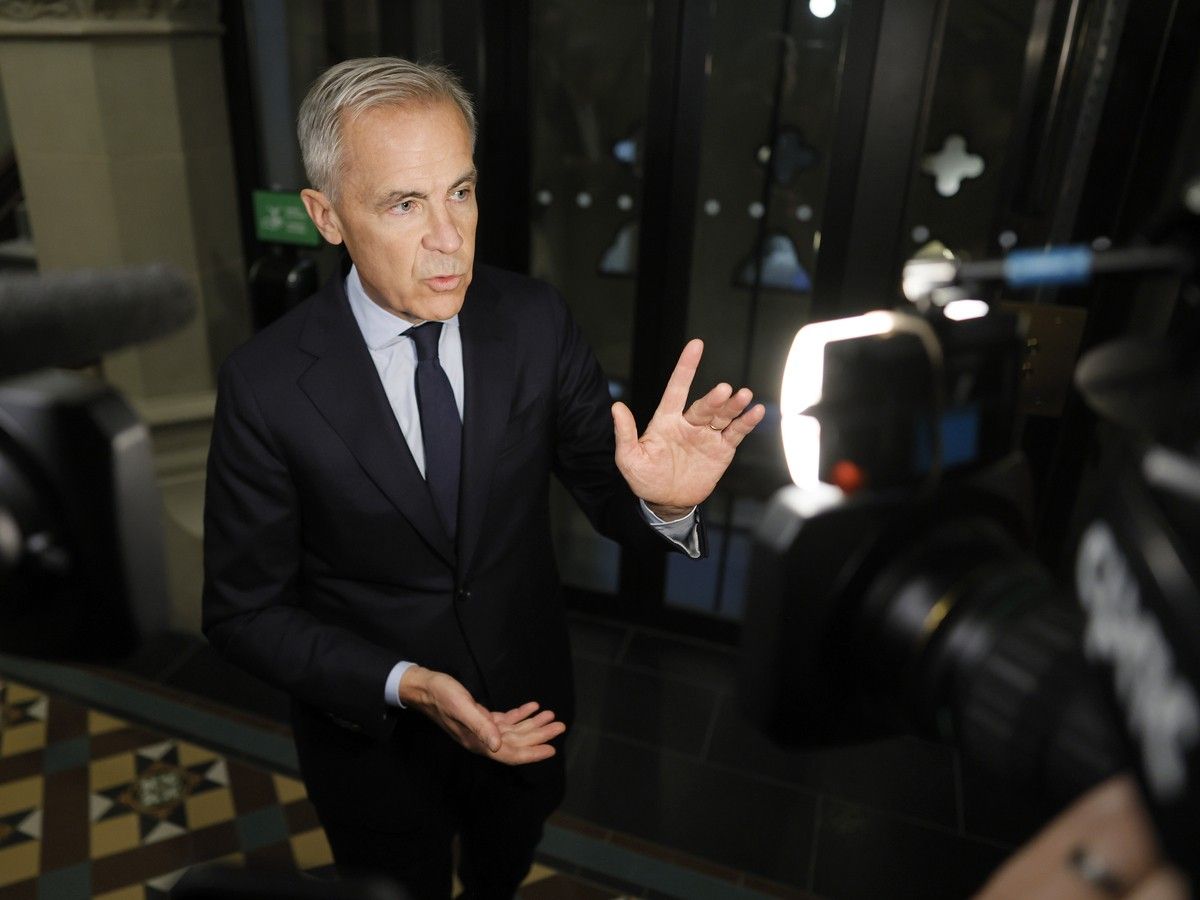
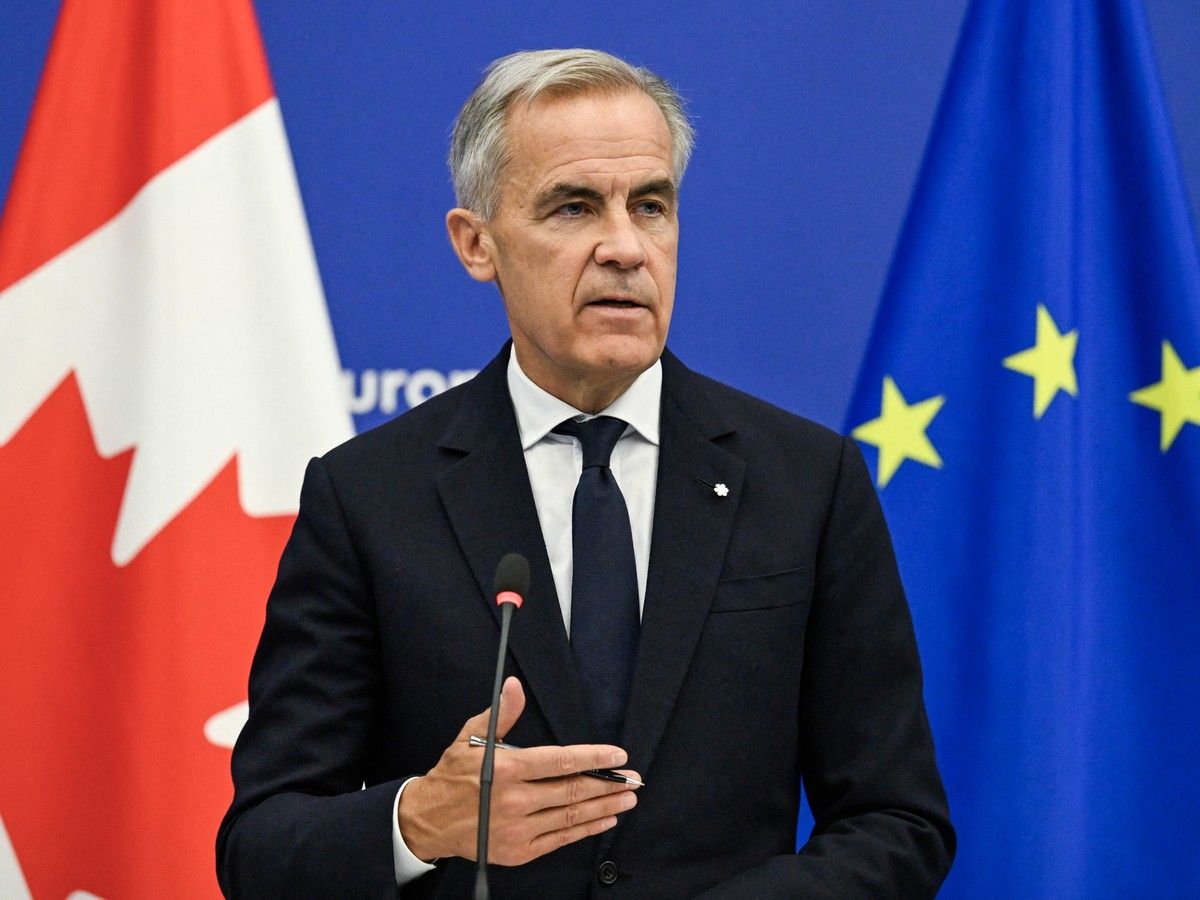
In his recent interview with the New York Times, Prime Minister Carney made a good many appropriate conciliatory noises, without backing down an inch on the legitimate points of Canadian sovereignty that he has been making. asserted
he → make → that
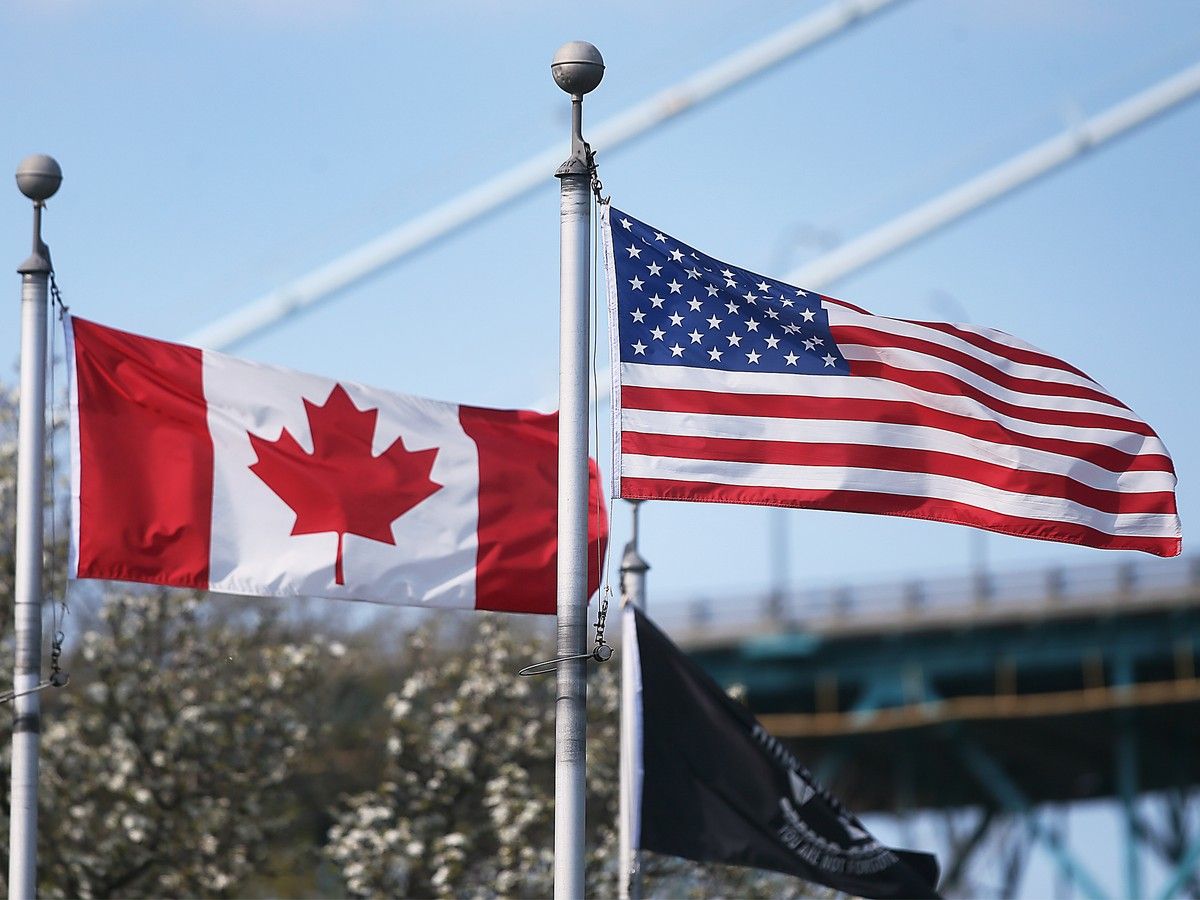
It was perhaps foreordained that before this exchange reverted to reasonable civility between apparently responsible people, it was necessary that reference be made to the possibility of armed conflict between Canada and the United States. asserted
reference → foreordain → Canada
I’ve described this elsewhere as equivalent in likelihood to an invasion of Martians or of angry elves commanded by Santa Claus. asserted
I → describe → Claus
In the early 1920s Canadian Lt.-Col. James “Buster” Sutherland Brown, in charge of strategic planning, conceived of a conflict with United States in which Canada would take the initiative by storming across the border, seizing cities east and west. asserted
Canada → conceive → cities
He was regarded at the time as possibly deranged and transferred to other tasks, but was revived decades later by militant anti-Americans in Canada as a clairvoyant folk hero. uncertain
He → regard → hero
The admirers of the founders of the U.S. Democratic Party, Thomas Jefferson and James Madison, commended themselves for doubling its size of America by the Louisiana Purchase from Napoleon, while shrinking the defense budget. asserted
admirers → commend → budget
They failed to notice that in disbanding the army of 20,000 trained soldiers that the first president, General George Washington, and his chosen successor John Adams had maintained, they lost all deterrence against abusive conduct by the Royal Navy. asserted
they → fail → Navy
The British imposed a naval blockade on the United States and overwhelmed the commerce of New England with smuggling from Canada, and Jefferson invoked the insurrection act in border areas. asserted
Jefferson → impose → areas
President Madison, principal author of the Constitution of the United States and one of the greatest lawgivers in history, rising above Hammurabi, Justinian, and Napoleon, plunged into the war of 1812 unaware that he had no forces whatever to expel the British from Canada. asserted
he → rise → Canada
He was also unable to overcome the loyalty of the French Canadians to the British crown, which they had promised in exchange for the freedom of religion, language, and the Civil Code that had been assured to them in the Quebec Act of 1774. asserted
that → overcome → 1774
Many years later, in the last months of his life in 1826, Jefferson described the conquest of Canada as “a mere matter of marching.” asserted
Jefferson → describe → marching
Only if you had the troops to march. asserted
you → have → troops
When Canada became an independent country, July 1, 1867, the minister of defense and the militia, Sir George-Etienne Cartier, in preparation for anticipated cross-border attacks by the American Fenians, recent immigrants from Ireland, fugitives of the famine full of hate for the oppressions of the English in their home country, managed the astounding feat, which would not be easily duplicated today, of raising an armed and trained militia of nearly 40,000 Canadians near border crossing points with the United States from New Brunswick to Southwestern Ontario. asserted
which → become → Ontario
This deterred the Fenians, and at the Washington conference of 1871, our first and shamefully desecrated prime minister, John A. Macdonald, joined and was a key player with the British Empire delegation in working out a comprehensive settlement of all American grievances with Britain and gaining the clear recognition of both great powers of Canada’s independence. asserted
minister → deter → independence
The principal British motivation for acceding to the requests of Macdonald and Cartier and the Liberal leader, the publisher of the precursor to the Toronto Globe and Mail, George Brown, and others, for an independent Confederation consisting of all the settlements strung along the American border, was that after the terrible American Civil War, Canada was vulnerable to the victorious Union army. asserted
Canada → accede → army
Slavery had been abolished in the U.S. at the cost of 750,000 American lives in a population of 31,000,000; five states had been smashed to rubble and scorched to ashes by the Grand Army of the Republic commanded by Generals Ulysses S. Grant and William T. Sherman. asserted
states → abolish → Grant
The deterrent power of the Royal Navy, the war-weariness of the enervated but triumphant American Union, and the statesmanship of the chief founder of our country prevented an American assault on Canada to avenge itself against Britain. asserted
power → prevent → Britain
Apart from the eccentric James H. Brown, no one of any official seniority at all has raised the prospect of war on our border since, until Mark Carney inexplicably volunteered it last week. asserted
Carney → raise → it
The positive aspect of this extraordinary musing from our prime minister is that it failed to roil the waters of Canadian-American relations. asserted
it → fail → relations
And President Trump in one of the busiest weeks of his nearly six years in the White House, focused at the United Nations on the Iran and Ukraine conflicts, the imminent demise of the failed communist state of Cuba, and the arrival of the president of China for a ceremonious and apparently cordial state visit. asserted
Trump → focus → visit
This meeting appeared to produce some de-escalation of Chinese support for Iran and renewed assurance that the United States would not attempt to alter the arrangement on Taiwan made by President Nixon with Chairman Mao Zedong and Premier Chou En-lai in 1972. asserted
States → appear → 1972
Mark Carney has expressed his hopes for economic growth and encouraged the major projects office to address the most promising proposals raised at the Canada investment conference last month. asserted
Carney → express → conference
The implication, though not confirmed as a certainty, is that he is winning the struggle with his environmental conscience and will promote Canada’s sensible capitalization of its immense potential as an exporter of oil and natural gas. asserted
he → confirm → oil
The concept of privatizing airport management is being considered, as has been successfully done in the United Kingdom and elsewhere, to build a sovereign fund to assist in the advancement of the major projects. asserted
concept → privatize → projects
Not only has this the makings of a workable plan, but asserted
this → have → plan
it possesses some of the grandeur that Canadian federalism has always required to prevail over provincial tendencies to decentralization. asserted
federalism → possess → decentralization
Such a program could be an inspiring reenactment of the spirit of the Canadian Pacific Railway, one of the wonders of the world when it was built across the Canadian Shield, and the Saint Lawrence Seaway, which brought ocean shipping to the great cities of the eastern and central interior of this continent. uncertain
which → build → continent
If this is what the Prime Minister intends, he will have and deserve widespread support. asserted
he → intend → support

💬Give feedback
🕘History 🎫Support