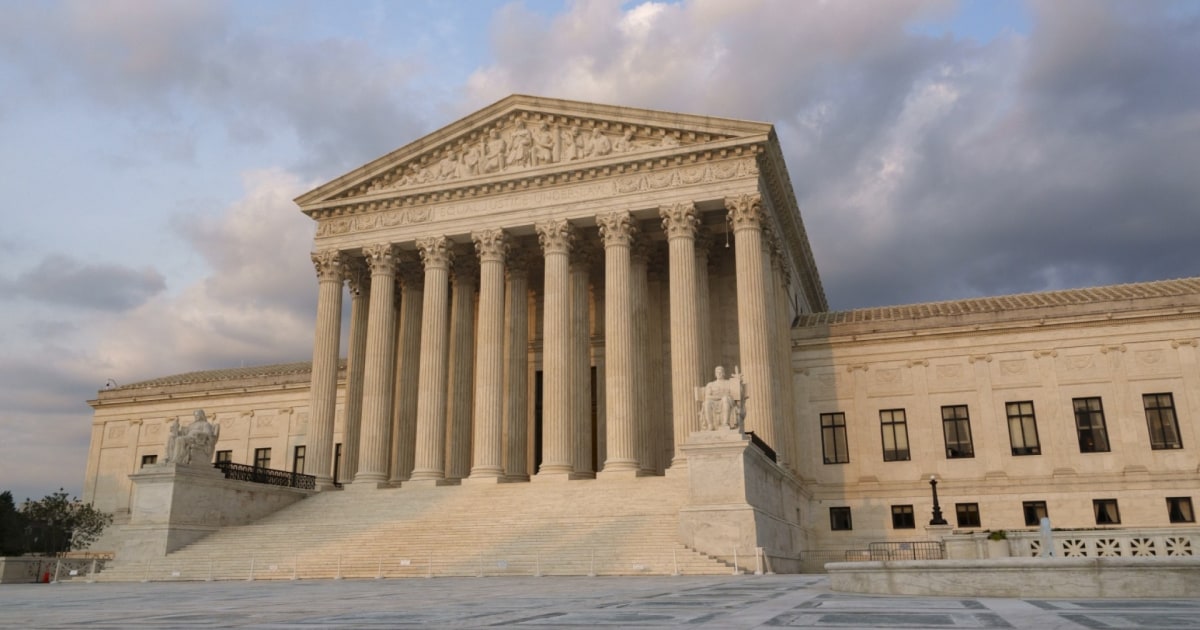
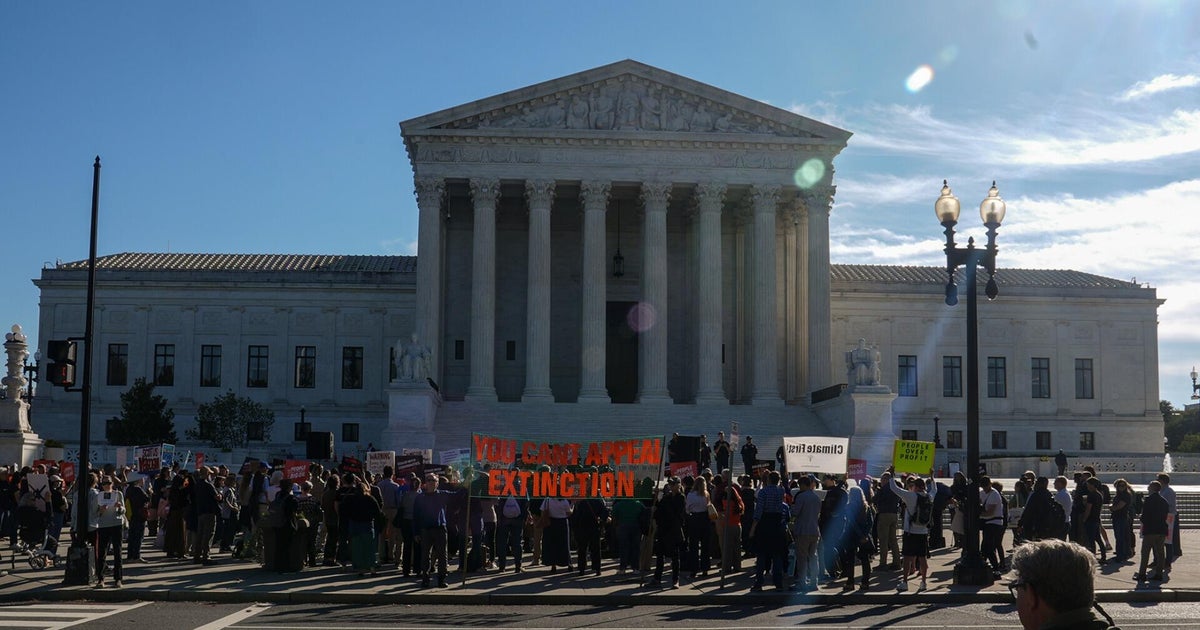
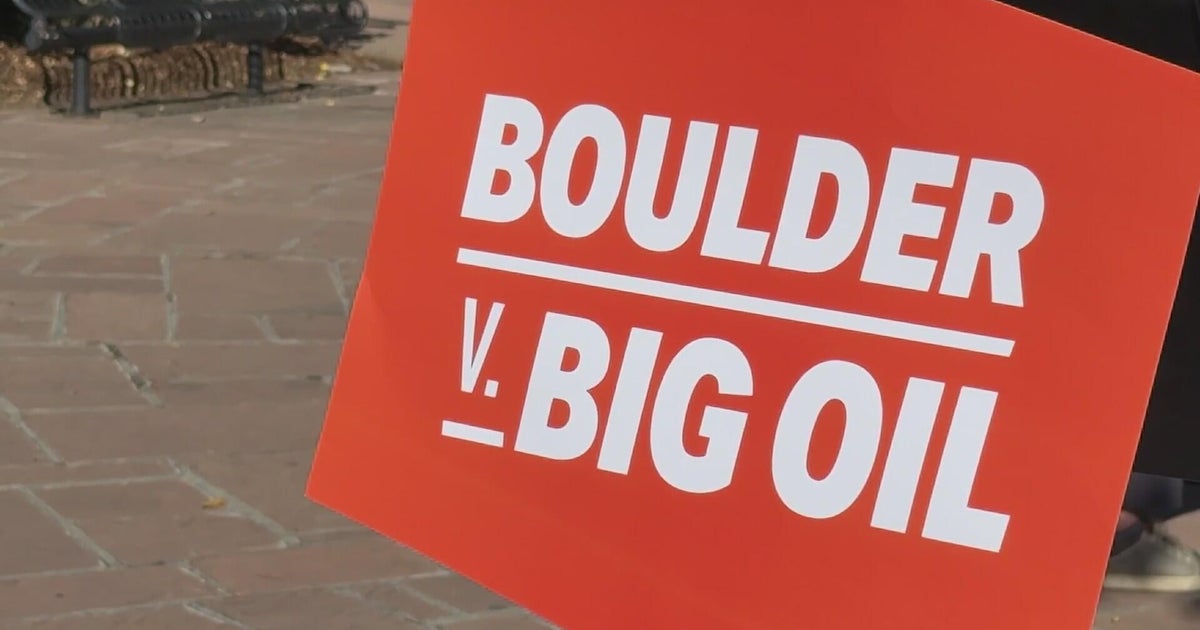
Photo via Washington Examiner

Supreme Court’s Boulder climate case could send your bills soaring

Read the original at Washington Examiner ↗
Cite

Wheat, J. M., & Greszler, R. (2026, October 5). Supreme Court’s Boulder climate case could send your bills soaring. Washington Examiner. https://www.washingtonexaminer.com/restoring-america/4752982/supreme-court-boulder-climate-case-could-send-your-bills-soaring-everyday-goods/

Dated when The Aporia collected the article, usually within hours of publication. Check the original for its exact date and byline.

Washington Examiner · collected 2026-10-05 · by J. Marc Wheat, Rachel Greszler

Quick Summary

The Supreme Court is set to hear arguments on October 5 in Suncor Energy (U.S.A.) Inc. v. Board of County Commissioners of Boulder County, a case that could determine if local governments can sue energy companies over climate change impacts under state law. The lawsuit by Boulder involves claims against Exxon and Suncor for alleged contributions to global warming and public deception about climate risks. At stake is whether nearly 91,000 U.S. jurisdictions could pursue multibillion-dollar lawsuits against private firms, potentially leading to increased energy costs nationwide if successful.
Written by AI on 2026-10-05, from this article's own text only (the story summary below draws on all the coverage).

AI analysis

Story summary

The Supreme Court opened its new term on Monday by hearing arguments in Suncor Energy v. Boulder County, a landmark case that could determine whether states and local governments can sue oil and gas companies for climate change damages. The case, which began in 2018 when Boulder County sued Exxon Mobil and Suncor Energy, accuses these companies of contributing to climate-related harms through their fossil fuel operations. The lawsuit aims to hold the companies financially responsible for local climate impacts using state tort laws.

If the Supreme Court allows such lawsuits, it could set a precedent for similar cases across the nation, potentially affecting industries that emit carbon and leading to increased costs for consumers due to higher legal liabilities. Conversely, if the court rules against Boulder County, it would limit states' ability to use their courts for addressing national policy issues like climate change through tort law, thereby protecting manufacturers from an expanding patchwork of lawsuits based on complex environmental problems.

Written for “Supreme Court Climate Case” on 2026-10-31, grounded in this article and the 35 other(s) covering the same event.

Story

📰 Supreme Court Climate Case
Environment · 36 article(s) covering the same event. Compare every outlet's account →

Compared with similar articles

This article reads unscored and hedges 41% of its claims. Each row says how that neighbour differs.
The Guardian
⚖️ Leans left Hedges 5 of 36 claims Outlet record 66/100
Washington Examiner
Hedges 2 of 20 claims Outlet record 70/100
Reason
Hedges 2 of 10 claims Outlet record 67/100
Los Angeles Times
Hedges 10 of 25 claims Outlet record 95/100
Washington Examiner
⚖️ Leans left Hedges 1 of 18 claims Outlet record 70/100
CBS News
Hedges 0 of 2 claims Outlet record 66/100
CBS News
⚖️ Leans left Hedges 0 of 1 claims Outlet record 66/100
Reason
Hedges 18 of 87 claims Outlet record 67/100
“The articles discuss different aspects of the Suncor Energy v. Boulder County case; one focuses on Prof. Adler's amicus brief and its reception, while the other provides a broader perspective on the implications of the case for energy companies and consumers.”
The Guardian
⚖️ Leans strongly left Hedges 1 of 21 claims Outlet record 66/100
“Article A discusses states and cities suing over EPA rule repeals, while Article B covers a Supreme Court case about lawsuits against energy companies for climate change contributions.”
How this article was measured signals, leaning charts, publisher record, byline, topics and claims

Signals How these are calculated →

Claims extracted
22
sentences that state something as happening or true
Uncertain
41%
9 of 22 hedged ("reportedly", "may", "according to")
Leaning
withheld
no quote in the article backed the model's score
Publisher signals
70/100
Washington Examiner's corrections and hedging, across everything collected from it. Not a measure of accuracy.
Outlets on this story
36
Environment
Same framing elsewhere
1
articles that frame the event the way this one does
Analyzed 2026-10-05 · how these are computed

How this is being covered How these are calculated →

Article leaning vs. publisher reliability
Source leaning vs. consistency

Publisher

Washington Examiner · 3851 article(s) · 7 correction(s) detected
Running correction rate · 7 correction(s)

Who wrote this

J. Marc Wheat
1 article(s) here · 1 carrying a prediction
🔮 If it seems like everyday expenses are becoming less affordable, just imagine what you could pay if the Supreme Court decides that thousands of state and local governments can bring multibillion-dollar lawsuits against energy companies for their alleged contributions to climate change.
The only article under this byline in the corpus.
Rachel Greszler
2 article(s) here · 1 carrying a prediction
🔮 When Virginians head to the polls on Nov. 3, they will vote on “Question 1, Right to Reproductive Freedom Amendment.”
🔮 If it seems like everyday expenses are becoming less affordable, just imagine what you could pay if the Supreme Court decides that thousands of state and local governments can bring multibillion-dollar lawsuits against energy companies for their alleged contributions to climate change.
Also by Rachel Greszler
Nothing else under this byline is closely related to this article, so these are simply their most recent.

Topics

Boulder Colorado Oregon Suncor Energy (U.S.A.) Inc. the Supreme Court

Subjects

Boulder GPE · 3× Colorado GPE · 3× the Supreme Court ORG · 3× AAF ORG · 2× Oregon GPE · 2× Board of County Commissioners ORG · 1× Boulder County GPE · 1× Exxon ORG · 1× Suncor ORG · 1× Suncor Energy (U.S.A.) Inc. ORG · 1×

Narrative

The consequences would extend beyond the gas pump and monthly energy bills, affecting the cost of everything from manufacturing and shipping to air travel, groceries, healthcare, and housing. An analysis from AAF’s Institute for Statistical Policy Analysis finds, and AAF’s amici brief summarizes, that “Litigation-imposed liability would therefore function as a regressive tax on the cost of every good and service that depends on affordable energy to produce.” The Constitution’s framers understood that local government should be responsible for regulating most issues that affect the public’s everyday lives.
framing: mixed · carried by 1 article(s) · first seen 2026-10-05
🔮 If it seems like everyday expenses are becoming less affordable, just imagine what you could pay if the Supreme Court decides that thousands of state and local governments can bring multibillion-dollar lawsuits against energy companies for their alleged contributions to climate change.
2026-10-05 · Washington Examiner
Supreme Court’s Boulder climate case could send your bills soaring · mixed framing

Claims (22 extracted, 9 hedged)

If it seems like everyday expenses are becoming less affordable, just imagine what you could pay if the Supreme Court decides that thousands of state and local governments can bring multibillion-dollar lawsuits against energy companies for their alleged contributions to climate change. uncertain
thousands → seem → change
The Supreme Court is scheduled to hear arguments in Suncor Energy (U.S.A.) Inc. v. Board of County Commissioners of Boulder County, a case considering that very question, on Oct. 5. asserted
Court → schedule → Oct.
At issue is a 2018 case in which the City of Boulder, Colorado, and the County Commissioners of Boulder County sued international energy companies Exxon and Suncor in Colorado state court. asserted
City → sue → court
The lawsuit — raising state-law claims, including public and private nuisance, trespass, unjust enrichment, and consumer protection — alleges that the companies contributed to climate change, knowingly misled the public about climate risks, and should pay for local climate-related costs. uncertain
companies → raise → costs
The crux of the case that the Supreme Court agreed to hear is not about the merits of Boulder’s allegations, but whether Boulder, or any one of nearly 91,000 state, local, and tribal governments within the United States, can sue private companies over national and international issues like climate change. asserted
Boulder → agree → change
Boulder isn’t the first jurisdiction to bring such a lawsuit. asserted
Boulder → bring → lawsuit
As an amicus brief filed by Advancing American Freedom notes, “Eleven U.S. states and dozens of city, county, and tribal governments across California, Colorado, Hawaii, Illinois, Maryland, New Jersey, New York, Oregon, Pennsylvania, Washington, and Puerto Rico, currently have active lawsuits seeking to hold major oil and gas companies liable for alleged climate damages. asserted
companies → file → damages
If local governments can use state tort law to seek billions of dollars from energy companies, an economic “tragedy of the commons” could ensue. uncertain
tragedy → use → commons
Each locality will be incentivized to maximize its claims against energy companies while dispersing the costs of its claims nationally through higher energy prices. uncertain
locality → incentivize → prices
With single jurisdictions such as Multnomah County, Oregon, demanding a $50 billion abatement fund plus $1.5 billion in future damages to “weatherproof” the county and New York’s Climate Change Superfund Act imposing $75 billion in fees on major fossil fuel producers over 25 years, the additional costs to energy producers, and thus consumers, could be enormous. uncertain
costs → demand → producers
The possible escalation in costs goes beyond civil litigation. asserted
escalation → go → litigation
As our colleague John Malcolm recently explained, “Using language usually reserved to describe serial murders, terrorist attacks, and mass shootings, several environmental activists are encouraging state prosecutors to charge energy executives and greenhouse gas emitters with murder or manslaughter for deaths that the environmentalist activists claim are directly related to their conduct.” uncertain
activists → explain → conduct
The prospect of criminal liability could further chill investment in energy production, raising the cost of capital and putting additional upward pressure on energy prices. uncertain
prospect → chill → prices
A peer-reviewed study of 108 climate lawsuits against publicly traded companies shows that companies are already pricing climate litigation costs into their operations. asserted
companies → review → operations
If individual localities could use state tort law as a de facto means of regulating conduct that is national and international in scope, it could fundamentally reshape our national energy system. uncertain
it → use → system
Climate policy by a thousand courtrooms could make everyday goods and services that already seem less affordable prohibitively expensive for many Americans. uncertain
that → make → Americans
The consequences would extend beyond the gas pump and monthly energy bills, affecting the cost of everything from manufacturing and shipping to air travel, groceries, healthcare, and housing. An analysis from AAF’s Institute for Statistical Policy Analysis finds, and AAF’s amici brief summarizes, that “Litigation-imposed liability would therefore function as a regressive tax on the cost of every good and service that depends on affordable energy to produce.” The Constitution’s framers understood that local government should be responsible for regulating most issues that affect the public’s everyday lives. asserted
that → extend → lives
But they also understood that the country’s national and international policy must be set by the federal government. asserted
policy → understand → government
The Supreme Court must recognize that leaving this sort of regulation up to each of America’s tens of thousands of localities would be both unconstitutional and destructive. asserted
leaving → recognize → localities
National energy and climate policy should be enacted by Congress, not litigated across thousands of state court cases. asserted
policy → enact → cases
In the Suncor case, the Supreme Court should say so. asserted
Court → say → case
J. Marc Wheat is the General Counsel for Advancing American Freedom and Senior Legal Fellow at the Edwin Meese III Institute for the Rule of Law; Rachel Greszler is a Senior Research Fellow in the Plymouth Institute for Free Enterprise at Advancing American Freedom. asserted
Greszler → advance → Freedom

💬Give feedback
🕘History 🎫Support