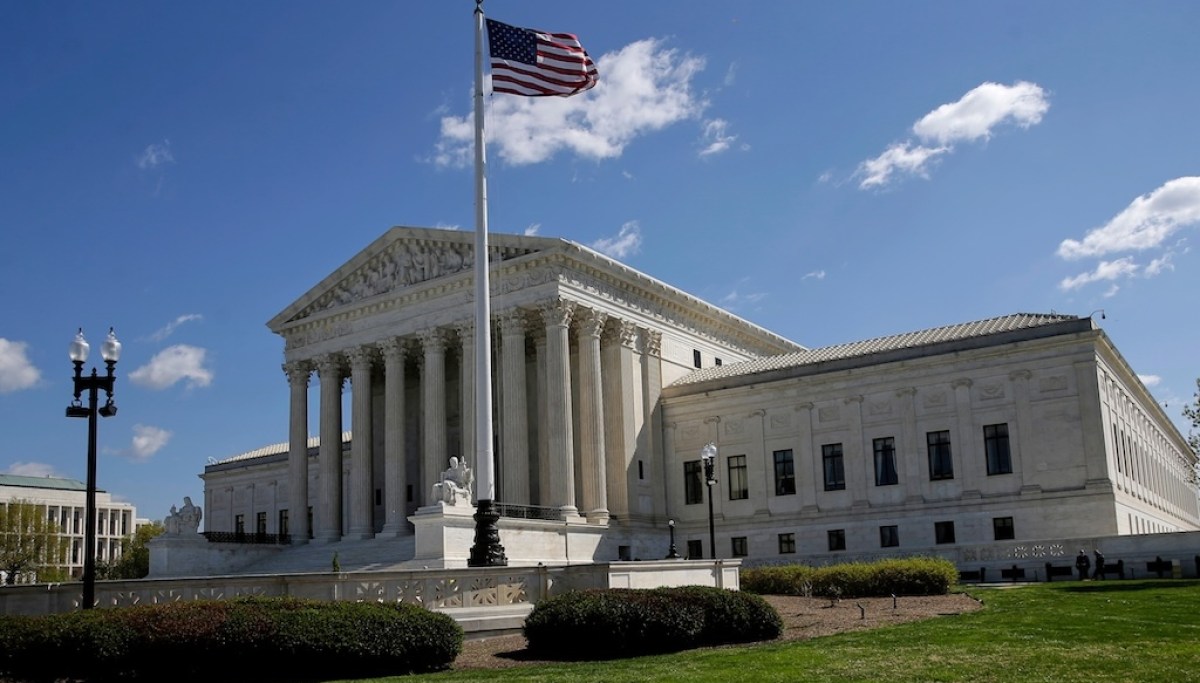
Unpacking the Suncor Oral Argument

Read the original at Reason ↗
Cite

Adler, J. H. (2026, October 5). Unpacking the Suncor Oral Argument. Reason. https://reason.com/volokh/2026/10/05/unpacking-the-suncor-oral-argument/

Dated when The Aporia collected the article, usually within hours of publication. Check the original for its exact date and byline.

Reason · collected 2026-10-05 · by Jonathan H. Adler

Quick Summary

The Supreme Court is set to hear oral arguments in the case of Suncor Energy v. Boulder County on October 9th, where fossil fuel companies are arguing that all state-law-based tort lawsuits regarding climate change damages should be preempted by federal law. This could have significant implications for environmental and climate policy in the United States. The author will discuss this case at two events: one at Penn Carey Law School on Friday, October 9th, and another via webinar hosted by Case Western Reserve University School of Law on Tuesday, October 13th.
Written by AI on 2026-10-05, from this article's own text only (the story summary below draws on all the coverage).

AI analysis

Story summary

The Supreme Court opened its new term on Monday by hearing arguments in Suncor Energy v. Boulder County, a landmark case that could determine whether states and local governments can sue oil and gas companies for climate change damages. The case, which began in 2018 when Boulder County sued Exxon Mobil and Suncor Energy, accuses these companies of contributing to climate-related harms through their fossil fuel operations. The lawsuit aims to hold the companies financially responsible for local climate impacts using state tort laws.

If the Supreme Court allows such lawsuits, it could set a precedent for similar cases across the nation, potentially affecting industries that emit carbon and leading to increased costs for consumers due to higher legal liabilities. Conversely, if the court rules against Boulder County, it would limit states' ability to use their courts for addressing national policy issues like climate change through tort law, thereby protecting manufacturers from an expanding patchwork of lawsuits based on complex environmental problems.
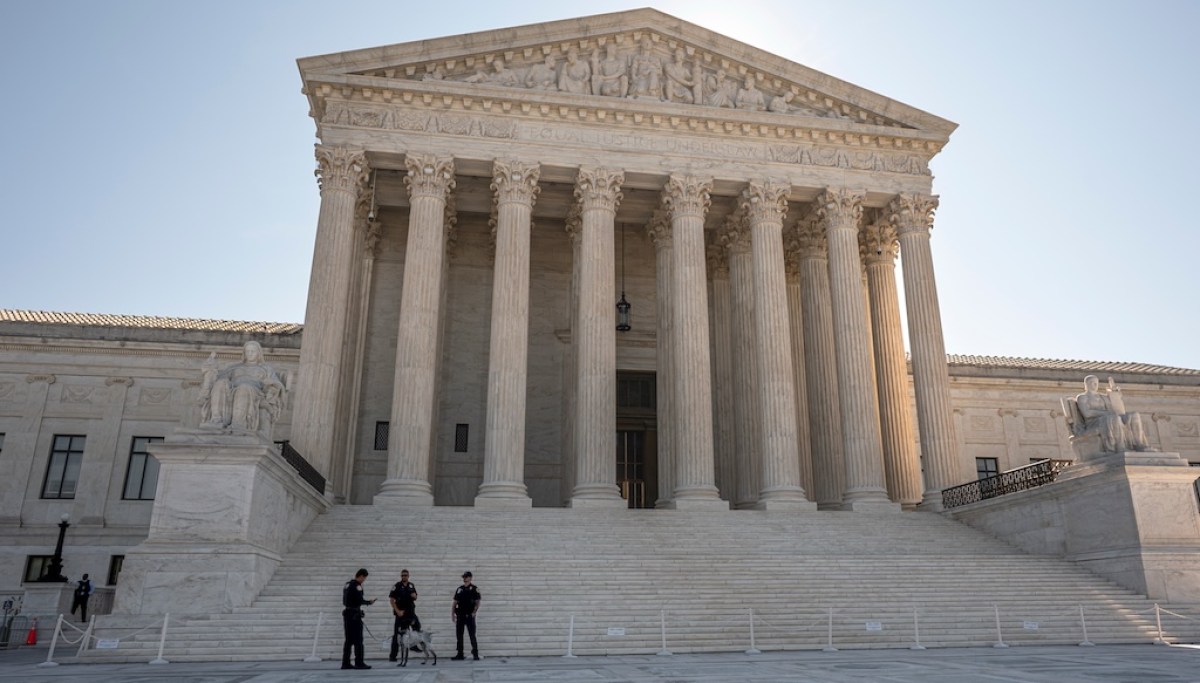

Written for “Supreme Court Climate Case” on 2026-11-04, grounded in this article and the 35 other(s) covering the same event.

Story

📰 Supreme Court Climate Case
Environment · 36 article(s) covering the same event. Compare every outlet's account →

Compared with similar articles

This article reads unscored and hedges 20% of its claims. Each row says how that neighbour differs.
Washington Examiner
⚖️ Leans left Hedges 12 of 56 claims Outlet record 69/100
Los Angeles Times
Hedges 19 of 57 claims Outlet record 95/100
The Straits Times
⚖️ Leans left Hedges 6 of 19 claims Outlet record 66/100
Washington Examiner
⚖️ Leans strongly right Hedges 2 of 34 claims Outlet record 69/100
NPR
Hedges 8 of 52 claims Outlet record 60/100
NBC News
⚖️ Leans left Hedges 7 of 33 claims Outlet record 78/100
Washington Examiner
Hedges 9 of 22 claims Outlet record 69/100
Washington Examiner
Hedges 7 of 40 claims Outlet record 69/100
The Guardian
⚖️ Leans left Hedges 5 of 36 claims Outlet record 66/100
Los Angeles Times
Hedges 10 of 25 claims Outlet record 95/100
How this article was measured signals, leaning charts, publisher record, byline, topics and claims

Signals How these are calculated →

Claims extracted
10
sentences that state something as happening or true
Uncertain
20%
2 of 10 hedged ("reportedly", "may", "according to")
Leaning
not political
takes no side on a contested political question
Publisher signals
67/100
Reason's corrections and hedging, across everything collected from it. Not a measure of accuracy.
Outlets on this story
36
Environment
Same framing elsewhere
1
articles that frame the event the way this one does
Analyzed 2026-10-05 · how these are computed

How this is being covered How these are calculated →

Article leaning vs. publisher reliability
Source leaning vs. consistency

Publisher

Reason · 1100 article(s) · 4 correction(s) detected
Running correction rate · 4 correction(s)

Who wrote this

Jonathan H. Adler
17 article(s) here · 1 carrying a prediction
🔮 The winner will receive an award plaque and be recognized at the section's program at the AALS annual meeting in January 2027.
🔮 Contributions to the symposium are: - Elizabeth Corey, Fusion: Power Is Not the Last Word; - Richard Morrison, What Fusion Will We Build; - Paul Mueller, Recovering Fusionism; - Veronique de Rugy, Fusionism and the Moral Prerequisites of Citizenship; - Paul Seaton, The Bifurcated Fusionist Regime. For more on the book, and why Fusionism remains relevant today, you can also check out this interview with Slade by James Patterson on Law & Liberty.
2026-10-11 · assertive framing · Fusionism in the Twenty-First Century
🔮 It seems to suggest that the claims made by the petitioners (and their allies) about the potentially catastrophic effects on the oil and gas industry of an adverse ruling in Suncor may have convinced Justice Alito that he needed to recuse, even though he does not own stock in any of the companies that are part of the case.
🔮 Mostly law professors | Sometimes contrarian | Often libertarian | Always independent This morning, the Supreme Court will hear oral argument in Suncor Energy v. Boulder County, in which fossil fuel energy companies are asking the Supreme Court to conclude that all state-law-based tort suits over damages allegedly caused by climate change are preempted.
2026-10-05 · assertive framing · Unpacking the Suncor Oral Argument
🔮 That may seem a contradiction: The justice often publicly portrayed as unyielding and inflexible is, behind the scenes, the conservative who is uniquely adept at finding common ground on the most divisive issues.
🔮 On Monday the Supreme Court will hear oral argument in Suncor Energy v. Boulder County.
🔮 Greg Stohr of Bloomberg reports on an interview with Justice Alito explaining the justice's last-minute decision to recuse in Suncor Energy v. Boulder County, the major climate change preemption case the Supreme Court will hear on Monday.
🔮 In 2025, after twenty-five years at Case Western Reserve University, I moved to William & Mary.
🔮 One week from today, the Supreme Court will open its term with oral argument in Suncor Energy v. Boulder County.
2026-09-28 · mixed framing · As Suncor Approaches, Justice Alito Recuses
🔮 Zycher's claim here that "in the context of Section 202(a), 'cause or contribute significantly' is replaced with 'reasonably be anticipated to endanger public health or welfare'" is simply wrong, as a moment's review of the relevant statutory text would have demonstrated.
Also by Jonathan H. Adler
Nothing else under this byline is closely related to this article, so these are simply their most recent.
All 17 articles by Jonathan H. Adler →

Topics

American Boulder County Suncor Suncor Energy the Supreme Court

Subjects

Suncor ORG · 4× Boulder County GPE · 3× Suncor Energy ORG · 3× the Supreme Court ORG · 2× American NORP · 1× James Goodwin PERSON · 1× Penn Carey Law School ORG · 1× The Volokh PERSON · 1× the Center for Progressive Reform ORG · 1× the University of Pennsylvania's ORG · 1×

Narrative

For more on the case, here are (some of) my posts on the subject (with more to come): - Climate Change Goes Back to the Supreme Court -- Colorado Edition, Feb. 23, 2026. - Previewing Suncor Energy v. Boulder County, Mar. 6, 2026. - Amicus Brief in Suncor Energy v. County Commissioners of Boulder County, Aug. 3, 2026. - Supreme Court Term to Start Hot, Aug. 6, 2026.
framing: assertive · carried by 1 article(s) · first seen 2026-10-05
🔮 Mostly law professors | Sometimes contrarian | Often libertarian | Always independent This morning, the Supreme Court will hear oral argument in Suncor Energy v. Boulder County, in which fossil fuel energy companies are asking the Supreme Court to conclude that all state-law-based tort suits over damages allegedly caused by climate change are preempted.
2026-10-05 · Reason
Unpacking the Suncor Oral Argument · assertive framing

Claims (10 extracted, 2 hedged)

Mostly law professors | Sometimes contrarian | Often libertarian | Always independent This morning, the Supreme Court will hear oral argument in Suncor Energy v. Boulder County, in which fossil fuel energy companies are asking the Supreme Court to conclude that all state-law-based tort suits over damages allegedly caused by climate change are preempted. uncertain
suits → hear → change
Assuming the Court reaches the merits, its decision could be quite significant for environmental law, climate policy, and American federalism. uncertain
decision → assume → law
I am scheduled to participate in two events analyzing the Suncor oral argument. asserted
I → schedule → argument
On Friday, October 9, I will be talking about the case at the University of Pennsylvania's Penn Carey Law School. asserted
I → talk → School
The event, "Discussing the Scope of Preemption in Emission s Lawsuits," will also feature James Goodwin of the Center for Progressive Reform is sponsored by the law school's Environmental Law Project and is part of Penn's Climate Week. asserted
event → discuss → Week
On Tuesday, October 13, I will again discuss the Suncor argument at the Case Western Reserve University School of Law. asserted
I → discuss → Law
This event, "Hot Times at the High Court: Suncor v. Boulder County and the Future of Climate Litigation," is a webinar (though we will have an in person audience too). asserted
we → have → audience
It will feature Professor Paul Salamanca of the University of Kentucky. asserted
It → feature → Kentucky
For more on the case, here are (some of) my posts on the subject (with more to come): - Climate Change Goes Back to the Supreme Court -- Colorado Edition, Feb. 23, 2026. - Previewing Suncor Energy v. Boulder County, Mar. 6, 2026. - Amicus Brief in Suncor Energy v. County Commissioners of Boulder County, Aug. 3, 2026. - Supreme Court Term to Start Hot, Aug. 6, 2026. asserted
Term → come → County
- As Suncor Approaches, Justice Alito Recuses, Sept. 28, 2026. asserted
Alito → approach → ?
💬Give feedback
🕘History 🎫Support