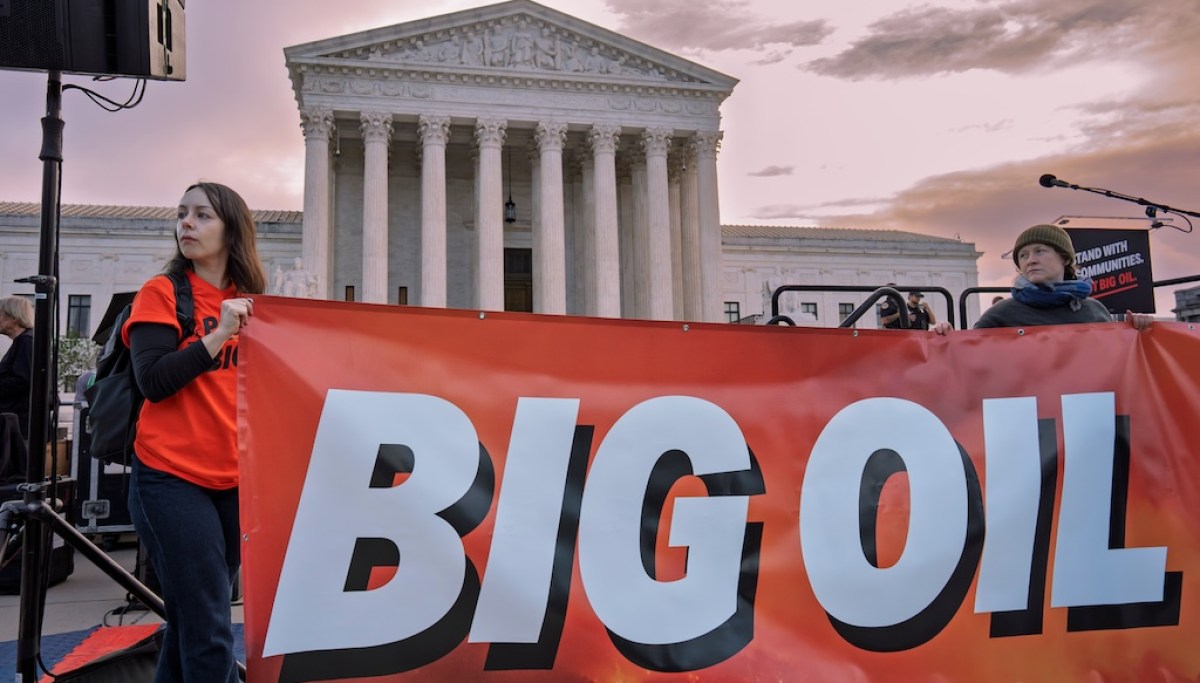
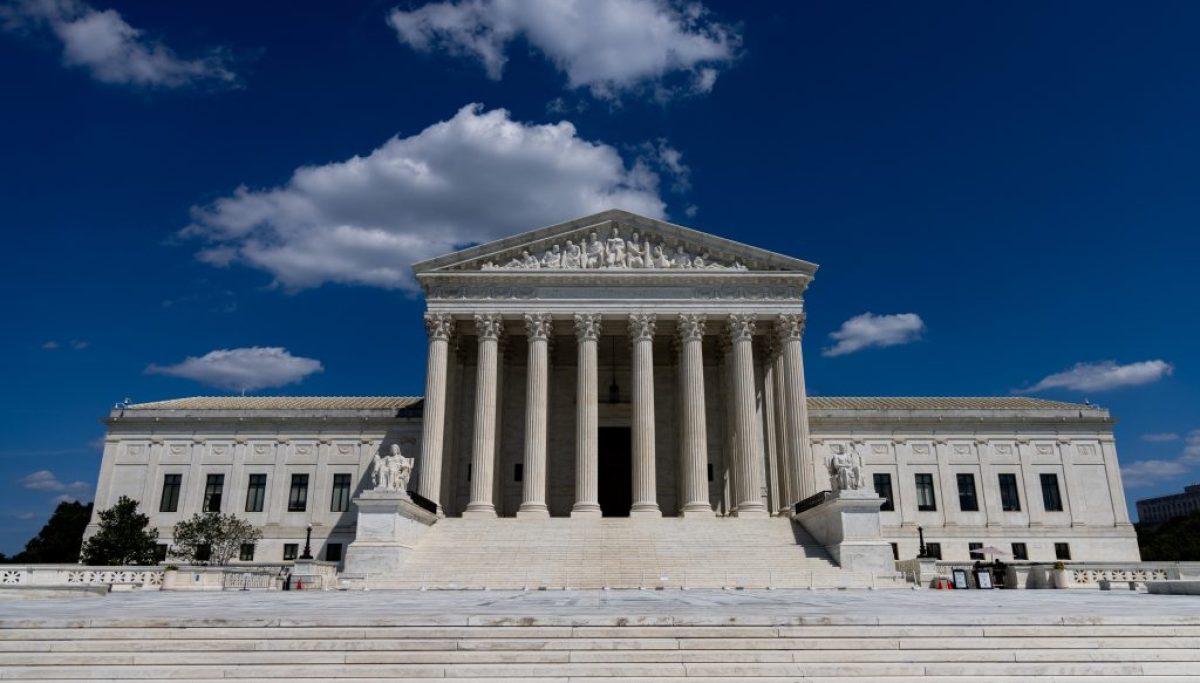
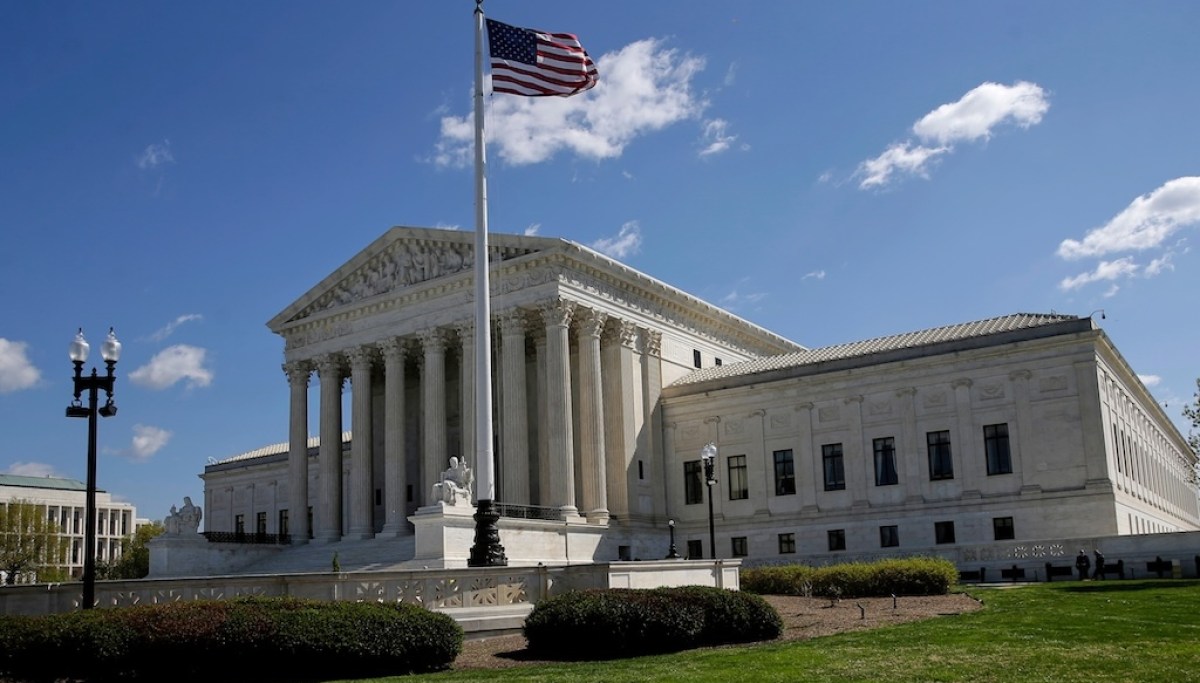
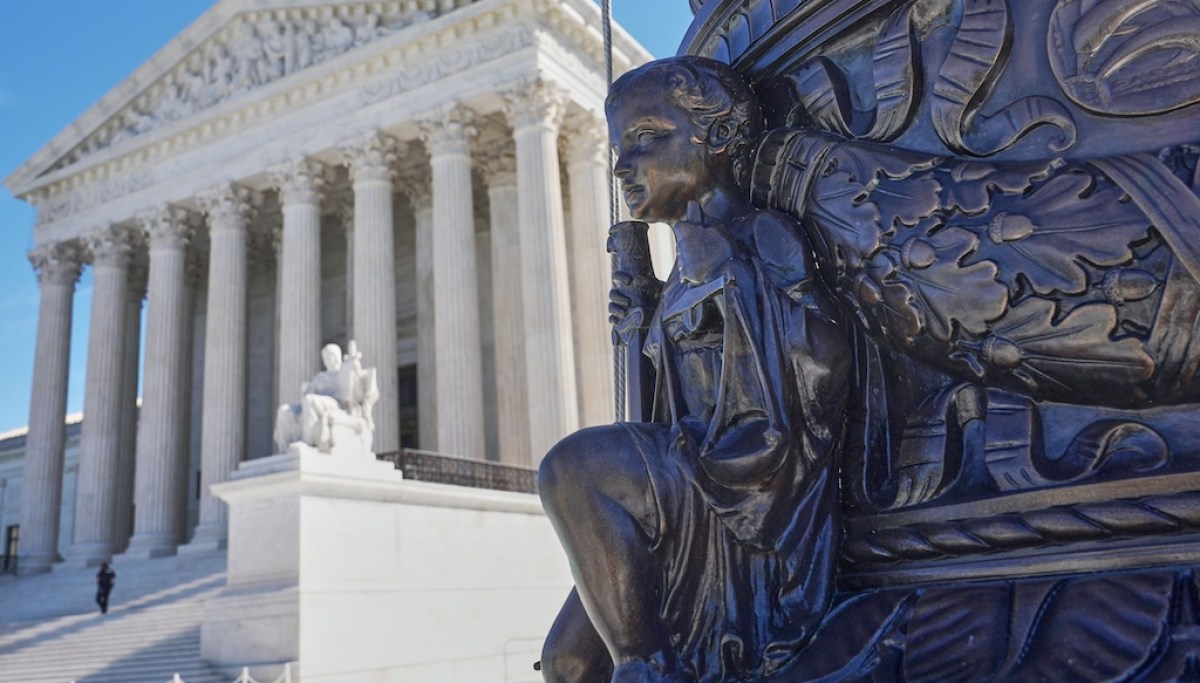
Photo via Washington Examiner

Supreme Court appears split on allowing Boulder’s costly climate change lawsuit to proceed

Read the original at Washington Examiner ↗
Cite

Birle, J. (2026, October 5). Supreme Court appears split on allowing Boulder’s costly climate change lawsuit to proceed. Washington Examiner. https://www.washingtonexaminer.com/news/supreme-court/4753643/supreme-court-appears-split-boulder-colorado-costly-climate-change-lawsuit/

Dated when The Aporia collected the article, usually within hours of publication. Check the original for its exact date and byline.

Washington Examiner · collected 2026-10-05 · by Jack Birle

Quick Summary

During Supreme Court oral arguments in Suncor Energy v. County Commissioners of Boulder County, justices were divided on whether to allow Boulder County's climate change lawsuit against oil companies to proceed. The case hinges on the Clean Air Act’s federal jurisdiction over air pollution and constitutional limits on states’ regulatory powers. Justice Elena Kagan questioned if cross-border pollution could be regulated by affected states, while Chief Justice John Roberts worried about the lack of limiting principles for similar lawsuits across jurisdictions.
Written by AI on 2026-10-05, from this article's own text only (the story summary below draws on all the coverage).

AI analysis

Story summary

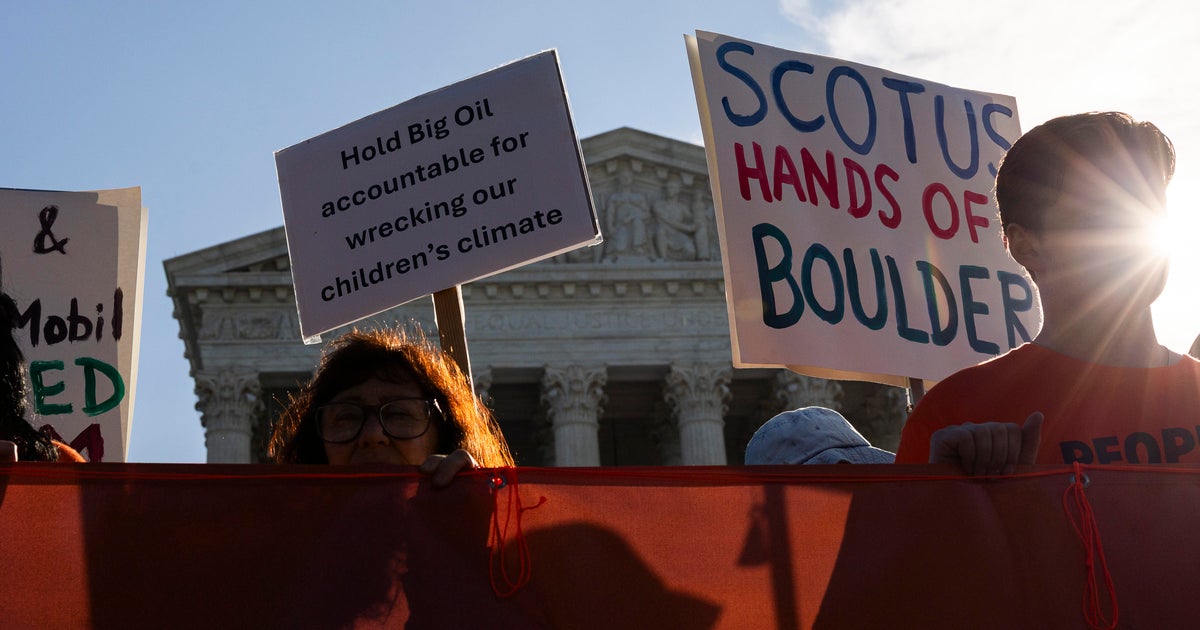
The Supreme Court opened its new term on Monday by hearing arguments in Suncor Energy v. Boulder County, a landmark case that could determine whether states and local governments can sue oil and gas companies for climate change damages. The case, which began in 2018 when Boulder County sued Exxon Mobil and Suncor Energy, accuses these companies of contributing to climate-related harms through their fossil fuel operations. The lawsuit aims to hold the companies financially responsible for local climate impacts using state tort laws.

If the Supreme Court allows such lawsuits, it could set a precedent for similar cases across the nation, potentially affecting industries that emit carbon and leading to increased costs for consumers due to higher legal liabilities. Conversely, if the court rules against Boulder County, it would limit states' ability to use their courts for addressing national policy issues like climate change through tort law, thereby protecting manufacturers from an expanding patchwork of lawsuits based on complex environmental problems.

Written for “Supreme Court Climate Case” on 2026-10-31, grounded in this article and the 35 other(s) covering the same event.

Story

📰 Supreme Court Climate Case
Environment · 36 article(s) covering the same event. Compare every outlet's account →

Compared with similar articles

This article reads unscored and hedges 10% of its claims. Each row says how that neighbour differs.
The Guardian
⚖️ Leans left Hedges 5 of 36 claims Outlet record 66/100
Washington Examiner
Hedges 9 of 22 claims Outlet record 70/100
Washington Examiner
⚖️ Leans left Hedges 12 of 56 claims Outlet record 70/100
Los Angeles Times
Hedges 19 of 57 claims Outlet record 95/100
Washington Examiner
⚖️ Leans strongly right Hedges 2 of 34 claims Outlet record 70/100
NPR
Hedges 8 of 52 claims Outlet record 60/100
NBC News
⚖️ Leans left Hedges 7 of 33 claims Outlet record 60/100
Washington Examiner
Hedges 7 of 40 claims Outlet record 70/100
Reason
Hedges 2 of 10 claims Outlet record 67/100
CBS News
Hedges 6 of 46 claims Outlet record 66/100
How this article was measured signals, leaning charts, publisher record, byline, topics and claims

Signals How these are calculated →

Claims extracted
20
sentences that state something as happening or true
Uncertain
10%
2 of 20 hedged ("reportedly", "may", "according to")
Leaning
not political
takes no side on a contested political question
Publisher signals
70/100
Washington Examiner's corrections and hedging, across everything collected from it. Not a measure of accuracy.
Outlets on this story
36
Environment
Same framing elsewhere
1
articles that frame the event the way this one does
Analyzed 2026-10-05 · how these are computed

How this is being covered How these are calculated →

Article leaning vs. publisher reliability
Source leaning vs. consistency

Publisher

Washington Examiner · 3820 article(s) · 7 correction(s) detected
Running correction rate · 7 correction(s)

Who wrote this

Jack Birle
34 article(s) here · 1 carrying a prediction
🔮 As same-day voters go to the polls for the midterm elections next week, the Supreme Court will hear a major religious liberty case over a Colorado universal preschool program with implications beyond the Centennial State.
🔮 A trio of cases involving property rights and personal freedoms set to be argued this term illustrates the role of the Supreme Court as the last line of defense for people fighting what they see as government overreach.
🔮 The Supreme Court will hear a pair of cases over the legality of sweeping “assault weapons” bans later this year, and the local governments at the center of the lawsuits are urging the high court this week to let them ban the firearms they claim are responsible for the “most tragic and frightening crimes.”
🔮 The Supreme Court handed the Trump administration a loss on its emergency docket on Wednesday, declining to lift a lower court’s block on a new regulation for federal prisons that would stop providing inmates with transgender surgeries and procedures.
🔮 The high court announced in an order list that because they lacked a quorum in BMG Rights Management v. Vetter, the lower court’s ruling would be affirmed as if the justices never took up the case, the same way that a deadlock at the Supreme Court would affirm a lower court’s ruling.
🔮 The Supreme Court announced Monday that it will hear a challenge to a federal law barring the distilling of alcohol at home, weighing whether it oversteps the federal government’s powers.
🔮 Justice Samuel Alito began his 22nd Supreme Court term last week, but even as he insists he will remain on the bench, speculation has grown over whether it could be his final one on the high court.
🔮 The high court ruled 7-2 to halt a ruling by the U.S. Court of Appeals for the 4th Circuit that would have forced the FCC to issue a final ruling on a revised rule allowing political parties and joint fundraising committees to access the same, more favorable television advertisement rates that are typically reserved for political candidates.
🔮 A lower federal court had ordered discovery into whether DOGE is subject to FOIA, but the Trump administration has argued the “sweeping, intrusive discovery” would effectively give the watchdog the documents it wants through the request before the court could even determine if it is subject to the public records request.
🔮 A female high school wrestler in Washington urged the Supreme Court earlier this week to intervene in a lawsuit over the state’s laws allowing biological men to compete in women’s sports, as the high court could issue another key ruling about transgender sports policies months after its landmark June decision.
Also by Jack Birle
Nothing else under this byline is closely related to this article, so these are simply their most recent.
All 34 articles by Jack Birle →

Topics

Boulder Boulder County Suncor The Supreme Court the Clean Air Act

Subjects

Boulder GPE · 6× Suncor ORG · 5× The Supreme Court ORG · 3× Boulder County GPE · 2× Colorado GPE · 2× Harris PERSON · 2× Roberts PERSON · 2× County Commissioners of Boulder County ORG · 1× Democrat NORP · 1× Suncor Energy v. ORG · 1×

Narrative

Suncor lawyer Kannon Shanmugam argued to the justices that Boulder’s lawsuit should be dismissed both because the Clean Air Act gives the federal government jurisdiction over the regulation of greenhouse gas emissions and air pollution, and because the Constitution does not allow states to regulate matters beyond their borders.
framing: assertive · carried by 1 article(s) · first seen 2026-10-05
🔮 The case is expected to have sweeping ramifications for similar lawsuits that climate activists and Democrat-led jurisdictions have attempted to bring against oil companies, either broadly allowing them to continue or shutting them down as barred by federal law.

Claims (20 extracted, 2 hedged)

The Supreme Court appeared split over whether to allow Boulder County, Colorado’s climate-change damages lawsuit against oil companies to proceed, with the justices appearing to have reservations about both sides’ sweeping arguments during Monday’s hearing. asserted
justices → appear → hearing
The high court heard oral arguments in Suncor Energy v. County Commissioners of Boulder County on whether a lawsuit brought by Boulder County, which seeks to hold oil companies accountable for their alleged role in global climate change, can proceed. asserted
companies → hear → change
The case is expected to have sweeping ramifications for similar lawsuits that climate activists and Democrat-led jurisdictions have attempted to bring against oil companies, either broadly allowing them to continue or shutting them down as barred by federal law. asserted
them → expect → law
Suncor lawyer Kannon Shanmugam argued to the justices that Boulder’s lawsuit should be dismissed both because the Clean Air Act gives the federal government jurisdiction over the regulation of greenhouse gas emissions and air pollution, and because the Constitution does not allow states to regulate matters beyond their borders. asserted
states → argue → borders
Shanmugam emphasized the constitutional argument, leading to pushback from some of the justices. asserted
Shanmugam → emphasize → justices
Chief Justice John Roberts and Justice Elena Kagan both questioned whether there are situations in which pollution caused in one state could be subject to a different state’s laws if it is directly harming the other state. uncertain
it → question → state
Several of the justices questioned why Shanmugam was not just making the argument that the Clean Air Act forecloses the lawsuit, which they noted would be easier under the high court’s precedents. asserted
they → question → precedents
Principal Deputy Solicitor General Sarah Harris argued in support of Suncor for the Department of Justice and similarly faced sharp questions about whether the Constitution forecloses the lawsuit. asserted
Constitution → argue → lawsuit
Justice Brett Kavanaugh asked Harris why the high court’s previous rulings on the Clean Air Act, which assert that air pollution is a federal matter, are not enough to form the basis of her argument on why the Boulder lawsuit should be tossed. asserted
lawsuit → ask → argument
Harris claimed that both arguments, regarding the constitutionality of the law and the Clean Air Act, would individually be enough for Suncor to win. asserted
Suncor → claim → law
Several justices expressed concern over the scope of Boulder’s arguments to keep its lawsuit alive, specifically over how broad the ensuing lawsuits could be. uncertain
lawsuits → express → lawsuit
Kevin Russell, the lawyer arguing for Boulder, was immediately questioned by Justice Clarence Thomas over what the limiting principle for lawsuits over climate change damages would be. asserted
principle → argue → damages
Roberts expressed concern about allowing the lawsuit to proceed, asking what would prevent other cities and states from emulating Boulder’s lawsuit and piling up challenges against these companies over global climate change without any limits. asserted
what → express → limits
So it’s not as if anything other than your litigation is going to address it. asserted
anything → ’ → it
So as a practical matter, what should happen?” Roberts asked. asserted
Roberts → happen → matter
Monday’s oral arguments only featured an eight-justice bench, after Justice Samuel Alito recused himself from the case last week. asserted
Alito → feature → case
Alito did not explain his rationale, but he has previously recused himself from climate change cases over his financial interests in oil companies. asserted
he → explain → companies
The eight-person bench leaves open the chance of a rare 4-4 deadlock, which would leave the issues in the case unresolved, as if the Supreme Court had never taken it up. asserted
Court → leave → it
The eight-justice panel on Monday did not appear clearly convinced by arguments from Suncor and the DOJ that Boulder’s lawsuit is constitutionally foreclosed, but a majority appeared open to shutting down the county’s lawsuit on the grounds that the Clean Air Act preempts Colorado state law. asserted
Act → appear → law
The Suncor case was the first the Supreme Court heard in its new term, and the justices are expected to issue a ruling as soon as early 2027. asserted
justices → hear → 2027

💬Give feedback
🕘History 🎫Support