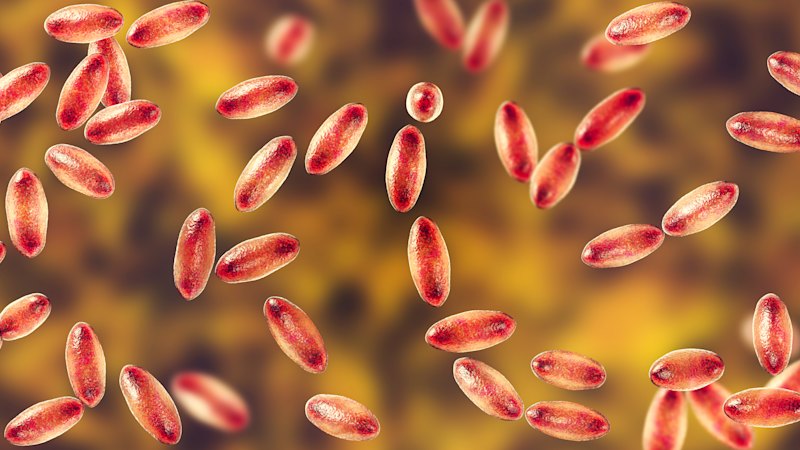
Photo via New York Post

Plague outbreak at Russian lab raises questions about bioweapons and what was actually happening in remote Siberia

Read the original at New York Post ↗
Cite

Blair, A. (2026, October 5). Plague outbreak at Russian lab raises questions about bioweapons and what was actually happening in remote Siberia. New York Post. https://nypost.com/2026/10/05/world-news/plague-outbreak-at-russian-lab-raises-questions-about-bioweapons-and-what-was-actually-happening-in-remote-siberia/

Dated when The Aporia collected the article, usually within hours of publication. Check the original for its exact date and byline.

New York Post · collected 2026-10-05 · by Anthony Blair

Quick Summary

A possible plague outbreak at a Russian lab in Irkutsk has sparked concerns about the nature of its activities, given Russia's history with biological weapons. The Anti-Plague Research Institute, located near Mongolia’s border and one of many Soviet-era labs, was previously linked to offensive bioweapons research despite official claims of defensive purposes. With nearly 200 contacts of a lab technician under quarantine, the incident has reignited debates over Russia's adherence to international biological weapons treaties, especially amid ongoing geopolitical tensions surrounding alleged bio-lab activities.
Written by AI on 2026-10-05, from this article's own text only (the story summary below draws on all the coverage).

AI analysis

Story summary

A 28-year-old laboratory assistant named Darya Shipilova died in early October after reportedly breaking a test tube containing potentially dangerous pathogens at the Irkutsk Anti-Plague Research Institute in Shelekhov, Russia. Despite extensive speculation that she may have contracted pneumonic plague, Russian authorities continue to maintain that her death was due to pneumonia of unknown origin and have not identified the specific pathogen involved. At least 197 people who had close contact with Shipilova were placed under quarantine or surveillance, while international health organizations like the CDC remain vigilant but assert that the risk to other countries is minimal. The incident has sparked concerns about Russia's transparency regarding biological research and safety protocols at such facilities.

Written for “Plague Outbreak In Siberia” on 2026-11-01, grounded in this article and the 113 other(s) covering the same event.

Story

📰 Plague Outbreak In Siberia
Health · 114 article(s) covering the same event. Compare every outlet's account →

Compared with similar articles

This article reads leans left and hedges 19% of its claims. Each row says how that neighbour differs.
New York Post
Hedges 2 of 8 claims Outlet record 66/100
Daily Mail
Hedges 12 of 49 claims Outlet record 68/100
“While both articles discuss concerns related to a Russian plague lab and potential bioweapons activity, they describe different aspects of the situation—one focusing on the questions raised by an outbreak at the lab, while the other features Dr. Alibek's perspective on a mysterious death at the lab.”
Washington Examiner
⚖️ Leans strongly right further right than this Hedges 3 of 47 claims Outlet record 70/100
Global News
Hedges 0 of 14 claims Outlet record 63/100
New York Post
⚖️ Leans left Hedges 6 of 26 claims Outlet record 66/100
Mother Jones
Hedges 5 of 16 claims Outlet record 95/100
The Sydney Morning Herald
Hedges 7 of 20 claims Outlet record 61/100
Al Jazeera
Hedges 2 of 13 claims Outlet record 60/100
“Article A reports on a single death from suspected pneumonic plague at a Russian anti-plague institute, while Article B discusses broader concerns about possible outbreaks and bioweapons in the context of historical Soviet labs.”
Daily Mail
⚖️ Leans left Hedges 14 of 84 claims Outlet record 68/100
How this article was measured signals, leaning charts, publisher record, byline, topics and claims

Signals How these are calculated →

Claims extracted
21
sentences that state something as happening or true
Uncertain
19%
4 of 21 hedged ("reportedly", "may", "according to")
Leaning
Leans left
of the writing, not the subject · beta estimate
Publisher signals
66/100
New York Post's corrections and hedging, across everything collected from it. Not a measure of accuracy.
Outlets on this story
114
Health
Same framing elsewhere
1
articles that frame the event the way this one does
Analyzed 2026-10-05 · how these are computed

How this is being covered How these are calculated →

Article leaning vs. publisher reliability
Source leaning vs. consistency

Publisher

New York Post · 15761 article(s) · 35 correction(s) detected
Running correction rate · 35 correction(s)

Who wrote this

Anthony Blair
85 article(s) here · 0 carrying a prediction
🔮 Ngulure Ibrahim Nkite, 23, arrived in Russia in February on a one-year contract to serve as a rifleman in April and was killed weeks later in occupied Donetsk in May, the outlet reported.
🔮 Those changes included recession fears, layoffs, and shifts in the job market, with 73% reporting a major or moderate impact, according to the study. But as one-third of employers say they are replacing entry-level jobs with AI, that may no longer be the case, according to the Corporate Recruiters Survey from GMAC, which interviewed roughly 600 respondents, more than half of whom recruit for Fortune 100 or Fortune 500 companies.
🔮 The judge, however, said that while Brailey’s crimes may have been “terrible mistakes,” she “used her position as a teacher … to abuse the trust of two young persons.”
🔮 The US-led summit, expected to be held in the United Arab Emirates’ capital, Abu Dhabi, would be the first face-to-face talks between the two warring nations since President Trump lifted sanctions on Moscow.
🔮 Miller, a Russian-born photographer, said she was in Vegas until Friday and “couldn’t come home,” Capt. Kim Montes, of the Osceola County Sheriff’s Office, told the Daily Mail.
🔮 “If you have any information that may help clarify the circumstances surrounding this incident, please reach out to us or contact your local law enforcement agency,” it went on.
🔮 “No further details will be shared out of respect for privacy and to allow officials to complete their work,” he added.
🔮 France is set to deploy the military on the streets to help the police ahead of further planned protests this weekend, which coincide with an NFL game in Paris between the New Orleans Saints and the Pittsburgh Steelers.
🔮 He was released from jail at around 9:30 a.m. and is set to be arraigned in a New Bedford court Monday morning.
🔮 He said the looters “will have to pay back for the damage, and those who sought to bring down the Republic will be held accountable.”
Also by Anthony Blair
Nothing else under this byline is closely related to this article, so these are simply their most recent.
All 85 articles by Anthony Blair →

Topics

Irkutsk Moscow Russia Russian the Soviet Union

Subjects

Russia GPE · 5× Irkutsk GPE · 4× Moscow GPE · 2× Russian NORP · 2× USSR GPE · 2× Zilinskas PERSON · 2× the Soviet Union GPE · 2× Mongolian NORP · 1× Raymond A. Zilinskas PERSON · 1× The Anti-Plague Research Institute ORG · 1×

Narrative

“The news of a suspected ‘plague’ outbreak from Russia should be treated with the utmost seriousness, especially considering the source,” he wrote in X. “COVID showed us how the lies and obstruction of authoritarian governments seeking to cover their tracks can turn a containable outbreak into a global pandemic.
framing: assertive · carried by 1 article(s) · first seen 2026-10-05

Claims (21 extracted, 4 hedged)

A possible plague outbreak at a Russian lab is raising questions about what was actually happening inside the lab in remote Siberia — especially in light of Russia’s known bioweapons program. asserted
what → raise → program
The Anti-Plague Research Institute in Irkutsk, 2,500 miles east of Moscow near the Mongolian border, is one of 80-some infectious disease labs built by the Soviet Union to study pathogens. asserted
Institute → build → pathogens
On paper, the labs were purely for defense and public health, but the plague labs were closely linked to the USSR’s offensive biological weapons program, according to research by Raymond A. Zilinskas. uncertain
labs → link → Zilinskas
The Irkutsk lab under the Soviets functioned as a critical repository for wild, highly virulent strains of plague, anthrax, and other pathogens isolated from animals across East Asia and Siberia. asserted
lab → function → Asia
Many of the labs also provided samples to the Soviet army to use in their bioweapons research program, Zilinskas found. asserted
Zilinskas → provide → program
The Irkutsk lab has, according to the Kremlin, been used for defensive research and vaccine development. uncertain
lab → accord → research
However, an April 2025 US State Department report found that “Russia maintains an offensive biological warfare program and is in violation of its obligations” under the Biological Weapons Convention, Radio Free Europe reported. asserted
Europe → find → Convention
It comes years after Moscow peddled a conspiracy theory that Ukraine was running bioweapons laboratories, often with tacit or direct US support. asserted
Ukraine → come → support
Rep. Don Bacon (Neb.-2), a senior member of the House Armed Services Committee, addressed the longstanding allegations in an X post on Sunday. “I remember hearing from anti-Ukraine voices about their so-called bio labs. asserted
I → address → labs
It was Russian disinformation ops at their best,” the Republican congressman wrote. asserted
congressman → write → best
“But in reality, it is Russia with the biolabs,” he added. asserted
he → add → biolabs
Former CIA Director Mike Pompeo similarly sounded the alarm on Monday — and drew a straight line to the COVID-19 outbreak seven years ago, which occurred 1,500 miles south in Wuhan, China. asserted
which → sound → Wuhan
“The news of a suspected ‘plague’ outbreak from Russia should be treated with the utmost seriousness, especially considering the source,” he wrote in X. “COVID showed us how the lies and obstruction of authoritarian governments seeking to cover their tracks can turn a containable outbreak into a global pandemic. asserted
lies → suspect → pandemic
Russia has consistently denied that it is producing biological weapons at its disease labs, saying that such facilities are aimed at developing defenses against deadly pathogens and plagues. asserted
facilities → deny → pathogens
So far, almost 200 people who came into contact with lab technician Shipilova are under quarantine, and up to five local hospitals are feared to have been placed on lockdown. asserted
hospitals → come → lockdown
No further positive cases of pneumonic plague have been reported as of Monday. asserted
cases → report → Monday
During the Soviet Union, research stations like Irkutsk collected thousands of wild pathogen strains from various ecological regions, and experts trained at the anti-plague institutes were frequently recruited into bioweapons programs, according to Zilinskas’ research. uncertain
experts → collect → research
When the USSR collapsed in 1991, many of the anti-plague labs scattered across the former empire fell into dangerous disrepair due to funding shortages, and for the next two decades, American-backed initiatives worked with the ex-Soviet states to secure their pathogen collections and upgrade lab biosafety. asserted
initiatives → collapse → biosafety
The plague is commonly spread by fleas — but contact with infected wild animals is the most common way the disease is transmitted to humans in the 21st century. asserted
disease → spread → century
Pneumonic plague, which is reportedly the variant in Siberia, can also spread person-to-person by particles in coughs from infected people or contact with bodily fluids. uncertain
which → spread → fluids
The plague was the source of the Black Death in the 14th century, which killed up to 60% of the entire population of Europe. asserted
which → kill → Europe

💬Give feedback
🕘History 🎫Support