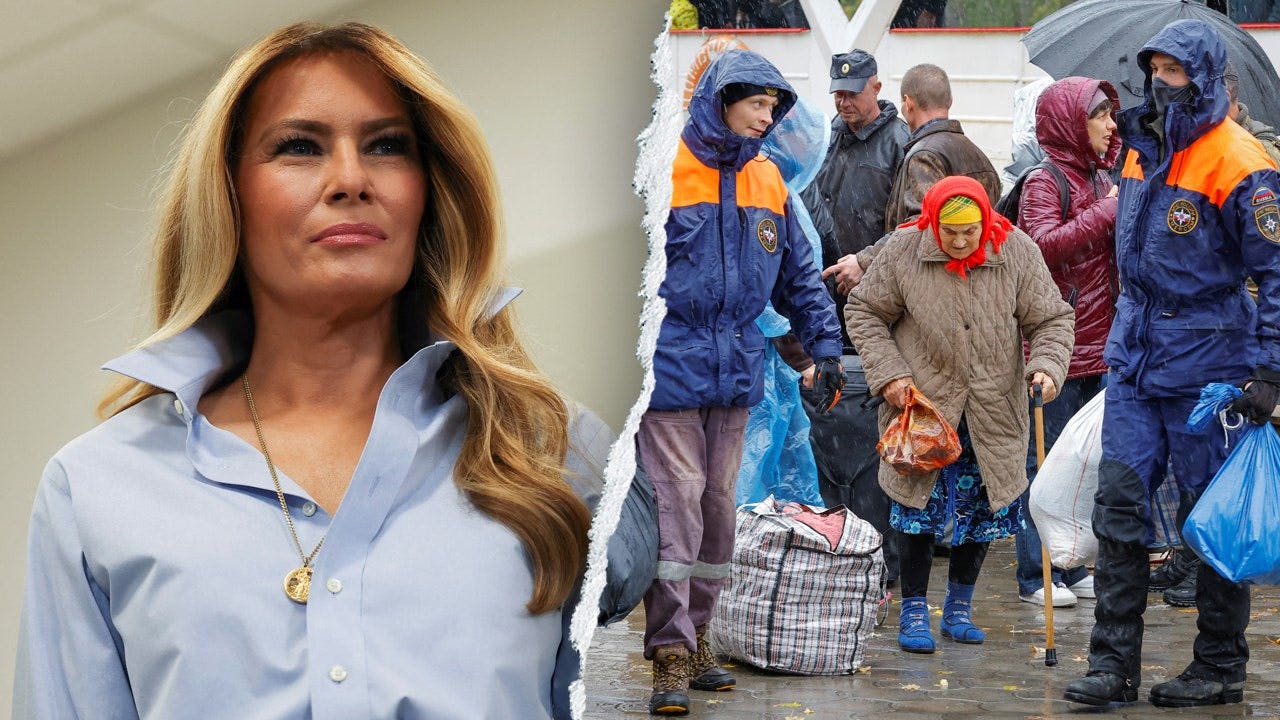
Photo via Fox News

Russian researcher's mystery death could be ‘far worse’ than the plague, former senior Trump official warns

Read the original at Fox News ↗
Cite

Phillips, M. (2026, October 6). Russian researcher's mystery death could be ‘far worse’ than the plague, former senior Trump official warns. Fox News. https://www.foxnews.com/politics/russian-researchers-mystery-death-could-be-far-worse-than-plague-former-senior-trump-official-warns

Dated when The Aporia collected the article, usually within hours of publication. Check the original for its exact date and byline.

Fox News · collected 2026-10-06 · by Morgan Phillips

Quick Summary

Marshall Billingslea, a former senior Trump administration official, warns on X that the unexplained death of a researcher at Russia’s Irkutsk Anti-Plague Institute could indicate dangerous bioweapons research rather than just plague. The warning follows reports that a 28-year-old employee died from pneumonia of undetermined origin; Russian authorities say no high-threat pathogens were detected among her contacts, though the cause remains unclear to biosecurity experts like MIT’s Kevin Esvelt. Billingslea bases his concerns on information provided by Ken Alibek, who defected from Soviet bioweapons research decades ago, suggesting Irkutsk was involved in developing antibiotic-resistant plague strains.
Written by AI on 2026-10-06, from this article's own text only (the story summary below draws on all the coverage).

AI analysis

Story summary

A 28-year-old laboratory assistant named Darya Shipilova died in early October after reportedly breaking a test tube containing potentially dangerous pathogens at the Irkutsk Anti-Plague Research Institute in Shelekhov, Russia. Despite extensive speculation that she may have contracted pneumonic plague, Russian authorities continue to maintain that her death was due to pneumonia of unknown origin and have not identified the specific pathogen involved. At least 197 people who had close contact with Shipilova were placed under quarantine or surveillance, while international health organizations like the CDC remain vigilant but assert that the risk to other countries is minimal. The incident has sparked concerns about Russia's transparency regarding biological research and safety protocols at such facilities.

Written for “Plague Outbreak In Siberia” on 2026-11-01, grounded in this article and the 113 other(s) covering the same event.

Story

📰 Plague Outbreak In Siberia
Health · 114 article(s) covering the same event. Compare every outlet's account →

Compared with similar articles

This article reads unscored and hedges 21% of its claims. Each row says how that neighbour differs.
TIME
Hedges 6 of 62 claims Outlet record 59/100
Al Jazeera
Hedges 4 of 17 claims Outlet record 60/100
CBS News
Hedges 1 of 3 claims Outlet record 66/100
The Hindu
Hedges 2 of 9 claims Outlet record 60/100
The Straits Times
Hedges 2 of 18 claims Outlet record 66/100
“Article A discusses warnings about the death potentially being related to a bio-weapon, while Article B reports on President Trump's statement that it is unlikely to be linked to a bio-weapon.”
Daily Mail
Hedges 7 of 41 claims Outlet record 68/100
“The articles discuss concerns about a researcher's death at an anti-plague institute in Russia but feature different experts and focus on distinct aspects of the incident, suggesting they cover related but separate events or perspectives.”
Washington Examiner
⚖️ Leans strongly right Hedges 3 of 47 claims Outlet record 70/100
NBC News
Hedges 0 of 3 claims Outlet record 60/100
Toronto Star
Hedges 1 of 3 claims Outlet record 64/100
Al Jazeera
Hedges 0 of 19 claims Outlet record 60/100
How this article was measured signals, leaning charts, publisher record, byline, topics and claims

Signals How these are calculated →

Claims extracted
34
sentences that state something as happening or true
Uncertain
21%
7 of 34 hedged ("reportedly", "may", "according to")
Leaning
withheld
no quote in the article backed the model's score
Publisher signals
69/100
Fox News's corrections and hedging, across everything collected from it. Not a measure of accuracy.
Outlets on this story
114
Health
Same framing elsewhere
1
articles that frame the event the way this one does
Analyzed 2026-10-06 · how these are computed

How this is being covered How these are calculated →

Article leaning vs. publisher reliability
Source leaning vs. consistency

Publisher

Fox News · 6161 article(s) · 11 correction(s) detected
Running correction rate · 11 correction(s)

Who wrote this

Morgan Phillips
45 article(s) here · 1 carrying a prediction
🔮 The Trump administration warned Iran that there "will be consequences" if Tehran continues its malign activities amid growing concern over a potential new round of U.S.-Iran hostilities after the midterm elections.
🔮 The opening moves of the next major war could unfold hundreds of miles above Earth.
🔮 Moscow and Kyiv remain locked in a years-long grinding war, but in one Ukrainian city, the fight has quieted — and soon the Russian-occupied aging population in Oleshky will be offered humanitarian relief and a way out.
🔮 The Pentagon is preparing U.S. military bases to keep operating for at least 90 days without outside support as it prepares for the possibility of a major war that could cripple power grids, disrupt supply chains and threaten critical infrastructure on American soil.
🔮 He is betting that keeping those sanctions in reserve will help bring Vladimir Putin to the negotiating table, a strategy drawing criticism from Republican allies amid questions about whether Moscow believes he will ever use them.
🔮 Tiffany points to 20-week abortion limit as Crowley declines to name one Tiffany pointed to Wisconsin's existing 20-week abortion limit when moderators asked whether he would sign a six-week abortion ban , a restriction he previously supported as a legislator.
🔮 "I will make sure that local, county and state law enforcement coordinate with federal law enforcement," Tiffany said in the debate hosted by WISN-TV.
🔮 Britain announced Tuesday that it would deploy Typhoon fighter jets to help defend Saudi cities and critical infrastructure, while Egypt is assisting the kingdom and Israel has offered to help.
🔮 Saudi Arabia is turning to foreign allies to fend off Houthi missiles and drones, exposing a military vulnerability that could soon become President Donald Trump's problem.
🔮 He acknowledged a "lack of anticipation" ahead of the demonstrations and said authorities had underestimated not only the number of protesters but the violent groups that would exploit the unrest.
Also by Morgan Phillips
Nothing else under this byline is closely related to this article, so these are simply their most recent.
All 45 articles by Morgan Phillips →

Topics

Russia Russian Soviet U.S. the Black Death

Subjects

Soviet NORP · 7× Russia GPE · 5× Russian NORP · 5× Billingslea PERSON · 4× U.S. GPE · 4× Alibek PERSON · 2× Esvelt PERSON · 2× Irkutsk GPE · 2× Donald Trump PERSON · 1× Marshall Billingslea PERSON · 1×

Narrative

Marshall Billingslea, who served as President Donald Trump's special presidential envoy for arms control, said a top Soviet bioweapons defector told him decades ago about secret work on antibiotic-resistant plague at the same facility where the recent plague-related death occurred.
framing: mixed · carried by 1 article(s) · first seen 2026-10-06
🔮 The unexplained death of a researcher at a Russian anti-plague institute has one former senior U.S. arms official warning it could be 'far worse' than the bacteria that caused the Black Death.

Claims (34 extracted, 7 hedged)

The unexplained death of a researcher at a Russian anti-plague institute has one former senior U.S. arms official warning it could be 'far worse' than the bacteria that caused the Black Death. uncertain
that → have → Death
Marshall Billingslea, who served as President Donald Trump's special presidential envoy for arms control, said a top Soviet bioweapons defector told him decades ago about secret work on antibiotic-resistant plague at the same facility where the recent plague-related death occurred. asserted
death → serve → facility
It may be far worse," Billingslea wrote on X. He spent much of the 1990s working on proliferation and arms control issues on the Senate Foreign Relations Committee — and during that time worked with Ken Alibek, the former No. 2 official in the Soviet biological weapons program who defected to the U.S. uncertain
who → write → U.S.
"He claimed that they had engineered a strain of plague that was antibiotic-resistant & that they had worked on plague chimeras (fusing 2 or more pathogens)," Billingslea wrote of Alibek. asserted
Billingslea → claim → Alibek
"He specifically called out Irkutsk for being involved in the BW program," he added. asserted
he → call → program
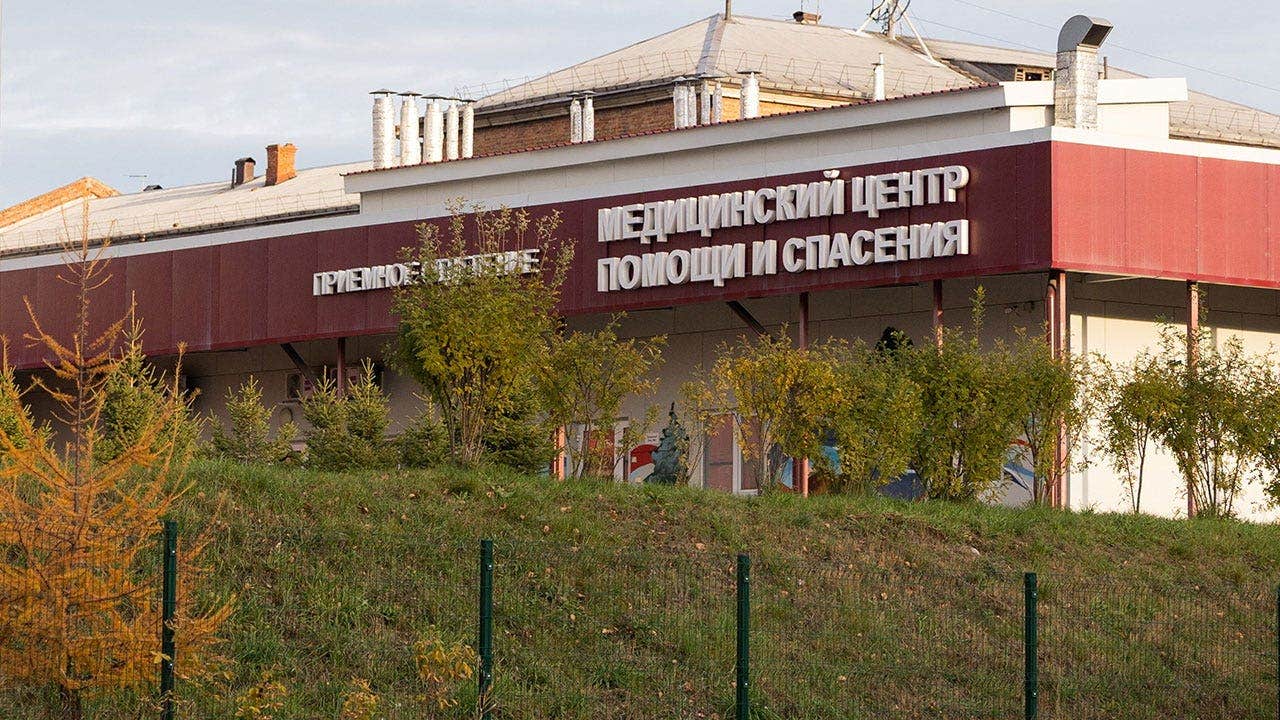
Billingslea's warning comes after a 28-year-old employee of the Irkutsk Anti-Plague Institute of Siberia and the Far East died last week from what Russian authorities have described as pneumonia of undetermined origin. asserted
authorities → come → origin
Russia has not said the woman died of plague and said testing found no microorganisms in her body linked to her work. asserted
testing → say → work
The World Health Organization (WHO) said Tuesday that Russian officials told the agency no plague or other high-threat pathogen had been detected among her close contacts, though they are still awaiting confirmation of what caused her fatal pneumonia. asserted
what → say → pneumonia
About 60% of the woman's identified contacts have been tested so far, according to Russian authorities, with two cases of COVID-19 and two rhinovirus infections detected — but no other infectious disease pathogens. uncertain
cases → identify → COVID-19
Still, the unexplained death at a facility that works with dangerous pathogens has drawn scrutiny from biosecurity experts — including questions about why the cause remains unknown. asserted
cause → work → questions
Kevin Esvelt, an MIT professor who studies biological security and catastrophic pandemic risks, said Russia's latest explanation suggests the researcher did not die from plague while leaving unanswered what killed her. uncertain
what → study → her
"If we take the Russian authorities at their word, it is not plague," Esvelt wrote Tuesday. asserted
Esvelt → take → word
"But untargeted research-grade sequencing reliably identifies pathogens, and people seldom die of pneumonia without pathogens, let alone 28-year-olds," he added. asserted
he → identify → olds
"It would be surprising if they did not know the cause." asserted
they → know → cause
Esvelt cautioned that more alarming explanations remain hypothetical. asserted
explanations → caution → ?
"The concerning possibility is still only a possibility," he wrote. asserted
he → write → ?
The questions surrounding the death come against the backdrop of the Soviet Union's documented history of secretly developing biological weapons, including weaponized plague, and U.S. assessments that elements of that program continued after the Soviet collapse. asserted
elements → surround → collapse
In its 2025 arms control compliance report, the State Department assessed that Russia maintains an offensive biological warfare program in violation of the Biological Weapons Convention and that the Soviet program was "absorbed, not dismantled" after the Soviet collapse. asserted
program → assess → collapse
The department said the program "has continued and evolved" under the Russian Federation and that Moscow continues activities prohibited under the convention. asserted
Moscow → say → convention
Russia has repeatedly denied maintaining an offensive biological weapons program. asserted
Russia → deny → program
The U.S. assessment does not establish any connection between Russia's biological weapons program and the researcher's death in Irkutsk, and no such connection has been confirmed. asserted
connection → establish → Irkutsk
The Soviet program Billingslea referenced was one of the world's largest clandestine biological weapons efforts. asserted
Billingslea → reference → efforts
Alibek, born Kanatjan Alibekov, rose to become the first deputy chief of Biopreparat, the ostensibly civilian network that formed a major part of the Soviet biological weapons apparatus, before defecting to the United States in 1992. asserted
that → bear → 1992
After his defection, Alibek provided U.S. officials with extensive information about the scale and capabilities of the Soviet program. asserted
Alibek → provide → program
He described Soviet scientists working to weaponize pathogens including plague and developing strains designed to withstand antibiotics. asserted
He → describe → antibiotics
His claims about some aspects of the Soviet program have faced scrutiny over the years, making independent documentation particularly important. uncertain
documentation → face → years
But the existence and enormous scale of the Soviet biological weapons effort — conducted despite Moscow's 1975 ratification of the Biological Weapons Convention — is well established. asserted
existence → conduct → Convention
The Irkutsk institute says it was founded in 1934 as a scientific and operational center for combating plague. asserted
it → say → plague
Its mission later expanded to other highly dangerous diseases, including cholera and anthrax, and it describes itself today as a research and anti-epidemic facility responsible for helping protect the region from infectious disease. asserted
it → expand → disease
The Trump administration has said it is closely monitoring the situation and pressed Moscow for greater transparency about what happened. asserted
what → say → transparency
Secretary of State Marco Rubio said Monday that while travel between the U.S. and Russia remains limited, an infectious disease could quickly spread beyond Russia's borders. uncertain
disease → say → borders
"If something like that gets out, it could quickly spread," Rubio said. uncertain
Rubio → get → that
President Donald Trump said the U.S. would offer assistance to Russia if needed. asserted
U.S. → say → Russia
"I hate to see them having it," Trump told reporters Monday. asserted
Trump → hate → reporters

💬Give feedback
🕘History 🎫Support