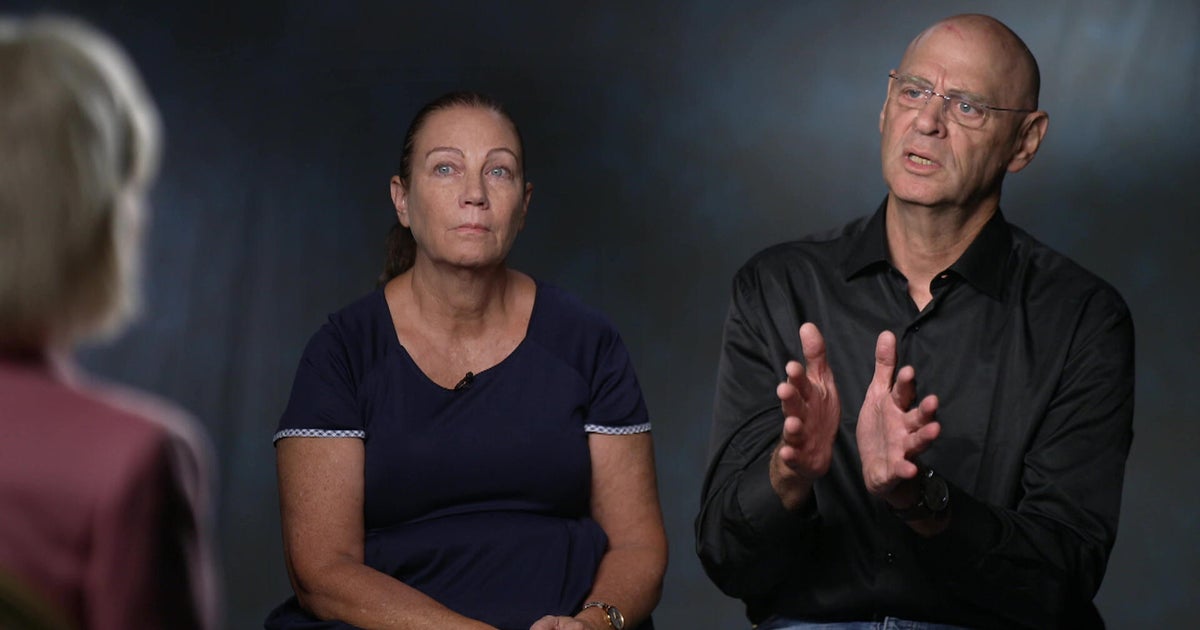
Photo via CBS News

How Israeli and Palestinian kids are coping 3 years after Oct. 7, 2023

Read the original at CBS News ↗
Cite

Kraus, T. (2026, October 7). How Israeli and Palestinian kids are coping 3 years after Oct. 7, 2023. CBS News. https://www.cbsnews.com/news/october-7-gaza-war-three-years-later-how-israel-and-palestinian-kids-coping/

Dated when The Aporia collected the article, usually within hours of publication. Check the original for its exact date and byline.

CBS News · collected 2026-10-07 · by Tina Kraus

Quick Summary

CBS News reports on how Israeli and Palestinian teenagers are coping three years after Hamas militants attacked Israel in October 2023, resulting in over 1,200 deaths. In southern Israel, Ron Shargian, now 15, describes living with constant fear and the trauma of evacuation from his home. Across the Gaza border, Kazem Doghmash, 14, expresses frustration that life remains difficult despite a cease-fire, noting over 1,400 people have been killed in Gaza since October. Both teens struggle with the lingering impact of war on their daily lives and hopes for peace.
Written by AI on 2026-10-07, from this article's own text only (the story summary below draws on all the coverage).

AI analysis

Story summary

Three years after October 7, 2023, the world continues to grapple with the profound impact of Hamas's attack on southern Israel. On that day, Palestinian fighters breached the Gaza border, killing more than 1,200 Israelis and taking 251 hostages into Gaza. The assault remains a defining moment in Israeli history, leading to significant changes in leadership and security policies.

In the lead-up to the attacks, Israelis were focused on internal politics rather than external threats. Following the massacre, Prime Minister Benjamin Netanyahu's government faced severe criticism but he remains in power despite overseeing what many consider the worst security failure in Israel’s history. The attack led to mass protests demanding the release of hostages and widespread global condemnation of Hamas.

The incident reshaped Israeli society and its approach to security, with leaders acknowledging that external threats were underestimated prior to October 7. Meanwhile, families like Sigal Manzuri continue to advocate for peace and remember their loved ones lost in the attacks, highlighting the human cost behind the statistics.

Written for “Oct 7 Attacks Anniversary” on 2026-11-01, grounded in this article and the 43 other(s) covering the same event.

Story

📰 Oct 7 Attacks Anniversary
Politics · 44 article(s) covering the same event. See how they differ ↓

Compared with similar articles

This article reads unscored and hedges 2% of its claims. Each row says how that neighbour differs.
The Straits Times
⚖️ Leans strongly left Hedges 0 of 21 claims Outlet record 66/100
CBS News
Hedges 0 of 2 claims Outlet record 66/100
The Guardian
Hedges 2 of 43 claims Outlet record 66/100
Al Jazeera
⚖️ Leans left Hedges 0 of 3 claims Outlet record 60/100
“The articles refer to different events: one discusses coping three years after an initial assault, while the other reports on a recent air strike in Gaza.”
Deutsche Welle
⚖️ Leans left Hedges 3 of 52 claims Outlet record 95/100
“The articles cover different time periods and focus on distinct aspects - one on current mental health impacts as October 7 approaches, the other on coping mechanisms three years after the attacks.”
Toronto Star
⚖️ Leans left Hedges 2 of 31 claims Outlet record 64/100
“While both articles discuss the aftermath of the Oct. 7, 2023 attack, they describe different aspects and do not clearly report on a single specific incident at the same time.”
New York Post
Hedges 4 of 24 claims Outlet record 66/100
“Article A describes an in-depth look at a specific tunnel used during the October 7, 2023 attack, while Article B discusses how children are coping three years after that event.”
CBS News
Hedges 0 of 2 claims Outlet record 66/100
“The articles discuss different aspects of the situation three years after the Hamas attack but do not describe the same specific incident or occurrence.”
BBC News
Hedges 1 of 7 claims Outlet record 68/100
“While both articles discuss the aftermath of Hamas's October 7, 2023 attacks in Israel, they focus on different aspects - Article A covers coping mechanisms of Israeli and Palestinian teenagers three years later, while Article B focuses on a specific kibbutz hit during the attack.”
How this article was measured signals, leaning charts, publisher record, byline, topics and claims

Signals How these are calculated →

Claims extracted
43
sentences that state something as happening or true
Uncertain
2%
1 of 43 hedged ("reportedly", "may", "according to")
Leaning
withheld
no quote in the article backed the model's score
Publisher signals
66/100
CBS News's corrections and hedging, across everything collected from it. Not a measure of accuracy.
Outlets on this story
44
Politics
Same framing elsewhere
1
articles that frame the event the way this one does
Analyzed 2026-10-07 · how these are computed

How this is being covered How these are calculated →

Article leaning vs. publisher reliability
Source leaning vs. consistency

Publisher

CBS News · 4334 article(s) · 6 correction(s) detected
Running correction rate · 6 correction(s)

Who wrote this

Tina Kraus
1 article(s) here · 1 carrying a prediction
🔮 "It feels like some kind of nightmare," he told CBS News three years later, calling the experience on that fateful day surreal, "and something I wouldn't believe if anyone told me it's going to happen."
The only article under this byline in the corpus.

Topics

CBS News Gaza Hamas Israel Palestinian

Subjects

Gaza GPE · 7× Israel GPE · 6× CBS News ORG · 5× Hamas ORG · 3× Doghmash PERSON · 2× Israelis NORP · 2× Palestinian NORP · 2× Shargian PERSON · 2× Palestinians NORP · 1× Ron Shargian PERSON · 1×

Narrative

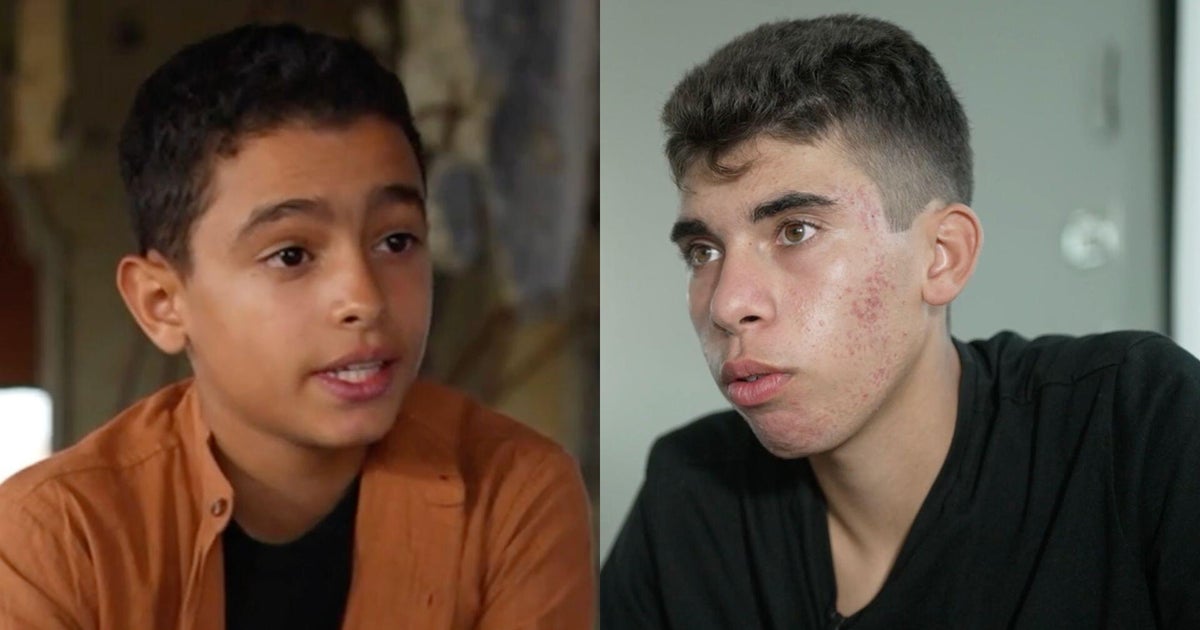
Three years after Hamas militants launched their assault on southern Israel, killing 1,200 people, taking 251 others hostage and triggering Israel's that has killed tens of thousands of Palestinians, CBS News met two teenagers on both sides of the Gaza border to find out how they are coping.
framing: assertive · carried by 1 article(s) · first seen 2026-10-07
🔮 "It feels like some kind of nightmare," he told CBS News three years later, calling the experience on that fateful day surreal, "and something I wouldn't believe if anyone told me it's going to happen."

Claims (43 extracted, 1 hedged)

Three years after Hamas militants launched their assault on southern Israel, killing 1,200 people, taking 251 others hostage and triggering Israel's that has killed tens of thousands of Palestinians, CBS News met two teenagers on both sides of the Gaza border to find out how they are coping. asserted
they → launch → border
Ron Shargian, 15, said growing up in southern Israel has meant learning to live with fear. asserted
growing → say → fear
He was 12 when he watched Hamas militants on paragliders soar over a wall meant to protect his community. asserted
militants → watch → community
"It feels like some kind of nightmare," he told CBS News three years later, calling the experience on that fateful day surreal, "and something I wouldn't believe if anyone told me it's going to happen." asserted
it → feel → me
The attackers killed 17 of his neighbors in Netiv HaAsara, the Israeli community that was closest to the Gaza border. asserted
that → kill → border
As the assault unfolded, he and his family locked themselves inside their home's bomb shelter. "Every time the gunshots get close to you, you think that that's the end, that they're coming to your house now," he recalled. asserted
he → unfold → house
His family escaped after 11 hours, when security forces came to the rescue, but like thousands of other Israelis displaced by the war, they couldn't go back home, at least not right away. asserted
they → escape → war
After Oct. 7, Shargian's family lived in a hotel for evacuees, and then in Tel Aviv, and then in another hotel, and then a year and a half in the coastal town of Gan Yavne. asserted
family → live → Yavne
Finally, a little over a year ago, his family returned to their home. asserted
family → return → home
"It was really hard to come back," he said. asserted
he → come → ?
"But I also anticipated it very much. asserted
I → anticipate → it
I really missed my home, my friends, the community — it's something that you don't have anywhere else." "War has been not finished" asserted
War → miss → that
Across the border in Gaza, safe places have been hard for Palestinian children to find since Israel launched its full-scale military assault in retaliation for the Hamas attack. asserted
Israel → find → attack
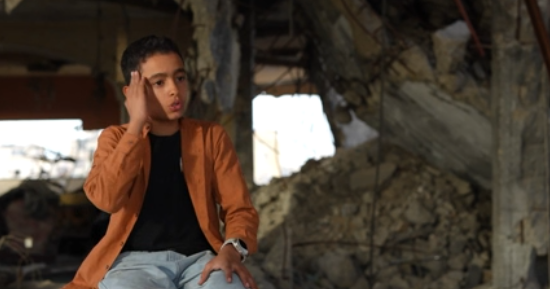
"Lots of things has been destroyed for me," Kazem Doghmash told CBS News. asserted
Doghmash → destroy → News
He was 11 when the war started. asserted
war → start → ?
Israel pummeled Gaza for years with daily airstrikes in a grueling war that, despite a cease-fire in place since last October ending major combat, . asserted
Israel → pummel → combat
Palestinian officials in Gaza say more than 1,400 people have been killed in Gaza since the cease-fire officially came into effect. asserted
fire → say → effect
"They say a lot of times that the war will finish, but the war has been not finished, the war has been more difficult," said Doghmash, who is now 14. asserted
who → say → times
"Before the war, I am just being a kid," he said, remembering it as "a good life." "Used to this reality" In Israel, Shargian said he struggles with how to think about people on the other side of the Gaza border after everything that happened. asserted
that → say → everything
"I don't know if there are good people there," he said. asserted
he → know → ?
"Up until October 7th, I thought that we could make peace. uncertain
we → think → peace
But from that day, something inside me broke." asserted
something → break → me
He is trying to move forward and lead a normal teenage life — learning the guitar, hanging out with friends at the beach, and he told CBS News the wider conflict now engulfing the Middle East can, at times, even feel distant. asserted
conflict → try → times
"I don't think we feel the war so much, like, it's in other countries," he said. asserted
he → think → countries
When the sound of a rocket or an air raid siren jolts him back to reality, he said like most Israelis, he takes it in his stride. asserted
he → jolt → stride
"Because we're so used to this reality," he said. asserted
he → say → reality
"So, we just don't make a big deal out of it." But even though it has happened throughout his life, he said he still feels it inside, every time he and his family or friends hear an alarm and have to rush for shelter. asserted
he → make → shelter
"Your muscles get tight and you have an adrenaline rush," he said. asserted
he → get → rush
"It's something we just got used to." asserted
we → get → ?
"My life has been destroyed" asserted
life → destroy → ?
Moving forward has been hard for Doghmash, too. asserted
Moving → move → Doghmash
He still can't think about returning to normal teenage pursuits. asserted
He → think → pursuits
"My life has been destroyed," he said. asserted
he → destroy → ?
"My school has been destroyed, a lot of things have been destroyed for me." asserted
lot → destroy → me
"We are focusing [on] how we're going to live," he said. asserted
he → focus → ?
But he hasn't given up on his dreams. asserted
he → give → dreams
He told CBS News he hopes to become a doctor, and he has resumed studying at the British International School in Gaza — in its new location, as the original building was — where his favorite subject is English. asserted
subject → tell → location
As he led CBS News through the rubble of what used to be his family's home, he longed for anything resembling a return to his life before the war. asserted
he → lead → war
"We need to live in a good life, not to just, thinking how we're gonna get food and the water," he said. asserted
he → need → food
"We're gonna need to go to school, to go, to be happy and smile." asserted
We → go → school
…and 3 more, not listed.

💬Give feedback
🕘History 🎫Support