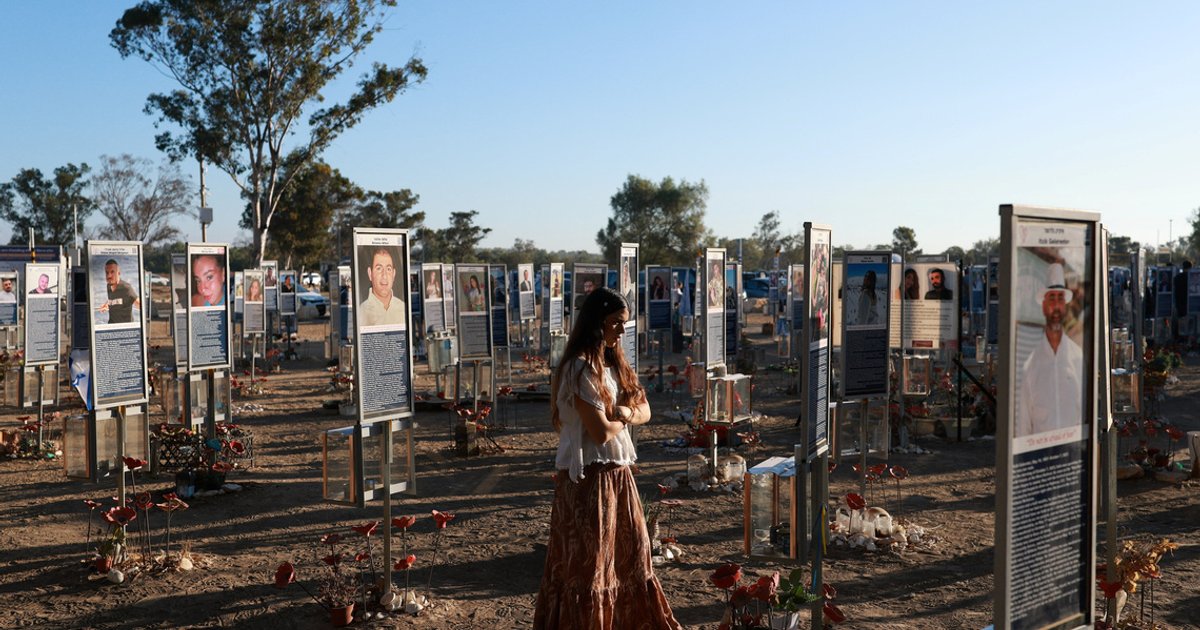
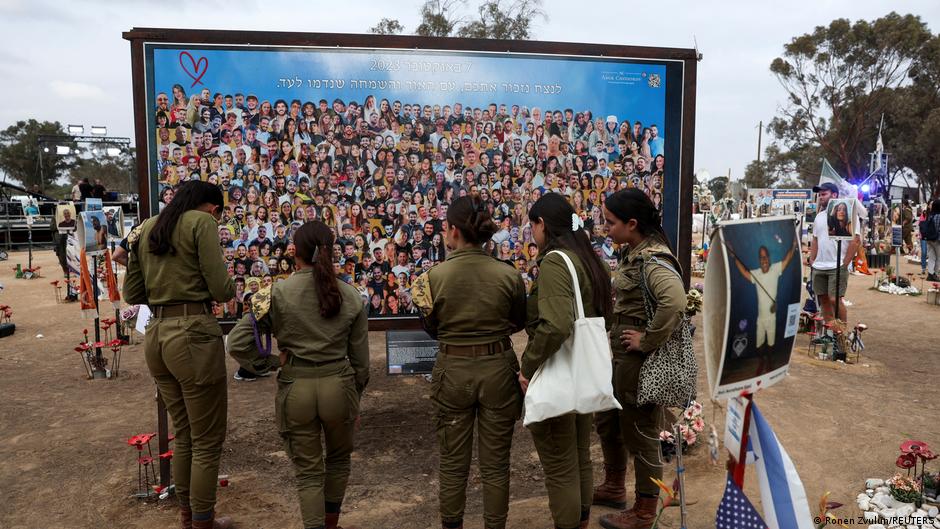
Photo via Washington Examiner

Three years after Oct. 7, Jews are still a people who sing

Read the original at Washington Examiner ↗
Cite

Abrams, S. J. (2026, October 7). Three years after Oct. 7, Jews are still a people who sing. Washington Examiner. https://www.washingtonexaminer.com/in_focus/4757184/three-years-after-october-7-jews-still-people-who-sing/

Dated when The Aporia collected the article, usually within hours of publication. Check the original for its exact date and byline.

Washington Examiner · collected 2026-10-07 · by Samuel J. Abrams

Quick Summary

Three years after Hamas attacked Israel on October 7, 2023, killing approximately 1,200 people and kidnapping over 250 others, a Jewish American writer reflects on personal experiences of conflict within their community. The article focuses on attending a concert by Israeli musician Idan Raichel, where the writer finds new meaning in his music amid ongoing uncertainty and adversity.
Written by AI on 2026-10-07, from this article's own text only (the story summary below draws on all the coverage).

AI analysis

Story summary

Three years after October 7, 2023, the world continues to grapple with the profound impact of Hamas's attack on southern Israel. On that day, Palestinian fighters breached the Gaza border, killing more than 1,200 Israelis and taking 251 hostages into Gaza. The assault remains a defining moment in Israeli history, leading to significant changes in leadership and security policies.

In the lead-up to the attacks, Israelis were focused on internal politics rather than external threats. Following the massacre, Prime Minister Benjamin Netanyahu's government faced severe criticism but he remains in power despite overseeing what many consider the worst security failure in Israel’s history. The attack led to mass protests demanding the release of hostages and widespread global condemnation of Hamas.

The incident reshaped Israeli society and its approach to security, with leaders acknowledging that external threats were underestimated prior to October 7. Meanwhile, families like Sigal Manzuri continue to advocate for peace and remember their loved ones lost in the attacks, highlighting the human cost behind the statistics.

Written for “Oct 7 Attacks Anniversary” on 2026-11-04, grounded in this article and the 43 other(s) covering the same event.

Story

📰 Oct 7 Attacks Anniversary
Politics · 44 article(s) covering the same event. See how they differ ↓

Compared with similar articles

This article reads leans left and hedges 1% of its claims. Each row says how that neighbour differs.
Toronto Star
⚖️ Leans left Hedges 2 of 31 claims Outlet record 64/100
South China Morning Post
⚖️ Leans right further right than this Hedges 1 of 4 claims Outlet record 62/100
The Straits Times
⚖️ Leans strongly left further left than this Hedges 0 of 21 claims Outlet record 66/100
Euronews
⚖️ Leans strongly right further right than this Hedges 0 of 14 claims Outlet record 60/100
ABC News (AU)
⚖️ Leans left Hedges 2 of 40 claims Outlet record 67/100
The Guardian
Hedges 2 of 43 claims Outlet record 66/100
Global News
⚖️ Leans left Hedges 2 of 45 claims Outlet record 63/100
Washington Examiner
Hedges 2 of 61 claims Outlet record 69/100
Deutsche Welle
⚖️ Leans left Hedges 3 of 52 claims Outlet record 95/100
“The articles discuss the aftermath of the Oct. 7 attacks but are not describing the same specific incident or occurrence.”
How this article was measured signals, leaning charts, publisher record, byline, topics and claims

Signals How these are calculated →

Claims extracted
71
sentences that state something as happening or true
Uncertain
1%
1 of 71 hedged ("reportedly", "may", "according to")
Leaning
Leans left
of the writing, not the subject · beta estimate
Publisher signals
69/100
Washington Examiner's corrections and hedging, across everything collected from it. Not a measure of accuracy.
Outlets on this story
44
Politics
Same framing elsewhere
1
articles that frame the event the way this one does
Analyzed 2026-10-07 · how these are computed

How this is being covered How these are calculated →

Article leaning vs. publisher reliability
Source leaning vs. consistency

Publisher

Washington Examiner · 4136 article(s) · 8 correction(s) detected
Running correction rate · 8 correction(s)

Who wrote this

Samuel J. Abrams
6 article(s) here · 1 carrying a prediction
🔮 I have spent much of the past three years fighting battles at my college that I never imagined I would have to fight.
🔮 In foundations courses, the most frequently assigned authors included Paulo Freire, Henry Giroux, Jonathan Kozol, and John Dewey, while E.D. Hirsch turned up on only two syllabi and Diane Ravitch on one, and aspiring teachers were seldom asked to show they could teach children to read.
2026-09-18 · assertive framing · Education schools prioritize activism over teaching
🔮 For the Fourth of July, we drove down to Colonial Williamsburg to hear the Declaration of Independence read aloud from the balcony of the old Capitol.
Also by Samuel J. Abrams
Have we talked ourselves into loneliness?
2026-10-31 · Washington Examiner
What it took to put Americans on the moon
2026-10-25 · Washington Examiner
Education schools prioritize activism over teaching
2026-09-18 · Washington Examiner
Nothing else under this byline is closely related to this article, so these are simply their most recent.
All 6 articles by Samuel J. Abrams →

Topics

Hamas Holocaust Israel Jewish Americans Jews

Subjects

Jews NORP · 2× Raichel PERSON · 2× Hamas ORG · 1× Idan Raichel PERSON · 1× Israel GPE · 1× Israeli NORP · 1× Jewish NORP · 1× Jewish Americans NORP · 1× New York GPE · 1×

Narrative

Early in the concert, which was just Raichel and his piano, he began singing “Bo’i“, and the audience began singing with him. There is obviously nothing unusual about people singing along at a concert, but this time I heard the song in a completely different way.
framing: assertive · carried by 1 article(s) · first seen 2026-10-07
🔮 I have spent much of the past three years fighting battles at my college that I never imagined I would have to fight.
2026-10-07 · Washington Examiner
Three years after Oct. 7, Jews are still a people who sing · assertive framing

Claims (71 extracted, 1 hedged)

Three years ago this week, on Oct. 7, 2023, Hamas attacked Israel, killing about 1,200 people and kidnapping some 250 more in the deadliest attack on Jews since the Holocaust. asserted
Hamas → attack → Holocaust
Three years later, I am still trying to make sense of everything that has happened since. asserted
that → try → everything
But for many Jewish Americans, there was also the experience of watching our own communities, workplaces, and institutions change almost overnight. asserted
communities → be → Americans
So many people and communities we thought we knew and thought we were part of said things we never expected them to say, and places where we had spent years suddenly felt very different. asserted
we → think → years
I have spent much of the past three years fighting battles at my college that I never imagined I would have to fight. asserted
I → spend → college
I have been called names, and my family has been physically threatened. asserted
family → call → names
Students have been warned about taking my classes, many have boycotted me, and I have had to spend far too much time defending myself and my place at an institution where I have taught for almost two decades. asserted
I → warn → decades
I have written a lot about what has happened, and I am sure I will write more about it. asserted
I → write → it
But that is not what I want to write about on this anniversary. asserted
I → want → anniversary
I want to write about a last-minute concert in New York where I had the honor of seeing the Israeli musician Idan Raichel perform. asserted
musician → want → honor
I have listened to Raichel for more than 20 years, but something struck me that night: His songs mean something very different to me now. asserted
songs → listen → me
The songs have not changed, of course, but after Oct. 7 and everything that has happened since, I hear them and interpret them differently. asserted
I → change → them
The title means “come,” and I have always loved the song. asserted
I → mean → song
It is about taking someone’s hand and moving forward without knowing exactly where you are going. asserted
you → take → hand
Don’t ask when happiness will come. asserted
happiness → ask → ?
Time keeps moving, and so do we. asserted
we → move → ?
When I first heard those words more than 20 years ago, I heard a love song. asserted
I → hear → song
It was a beautiful song about two people confronting all the uncertainty that comes with life together. asserted
that → confront → life
We do not know where we are going. asserted
we → know → ?
We cannot promise each other happiness or even know how much time we have. asserted
we → promise → time
But take my hand and let us go together anyway. asserted
us → take → hand
I still hear that song, but after Oct. 7, the “we” has become much larger for me. asserted
we → hear → me
I hear something about the Jewish experience of the past three years and about how to live in a dangerous and uncertain world. asserted
I → hear → world
We do not know what comes next. asserted
what → know → ?
We do not know when happiness will come or exactly where we are going. asserted
we → know → ?
But we take one another’s hands, we keep moving forward, and we do not surrender who we are. asserted
we → take → hands
Early in the concert, which was just Raichel and his piano, he began singing “Bo’i“, and the audience began singing with him. There is obviously nothing unusual about people singing along at a concert, but this time I heard the song in a completely different way. asserted
I → begin → way
Maybe it was because of everything that has happened over the past three years. asserted
that → happen → years
Or it could have been that I was just tired and needed to hear it. uncertain
I → need → it
But being in the room and listening to hundreds of people singing together in Hebrew, I had a very simple thought: We are a people who sing. asserted
who → listen → thought
Jews sing all the time. asserted
Jews → sing → ?
We sing on Friday night and at the end of Shabbat. asserted
We → sing → Shabbat
We sing around the Passover table and under the chuppah at weddings. asserted
We → sing → weddings
We sing at celebrations, and we sing when we mourn. asserted
we → sing → celebrations
My son and I sing together in synagogue. asserted
son → sing → synagogue
I know melodies because my parents knew them, and my children now know some of those same melodies because I sing them. asserted
I → know → them
Some of these words and melodies have been passed from one generation to another for thousands of years. asserted
Some → pass → years
But there we were, singing it together, three years after the deadliest attack on Jews since the Holocaust. asserted
we → sing → Holocaust
Our shared singing of a song about moving forward hit me hard. asserted
singing → share → me
So much of the Jewish experience since Oct. 7 has been about responding to other people. asserted
much → respond → people
…and 31 more, not listed.

💬Give feedback
🕘History 🎫Support