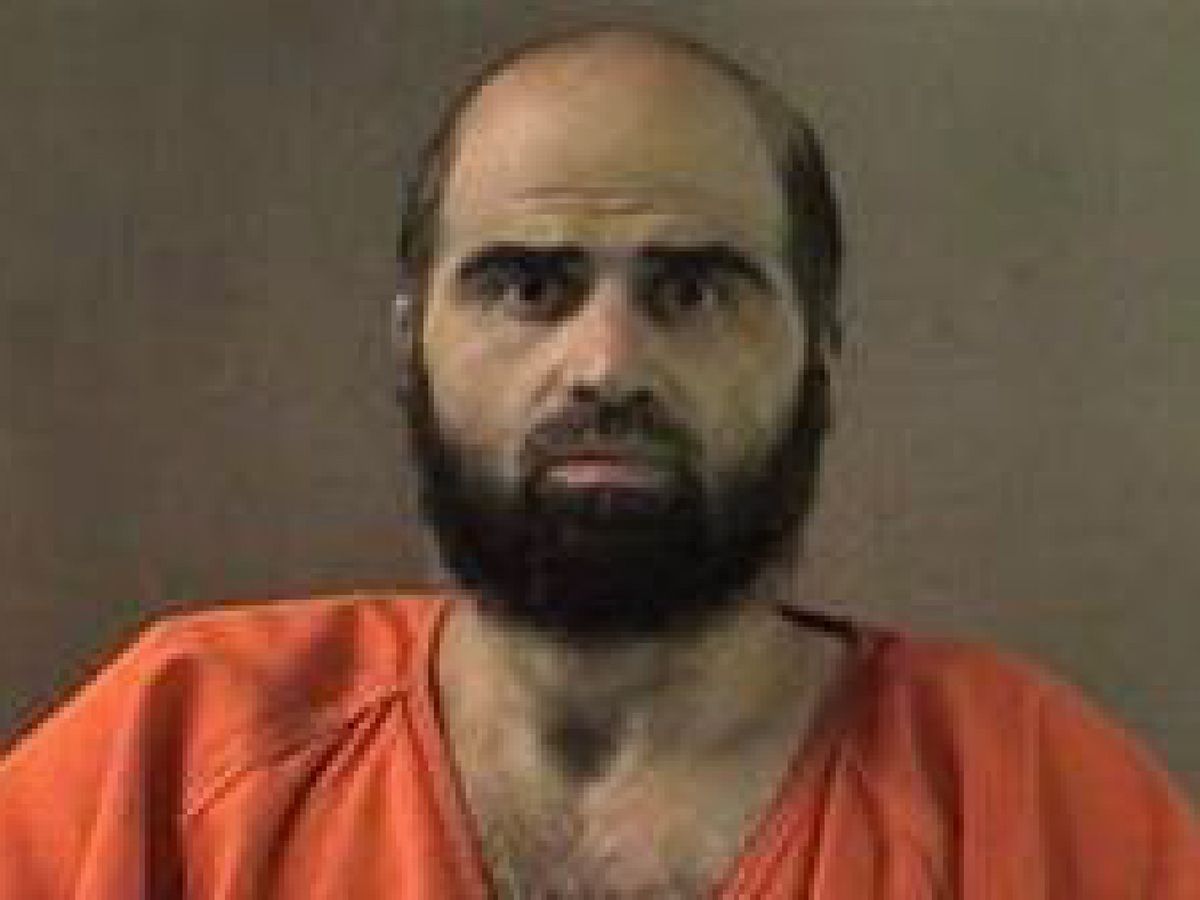
Photo via The Guardian

Execution live stream could cause PTSD in viewers, say psychiatrists

Read the original at The Guardian ↗
Cite

correspondent, N. D. S. (2026, October 9). Execution live stream could cause PTSD in viewers, say psychiatrists. The Guardian. https://www.theguardian.com/us-news/2026/oct/09/execution-live-stream-ford-hood-killer-ptsd-viewers-pete-hegseth

Dated when The Aporia collected the article, usually within hours of publication. Check the original for its exact date and byline.

The Guardian · collected 2026-10-09 · by Nicola Davis Science correspondent

Quick Summary

Mental health experts warn that livestreaming the upcoming execution of Nidal Hasan by firing squad could cause post-traumatic stress disorder (PTSD) in viewers. US Defense Secretary Pete Hegseth announced plans to broadcast the execution on December 3rd, making it likely the first public execution in the United States in nearly a century. Forensic psychologist Dr. Simon Duff and Professor Neil Greenberg from King’s College London advise against watching the event due to potential psychological harm, especially for those with pre-existing mental health conditions.
Written by AI on 2026-10-09, from this article's own text only (the story summary below draws on all the coverage).

AI analysis

Story summary

On October 16, 2026, U.S. President Donald Trump canceled plans to livestream the firing squad execution of Nidal Hasan, who was convicted and sentenced to death for killing 13 people in a mass shooting at Fort Hood military base in Texas in 2009. The decision came after widespread criticism from domestic and international stakeholders, including U.S. politicians and religious organizations. Trump stated that although the streaming could serve as a deterrent against terrorism, he acknowledged that many Americans would prefer not to witness such an event. The execution will still take place but will not be publicly broadcast. Pentagon spokesperson Sean Parnell confirmed the cancellation in a statement. This reversal marks a significant shift following initial plans announced by Defense Secretary Pete Hegseth earlier in October. Interviews with Americans showed overwhelming support for Trump's decision, citing concerns about making a spectacle out of an execution and likening public broadcasting to practices seen in countries like North Korea. The actual date and location of the execution have not been disclosed but must occur within 150 days of the president's approval, no sooner than 60 days from the announcement.
Written for “Trump Approves Firing Squad Execution For Nidal Hasan” on 2026-11-02, grounded in this article and the 145 other(s) covering the same event.

Story

📰 Trump Approves Firing Squad Execution For Nidal Hasan
Politics · 146 article(s) covering the same event. Compare every outlet's account →

Compared with similar articles

This article reads unscored and hedges 19% of its claims. Each row says how that neighbour differs.
National Post
Hedges 1 of 25 claims Outlet record 60/100
Al Jazeera
⚖️ Leans left Hedges 6 of 49 claims Outlet record 60/100
Los Angeles Times
Hedges 0 of 53 claims Outlet record 95/100
National Post
Hedges 1 of 26 claims Outlet record 60/100
Washington Examiner
Hedges 3 of 14 claims Outlet record 70/100
The Sydney Morning Herald
⚖️ Leans strongly left Hedges 3 of 45 claims Outlet record 61/100
NPR
Hedges 7 of 47 claims Outlet record 60/100
CBS News
Hedges 0 of 2 claims Outlet record 66/100
Mother Jones
⚖️ Leans strongly left Hedges 0 of 33 claims Outlet record 60/100
The Hindu
Hedges 0 of 12 claims Outlet record 77/100
“While both articles discuss the planned livestreaming of Nidal Malik Hasan's execution, they describe different aspects of the event (announcing the livestream and potential psychological impact).”
How this article was measured signals, leaning charts, publisher record, byline, topics and claims

Signals How these are calculated →

Claims extracted
21
sentences that state something as happening or true
Uncertain
19%
4 of 21 hedged ("reportedly", "may", "according to")
Leaning
withheld
no quote in the article backed the model's score
Publisher signals
66/100
The Guardian's corrections and hedging, across everything collected from it. Not a measure of accuracy.
Outlets on this story
146
Politics
Same framing elsewhere
1
articles that frame the event the way this one does
Analyzed 2026-10-09 · how these are computed

How this is being covered How these are calculated →

Article leaning vs. publisher reliability
Source leaning vs. consistency

Publisher

The Guardian · 1899 article(s) · 6 correction(s) detected
Running correction rate · 6 correction(s)

Who wrote this

Nicola Davis Science correspondent
11 article(s) here · 1 carrying a prediction
🔮 But if campaigners get their way, this could be the last blast for bangers in the back yard.
🔮 However “a level below 50 might be a pointer of iron deficiency,” said Sue Pavord, professor of practice in medical haematology at Oxford University hospitals.
🔮 Cartmill said the preference could be rooted in the sound of laughter putting the orangutans in a more positive emotional state when they learned to associate the substance with food.
🔮 “Nobody of lower rank would have been buried in anything like that,” he said, adding that the lid was another clue.
🔮 Livestreaming an execution could cause post-traumatic stress disorder in the viewing public, mental health experts have said after the US confirmed plans to broadcast the death by firing squad of a man who shot dead 13 unarmed soldiers.
🔮 They will share a prize of 12m Swedish kronor (about £901,500).
🔮 Court officials and craftspeople serving early Egyptian kings may have been sacrificed when their ruler died, according to research that found fractures in several ancient skulls.
🔮 But such woes could soon be a thing of the past, with gene-edited bananas that keep their freshly peeled colour now one step closer to reaching British shoppers.
🔮 Drones could help cut the time it takes to get a defibrillator to people experiencing cardiac arrests when not in hospital, researchers have suggested.
🔮 Now experts are hoping a database of canine DNA could offer vital leads.
Also by Nicola Davis Science correspondent
Nothing else under this byline is closely related to this article, so these are simply their most recent.
All 11 articles by Nicola Davis Science correspondent →

Topics

Islamist King’s College London the Institute of Psychiatry, Psychology and Neuroscience the Open University the University of Nottingham

Subjects

Christa Pike PERSON · 1× Duff PERSON · 1× Hegseth PERSON · 1× Islamist NORP · 1× Neil Greenberg PERSON · 1× Nidal Hasan PERSON · 1× Pete Hegseth PERSON · 1× Simon Duff PERSON · 1× the Institute of Psychiatry, Psychology and Neuroscience ORG · 1× the University of Nottingham ORG · 1×

Narrative

Hegseth said: “It was a radical Islamist attack in uniform inside the ranks, and so he’s going to get a firing squad of soldiers, as it should be, and we’ll make sure that people are able to watch it, that it’s public, because people need to understand there’s serious consequences for these types of things.”
framing: assertive · carried by 1 article(s) · first seen 2026-10-09
🔮 Livestreaming an execution could cause post-traumatic stress disorder in the viewing public, mental health experts have said after the US confirmed plans to broadcast the death by firing squad of a man who shot dead 13 unarmed soldiers.
2026-10-09 · The Guardian
Execution live stream could cause PTSD in viewers, say psychiatrists · assertive framing

Claims (21 extracted, 4 hedged)

Livestreaming an execution could cause post-traumatic stress disorder in the viewing public, mental health experts have said after the US confirmed plans to broadcast the death by firing squad of a man who shot dead 13 unarmed soldiers. uncertain
who → livestreame → soldiers
The US defence secretary, Pete Hegseth, said on Thursday that Nidal Hasan, a former army psychiatrist who killed 13 people at Fort Hood in 2009, would be executed by firing squad on 3 December. asserted
who → say → December
Officials later confirmed it would be livestreamed. asserted
it → confirm → ?
It is believed it will be the first public execution in the US in almost a century. asserted
it → believe → century
Hegseth said: “It was a radical Islamist attack in uniform inside the ranks, and so he’s going to get a firing squad of soldiers, as it should be, and we’ll make sure that people are able to watch it, that it’s public, because people need to understand there’s serious consequences for these types of things.” asserted
people → say → things
Experts said watching the event could result in lasting harms for viewers. uncertain
watching → say → viewers
Dr Simon Duff, a forensic psychologist at the University of Nottingham in the UK, said that while there was not a lot of research into the impact of watching an execution, studies examining journalists’ experiences of witnessing violence suggested evidence of trauma response. uncertain
studies → say → response
“Certainly if people are not resilient they probably shouldn’t [watch], but if they have some underlying psychological driver towards viewing an execution they will likely do so regardless of the potential for harm,” Duff said. asserted
Duff → watch → harm
“Recent events suggest that executions do not always go to plan,” he said, referring to the failed execution by lethal injection of Christa Pike in the US. asserted
he → suggest → US
“That possibility needs to be acknowledged, and the likelihood that this would increase the trauma for viewers.” asserted
this → need → viewers
Neil Greenberg, a professor of defence mental health at the Institute of Psychiatry, Psychology and Neuroscience at King’s College London, said trigger warnings did not routinely lead to people avoiding media they may find distressing. uncertain
they → say → media
“Instead they are likely to suffer anticipatory anxiety before the ‘trauma’ is shown and some people will then become distressed,” he said. asserted
he → suffer → anxiety
“It is likely that people who have pre-existing mental health problems will be especially at risk of becoming distressed or experiencing a deterioration in their mental health. asserted
who → have → health
“My advice would be not to watch the event at all and I would hope that mainstream media would not transmit highly traumatic images [or] sounds.” asserted
media → watch → images
Public executions were once common around the world, including in the UK, but only two out of 17 countries that carried out executions last year did so publicly. asserted
that → include → executions
Prof Rosalind Crone, an historian at the Open University in the UK, said: “Public execution in England and Wales was abolished in 1868 because of persistent and increasing concern about the effects of watching hangings on the crowd. asserted
execution → say → crowd
“It was clear that public execution did not have a deterrent effect, in fact, sometimes the opposite.” asserted
execution → have → fact
Crone said crowds were increasingly made up of people missing work to attend, and people who were drunk, rowdy and celebratory. asserted
who → say → work
“Charles Dickens sums up the increasing objections well in his letter to the Daily News in 1846: ‘No sorrow, no salutatory terror, no abhorrence, no seriousness, nothing but ribaldry, debauchery, levity, drunkenness and flouting vice in fifty other shapes’,” she said. asserted
she → sum → shapes
“Public execution – and execution full stop – does not work as a deterrent,” Crone added. asserted
Crone → work → deterrent
“If anything, the use of a medium like video broadcast will likely generate new, potentially more dangerous problems in managing crowd responses and reactions.” asserted
use → generate → responses
💬Give feedback
🕘History 🎫Support