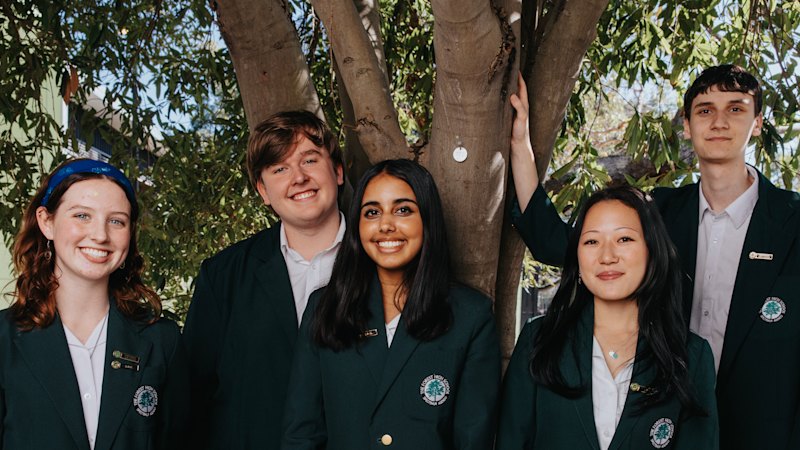
Photo via The Sydney Morning Herald

‘Every single patient matters’: The Sydney researcher weaponising AI to fight cancer

Read the original at The Sydney Morning Herald ↗
Cite

Rawsthorne, S. (2026, October 11). ‘Every single patient matters’: The Sydney researcher weaponising AI to fight cancer. The Sydney Morning Herald. https://www.smh.com.au/national/every-single-patient-matters-the-sydney-researcher-weaponising-ai-to-fight-cancer-20261011-p60vij.html?ref=rss&utm_medium=rss&utm_source=rss_feed

Dated when The Aporia collected the article, usually within hours of publication. Check the original for its exact date and byline.

The Sydney Morning Herald · collected 2026-10-11 · by Sally Rawsthorne

Quick Summary

Professor Fatemeh Vafaee at the University of New South Wales in Sydney is using artificial intelligence to revolutionize cancer research and drug development. Her lab has developed an AI platform that predicts effective drug combinations before lab testing, significantly speeding up the process compared to traditional methods, which have a 10% success rate over 15 years and cost about $2 billion per drug. This technology has already identified 24 synergistic drug combinations for cancer treatment, with some progressing to clinical trials. Vafaee’s work also includes developing a blood test to rule out recurrent breast cancer, affecting 15% of patients. The University of NSW will highlight these advancements in its upcoming Social Impact of Science report.
Written by AI on 2026-10-11, from this article's own text only (the story summary below draws on all the coverage).

AI analysis

Story summary

Professor Fatemeh Vafaee, deputy director of the University of NSW’s AI institute, is leveraging artificial intelligence to improve cancer treatment outcomes. Her lab in Sydney aims to develop personalized medications, including treatments for rare cancers, through advanced AI drug-development platforms. Traditional drug development has a success rate of about 10% and takes around 15 years, costing approximately $2 billion per drug. Vafaee's approach uses AI to identify effective combinations of drugs more efficiently than previous methods, potentially accelerating the discovery process and improving patient outcomes.

Written for “AI In Cancer Research” on 2026-11-04, grounded in this article and the 0 other(s) covering the same event.

Story

📰 AI In Cancer Research
Science · 1 article(s) covering the same event.

Compared with similar articles

This article reads unscored and hedges 5% of its claims. Each row says how that neighbour differs.
Semafor
Hedges 1 of 4 claims Outlet record 59/100
“The articles describe different research labs and initiatives, with Article A focusing on Alphabet's Isomorphic Labs fundraising efforts, while Article B highlights a Sydney researcher at UNSW using AI to fight cancer.”
How this article was measured signals, leaning charts, publisher record, byline, topics and claims

Signals How these are calculated →

Claims extracted
22
sentences that state something as happening or true
Uncertain
5%
1 of 22 hedged ("reportedly", "may", "according to")
Leaning
not political
takes no side on a contested political question
Publisher signals
61/100
The Sydney Morning Herald's corrections and hedging, across everything collected from it. Not a measure of accuracy.
Outlets on this story
1
Science
Same framing elsewhere
1
articles that frame the event the way this one does
Analyzed 2026-10-11 · how these are computed

How this is being covered How these are calculated →

Article leaning vs. publisher reliability
Source leaning vs. consistency

Publisher

The Sydney Morning Herald · 6070 article(s) · 15 correction(s) detected
Running correction rate · 15 correction(s)

Who wrote this

Sally Rawsthorne
8 article(s) here · 1 carrying a prediction
🔮 The draft policy said artificial intelligence would be used for facial recognition, with a human also required to verify the match for “action is taken”.
🔮 More than 130,000 degree-qualified jobs could be wiped out by AI within a decade, a sobering government report by the agency tasked with assessing the nation’s future skills has warned.
🔮 “This is where AI can come on board to prioritise that and look into combinations that could be efficacious before we go into the lab experiments.
🔮 “I would take eight gap years and five years discovering myself.
🔮 The class of litigants is expected to include staff from campuses in Sydney and the Blue Mountains, and elsewhere across the country.
🔮 On Thursday, family WhatsApp chats exploded as overseas relatives weighed up sweeping reforms that will bar family members coming to Australia on conditions attached to student visas.
🔮 Tomorrow’s leaders will also need to understand AI’s ethical, social and environmental impacts, and possess the ability to work with this technology critically and responsibly.
Also by Sally Rawsthorne
An arts degree or a trade: How to futureproof your career
2026-10-25 · The Sydney Morning Herald
Cranbrook gardener charged over alleged child abuse material
2026-10-10 · The Sydney Morning Herald
Nothing else under this byline is closely related to this article, so these are simply their most recent.
All 8 articles by Sally Rawsthorne →

Topics

Melbourne Peter MacCallum Cancer Centre Sydney Vafaee the University of NSW’s

Subjects

Vafaee PERSON · 5× Chicago GPE · 1× Fatemeh Vafaee PERSON · 1× Iran GPE · 1× Melbourne GPE · 1× Peter MacCallum Cancer Centre ORG · 1× Sydney GPE · 1× University of Illinois ORG · 1× the University of NSW ORG · 1× the University of NSW’s ORG · 1×

Narrative

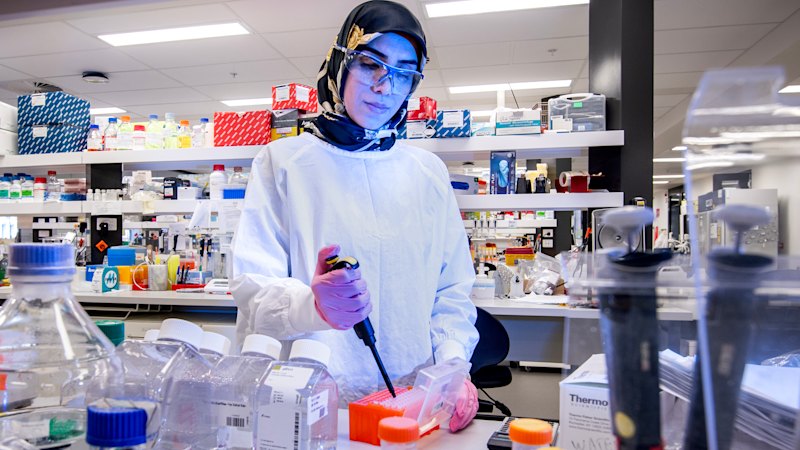
Personalised medication, drugs to combat the rarest of cancers, knowledge of our individual cell interactions and even pre-empting disease in the body – one Sydney lab is working on all of these possibilities and more, thanks to the advent of artificial intelligence.
framing: assertive · carried by 1 article(s) · first seen 2026-10-11
🔮 “This is where AI can come on board to prioritise that and look into combinations that could be efficacious before we go into the lab experiments.
2026-10-11 · The Sydney Morning Herald
‘Every single patient matters’: The Sydney researcher weaponising AI to fight cancer · assertive framing

Claims (22 extracted, 1 hedged)

Personalised medication, drugs to combat the rarest of cancers, knowledge of our individual cell interactions and even pre-empting disease in the body – one Sydney lab is working on all of these possibilities and more, thanks to the advent of artificial intelligence. asserted
lab → combat → intelligence
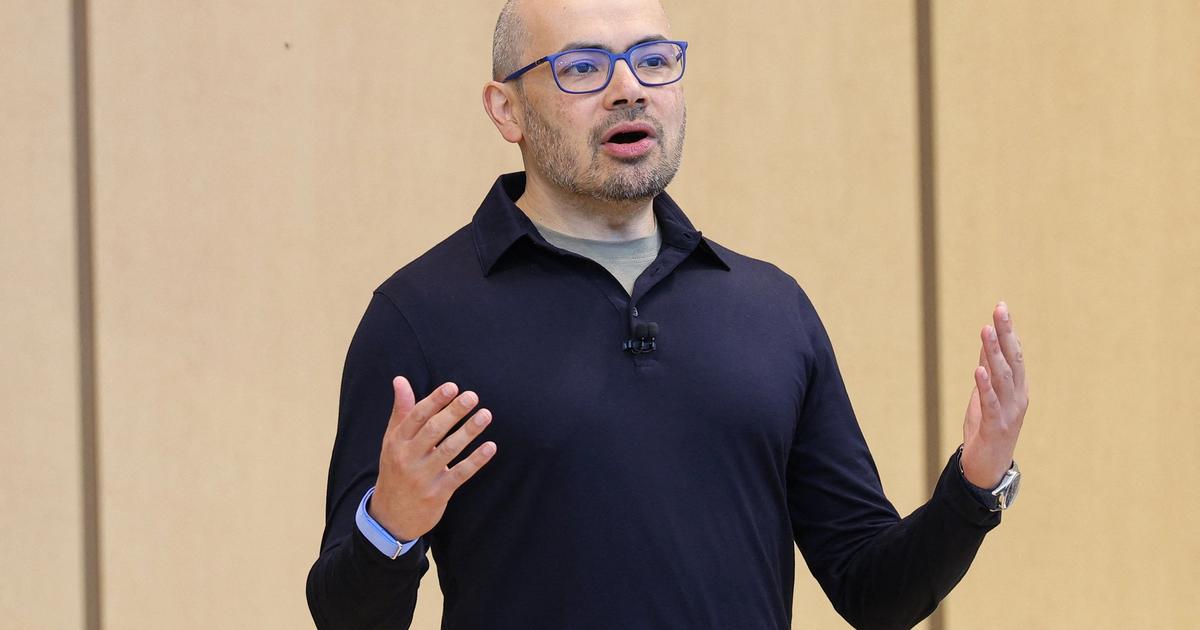
“I’ve become very interested in how we can leverage AI to save lives and improve the patient outcomes,” said Professor Fatemeh Vafaee, deputy director of the University of NSW’s AI institute and a professor in the school of biotechnology and biomolecular sciences. asserted
Vafaee → become → biotechnology
An AI drug-development platform is among the breakthroughs made possible since the technology exploded in 2022, Vafaee said. asserted
Vafaee → make → 2022
The model is upending traditional drug development, which succeeds around 10 per cent of the time, takes 15 years to develop a drug from beginning to end and costs about $2 billion. asserted
which → upend → billion
The complexity of diseases such as cancer and diabetes means that often one medication is insufficient and combination therapy – using a mix of different drugs together – is better able to tackle the disease. asserted
therapy → mean → disease
But the number of potential combinations had previously slowed researchers down. asserted
number → slow → researchers
“It’s an intractable problem – if you have 1000 drugs and you want to look into the combination of two or three drugs across different dosages, there are millions of experiments that you need to run,” said Vafaee. asserted
Vafaee → ’ → that
“This is where AI can come on board to prioritise that and look into combinations that could be efficacious before we go into the lab experiments. uncertain
we → come → experiments
“We can predict possible combinations of drugs ahead of lab experiments.” asserted
We → predict → experiments
Vafaee’s lab has so far picked 24 synergistic combinations, which have been validated in pre-clinical studies at Melbourne’s Peter MacCallum Cancer Centre and are now going to higher levels of testing. asserted
which → pick → testing
Earlier this year, Vafaee worked with a commercial partner to develop a blood test ruling out recurrent breast cancer, something that affects 15 per cent of breast cancer patients and that had plagued doctors because of its unpredictable post-cancer time frame. asserted
that → work → frame
These breakthroughs are among the work highlighted by the University of NSW in its forthcoming Social Impact of Science report, which will be released on Monday. asserted
which → highlight → Monday
The report proposes a new framework for measuring research that zeroes in on commercialisation, scholarly outputs, policy and influence, lives changed, and sustainability and development. asserted
that → propose → commercialisation
Born in Iran, Vafaee received her PhD in AI in 2011 from Chicago’s University of Illinois, which she has since applied to biomedicine. asserted
she → bear → biomedicine
AI developments and access to large-scale data since 2022 – the same year that ChatGPT launched – have meant that scientists can do things “several thousand times faster” than previously. asserted
scientists → launch → things
“We don’t want just to predict for breast cancer and brain cancer,” she said. asserted
she → want → cancer
“We want to be able to adopt that into [rare] cancer or even other diseases. asserted
We → want → cancer
“And this is where we have been developing AI tools for transfer learning, what we can transfer the knowledge from one disease to another ... that would help us to go through less common diseases and look at how we adopt AI for the patient’s benefits. asserted
we → develop → benefits
Every single patient matters, and we can use this technology for patients that we have less population level data available for.” asserted
data → matter → that
Personalised medicine for all was around the corner, she said, if AI was granted access to large-scale data. asserted
AI → say → data
“We are all different and we need to move on from one solution fit everyone,” she said. asserted
she → need → everyone
“What I would love to see in future is that we go from being reactive to what we observe, to being proactive to what we predict.” asserted
we → love → what

💬Give feedback · no sign-in needed

No sign-in needed for now. Your note is sent without a name, so it cannot be answered.

🕘History 🎫Support